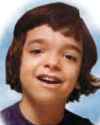
Born 21 Sep 1971; died 22 Feb 1984 at age 12.
American patient who lived his twelve years of life in a sterile plastic “bubble” to protect him from any chance of infection, because he was born with the a genetic disease, severe combined deficiency syndrome (SCID). He was publicly identified only as “David,” or “the Bubble Boy.” He died after an unsuccessful bone marrow stem cells transplant that had been hoped could save him. The confinment and loneliness caused psychological turmoil that was kept from the media, which wrote of a more benign experience. A made-for-TV movie was inaccurate. The bone marrow from his sister, despite screening to avoid such a problem, contained Epstein-Barr virus. He died of Burkitt's lymphoma (from which it was learned, for the first time, that a virus can cause cancer.) He lived his last 15 days outside of the bubble.«
American patient who lived his twelve years of life in a sterile plastic “bubble” to protect him from any chance of infection, because he was born with the a genetic disease, severe combined deficiency syndrome (SCID). He was publicly identified only as “David,” or “the Bubble Boy.” He died after an unsuccessful bone marrow stem cells transplant that had been hoped could save him. The confinment and loneliness caused psychological turmoil that was kept from the media, which wrote of a more benign experience. A made-for-TV movie was inaccurate. The bone marrow from his sister, despite screening to avoid such a problem, contained Epstein-Barr virus. He died of Burkitt's lymphoma (from which it was learned, for the first time, that a virus can cause cancer.) He lived his last 15 days outside of the bubble.«
The American Experience: The Boy in the Bubble (DVD), by PBS. - book suggestion.
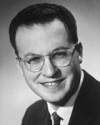
Born 21 Sep 1926; died 28 Feb 2013 at age 86. quotes
Donald Arthur Glaser was an American physicist who received the 1960 Nobel Prize for Physics for his invention of the bubble chamber in which the behaviour of subatomic particles can be observed by the tracks they leave. A flash photograph records the particle's path. Glaser’s chamber contains a superheated liquid maintained in a superheated, unstable state without boiling. A piston causing a rapid decrease in pressure creates a tendency to boil at the slightest disturbance in the liquid. Then any atomic particle passing through the chamber leaves a track of small gas bubbles caused by an instantaneous boiling along its path where the ions it creates act as bubble-development centers.«
Donald Arthur Glaser was an American physicist who received the 1960 Nobel Prize for Physics for his invention of the bubble chamber in which the behaviour of subatomic particles can be observed by the tracks they leave. A flash photograph records the particle's path. Glaser’s chamber contains a superheated liquid maintained in a superheated, unstable state without boiling. A piston causing a rapid decrease in pressure creates a tendency to boil at the slightest disturbance in the liquid. Then any atomic particle passing through the chamber leaves a track of small gas bubbles caused by an instantaneous boiling along its path where the ions it creates act as bubble-development centers.«

Born 21 Sep 1909; died 25 Oct 1989 at age 80.
Richard Howell Fleming was a Canadian-American oceanographer who researched ocean currents, chemistry and biochemistry. He applied oceanography for military uses (1941-51) and studied the disposal of atomic wastes in the ocean. Fleming worked with the first comprehensive synoptic two-year survey (1955-56) of the Northern Pacific Ocean, charting currents, tides, winds, depths, and temperatures and observing plant and animal life. In 1959, for the Atomic Energy Commission, he began investigating the feasibility of creating a harbor in Alaska by nuclear explosions. He co-authored the comprehensive The Oceans: Their Physics, Chemistry, and General Biology, (1942).[Image: Fleming on the bow of the Bureau of Commercial Fisheries Ship Brown Bear, Jul 1960]
Richard Howell Fleming was a Canadian-American oceanographer who researched ocean currents, chemistry and biochemistry. He applied oceanography for military uses (1941-51) and studied the disposal of atomic wastes in the ocean. Fleming worked with the first comprehensive synoptic two-year survey (1955-56) of the Northern Pacific Ocean, charting currents, tides, winds, depths, and temperatures and observing plant and animal life. In 1959, for the Atomic Energy Commission, he began investigating the feasibility of creating a harbor in Alaska by nuclear explosions. He co-authored the comprehensive The Oceans: Their Physics, Chemistry, and General Biology, (1942).[Image: Fleming on the bow of the Bureau of Commercial Fisheries Ship Brown Bear, Jul 1960]
The Oceans - Their Physics, Chemistry, and General Biology, by Johnson, Fleming and Sverdrup. - book suggestion.
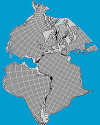
Pangea
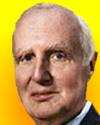
Sir Edward Crisp Bullard was an English marine geophysicist who, with Maurice Ewing, is generally considered to have founded the discipline of marine geophysics. work in geomagnetism. Bullard made the first satisfactory measurements of geothermal heat-flow through the oceanic crust. In early work, he measured minute gravitational variations by timing the swings of an invariant pendulum, studied in the East African Rift Valley. Bullard’s computer analysis of the precise fit of the rifted continental borders on each side of the Atlantic Ocean, added support to the theory of continental drift. His “dynamo” theory of geomagnetism explained the Earth’s magnetic field as due to convection of molten material within the Earth’s core. Knighted in 1953.« more
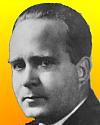
Born 21 Sep 1895; died 19 Dec 1936 at age 41.
Juan de la Cierva (Codorniu) was a Spanish aeronautical engineer who invented the autogiro (1923), a predecessor to the helicopter. Its rotor, mounted on a mast, was not powered but provided lift by auto-rotation. Power was provided by a forward-mounted engine and a conventional propeller. Flight was controlled by elevators, a rudder, and usually ailerons, though some roll control could be achieved by adjusting the tilt of the rotor head. Unlike the later helicopters, it could not take off vertically nor hover though it could takeoff and land in a much shorter distance, it could. However, if an autogiro lost power, it could spin safely back down to earth like a maple seed. He died in a fixed-wing plane accident.«
Juan de la Cierva (Codorniu) was a Spanish aeronautical engineer who invented the autogiro (1923), a predecessor to the helicopter. Its rotor, mounted on a mast, was not powered but provided lift by auto-rotation. Power was provided by a forward-mounted engine and a conventional propeller. Flight was controlled by elevators, a rudder, and usually ailerons, though some roll control could be achieved by adjusting the tilt of the rotor head. Unlike the later helicopters, it could not take off vertically nor hover though it could takeoff and land in a much shorter distance, it could. However, if an autogiro lost power, it could spin safely back down to earth like a maple seed. He died in a fixed-wing plane accident.«
Cierva Autogiros: The Development of Rotary-Wing Flight, by Peter W. Brooks. - book suggestion.
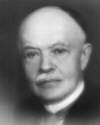
Born 21 Sep 1866; died 28 Feb 1936 at age 69. quotes
French physician and bacteriologist who received the 1928 Nobel Prize for Physiology or Medicine for his discovery (1909) that typhus is transmitted by the body louse. When appointed as Director of the Pasteur Institute at Tunis, Africa, young Dr. Charles Nicolle was immediately brought into contact with the scientific and practical problems that typhus epidemics had created in this country. His solution began with the simple observation that whilst typhus patients continued to spread infection prior to entering the hospital, they were no longer a danger upon being bathed and in new clothing. This fact pointed to a parasite which lives on the patient's body and in his clothing. He subsequently identified the carrier to be the body louse.
French physician and bacteriologist who received the 1928 Nobel Prize for Physiology or Medicine for his discovery (1909) that typhus is transmitted by the body louse. When appointed as Director of the Pasteur Institute at Tunis, Africa, young Dr. Charles Nicolle was immediately brought into contact with the scientific and practical problems that typhus epidemics had created in this country. His solution began with the simple observation that whilst typhus patients continued to spread infection prior to entering the hospital, they were no longer a danger upon being bathed and in new clothing. This fact pointed to a parasite which lives on the patient's body and in his clothing. He subsequently identified the carrier to be the body louse.
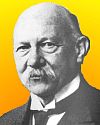
Born 21 Sep 1853; died 21 Feb 1926 at age 72. quotes
Dutch physicist who was awarded the 1913 Nobel Prize for Physics for his work on low-temperature physics in which he liquified hydrogen and helium. On 10 Jul 1908, he obtained his first sample of liquid helium, an amount of 60 cc. After a few more days of verification, his accomplishment was published in The Times on 20 Jul 1908. From his studies of the resistance of metals at low temperatures, he discovered superconductivity (a state in which certain metals exhibit almost no electrical resistance at a temperature near absolute zero).«
Dutch physicist who was awarded the 1913 Nobel Prize for Physics for his work on low-temperature physics in which he liquified hydrogen and helium. On 10 Jul 1908, he obtained his first sample of liquid helium, an amount of 60 cc. After a few more days of verification, his accomplishment was published in The Times on 20 Jul 1908. From his studies of the resistance of metals at low temperatures, he discovered superconductivity (a state in which certain metals exhibit almost no electrical resistance at a temperature near absolute zero).«
Freezing Physics: Heike Kamerlingh Onnes and the Quest for Cold, by Dirk van Delft. - book suggestion.
Born 21 Sep 1832; died 5 Jan 1913 at age 80.
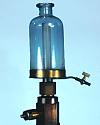
French physicist and ironmaster noted for his work on liquefaction of gases. Working at his father's metallurgy business, he investigated the permeability of iron to hydrogen and other gases, accounting for the unpredictable behaviour of some irons in terms of an excess of dissolved gases. In 1870, he began carefully measuring whether real gases deviate from "ideal" gas law behaviour. From this grew an interest in the liquefaction of gases. He used the Joule-Thomson effect - compressing a gas whilst cooling it, then allowing its rapid expansion to cool it still further - and in 1877-78, was first to produce droplets of liquid oxygen, hydrogen, nitrogen, carbon monoxide, nitrogen dioxide and acetylene. He also invented the altimeter and the high-pressure manometer.Image: Cailletet's liquefier.
French physicist and ironmaster noted for his work on liquefaction of gases. Working at his father's metallurgy business, he investigated the permeability of iron to hydrogen and other gases, accounting for the unpredictable behaviour of some irons in terms of an excess of dissolved gases. In 1870, he began carefully measuring whether real gases deviate from "ideal" gas law behaviour. From this grew an interest in the liquefaction of gases. He used the Joule-Thomson effect - compressing a gas whilst cooling it, then allowing its rapid expansion to cool it still further - and in 1877-78, was first to produce droplets of liquid oxygen, hydrogen, nitrogen, carbon monoxide, nitrogen dioxide and acetylene. He also invented the altimeter and the high-pressure manometer.Image: Cailletet's liquefier.
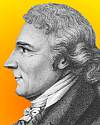
Born 21 Sep 1760; died 19 Sep 1818 at age 57.
Swedish botanist who left a legacy of a collection of plants from his botanical tours of the West Indies, Jamaica, North America, Puerto Rico, Haiti and Cuba between 1783-87. On his return, he described nearly 900 species, most of them new, in Flora Indiae occidentalis (3 vols., 1797-1806). The Swedish Museum of Natural History now holds the collection, about 6000 specimens of phanerogams and ferns, mostly from the West Indies. It is a part of their Regnellian herbarium. He is also noted for his taxonomic studies of specific plant groups, including orchids, mosses and especially ferns. He also published Nova Genera et Species Plantarum seu Prodromus (1788) and Observationes botanicae (1791).«
Swedish botanist who left a legacy of a collection of plants from his botanical tours of the West Indies, Jamaica, North America, Puerto Rico, Haiti and Cuba between 1783-87. On his return, he described nearly 900 species, most of them new, in Flora Indiae occidentalis (3 vols., 1797-1806). The Swedish Museum of Natural History now holds the collection, about 6000 specimens of phanerogams and ferns, mostly from the West Indies. It is a part of their Regnellian herbarium. He is also noted for his taxonomic studies of specific plant groups, including orchids, mosses and especially ferns. He also published Nova Genera et Species Plantarum seu Prodromus (1788) and Observationes botanicae (1791).«
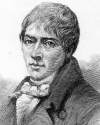
Born 21 Sep 1756; died 26 Nov 1836 at age 80.
John Loudon McAdam was born in Ayr, Scotland, and was the inventor of of macadamized roads. He made his fortune in his uncle's counting-house. (New York City, 1770-83) then returned to England. McAdam developed new methods of road construction. In 1816, as surveyor to the Bristol Turnpike Trust, he re-made their roads with a raised carriageway to improve drainage. Stones were graded and laid in three levels, with the smallest stones crushed and laid as a top surface. This provided swifter and safer travel. Later he added tarmacadam ("tarmac", asphalt) to bind the top layer. His methods were adopted in many other countries. In 1827 he was made surveyor-general of metropolitan roads in Great Britain.[Image: engraving by Charles Turner]
John Loudon McAdam was born in Ayr, Scotland, and was the inventor of of macadamized roads. He made his fortune in his uncle's counting-house. (New York City, 1770-83) then returned to England. McAdam developed new methods of road construction. In 1816, as surveyor to the Bristol Turnpike Trust, he re-made their roads with a raised carriageway to improve drainage. Stones were graded and laid in three levels, with the smallest stones crushed and laid as a top surface. This provided swifter and safer travel. Later he added tarmacadam ("tarmac", asphalt) to bind the top layer. His methods were adopted in many other countries. In 1827 he was made surveyor-general of metropolitan roads in Great Britain.[Image: engraving by Charles Turner]

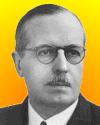
Died 21 Sep 1971 at age 84 (born 10 Apr 1887).
Argentine physiologist and corecipient, with Carl and Gerty Cori, of the 1947 Nobel Prize for Physiology or Medicine. He was noted for discovering how pituitary hormones regulate the amount of blood sugar (glucose) in animals. The hypophysis, or the pituitary gland, is an important, but small secreting gland at the base of the brain, where it lies sunk in a bony hollow in the most sheltered spot of the whole body. Its size is that of a bean in man, a pea in the dog, and a radish seed in the large toad Bufo marinus, which is plentiful in the Argentine. Houssay worked with dogs from which the hypophysis, or sometimes only its anterior lobe, was surgically removed. He then found that a daily implantation of anterior lobe of hypophysis from toads on the operated animals protected the latter from unbalanced levels of insulin, otherwise present.
Argentine physiologist and corecipient, with Carl and Gerty Cori, of the 1947 Nobel Prize for Physiology or Medicine. He was noted for discovering how pituitary hormones regulate the amount of blood sugar (glucose) in animals. The hypophysis, or the pituitary gland, is an important, but small secreting gland at the base of the brain, where it lies sunk in a bony hollow in the most sheltered spot of the whole body. Its size is that of a bean in man, a pea in the dog, and a radish seed in the large toad Bufo marinus, which is plentiful in the Argentine. Houssay worked with dogs from which the hypophysis, or sometimes only its anterior lobe, was surgically removed. He then found that a daily implantation of anterior lobe of hypophysis from toads on the operated animals protected the latter from unbalanced levels of insulin, otherwise present.
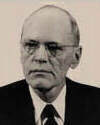
Died 21 Sep 1961 at age 68 (born 10 Oct 1892).
American inventor of Band-aids. Finding his wife prone to kitchen accidents - cuts or burns - Dickson frequently was dressing her small wounds with cotton gauze and adhesive tape. After a number of these accidents, Earle devised a way she could easily apply her own dressings. He prepared ready-made bandages by placing squares of cotton gauze at intervals along an adhesive strip and covering them with crinoline. Now all his wife had to do was cut off a length of the strip and wrap it over her cut. His employment was as a cotton buyer at Johnson & Johnson, where his suggestion to make this a product became a reality leading to Band-aids.
American inventor of Band-aids. Finding his wife prone to kitchen accidents - cuts or burns - Dickson frequently was dressing her small wounds with cotton gauze and adhesive tape. After a number of these accidents, Earle devised a way she could easily apply her own dressings. He prepared ready-made bandages by placing squares of cotton gauze at intervals along an adhesive strip and covering them with crinoline. Now all his wife had to do was cut off a length of the strip and wrap it over her cut. His employment was as a cotton buyer at Johnson & Johnson, where his suggestion to make this a product became a reality leading to Band-aids.
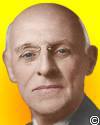
Died 21 Sep 1959 at age 92 (born 13 Nov 1866). quotes
American educator who played a major role in the introduction of modern medical and science education to American colleges and universities. Founder and director of a progressive college- preparatory school in Louisville (1890-1904), Flexner issued an appraisal of American educational institutions (The American College: A Criticism; 1908) that earned him a Carnegie Foundation commission to survey the quality of the 155 medical colleges in the U.S. and Canada. His report (1910) had an immediate and sensational impact on American medical education. Many of the colleges that were severely criticized by Flexner closed soon after publication of the report; others initiated extensive revisions of their policies and curricula.
American educator who played a major role in the introduction of modern medical and science education to American colleges and universities. Founder and director of a progressive college- preparatory school in Louisville (1890-1904), Flexner issued an appraisal of American educational institutions (The American College: A Criticism; 1908) that earned him a Carnegie Foundation commission to survey the quality of the 155 medical colleges in the U.S. and Canada. His report (1910) had an immediate and sensational impact on American medical education. Many of the colleges that were severely criticized by Flexner closed soon after publication of the report; others initiated extensive revisions of their policies and curricula.
Iconoclast: Abraham Flexner and a Life in Learning, by Thomas Neville Bonner. - book suggestion.
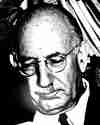
Died 21 Sep 1957 at age 74 (born 12 Jun 1883). quotes
Robert Harry Lowie was an Austrian-born American anthropologist whose extensive studies of North American Plains Indians include exemplary research on the Crow. Lowie was instrumental in the development of the discipline. He helped form the profession and influenced the way in which anthropology is done today 'through such works as Culture and Ethnology (1917), Primitive Society (1920), and Social Organization (1948). Lowie's most intense fieldwork on the culture of the Crow Indians took place every season from 1910 to 1916. It was with this assignment that Lowie began to employ "salvage ethnography," the purpose of which was to salvage a record of what was left of a culture before it disappeared.
Robert Harry Lowie was an Austrian-born American anthropologist whose extensive studies of North American Plains Indians include exemplary research on the Crow. Lowie was instrumental in the development of the discipline. He helped form the profession and influenced the way in which anthropology is done today 'through such works as Culture and Ethnology (1917), Primitive Society (1920), and Social Organization (1948). Lowie's most intense fieldwork on the culture of the Crow Indians took place every season from 1910 to 1916. It was with this assignment that Lowie began to employ "salvage ethnography," the purpose of which was to salvage a record of what was left of a culture before it disappeared.
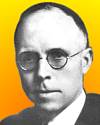
Died 21 Sep 1950 at age 54 (born 14 Feb 1896).
Edward Arthur Milne was an English astrophysicist and cosmologist who is best known for his development of kinematic relativity. Poor eyesight prevented him from active service in WWI, he did important war service in research in ballistics and sound ranging, and problems related to the atmosphere of the earth.. From 1920-29, he studied problems of radiative equilibrium and the theory of stellar atmospheres. He extended work done earlier by Schuster and by Schwarzschild, which he combined in a mathematical interesting integral equation now known as Milne's integral equation. Later, he turned to the theory of stellar structure and cosmology. After 1932, he concentrated on a new form of relativity called kinematic relativity, an alternative to Einstein's general theory.
Edward Arthur Milne was an English astrophysicist and cosmologist who is best known for his development of kinematic relativity. Poor eyesight prevented him from active service in WWI, he did important war service in research in ballistics and sound ranging, and problems related to the atmosphere of the earth.. From 1920-29, he studied problems of radiative equilibrium and the theory of stellar atmospheres. He extended work done earlier by Schuster and by Schwarzschild, which he combined in a mathematical interesting integral equation now known as Milne's integral equation. Later, he turned to the theory of stellar structure and cosmology. After 1932, he concentrated on a new form of relativity called kinematic relativity, an alternative to Einstein's general theory.
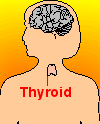
Died 21 Sep 1939 at age 74 (born 20 Jun 1865).
English physician who pioneered in the treatment of endocrine disorders. He was one of the first to use extractions of animal thyroid to relieve myxedema (severe hypothyroidism) in humans. In 1891, Murray cut the thyroid out of a sheep, strained it through a handkerchief and prepared emulsions of dried sheep thyroid in glycerine. Despite being scoffed at by his colleagues, when he injected the thyroid extract into a patient with myxedema (the common form of hypothyroidism), he was completely successful on his first such attempt with the treatment. With continued use of thyroid extract, the patient lived in good health for over twenty-eight years after she had reached an advanced stage of myxoedema.
English physician who pioneered in the treatment of endocrine disorders. He was one of the first to use extractions of animal thyroid to relieve myxedema (severe hypothyroidism) in humans. In 1891, Murray cut the thyroid out of a sheep, strained it through a handkerchief and prepared emulsions of dried sheep thyroid in glycerine. Despite being scoffed at by his colleagues, when he injected the thyroid extract into a patient with myxedema (the common form of hypothyroidism), he was completely successful on his first such attempt with the treatment. With continued use of thyroid extract, the patient lived in good health for over twenty-eight years after she had reached an advanced stage of myxoedema.
Died 21 Sep 1936 at age 73 (born 15 May 1863). quotes
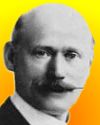
English inventor and manufacturer who patented the Meccano construction set in 1901. This toy used perforated metal strips, wheels, roods, brackets, clips and assembly nuts and bolts to build unlimited numbers of models. His original sets, marketed as "Mechanics Made Easy" produced in a rented room, were initially sold at only one Liverpool toy shop. By 1908, he had formed his company, Meccano Ltd., and within five more years had established manufacturing in France, Germany, Spain and the U.S. He introduced Hornby model trains in 1920, originally clockwork and eventually electrically powered with tracks and scale replicas of associated buildings. The "Dinky" range of miniature cars and other motor vehicles was added in 1933.«
English inventor and manufacturer who patented the Meccano construction set in 1901. This toy used perforated metal strips, wheels, roods, brackets, clips and assembly nuts and bolts to build unlimited numbers of models. His original sets, marketed as "Mechanics Made Easy" produced in a rented room, were initially sold at only one Liverpool toy shop. By 1908, he had formed his company, Meccano Ltd., and within five more years had established manufacturing in France, Germany, Spain and the U.S. He introduced Hornby model trains in 1920, originally clockwork and eventually electrically powered with tracks and scale replicas of associated buildings. The "Dinky" range of miniature cars and other motor vehicles was added in 1933.«
Frank Hornby: The Boy Who Made $1,000,000 With a Toy, by Maurice Philip Gould. - book suggestion.
/MaskelyneNevil(1863-1924)Thm.jpg "Nevil Maskelyne")
Died 21 Sep 1924 (born 1863).
English magician and inventor, who was a self-educated electrician with a serious interest in radio telegraphy, and being stymied by Marconi’s near monopoly on spark telegraphy, Maskelyne became adversarial. To embarrass Marconi’s claim of secure communication, on 4 Jun 1903, Maskelyne used his own transmitter nearby to interfere with a public demonstration of Marconi’s system at the Royal Institution. Maskelyne transmissions in Morse code were mocking. The electronic vandalism became the subject of an exchange of letters in the Times. In the following years, Maskelyne pursued continuous wave radio, capable of carrying voice signals (which spark transmissions could not). He obtained exclusive rights to use the Poulsen and DeForest patents in Britain Nevil was the son of magician John Nevil Maskelyne.«[Another source gives death on 24 Sep 1925.]
English magician and inventor, who was a self-educated electrician with a serious interest in radio telegraphy, and being stymied by Marconi’s near monopoly on spark telegraphy, Maskelyne became adversarial. To embarrass Marconi’s claim of secure communication, on 4 Jun 1903, Maskelyne used his own transmitter nearby to interfere with a public demonstration of Marconi’s system at the Royal Institution. Maskelyne transmissions in Morse code were mocking. The electronic vandalism became the subject of an exchange of letters in the Times. In the following years, Maskelyne pursued continuous wave radio, capable of carrying voice signals (which spark transmissions could not). He obtained exclusive rights to use the Poulsen and DeForest patents in Britain Nevil was the son of magician John Nevil Maskelyne.«[Another source gives death on 24 Sep 1925.]
Wireless: From Marconi’s Black-box to the Audion, by Sungook Hong. - book suggestion.
Died 21 Sep 1924 at age 75 (born 21 Feb 1849).
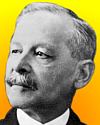
Édouard Gaston (Daniel) Deville was a French-Canadian surveyor was a French-born Canadian surveyor of Canadian lands (1875-1924) who perfected the first practical method of photogrammetry, or the making of maps based on photography. His system used projective grids of images taken from photographs made with a camera and theodolite mounted on the same tripod. Photographs were taken from different locations, at precise predetermined angles, with measured elevations. Each photograph slightly overlapped the preceding one. With enough photographs and points of intersection, a map could be prepared, including contour lines. He also invented (1896) the first stereoscopic plotting instrument called the Stereo-Planigraph, though its complexity resulted in little use.«
Édouard Gaston (Daniel) Deville was a French-Canadian surveyor was a French-born Canadian surveyor of Canadian lands (1875-1924) who perfected the first practical method of photogrammetry, or the making of maps based on photography. His system used projective grids of images taken from photographs made with a camera and theodolite mounted on the same tripod. Photographs were taken from different locations, at precise predetermined angles, with measured elevations. Each photograph slightly overlapped the preceding one. With enough photographs and points of intersection, a map could be prepared, including contour lines. He also invented (1896) the first stereoscopic plotting instrument called the Stereo-Planigraph, though its complexity resulted in little use.«
Died 21 Sep 1874 at age 75 (born 25 Sep 1798).
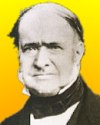
Jean-Baptiste-Armand-Louis-Léonce Élie de Beaumont was a French geologist who, with French geologist Ours Pierre Dufrénoy, published the substantial geological map of France, Carte geologique generale de la France (1841). On 5 Jul 1847, he presented the first complete theory of metalliferous veins. He made a detailed study of European folded rocks, and concluded that these showed evidence of distinct mountain building episodes. His geometrically-based hypothesis that the directions of mountain systems were based on a pentagonal grid structure for the earth's crust found little support. However, his theory that the Earth is cooling, and therefore shrinking, was more warmly received.«
Jean-Baptiste-Armand-Louis-Léonce Élie de Beaumont was a French geologist who, with French geologist Ours Pierre Dufrénoy, published the substantial geological map of France, Carte geologique generale de la France (1841). On 5 Jul 1847, he presented the first complete theory of metalliferous veins. He made a detailed study of European folded rocks, and concluded that these showed evidence of distinct mountain building episodes. His geometrically-based hypothesis that the directions of mountain systems were based on a pentagonal grid structure for the earth's crust found little support. However, his theory that the Earth is cooling, and therefore shrinking, was more warmly received.«
Died 21 Sep 1576 at age 74 (born 24 Sep 1501). quotes
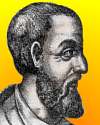
Italian physician, mathematician and astrologer (a.k.a. Geronimo, Gerolamo, or Anglicized as Jerome Cardan) who was the first to give a clinical description of typhus fever. His book, Ars magna (“Great Art,” 1545) was one of the great achievements in the history of algebra, in which he published the solutions to the cubic and quartic equations. His mechanical inventions included the combination lock, the compass gimbal consisting of three concentric rings, and the universal joint to transmit rotary motion at various angles (as used in present-day vehicles). He contributed to hydrodynamics and held that perpetual motion is impossible, except in celestial bodies. Cardano published two encyclopedias of natural science, introduced the Cardan grille, a cryptographic tool (1550), and was a life-long believer as an astrologer. He died by suicide.« more
Italian physician, mathematician and astrologer (a.k.a. Geronimo, Gerolamo, or Anglicized as Jerome Cardan) who was the first to give a clinical description of typhus fever. His book, Ars magna (“Great Art,” 1545) was one of the great achievements in the history of algebra, in which he published the solutions to the cubic and quartic equations. His mechanical inventions included the combination lock, the compass gimbal consisting of three concentric rings, and the universal joint to transmit rotary motion at various angles (as used in present-day vehicles). He contributed to hydrodynamics and held that perpetual motion is impossible, except in celestial bodies. Cardano published two encyclopedias of natural science, introduced the Cardan grille, a cryptographic tool (1550), and was a life-long believer as an astrologer. He died by suicide.« more
The Book of My Life, by Girolamo Cardano. - book suggestion.
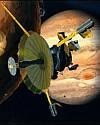
(NASA)
In 2003, the U.S. NASA Galileo space probe ended its eight-year mission to Jupiter as planned. The Jet Propulsion Laboratory in Pasadena, California directed the craft into Jupiter's atmosphere to burn up, totally vaporizing its structure. This prevented the possibility of any later uncontrolled fall onto a moon causing contamination with bacterial life from Earth, perhaps carried on the probe since launch. Contact was lost with the spacecraft slightly after 3:40 p.m. EDT. More than 1,000 people who worked on the Galileo program gathered at the Laboratory to celebrate the end of the mission. Galileo was first conceived in 1976 as a mission to Jupiter and its moons, Ganymede, Callisto, Io, and Europa.[Artist's impression of Galileo passing the moon Io, with Jupiter in the background]
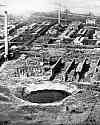
In 1921, a huge explosion at a fertilizer factory at Oppau, Germany, caused 500 deaths. Destruction at the site included hundreds of neighboring houses. The fertilizer made there since 1917 was a 50/50 mix of ammonium nitrate and ammonium sulphate. Storage silos reached up to a hundred feet high. This fertilizer had a tendency to form solid clumps. It had become routine to break it up ammonium sulphate with bulldozers and dynamite. The mixed fertilizer was not regarded as explosive because it was difficult to initiate and not experienced before in such circumstances. Dynamite used this time caused 4,500 tons of fertilizer to explode, creating a crater 250-ft diam. and 50-ft deep.«
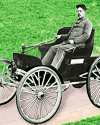
In 1895, the Duryea Motor Wagon Company became the first American auto manufacturer to open for business. In 1893, Frank Duryea and his brother, Charles, designed what is believed to be the first gasoline-powered automobile built in the U.S. Since it didn't need a horse, it was called a “horseless carriage,” which took its first short test drive in Springfield, Mass. Although the first in the U.S. auto business, the Duryeas did not develop into a major manufacturer.«
more
Carriages Without Horses: J. Frank Duryea and the Birth of the American Automobile Industry, by Richard P. Scharchburg. - book suggestion.
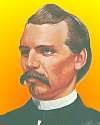
In 1875, inventor and scientist, Professor Thaddeus S.C. Lowe (1832-1913) patented a process for water gas production of "illuminating or heating gas." This gas making process fundamentally consists of the spraying of oil into water gas (blue gas) in a hot vessel for the purpose of increasing the calorific value of the gas. This carbureted water gas process was soon the most important manufactured gas in the United States of its time. He later invented a number of important and basic devices for use in atmospheric observation and metallurgical processing. Earlier, during the Civil War, he had created a military balloon force to spy on Confederate troops.




