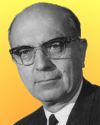
Born 12 Sep 1910; died 22 Nov 1993 at age 83. quotes
Alexander Duncan Langmuir was an American epidemiologist created and led the Epidemic Intelligence Service (EIS) for the U.S. government and was credited with saving thousands of lives with his revolutionary work. In 1949, he became director of the epidemiology branch of the National Communicable Disease Center in Atlanta, a position he held for over 20 years. His efforts contributed to the virtual elimination of polio in the U.S. and to a better understanding of other infectious disease dilemmas of the last 50 years. He emphasized surveillance with regard to disease wherever it occurred, analyzing it and looking at it, and acting if appropriate. Langmuir wrote extensively on all phases of epidemiology on a global basis and was recognized internationally as a leader. Irving Langmuir was his uncle.
Alexander Duncan Langmuir was an American epidemiologist created and led the Epidemic Intelligence Service (EIS) for the U.S. government and was credited with saving thousands of lives with his revolutionary work. In 1949, he became director of the epidemiology branch of the National Communicable Disease Center in Atlanta, a position he held for over 20 years. His efforts contributed to the virtual elimination of polio in the U.S. and to a better understanding of other infectious disease dilemmas of the last 50 years. He emphasized surveillance with regard to disease wherever it occurred, analyzing it and looking at it, and acting if appropriate. Langmuir wrote extensively on all phases of epidemiology on a global basis and was recognized internationally as a leader. Irving Langmuir was his uncle.
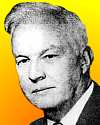
Born 12 Sep 1900; died 1 Sep 1982 at age 81.
American mathematician who was a pioneer of modern mathematical logic. His research in the foundations of mathematics led him to the development of combinatory logic. Later, this seminal work found significant application in computer science, especially in the design of programming languages. Curry worked on the first electronic computer, called ENIAC, during WW II. He also formulated a logical calculus using inferential rules. In 1942, he published Curry's paradox, which occurs in naive set theory or naive logics, and allows the derivation of an arbitrary sentence from a self-referring sentence and some apparently innocuous logical deduction rules.«
American mathematician who was a pioneer of modern mathematical logic. His research in the foundations of mathematics led him to the development of combinatory logic. Later, this seminal work found significant application in computer science, especially in the design of programming languages. Curry worked on the first electronic computer, called ENIAC, during WW II. He also formulated a logical calculus using inferential rules. In 1942, he published Curry's paradox, which occurs in naive set theory or naive logics, and allows the derivation of an arbitrary sentence from a self-referring sentence and some apparently innocuous logical deduction rules.«
Foundations of Mathematical Logic, by Haskell Brooks Curry. - book suggestion.
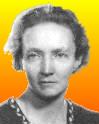
Born 12 Sep 1897; died 17 Mar 1956 at age 58. quotes
French physicist and physical chemist, wife of Frédéric Joliot-Curie, who shared the 1935 Nobel Prize for Chemistry "in recognition of their synthesis of new radioactive elements." For example, in their joint research they discovered that aluminium atoms exposed to alpha rays transmuted to radioactive phosphorus atoms. She was the daughter of Nobel Prize winners Pierre and Marie Curie. From 1946, she was director of the Radium Institute, Paris, founded by her mother. She died of leukemia, like her mother, resulting from radiation exposure during research.
French physicist and physical chemist, wife of Frédéric Joliot-Curie, who shared the 1935 Nobel Prize for Chemistry "in recognition of their synthesis of new radioactive elements." For example, in their joint research they discovered that aluminium atoms exposed to alpha rays transmuted to radioactive phosphorus atoms. She was the daughter of Nobel Prize winners Pierre and Marie Curie. From 1946, she was director of the Radium Institute, Paris, founded by her mother. She died of leukemia, like her mother, resulting from radiation exposure during research.
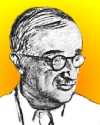
Born 12 Sep 1891; died 7 Jun 1953 at age 61.
Hungarian-American psychoanalyst who was the first ethnologist to utilize a psychoanalytic approach to interpreting culture, especially to tribes of Australia, New Guinea, and southwestern U.S. He was also among the earliest anthropologists to work within Freudian theory, his earliest works being largely the application of Freudian theory to data gathered from readings. From 1928-30 he carried out field work with the Somali, Aranda, Lirittja, Duau, Dobu, and Yuma. In 1938, Róheim took up residence in the U.S. and shortly was in private psychoanalytical practice in New York. In 1947, he worked with the Navaho.
Hungarian-American psychoanalyst who was the first ethnologist to utilize a psychoanalytic approach to interpreting culture, especially to tribes of Australia, New Guinea, and southwestern U.S. He was also among the earliest anthropologists to work within Freudian theory, his earliest works being largely the application of Freudian theory to data gathered from readings. From 1928-30 he carried out field work with the Somali, Aranda, Lirittja, Duau, Dobu, and Yuma. In 1938, Róheim took up residence in the U.S. and shortly was in private psychoanalytical practice in New York. In 1947, he worked with the Navaho.
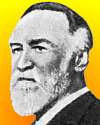
Born 12 Sep 1838; died 24 Jan 1915 at age 76.
Georg Friedrich Julius Arthur von Auwers was a German astronomer known for his life's work making extremely accurate catalogs of stellar positions and motions. He also researched solar and stellar parallaxes, making a new reduction of James Bradley's 18th century Greenwich observations and measurements of star distances. Auwers also observed double stars, and accurately calculated the orbits of the Sirius and Procyon systems before the faint companions to the bright stars were seen. He redetermined the distance to the sun several times, making use of transits of Venus and an approach of a minor planet.
Georg Friedrich Julius Arthur von Auwers was a German astronomer known for his life's work making extremely accurate catalogs of stellar positions and motions. He also researched solar and stellar parallaxes, making a new reduction of James Bradley's 18th century Greenwich observations and measurements of star distances. Auwers also observed double stars, and accurately calculated the orbits of the Sirius and Procyon systems before the faint companions to the bright stars were seen. He redetermined the distance to the sun several times, making use of transits of Venus and an approach of a minor planet.
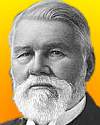
Born 12 Sep 1818; died 26 Feb 1903 at age 84. quotes
U.S. inventor, whose Gatling gun (1861) was first successful machine gun, a crank-operated, rapid-fire multibarrel design combining reliability, high firing rate and ease of loading into a single device. His father was also an inventor, and while young, Richard helped him create machines for sowing cotton seeds and thinning cotton plants. In 1839, he designed a screw propeller for steamboats, but found a similar one had been previously patented. From 1844, he continued to invent improved agricultural machines, including one to plant grains, like rice and wheat (adapted from the cotton-sowing machine); a hemp-breaking machine (1850); and a steam plow (1857). The outbreak of the American Civil War spurred him to design firearms (1861).«
U.S. inventor, whose Gatling gun (1861) was first successful machine gun, a crank-operated, rapid-fire multibarrel design combining reliability, high firing rate and ease of loading into a single device. His father was also an inventor, and while young, Richard helped him create machines for sowing cotton seeds and thinning cotton plants. In 1839, he designed a screw propeller for steamboats, but found a similar one had been previously patented. From 1844, he continued to invent improved agricultural machines, including one to plant grains, like rice and wheat (adapted from the cotton-sowing machine); a hemp-breaking machine (1850); and a steam plow (1857). The outbreak of the American Civil War spurred him to design firearms (1861).«
Gatling: A Photographic Remembrance, by E. Frank Jr. Stephenson. - book suggestion.
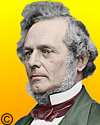
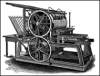
American inventor who developed and manufactured the first successful rotary printing press (1846). A cylinder rolled over stationary plates of inked type and the cylinder made an impression on paper. This eliminated the need for making impressions directly from the type plates themselves, which were heavy and difficult to manoeuvre. By constantly turning in only one direction, Hoe's revolving press increased the number of pages that could be printed per hour. more
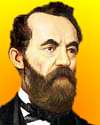
Born 12 Sep 1811; died 7 Aug 1898 at age 86.
American geologist and paleontologist who is considered one of the founders of American geology. He invented the term geosyncline and the geosyncline theory for mountain building, which proposed that as sediment is increasingly deposited in a shallow basin, the basin will sink, causing the adjacent area to rise. (This was superseded in the 1960's by the new theories of Plate Tectonics.) In paleontology, he studied the Silurian and Devonian fossils (345 million - 430 million years old) found in New York, and recorded his results in a 13-volume series, The Paleontology of New York (1847-94). Hall was a charter member of the Academy of Sciences.«
American geologist and paleontologist who is considered one of the founders of American geology. He invented the term geosyncline and the geosyncline theory for mountain building, which proposed that as sediment is increasingly deposited in a shallow basin, the basin will sink, causing the adjacent area to rise. (This was superseded in the 1960's by the new theories of Plate Tectonics.) In paleontology, he studied the Silurian and Devonian fossils (345 million - 430 million years old) found in New York, and recorded his results in a 13-volume series, The Paleontology of New York (1847-94). Hall was a charter member of the Academy of Sciences.«
Born 12 Sep 1725; died 22 Oct 1792 at age 67.
Guillaume-Joseph-Hyacinthe-Jean-Baptiste Le Gentil de la Galaziere was a French astronomer who began as an assistant of Jacques Cassini, at the Paris Observatory. Le Gentil discovered M32 (Andromeda’s satellite galaxy), M36 and M38 (two open clusters of the constellation Auriga) and M8 (Lagoon nebula). In Mar 1760, he left for Pondicherri, India to observe the 1761 transit of Venus across the sun. He was delayed on his journey by an outbreak of war, and missed viewing it. Though a rare astronomical event, a transit promised crucial data to calculate the Earth-Sun distance, so, he stayed abroad eight more years for another chance. Yet then (3 Jun 1769), cloudy weather denied his view. Upon return to France (Oct 1771), he found his heirs had assumed he was dead and taken his property.«
Guillaume-Joseph-Hyacinthe-Jean-Baptiste Le Gentil de la Galaziere was a French astronomer who began as an assistant of Jacques Cassini, at the Paris Observatory. Le Gentil discovered M32 (Andromeda’s satellite galaxy), M36 and M38 (two open clusters of the constellation Auriga) and M8 (Lagoon nebula). In Mar 1760, he left for Pondicherri, India to observe the 1761 transit of Venus across the sun. He was delayed on his journey by an outbreak of war, and missed viewing it. Though a rare astronomical event, a transit promised crucial data to calculate the Earth-Sun distance, so, he stayed abroad eight more years for another chance. Yet then (3 Jun 1769), cloudy weather denied his view. Upon return to France (Oct 1771), he found his heirs had assumed he was dead and taken his property.«

Died 12 Sep 1995 at age 88 (born 28 Jul 1907).
Sir (John) Grahame Douglas Clark was a British archaeologist and authority on the prehistoric age in northwestern Europe known as the Mesolithic Period (8000-2700 BC)
Sir (John) Grahame Douglas Clark was a British archaeologist and authority on the prehistoric age in northwestern Europe known as the Mesolithic Period (8000-2700 BC)

Died 12 Sep 1994 at age 56 (born 26 Nov 1937).
Soviet physician who was the first practicing doctor in space. He travelled on Voskhod 1 ("Sunrise 1"), 12-13 Oct 1964 the first space flight with a crew of more than one man. He was an expert in the sense-of-balance mechanism of the inner ear. He collected medical information, including the effects of radiation, confinement and weightlessness on the crew. He began his training in the summer of 1964, a few months before the flight, but was not a long-term cosmonaut and afterwards returned to his medical practice.
Soviet physician who was the first practicing doctor in space. He travelled on Voskhod 1 ("Sunrise 1"), 12-13 Oct 1964 the first space flight with a crew of more than one man. He was an expert in the sense-of-balance mechanism of the inner ear. He collected medical information, including the effects of radiation, confinement and weightlessness on the crew. He began his training in the summer of 1964, a few months before the flight, but was not a long-term cosmonaut and afterwards returned to his medical practice.
Died 12 Sep 1956 at age 80 (born 5 May 1876).
English archaeologist whose excavations of Ancient Jericho are the best known of his major contributions to the study of the ancient history and prehistory of Asia Minor and Palestine.«
English archaeologist whose excavations of Ancient Jericho are the best known of his major contributions to the study of the ancient history and prehistory of Asia Minor and Palestine.«
Died 12 Sep 1941 at age 72 (born 27 Jun 1869).
German embryologist who was awarded the Nobel Prize for Physiology and Medicine (1935) for his discovery of embryonic induction, an effect involving several parts of the embryo in directing the development of the early group of cells into specific tissues and organs. Working extensively on the early development of the newt, he showed that the in the earliest stage, tissues may be transplanted to different areas of the embryo, and it then develops based on the new location and not from where it came. For example, early tissue cut from an area of nervous tissue might be moved to an area of skin tissue where it then grows into the same form as the surrounding skin.
German embryologist who was awarded the Nobel Prize for Physiology and Medicine (1935) for his discovery of embryonic induction, an effect involving several parts of the embryo in directing the development of the early group of cells into specific tissues and organs. Working extensively on the early development of the newt, he showed that the in the earliest stage, tissues may be transplanted to different areas of the embryo, and it then develops based on the new location and not from where it came. For example, early tissue cut from an area of nervous tissue might be moved to an area of skin tissue where it then grows into the same form as the surrounding skin.
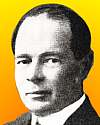
Died 12 Sep 1939 at age 70 (born 27 Feb 1869).
American botanist who was a pioneer in the field of plant ecology, especially the concept of dynamic ecology, which he devised in the 1890's through a study of sand dune vegation at the southern end of Lake Michigan. He observed ecological succession, whereby starting with a bare habitat, there is a sequence of biological communities, each providing modification of the habitat to favour successors, until a climax community is established, characteristic of the climatic conditions of the region. His field work there showed that the vegetation at any one point in the system is related to the distance the point lies from the lake, the kind of soil present at the location, and the time period over which seeds and spores have had a chance to germinate.«
American botanist who was a pioneer in the field of plant ecology, especially the concept of dynamic ecology, which he devised in the 1890's through a study of sand dune vegation at the southern end of Lake Michigan. He observed ecological succession, whereby starting with a bare habitat, there is a sequence of biological communities, each providing modification of the habitat to favour successors, until a climax community is established, characteristic of the climatic conditions of the region. His field work there showed that the vegetation at any one point in the system is related to the distance the point lies from the lake, the kind of soil present at the location, and the time period over which seeds and spores have had a chance to germinate.«
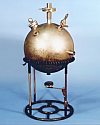
Died 12 Sep 1923 at age 81 (born 16 Nov 1841).
French physicist who made the first high-altitude determination of the solar constant (1875, on Mont Blanc in the French-Swiss Alps). He also determined the fusion points of palladium, platinum and gold. Violle also was interested in the theory of geysers, the origin of hail, and atmospheric exploration through balloon soundings. For high-temperature radiation, he proposed a photometric unit, the violle or Violle's standard (1881). His actinometer is one form of pyrheliometer, a device to measure the intensity of sunlight. It was modified from John Herschel's invention of 1825. It consists of two concentric hollow spheres containing water between them. Sunlight passes through an aperture and falls on a thermometer bulb in the hollow inner sphere.
French physicist who made the first high-altitude determination of the solar constant (1875, on Mont Blanc in the French-Swiss Alps). He also determined the fusion points of palladium, platinum and gold. Violle also was interested in the theory of geysers, the origin of hail, and atmospheric exploration through balloon soundings. For high-temperature radiation, he proposed a photometric unit, the violle or Violle's standard (1881). His actinometer is one form of pyrheliometer, a device to measure the intensity of sunlight. It was modified from John Herschel's invention of 1825. It consists of two concentric hollow spheres containing water between them. Sunlight passes through an aperture and falls on a thermometer bulb in the hollow inner sphere.
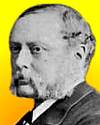
Died 12 Sep 1888 at age 51 (born 23 Mar 1837).
English astronomer who first suggested (1873) that meteor impacts caused lunar craters, rather than volcanic action. He studied the motion of stars, their distribution, and their relation to the nebulae. He prepared a map (1867) of the surface of Mars on which he named continents, seas, bays and straits (in the same way that Riccioli used on his map of the moon). However, he did not perceive “canals” on the surface, as later Schiaparelli identified. Proctor participated in expeditions of 1874 and 1882 to observe the transit of Venus. He was very successful popularizing astronomy by his writings in periodicals, books, and lectures he gave as far abroad as Australia and America (where he stayed after 1881).« more
English astronomer who first suggested (1873) that meteor impacts caused lunar craters, rather than volcanic action. He studied the motion of stars, their distribution, and their relation to the nebulae. He prepared a map (1867) of the surface of Mars on which he named continents, seas, bays and straits (in the same way that Riccioli used on his map of the moon). However, he did not perceive “canals” on the surface, as later Schiaparelli identified. Proctor participated in expeditions of 1874 and 1882 to observe the transit of Venus. He was very successful popularizing astronomy by his writings in periodicals, books, and lectures he gave as far abroad as Australia and America (where he stayed after 1881).« more
Died 12 Sep 1869 at age 90 (born 18 Jan 1779).
English physician who, in 1814, invented a "log-log" slide rule for calculating the roots and powers of numbers. After studying medicine at the University of Edinburgh, he helped establish a medical school at Manchester, and practiced in London (1808-40). Upon retirement, from age 61 to 73, he produced his famous Thesaurus of English Words and Phrases (1852). He was a fellow of the Royal Society from 1815, and its secretary from 1827.
English physician who, in 1814, invented a "log-log" slide rule for calculating the roots and powers of numbers. After studying medicine at the University of Edinburgh, he helped establish a medical school at Manchester, and practiced in London (1808-40). Upon retirement, from age 61 to 73, he produced his famous Thesaurus of English Words and Phrases (1852). He was a fellow of the Royal Society from 1815, and its secretary from 1827.

Glacier
Swiss pioneer glaciologist, who was one of the first to explain how the movement of glaciers produced geological results, such as the random scattering of even exceptionally large boulders, such as those he found strewn in the Jura range. He discarded prior proposals, such as meteoritic origin (since their composition matched other rocks in the Alps). He also rejected the idea of boulders transported within icebergs during a flood, a theory favoured by Charles Lyell (since the origin and disappearance of the flood water was not explained). Charpentier recognized lines of debris (lateral moraines) along the sides of glacial valleys - which often stretched further downhill than the current end of the glaciers - suggesting those glaciers were previously larger. Charpentier realized more widespread glaciation a past era had formed huge ice sheets that dumped boulders, gravel and sand across northern Europe. The glacial theory he presented in 1835 at first gained little support except from Louis Agassiz (1837), though the work eventually became quite influential.«[DSB gives dates 7 Dec 1786 - 12 Sep 1855. EB gives 8 Dec 1786 - 12 Nov 1855.] more
Died 12 Sep 1854 at age 78 (born 27 Mar 1776).
French botanist whose book Traité d'anatomie et de physiologie végétale, (2 volumes, 1802, "Treatise on Plant Anatomy and Physiology") was a founding work in plant cytology and plant physiology. He is best-known for his identification of the continuous membrane around each plant cell (1809).
French botanist whose book Traité d'anatomie et de physiologie végétale, (2 volumes, 1802, "Treatise on Plant Anatomy and Physiology") was a founding work in plant cytology and plant physiology. He is best-known for his identification of the continuous membrane around each plant cell (1809).
Died 12 Sep 1844 (born 1795).
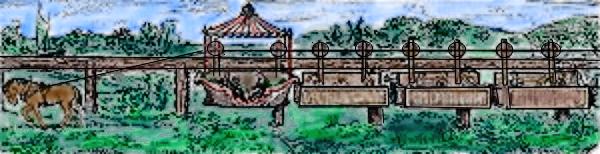
Henry Robinson Palmer was an English civil engineer who invented and patented the first monorail transport (British patent 1821, No. 4,618). From 1816, for ten years, he was an assistant to the Scottish engineer Thomas Telford. In the early 1820's, monorails were built on his design in Deptford and Cheshunt. Wooden posts supported a single wooden beam surfaced with iron to carry the double-flanged wheels of a frame carrying pannier style wagons that hung on each side of the rail. A string of such wagons was hauled using a rope by a single horse on the ground. Palmer wrote a short book (1823) on his monorail ideas, in which he considered how friction could be reduced.«
Henry Robinson Palmer was an English civil engineer who invented and patented the first monorail transport (British patent 1821, No. 4,618). From 1816, for ten years, he was an assistant to the Scottish engineer Thomas Telford. In the early 1820's, monorails were built on his design in Deptford and Cheshunt. Wooden posts supported a single wooden beam surfaced with iron to carry the double-flanged wheels of a frame carrying pannier style wagons that hung on each side of the rail. A string of such wagons was hauled using a rope by a single horse on the ground. Palmer wrote a short book (1823) on his monorail ideas, in which he considered how friction could be reduced.«
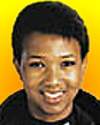
In 1992, the crew of the Shuttle Endeavour included the first African-American woman in space, Mae C. Jemison, as a Science Mission Specialist aboard Endeavour. During the eight-day mission, she conducted space-sickness experiments and conducted research on bone loss in zero gravity. The first married couple, Mark Lee and Jan David, together with the first Japanese citizen on a U.S. space mission were also members of the same crew.
In 1970, Luna 16 was launched, another in a series of unmanned Soviet lunar probes, which was the first unmanned spacecraft to carry lunar soil samples back to Earth. It was followed by Luna 17, launched 10 Nov 1970, which soft-landed a robot exploration vehicle.
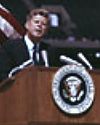
In 1962, President John F. Kennedy delivered perhaps the most famous space speech ever given. Speaking at the stadium of Rice University, the text of his speech included these memorable lines, "We choose to go to the moon. We choose to go to the moon in this decade and do the other things, not because they are easy, but because they are hard, because that goal will serve to organize and measure the best of our energies and skills, because that challenge is one that we are willing to accept, one we are unwilling to postpone, and one which we intend to win, and the others, too. It is for these reasons that I regard the decision last year to shift our efforts in space from low to high gear as among the most important decisions that will be made during my incumbency in the office of the Presidency."«
Webmaster's note: If you have never heard or read the speech in full, please click this link and do so now! Do it! Now!
Webmaster's note: If you have never heard or read the speech in full, please click this link and do so now! Do it! Now!
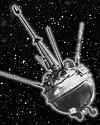
In 1959, Luna 2 was launched, one of a series of unmanned Soviet lunar probes, and 36 hours later on 14 Sep 1959 would become the first spacecraft to strike the Moon. It was followed by Luna 3, launched the following month, on 4 Oct 1959, which made the first circumnavigation of the Moon and returned the first photographs of its far side. Earlier, the Luna 1 mission had blasted off 2 Jan 1959. That spacecraft failed to impact the Moon as intended, due to a guidance system failure, but it became the first manmade object in solar orbit.
Deep Space Chronicle: A Chronology of Deep Space and Planetary Probes 1958-2000. Monograph in Aerospace History, No. 24, by Asif A. Siddiqi. - book suggestion.
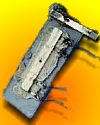
In 1958, Jack Kilby demonstrated his invention of a miniaturized electronic circuit to his supervisor at Texas Instruments, now recognised as the first integrated circuit to be built and operated. On 6 Feb 1959, he applied for a patent, which was eventually issued on 23 Jun 1964.[Image: Texas Instrument's first integrated circuit.]
In 1956, construction was completed on the first U.S. commercial coal pipeline. This coal slurry pipeline ran 108 miles from a coal mine (Georgetown Preparation Plant of the Hanna Coal Company, near Cadiz, Ohio) to a power station (Cleveland Illuminating Company, in Eastlake, Ohio). The 10¾- in diam. pipeline could transport over a million tons of coal per year. Mixed with an equal amount of water, it delivered 150 tons of coal per hour. It was placed in operation on 4 Jun 1957. After processing to remove the water, the coal slurry was ready for burning as fuel for the power plant. Slurry pipelines now exist transporting over twenty types of minerals, including iron-ore concentrate, copper ore, phosphate rock concentrate and mineral sands. Pipeline transportation costs less than by railroad.«
In 1940, five schoolboys exploring the Grotte de Lascaux, France, discovered an astonishing display of prehistoric art depicting animals in a variety of styles, which dated back to 15,000 BC.
In 1915, a prisoner developed a rash associated with the disease pellegra. He was part of a study designed by Dr. Joseph Goldberger to provide a protein-deficient diet for several months to 12 volunteer inmates of the state prison at Jackson, Mississippi. For Goldberger, it meant a proof that the cause of the deadly disease pellegra was a result of poor diet, and that it was not contagious. For the inmates, it earned a pardon.
In 1793, due to an outbreak of yellow fever in Philadelphia, the first quarantine in the U.S. on a city was declared when the governor of Maryland, Thomas Sim, stopped commerce from Philadelphia to Maryland.





