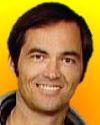
1979
Born 11 Sep 1937. quotes
U.S. astronaut who piloted the first orbital test flight of the U.S. space shuttle program (STS-1, 12-14 Apr 1981). He was the commander of three additional shuttle flights. He first joined the U.S. Air Force Manned Orbiting Laboratory program in Oct 1966, and became a NASA astronaut in Sep 1969. Since then, Crippen has been part of the astronaut support crew for the Skylab 2, 3, and 4 missions, and for the Apollo-Soyuz Test Project mission. With NASA, he was Deputy Director (Jul 1987 - Dec 1989) then Director (Jan 1990-Jan 1992) of Shuttle Operations at the John F. Kennedy Space Center. He became the director of Kennedy Space Center (Jan 1992 - Jan 1995), during which time the center carried out 22 shuttle missions.«
U.S. astronaut who piloted the first orbital test flight of the U.S. space shuttle program (STS-1, 12-14 Apr 1981). He was the commander of three additional shuttle flights. He first joined the U.S. Air Force Manned Orbiting Laboratory program in Oct 1966, and became a NASA astronaut in Sep 1969. Since then, Crippen has been part of the astronaut support crew for the Skylab 2, 3, and 4 missions, and for the Apollo-Soyuz Test Project mission. With NASA, he was Deputy Director (Jul 1987 - Dec 1989) then Director (Jan 1990-Jan 1992) of Shuttle Operations at the John F. Kennedy Space Center. He became the director of Kennedy Space Center (Jan 1992 - Jan 1995), during which time the center carried out 22 shuttle missions.«
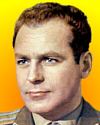
Born 11 Sep 1935; died 20 Sep 2000 at age 65. quotes
Russian cosmonaut who was pilot of the Vostok 2 spacecraft on its 6-7 Aug 1961 orbital flight of 25 hrs 18 min. His spacecraft carried life-support equipment, radio and television for monitoring the condition of the cosmonaut, tape recorder, telemetry system, biological experiments, and automatic and manual control equipment. After Yuri Gagarin, Titov was the second human to orbit the Earth but was the first person to orbit more than once, the first to spend more than a day in space, and the first to sleep in space. He died holding the record as the youngest person in space (age 25). Titov was selected for cosmonaut training in 1960. After his spaceflight, Titov held senior positions in the Soviet space programme until his retirement in 1992.«
Russian cosmonaut who was pilot of the Vostok 2 spacecraft on its 6-7 Aug 1961 orbital flight of 25 hrs 18 min. His spacecraft carried life-support equipment, radio and television for monitoring the condition of the cosmonaut, tape recorder, telemetry system, biological experiments, and automatic and manual control equipment. After Yuri Gagarin, Titov was the second human to orbit the Earth but was the first person to orbit more than once, the first to spend more than a day in space, and the first to sleep in space. He died holding the record as the youngest person in space (age 25). Titov was selected for cosmonaut training in 1960. After his spaceflight, Titov held senior positions in the Soviet space programme until his retirement in 1992.«
I am Eagle, by Gherman S. Titov. - book suggestion.
Born 11 Sep 1904; died 19 Jul 1999 at age 94.
Austrian-born American physician who showed that leukemia could be caused by a virus. After his first discovery in 1951 of an RNA leukemia virus in mice, the subsequent studies by Gross revealed much about the mode of action of his RNA virus, including the vertical transmission of virus from one generation to the next, the activation of viruses by radiation, and the role of immunity in protection against the agent. His work led other researchers to study the role of viruses in cancer.«
Austrian-born American physician who showed that leukemia could be caused by a virus. After his first discovery in 1951 of an RNA leukemia virus in mice, the subsequent studies by Gross revealed much about the mode of action of his RNA virus, including the vertical transmission of virus from one generation to the next, the activation of viruses by radiation, and the role of immunity in protection against the agent. His work led other researchers to study the role of viruses in cancer.«
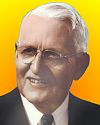
Born 11 Sep 1884; died 23 Jul 1981 at age 96.
American acoustical engineer who was the first to demonstrate stereophonic sound (1934). He was a trail blazing investigator of the nature of speech and hearing, noted for his contributions in acoustics, electrical engineering, speech, medicine, music, atomic physics, sound pictures, and education. He guided the development of the Western Electric Hearing Aid, the first such device to use vacuum tubes. He developed a group survey method using recorded sound of decreasing volume which has wide acceptance in schools throughout the nation.
American acoustical engineer who was the first to demonstrate stereophonic sound (1934). He was a trail blazing investigator of the nature of speech and hearing, noted for his contributions in acoustics, electrical engineering, speech, medicine, music, atomic physics, sound pictures, and education. He guided the development of the Western Electric Hearing Aid, the first such device to use vacuum tubes. He developed a group survey method using recorded sound of decreasing volume which has wide acceptance in schools throughout the nation.
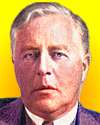
c. 1929
Born 11 Sep 1877; died 16 Sep 1946 at age 69. quotes
Sir James Hopwood Jeans was an English physicist, astronomer, and mathematician who was the first to propose that matter is continuously created throughout the universe. He made other innovations in astronomical theory but is perhaps best known as a writer of popular books about astronomy. Died in Dorking, Surrey.
Sir James Hopwood Jeans was an English physicist, astronomer, and mathematician who was the first to propose that matter is continuously created throughout the universe. He made other innovations in astronomical theory but is perhaps best known as a writer of popular books about astronomy. Died in Dorking, Surrey.
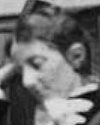
c.1889
Born 11 Sep 1847; died 20 Jan 1921 at age 73. quotes
American astronomer who trained with Maria Mitchell and succeeded her as professor and director of the Vassar College Observatory. As Mitchell had before her, Whitney championed science education the advancement of professional opportunities for women. She developed the astronomy department. Four years before her 1910 retirement, there were 160 students and eight different astronomy courses, including some of the first courses anywhere on astrophysics and on variable stars. During her tenure as director, the Observatory staff published 102 papers in major astronomical journals reporting their work on comets, asteroids, and variable stars. From 1896, photographic plates were used to study and measure star clusters.«[Image: Whitney leaning on ladder under the equatorial telescope in the Observatory dome of Vassar College, circa 1889]
American astronomer who trained with Maria Mitchell and succeeded her as professor and director of the Vassar College Observatory. As Mitchell had before her, Whitney championed science education the advancement of professional opportunities for women. She developed the astronomy department. Four years before her 1910 retirement, there were 160 students and eight different astronomy courses, including some of the first courses anywhere on astrophysics and on variable stars. During her tenure as director, the Observatory staff published 102 papers in major astronomical journals reporting their work on comets, asteroids, and variable stars. From 1896, photographic plates were used to study and measure star clusters.«[Image: Whitney leaning on ladder under the equatorial telescope in the Observatory dome of Vassar College, circa 1889]
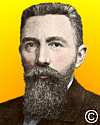
Born 11 Sep 1845; died 28 Mar 1903 at age 57.
Jean-Maurice-Émile Baudot was a French engineer who received a patent on a telegraph code (1874) that by the mid-20th century had superceded Morse Code as the most commonly used telegraphic alphabet. He dedicated his life to the development of a fast-printing telegraph. After successively improved versions, he demonstrated at the International Exhibition of Electronics a perfected model which could transmit six simultaneous messages. The Baudot system was used throughout the world for terrestrial and undersea links for over 70 years. The baud unit of data transmission rate is named after him.
Jean-Maurice-Émile Baudot was a French engineer who received a patent on a telegraph code (1874) that by the mid-20th century had superceded Morse Code as the most commonly used telegraphic alphabet. He dedicated his life to the development of a fast-printing telegraph. After successively improved versions, he demonstrated at the International Exhibition of Electronics a perfected model which could transmit six simultaneous messages. The Baudot system was used throughout the world for terrestrial and undersea links for over 70 years. The baud unit of data transmission rate is named after him.
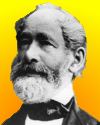
Born 11 Sep 1816; died 3 Dec 1888 at age 72.
German industrialist who gained a worldwide reputation as a manufacturer of fine optical instruments. After qualifying in medicine, he began the manufacture of optical instruments, which he knew would be in increasing demand as science and medicine advanced. He spent seven years in the workshops of various European instrument-makers before he founded an optical factory at Jena (1846). He quickly establishing a reputation for products of the highest quality. Twenty years later he went into partnership with Ernst Abbe (1840-1905), who was his advisor on theoretical advances in optics. Abbe further enhanced the reputation of the company and became its sole owner upon the death of Zeiss. Abbe enhanced the reputation of the company and established invested in the workers.
German industrialist who gained a worldwide reputation as a manufacturer of fine optical instruments. After qualifying in medicine, he began the manufacture of optical instruments, which he knew would be in increasing demand as science and medicine advanced. He spent seven years in the workshops of various European instrument-makers before he founded an optical factory at Jena (1846). He quickly establishing a reputation for products of the highest quality. Twenty years later he went into partnership with Ernst Abbe (1840-1905), who was his advisor on theoretical advances in optics. Abbe further enhanced the reputation of the company and became its sole owner upon the death of Zeiss. Abbe enhanced the reputation of the company and established invested in the workers.

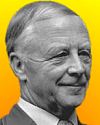
Died 11 Sep 2004 at age 80 (born 2 Jun 1924).
English nuclear scientist who volunteered to ingest a minute amount of plutonium as part of European research to track plutonium in the body's metabolism. He was one of 12 volunteers aged 26 to 67 who were injected with plutonium between 1992-98. Reuters reported on 8 Aug 1999 that Voice, age 73, had volunteered again to inhale plutonium for further study 18 months earlier. The miniscule dose was a soluble compound of Pu-237, which he regarded as having little risk, and he remained in good health. Sensitive detectors measured how much and where plutonium was retained, in which organs, and how quickly expelled. He was one of the first western scientists to visit Chernobyl after the explosion (1986). He died of unrelated natural causes.«
English nuclear scientist who volunteered to ingest a minute amount of plutonium as part of European research to track plutonium in the body's metabolism. He was one of 12 volunteers aged 26 to 67 who were injected with plutonium between 1992-98. Reuters reported on 8 Aug 1999 that Voice, age 73, had volunteered again to inhale plutonium for further study 18 months earlier. The miniscule dose was a soluble compound of Pu-237, which he regarded as having little risk, and he remained in good health. Sensitive detectors measured how much and where plutonium was retained, in which organs, and how quickly expelled. He was one of the first western scientists to visit Chernobyl after the explosion (1986). He died of unrelated natural causes.«
Died 11 Sep 2001 at age 54 (born 22 Jun 1947).
William Edward Caswell was an American physicist who made early application (mid 1970s) of the power of computer calculations to the synthesis of gauge symmetry and renormalization group ideas. His techniques still apply in the interpretation of many experiments in high-energy physics. His work led to methods for multiloop quantum chromodynamics calculations. Caswell made many other valuable and influential contributions used as tools for calculations in particle physics. In 1983, he joined the Naval Surface Weapons Center in Silver Spring, Maryland. By 1985, he was leading a team of 100 scientists on a major classified defense technology project. He died aboard the airplane crashed by 9/11 terrorists into the Pentagon.«
William Edward Caswell was an American physicist who made early application (mid 1970s) of the power of computer calculations to the synthesis of gauge symmetry and renormalization group ideas. His techniques still apply in the interpretation of many experiments in high-energy physics. His work led to methods for multiloop quantum chromodynamics calculations. Caswell made many other valuable and influential contributions used as tools for calculations in particle physics. In 1983, he joined the Naval Surface Weapons Center in Silver Spring, Maryland. By 1985, he was leading a team of 100 scientists on a major classified defense technology project. He died aboard the airplane crashed by 9/11 terrorists into the Pentagon.«
Died 11 Sep 1981 at age 69 (born 23 May 1912).
American anthropologist who served as chairman (1956-57) of the anthropology department and acting director of African studies (1953, 1957) at Northwestern University, Evanston, Ill.
American anthropologist who served as chairman (1956-57) of the anthropology department and acting director of African studies (1953, 1957) at Northwestern University, Evanston, Ill.
Died 11 Sep 1959 at age 85 (born 19 Jun 1874).
German-American inventor, engineer and manufacturer who is credited with designing the first concrete mixing machine in 1905. His U.S. patent issued 19 Feb 1924 (No. 1,484,028), shows the familiar design long used on construction sites. He formed the Jaeger Machine Company, which became the world's largest manufacturer of concrete mixers (1906-1992). At age 18, he emigrated from Germany and settled in St. Louis, MO, then moved in 1900 to Pittsburgh, PA, where he invented and co-patented a machine to maken woven wire fencing. In 1902, he moved to Columbus, OH, and designed the Hayden Concrete Block Machine. He thereafter took out various concrete mixer patents, including a concrete mixer truck (1928), which delivered ready-mixed product to construction sites and contributed to extensive road building in the U.S.«
German-American inventor, engineer and manufacturer who is credited with designing the first concrete mixing machine in 1905. His U.S. patent issued 19 Feb 1924 (No. 1,484,028), shows the familiar design long used on construction sites. He formed the Jaeger Machine Company, which became the world's largest manufacturer of concrete mixers (1906-1992). At age 18, he emigrated from Germany and settled in St. Louis, MO, then moved in 1900 to Pittsburgh, PA, where he invented and co-patented a machine to maken woven wire fencing. In 1902, he moved to Columbus, OH, and designed the Hayden Concrete Block Machine. He thereafter took out various concrete mixer patents, including a concrete mixer truck (1928), which delivered ready-mixed product to construction sites and contributed to extensive road building in the U.S.«
Died 11 Sep 1956 at age 69 (born 21 Jun 1887).
Canadian geologist who was one of the most important pioneers in the field of experimental petrology (i.e., the experimental study of the origin and chemical composition of rocks). He was widely recognized for his phase-equilibrium studies of silicate systems as they relate to the origin of igneous rocks. Bowen's legacy, in addition to the many accurate and precise phase diagrams of the end members of common rock-forming minerals, was the construction of an experimental and theoretical basis for the interpretation and documentation of the diversity of igneous and metamorphic rocks.
Canadian geologist who was one of the most important pioneers in the field of experimental petrology (i.e., the experimental study of the origin and chemical composition of rocks). He was widely recognized for his phase-equilibrium studies of silicate systems as they relate to the origin of igneous rocks. Bowen's legacy, in addition to the many accurate and precise phase diagrams of the end members of common rock-forming minerals, was the construction of an experimental and theoretical basis for the interpretation and documentation of the diversity of igneous and metamorphic rocks.
Died 11 Sep 1922 at age 91 (born 15 Sep 1830).
R(obert) H(enry) Coddrington was an English Anglican priest and anthropologist who made the first systematic study of the Melanesian society and culture. The reports of his observation remain classics in ethnography.
R(obert) H(enry) Coddrington was an English Anglican priest and anthropologist who made the first systematic study of the Melanesian society and culture. The reports of his observation remain classics in ethnography.
Died 11 Sep 1915 at age 72 (born 3 Feb 1843).
U.S.-born Canadian railway official who directed the construction of Canada's first transcontinental railroad.
U.S.-born Canadian railway official who directed the construction of Canada's first transcontinental railroad.
Died 11 Sep 1851 at age 57 (born 5 Jul 1794).
American physician and inventor of the graham cracker. Perhaps because of concern for his own health, after a long illness, he became interested in human physiology and nutrition, giving lectures in the eastern states, and developing what came to be known as the Graham System, a vegetarian dietetic theory. He advocated use of whole wheat for bread, hard mattresses, open windows, fresh fruits and vegetables, pure drinking water, and cheerfulness at meals Graham's most ambitious work, Lectures on the Science of Human Life, published in 1839, became a leading text on health reform, but his popularity waned after 1840 and he died in 1851.
American physician and inventor of the graham cracker. Perhaps because of concern for his own health, after a long illness, he became interested in human physiology and nutrition, giving lectures in the eastern states, and developing what came to be known as the Graham System, a vegetarian dietetic theory. He advocated use of whole wheat for bread, hard mattresses, open windows, fresh fruits and vegetables, pure drinking water, and cheerfulness at meals Graham's most ambitious work, Lectures on the Science of Human Life, published in 1839, became a leading text on health reform, but his popularity waned after 1840 and he died in 1851.

Died 11 Sep 1843 at age 57 (born 24 Jul 1786).
Joseph Nicolas Nicollet was a French mathematician, explorer, and cartographer with an interest in astronomy. He was born in France, but financially ruined by the 1830 Revolution, he left for the U.S. in 1831. He made a private survey of the Mississippi region (1836-7), the results of which he presented in Washington. In 1838, he led a surveying expedition for the U.S. government party mapping out the lakes and waterways of northcentral Minnesota. He stressed to map publishers the importance of elevation marks on published maps. His maps were considered among the most accurate and useful until the surveyors for the great logging companies arrived in Minnesota's vast pine forests.
Joseph Nicolas Nicollet was a French mathematician, explorer, and cartographer with an interest in astronomy. He was born in France, but financially ruined by the 1830 Revolution, he left for the U.S. in 1831. He made a private survey of the Mississippi region (1836-7), the results of which he presented in Washington. In 1838, he led a surveying expedition for the U.S. government party mapping out the lakes and waterways of northcentral Minnesota. He stressed to map publishers the importance of elevation marks on published maps. His maps were considered among the most accurate and useful until the surveyors for the great logging companies arrived in Minnesota's vast pine forests.
Died 11 Sep 1808 at age 76 (born 6 Apr 1732).
José Celestino Bruno Mutis was a Spanish botanist and astronomer with medical training, who left Spain in 1760 to live in South America where he engaged in botanical exploration. He pursued how the plants wood, dyes, waxes, rubbers available there could provide economic and agricultural benefits for Spain. He also modernized mining methods, and examined the medical properties of quinine. Over the years, as government funding improved, he supervised a staff of artists, zoologists, and botanists, to produce thousands of drawings, maintain a botanical garden, make a collection of bird and animal skins, and assembled an herbarium containing more than 24,000 plants.«
José Celestino Bruno Mutis was a Spanish botanist and astronomer with medical training, who left Spain in 1760 to live in South America where he engaged in botanical exploration. He pursued how the plants wood, dyes, waxes, rubbers available there could provide economic and agricultural benefits for Spain. He also modernized mining methods, and examined the medical properties of quinine. Over the years, as government funding improved, he supervised a staff of artists, zoologists, and botanists, to produce thousands of drawings, maintain a botanical garden, make a collection of bird and animal skins, and assembled an herbarium containing more than 24,000 plants.«
Died 11 Sep 1768 at age 80 (born 4 Apr 1688).
French astronomer who proposed that the series of coloured rings sometimes observed around the Sun is caused by diffraction of sunlight through water droplets in a cloud. He also worked to find the distance of the Sun from the Earth by observing transits of Venus and Mercury across the face of the Sun.
French astronomer who proposed that the series of coloured rings sometimes observed around the Sun is caused by diffraction of sunlight through water droplets in a cloud. He also worked to find the distance of the Sun from the Earth by observing transits of Venus and Mercury across the face of the Sun.
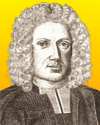
Died 11 Sep 1721 at age 56 (born 17 Feb 1665).
German botanist who demonstrated the existence of sexes in plants, which made plants available for studies of genetics and heredity. He demonstrated experimentally the sexuality of plants in Epistolae de Sexu Plantarum (Letter on the Sexuality of Plants, 1694) in which he identified the stamen and pistil as the male and female organs, and the pollen as the fertilizing agent.
German botanist who demonstrated the existence of sexes in plants, which made plants available for studies of genetics and heredity. He demonstrated experimentally the sexuality of plants in Epistolae de Sexu Plantarum (Letter on the Sexuality of Plants, 1694) in which he identified the stamen and pistil as the male and female organs, and the pollen as the fertilizing agent.

In 1999, the death of an 83-year-old man stung by a swarm of Africanized “killer” bees marked the first fatality by that cause in the state of California (USA). The victim, Virgil Foster, was a bee-keeper, who was mowing his lawn in Los Angeles County on 31 Aug 1999. He was stung at least 50 times by the highly aggressive bees, receiving a high dose of toxins. He was not breathing when paramedics arrived, and then went into cardiac arrest. For two weeks he was kept alive on a respirator. Foster's three hives had been taken over by wild Africanized honeybees. Originally hybridized in Brazil in the 1950s, the killer bees had migrated north through Mexico. They were first seen in the U.S. in Texas on 15 Oct 1990. Before spreading into California, killer bee attacks had already caused fseveral deaths in other U.S. states.«
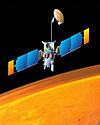
In 1997, the Mars Global Surveyor, launched on 7 Nov 1996, went into an elliptical orbit around Mars. To drop into a lower orbit the original mission plan was to use a braking effect by dipping into the upper Martian atmosphere. The lower orbit was a better position for mapping purposes. However, the aerobraking method originally planned was suspended for several weeks to give engineers time to develop more gentle manoeuvers to protect the craft when a solar array failed to deploy correctly, and was flexing excessively. It was to spend two years mapping the surface of Mars.
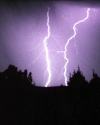
In 1997, lightning killed 19 persons and injured 6 at Andhra Pradesh, India.
Out of the Blue: A History of Lightning: Science, Superstition, and Amazing Stories of Survival, by John Friedman. - book suggestion.
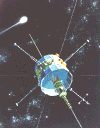
In 1985, the International Cometary Explorer (ICE) flew relatively unscathed through the gas tail of comet P/Giacobini-Zinner, at a speed of 21 km/sec at its closed approach of some 7,800-km downstream from the nucleus. The spaceraft found a region of interacting cometary and solar wind ions, and encountered a comet plasma tail about 25,000 km wide. Water and carbon monoxide ions were also identified, which confirmed the “dirty snowball” theory proposed by Fred Whipple (1950). It had been launched on 12 Aug 1978, originally named ISEE-3 (International Sun-Earth Explorer), then renamed ICE when, after completing its original mission in 1982, it was gravitationally manuvuered to intercept the comet.
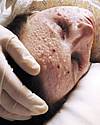
In 1978, the last recorded smallpox death was British medical photographer, Janet Parker. To complete the eradication of the disease, all stocks of smallpox virus at research labs were destroyed. One exception to the total elimination of the virus was to keep samples at two World Heath Organization laboratories with Level 4 biosafety security. Janet Parker worked at the Birmingham Medical School Anatomy Department located on the floor above a laboratory doing research using smallpox virus. One conjecture was some virus somehow escaped from the lab and travelled via a service duct. She died after a month of illness. Her body was quarantined until cremated.«
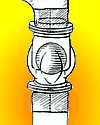
In 1952, the first artificial aortic valve was successfully fitted in the heart of a 30-yr-old patient with severe aortic incompetence. It was made by Dr. Charles A. Hufnagel of the Georgetown University Medical Center in Washington, D.C. The valve used a caged ball. It was made of a tube of Flexiglas and contained a 3/4" diam. silicone rubber ball float that rose and slipped into one of three sockets in the side of the valve sleeve on the heart’s upbeat, when blood was forced into the aorta. The critical weight of the ball was chosen to respond to minimal changes in aortic pressure. The caged-ball priciple was devised by J.B. Williams in his bottle-stopper patent (1858, U.S. No. 19323).Date: Hufnagel, C.A. and Harvey, W. P. (1953). The surgical correction of aortic
insufficiency. Bull Georgetown Univ. Med. Cent., 6. 60
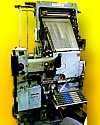
In 1950, the Intertype Fotosetter Photographic Line Composing Machine, was first put on public display at the Sixth Educational Graphic Arts Exposition, in Chicago, Illinois. This U.S.-made typesetter was notable because of its new technology. Instead of casting slugs of metal type, it produced justified composition in galley form directly on film or photographic paper in one operation. This composition was ready to be reproduced on offset-lithographic, gravure or letterpress plates, using the standard platemaking method. It was manufactured by the Intertype Corp. of Brooklyn, N.Y. The first installation (1949) was at the plant of Stecher-Traung Lithograph Corp.«
In 1946, the first mobile long-distance car-to-car telephone conversation took place between Houston, Texas and St. Louis, Missouri.

In 1940, the first demonstration of remote computing took place when a teletype terminal at the American Mathematical Association Meeting in Dartmouth, New Hampshire was used to communicate over phone lines with an attendant at the keyboard for input to George Stibitz's Complex Number Calculator in New York. The machine had been operational since 1 Aug 1940. In 1940, George Stibitz's Complex Number Calculator was functional. He was a research mathematician at Bell Laboratories, who worked on its construction from Apr 1939, assisted by Samuel Williams. Later known as Bell Labs Model I Relay Computer, it used telephone relays and coded decimal numbers as groups of four binary digits (bits) each. It has been called the first electromechanical computer for routine use.«[Image: An attendant sends messages to the Model I relay computer.]
In 1928, General Electric made the first simulcast in Schenectady, New York, broadcasting a play over radio and TV at same time, The Queen's Messenger.
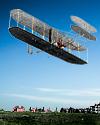
In 1908, in the U.S., Orville Wright established a new flight record of 70 minutes aloft. On 20 Aug 1908, he had taken his 1908 Flyer to Fort Myer, Virginia, for demonstrations to the U.S. Army. After several days of assembling and testing, he made the first public flight there on 3 Sep 1908, going one and one-half times around the parade ground—about one mile. Thereafter, Wright made public flights almost daily, and as word spread, crowds of people came to watch. On 8 Sep he flew for 57½ min. which he beat on 10 Sep with 66 min.in the air. On 11 Sep, his 70 minute flight encircled the field 57½ times, and included two figure eights. The next day, 12 Sep, he broke his record again: 74 min.«
In 1883, the first U.S. patent for a mail chute was issued to J.G. Cutler of Rochester, N.Y. (No. 284,951).
In 1841, the first U.S. patent for collapsible metal tubes was issued to an artist, John Rand (No. 2,252). His purpose was as a "mode of preserving paints, and other fluids, by confining them in close mettalic vessels so constructed as to collapse with slight pressure, and thus force out the paint or fluid confined therein through proper openings for that purpose." The tubes, molded of lead and used to hold oil colours, were provided with caps to keep them airtight. The idea was later reinvented in 1892 for the commercial packaging of tootpaste. The first collapsible polythene tubes were produced in the U.S. for skin-tanning lotion in 1953.
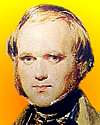
In 1831, Charles Darwin and Captain Robert Fitzroy travelled from London to Plymouth to inspect the Beagle. This was Darwin's first sight of the ship on which he would sail on a voyage of discovery leading to his famous theory of evolution.
more
From So Simple a Beginning: Darwin's Four Great Books, by Charles Darwin, Edward O. Wilson. - book suggestion.
In 1822, it was announced by the College of Cardinals that henceforth “the printing and publication of works treating of the motion of the earth and the stability of the sun, in accordance with the opinion of modern astronomers, is permitted.” When two weeks pope Pius VII ratified the Cardinals' decree, the Catholic Church finally officially accepted the Copernican principle that on 22 Jun 1633 Italian scientist Galileo had been imprisoned for championing. It was not until 1835 that the Vatican removed Galileo's Dialogue Concerning the Two Chief World Systems from its list of banned books. Finally 31 Oct 1992, the Catholic Church admitted that Galileo had been correct.«




