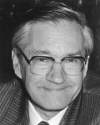
Born 14 Aug 1933.
Swiss researcher and teacher who was awarded the 1991 Nobel Prize for Chemistry “for his contributions to the development of the methodology of high resolution nuclear magnetic resonance (NMR) spectroscopy.” As NMR spectroscopy developed into on of the most important instrumental measuring technique within chemistry, Ernst continued to improve both the sensitivity and the resolution of the instrument. NMR spectroscopy is now applied to determination of molecular structure in solution, to study interactions between different molecules (ex. enzyme/substrate, soap/water), to investigate molecular motion, to get information on the rate of chemical reactions and many other problems in chemistry, physics, biology and medicine.«
Swiss researcher and teacher who was awarded the 1991 Nobel Prize for Chemistry “for his contributions to the development of the methodology of high resolution nuclear magnetic resonance (NMR) spectroscopy.” As NMR spectroscopy developed into on of the most important instrumental measuring technique within chemistry, Ernst continued to improve both the sensitivity and the resolution of the instrument. NMR spectroscopy is now applied to determination of molecular structure in solution, to study interactions between different molecules (ex. enzyme/substrate, soap/water), to investigate molecular motion, to get information on the rate of chemical reactions and many other problems in chemistry, physics, biology and medicine.«
Principles of Nuclear Magnetic Resonance..., by Richard R. Ernst, et al. - book suggestion.
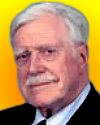
Born 14 Aug 1919; died 12 Jun 2010 at age 90. quotes
British physiologist who did pioneering work on the mechanisms underlying the conduction of the action potential along nerve fibres. Early in his career, he worked with the giant nerve fibers of squid, which would help discover how nerve impulses are transmitted in all animals. In later resarch, he determined how electric eels project electric fields outside their bodies. Keynes was the first to use radioactive sodium and potassium tracer atoms to follow the movements of these atoms when an impulse is transmitted along a nerve fibre. He has written extensively about the life and work of his great-grandfather, Charles Darwin, beginning with The Beagle Record (1979).«
British physiologist who did pioneering work on the mechanisms underlying the conduction of the action potential along nerve fibres. Early in his career, he worked with the giant nerve fibers of squid, which would help discover how nerve impulses are transmitted in all animals. In later resarch, he determined how electric eels project electric fields outside their bodies. Keynes was the first to use radioactive sodium and potassium tracer atoms to follow the movements of these atoms when an impulse is transmitted along a nerve fibre. He has written extensively about the life and work of his great-grandfather, Charles Darwin, beginning with The Beagle Record (1979).«
Nerve and Muscle, by Richard Darwin Keynes, David John Aidley. - book suggestion.
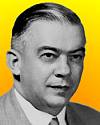
1936
Born 14 Aug 1887; died 16 May 1959 at age 71.
Edward Winslow Gifford was an American anthropologist and archaeologist who was self-taught in these fields. After high school, he became an assistant with the California Academy of Sciences, and on its expedition to the Galapagos Islands (1905-06) he observed and later described how the Pallid Tree Finch used a thorn or twig pry insects out from tree bark. He became assistant curator (1912) then curator (1925) at the University of California Museum of Anthropology. He made ethnographical field studies of native culture in California, Tonga, Fiji, New Caledonia and Yap. He succeeded Alfred L. Kroeber as the museum director in 1947. Gifford developed the museum into a major U.S. collection, and wrote over 100 treatises related to ethnology, folklore and museum collections.«
Edward Winslow Gifford was an American anthropologist and archaeologist who was self-taught in these fields. After high school, he became an assistant with the California Academy of Sciences, and on its expedition to the Galapagos Islands (1905-06) he observed and later described how the Pallid Tree Finch used a thorn or twig pry insects out from tree bark. He became assistant curator (1912) then curator (1925) at the University of California Museum of Anthropology. He made ethnographical field studies of native culture in California, Tonga, Fiji, New Caledonia and Yap. He succeeded Alfred L. Kroeber as the museum director in 1947. Gifford developed the museum into a major U.S. collection, and wrote over 100 treatises related to ethnology, folklore and museum collections.«
California Indian Nights Entertainment, by Edward Gifford, Gwendoline Gifford. - book suggestion.
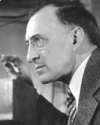
Born 14 Aug 1886; died 11 Mar 1950 at age 63.
Canadian-American physicist who in 1918 built the first mass spectrometer (based on the invention of Francis W. Aston) and discovered isotope uranium-235 (1935). The mass spectrometer is an instrument that uses electric and magnetic fields to separate and measure a sample's atoms according to their mass and relative quantity. In 1935, he discovered that naturally occurring uranium, though mostly uranium-238, contained 0.7% U-235 (later used as the primary fuel in atomic bombs and reactors after Niels Bohr predicted it could be used to produce a chain reaction releasing huge amounts of nuclear fission energy). During WW II, Dempster worked with the secret Manhattan Project that developed the world's first nuclear weapons.«
Canadian-American physicist who in 1918 built the first mass spectrometer (based on the invention of Francis W. Aston) and discovered isotope uranium-235 (1935). The mass spectrometer is an instrument that uses electric and magnetic fields to separate and measure a sample's atoms according to their mass and relative quantity. In 1935, he discovered that naturally occurring uranium, though mostly uranium-238, contained 0.7% U-235 (later used as the primary fuel in atomic bombs and reactors after Niels Bohr predicted it could be used to produce a chain reaction releasing huge amounts of nuclear fission energy). During WW II, Dempster worked with the secret Manhattan Project that developed the world's first nuclear weapons.«
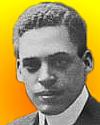
Born 14 Aug 1883; died 27 Oct 1941 at age 58.
Black-American embryologist who pioneered understanding of cell division, researching fertilized egg cells, experimental parthenogenesis, hydration, cell division, dehydration in living cells, and the effect of ultra violet rays on egg cells. In 1915, he was awarded the first Spingarn Medal, the highest honor given by the NAACP. His research during summers 1909-30, at the Marine Biological Laboratory (MBL), Woods Hole, Mass, included thousands of experiments on marine mammal cell fertilization. Outside MBL, he experienced discrimination. Seeking more opportunities, he spent most of the 1930s in various European countries. WW II hostilities caused him to return to the U.S. in late 1940, but he died of pancreatic cancer the next year.«
Black-American embryologist who pioneered understanding of cell division, researching fertilized egg cells, experimental parthenogenesis, hydration, cell division, dehydration in living cells, and the effect of ultra violet rays on egg cells. In 1915, he was awarded the first Spingarn Medal, the highest honor given by the NAACP. His research during summers 1909-30, at the Marine Biological Laboratory (MBL), Woods Hole, Mass, included thousands of experiments on marine mammal cell fertilization. Outside MBL, he experienced discrimination. Seeking more opportunities, he spent most of the 1930s in various European countries. WW II hostilities caused him to return to the U.S. in late 1940, but he died of pancreatic cancer the next year.«
Black Apollo of Science: The Life of Ernest Everett Just, by Kenneth R. Manning. - book suggestion.
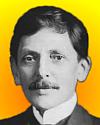
Born 14 Aug 1871; died 24 Apr 1960 at age 88. quotes
German-American zoologist who was an authority on molluscs, but had broad interests in natural history including plants and birds. He began his career as assistant curator of marine invertebrates at the US National Museum, Washington, DC., but then worked until retirement for the Smithsonian Institution (1896-1942). He represented that organisation on numerous zoological expeditions. In 1902, he initiated a systematic, scientific bird banding program (credited as the first in North America since John James Audubon) by banding 23 Black-crowned Night-herons at Washington, DC. During WW I, he invented a gas detector for the Chemical Warfare Service in 1918. Bartsch organized the first Boy Scout troop in Washington.«
German-American zoologist who was an authority on molluscs, but had broad interests in natural history including plants and birds. He began his career as assistant curator of marine invertebrates at the US National Museum, Washington, DC., but then worked until retirement for the Smithsonian Institution (1896-1942). He represented that organisation on numerous zoological expeditions. In 1902, he initiated a systematic, scientific bird banding program (credited as the first in North America since John James Audubon) by banding 23 Black-crowned Night-herons at Washington, DC. During WW I, he invented a gas detector for the Chemical Warfare Service in 1918. Bartsch organized the first Boy Scout troop in Washington.«
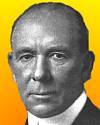
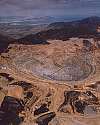
American mining engineer and metallurgist who founded the Utah Copper Company and with an economical method to process low-grade porphyry copper ores, below 2% copper. As electicity use expanded in the early 20th century, so demand for copper rose, and the need to exploit even low-grade ore. Such ore was obtained by open-pit mining then loaded by steam shovels into railroad cars and transported to concentrating mills. Jackling developed improved extraction/flotation processes to produce a higher-grade concentrate for smelting. By the time Jackling died, over 60% of the world's copper production took advantage of his low-grade ore processing methods. His Bingham Canyon Mine, now a huge pit, still produces copper.«[Image right: Bingham Mine]
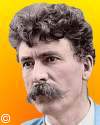
Born 14 Aug 1860; died 23 Oct 1946 at age 86. quotes
English-American naturalist, author and illustrator who applied these skills in over forty books on wild life, woodcraft, Indian lore and animal-fiction stories. As a capable naturalist, in his field observations he made detailed studies of morphology, physiology, distribution, and behaviour. His fame as author began with Wild Animals I Have Known (1898) - still in print a century later. Over a period of twenty years he delivered over three thousand lectures. Believing in promoting the values of ethology and ecology, he was chairman of the committee that established the Boy Scouts in the U.S. (1910). Seton envisioned the North American Indian as a model for the movement, but Baden-Powell's military structure was adopted as in Britain.« more
English-American naturalist, author and illustrator who applied these skills in over forty books on wild life, woodcraft, Indian lore and animal-fiction stories. As a capable naturalist, in his field observations he made detailed studies of morphology, physiology, distribution, and behaviour. His fame as author began with Wild Animals I Have Known (1898) - still in print a century later. Over a period of twenty years he delivered over three thousand lectures. Believing in promoting the values of ethology and ecology, he was chairman of the committee that established the Boy Scouts in the U.S. (1910). Seton envisioned the North American Indian as a model for the movement, but Baden-Powell's military structure was adopted as in Britain.« more
Ernest Thompson Seton: The Life and Legacy of an Artist and Conservationist, by David Witt. - book suggestion.
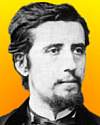
Born 14 Aug 1842; died 23 Feb 1917 at age 74. quotes
French mathematician whose work on partial differential equations introduced a new method of integration (the Darboux integral) and contributed to infinitesimal geometry. He wrote a paper in 1870 on differential equations of the second order in which he presented the Darboux integral. In 1873, Darboux wrote a paper on cyclides and between 1887-96 he produced four volumes on infinitesimal geometry, including a discussion of one surface rolling on another surface. In particular he studied the geometrical configuration generated by points and lines which are fixed on the rolling surface. He also studied the problem of finding the shortest path between two points on a surface.«
French mathematician whose work on partial differential equations introduced a new method of integration (the Darboux integral) and contributed to infinitesimal geometry. He wrote a paper in 1870 on differential equations of the second order in which he presented the Darboux integral. In 1873, Darboux wrote a paper on cyclides and between 1887-96 he produced four volumes on infinitesimal geometry, including a discussion of one surface rolling on another surface. In particular he studied the geometrical configuration generated by points and lines which are fixed on the rolling surface. He also studied the problem of finding the shortest path between two points on a surface.«
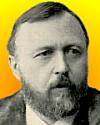
Born 14 Aug 1840; died 22 Dec 1902 at age 62. quotes
German neurologist and neuropsychiatrist (baron) who opened the field of sexual psychopathology. He was recognized as an authority on deviant sexual behavior and its medicolegal aspects. He was the first to write on the subject in his Psychopathia Sexualis (1886). It contained 51 case histories out of the hundreds of medical and court reports he had collected. Therein, he also coined the terms sadism and masochism derived from the names of the Marquis de Sade and Leopold von Sacher-Masoch (1836-1895). He also introduced therm “paranoia.” His work provided a foundation for the work of Sigmund Freud two decades later.«
German neurologist and neuropsychiatrist (baron) who opened the field of sexual psychopathology. He was recognized as an authority on deviant sexual behavior and its medicolegal aspects. He was the first to write on the subject in his Psychopathia Sexualis (1886). It contained 51 case histories out of the hundreds of medical and court reports he had collected. Therein, he also coined the terms sadism and masochism derived from the names of the Marquis de Sade and Leopold von Sacher-Masoch (1836-1895). He also introduced therm “paranoia.” His work provided a foundation for the work of Sigmund Freud two decades later.«
Stepchildren of Nature: Krafft-Ebing, Psychiatry, and the Making of Sexual Identity, by Harry Oosterhuis. - book suggestion.
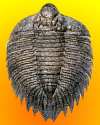
English physician and geologist who spent most of his career in Canada and the United States, studying and writing on the geology and uncovering many new species of ancient life represented in the palaeozoic fossils he found there. His first contribution to American geology appeared in a paper in Silliman's Journal in 1820. Bigsby's best-known works are Thesaurus Siluricus (1868), his “master-roll” of the flora and fauna of the Silurian period and Thesaurus Devonico-Carboniferus (1878). He wrote of his six years travelling throughout Canada in a two-volume book, The Shoe and Canoe (1850), describing the scenery and society he saw in “this romantic and fertile part of North America”.«Image right: Fossil of the trilobite Arctinurus boltoni classified by Bigsby in 1825.
The Shoe and Canoe, by John Jeremiah Bigsby. - book suggestion.
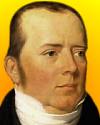
Born 14 Aug 1777; died 9 Mar 1851 at age 73. quotes
Hans Christian Ørsted was a Danish physicist and chemist whose discovery (1820) that an electric current in a wire causes a nearby magnetized compass needle to deflect, indicating the electric current in a wire induces a magnetic field around it, marks the starting point for the development of electromagnetic theory. For this, he can be called “the father of electromagnetism,” for which his name was adopted for the magnetic field strength in the CGS system of units (for which the SI system now uses the henry unit). Philosophically, he had believed nature's forces had a common origin. Oersted was the first to isolate aluminium as a metal (1825). He also made the first accurate determination of the compressibility of water (1822). Late in his career, he researched diamagnetism. In his final years, he turned back to philosophy, and started writing The Soul in Nature.«
Hans Christian Ørsted was a Danish physicist and chemist whose discovery (1820) that an electric current in a wire causes a nearby magnetized compass needle to deflect, indicating the electric current in a wire induces a magnetic field around it, marks the starting point for the development of electromagnetic theory. For this, he can be called “the father of electromagnetism,” for which his name was adopted for the magnetic field strength in the CGS system of units (for which the SI system now uses the henry unit). Philosophically, he had believed nature's forces had a common origin. Oersted was the first to isolate aluminium as a metal (1825). He also made the first accurate determination of the compressibility of water (1822). Late in his career, he researched diamagnetism. In his final years, he turned back to philosophy, and started writing The Soul in Nature.«

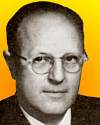
Died 14 Aug 1991 at age 86 (born 12 Mar 1905). quotes
Chauncey Guy Suits was an American electrical engineer and research director who joined the General Electric Company in 1930, and subsequently directed the company's research laboratory and was vice-president (1945-65). He helped develop a new process, announced in 1962, to create synthetic diamonds by compressing carbon in a large hydraulic press at pressures up to three million pounds per square inch, while simultaneously heated to 9,000 ºF, without needing the metal catalyst agent previously used. He held 77 U.S. patents, in such varied applications as railway block signal improvements, circuits for sequence-flashing electric signs, radio circuits, beacons, submarine signals, theater light dimmers and photo-electric relays. Upon his retirement from G.E., he consulted on industrial research management.«
Chauncey Guy Suits was an American electrical engineer and research director who joined the General Electric Company in 1930, and subsequently directed the company's research laboratory and was vice-president (1945-65). He helped develop a new process, announced in 1962, to create synthetic diamonds by compressing carbon in a large hydraulic press at pressures up to three million pounds per square inch, while simultaneously heated to 9,000 ºF, without needing the metal catalyst agent previously used. He held 77 U.S. patents, in such varied applications as railway block signal improvements, circuits for sequence-flashing electric signs, radio circuits, beacons, submarine signals, theater light dimmers and photo-electric relays. Upon his retirement from G.E., he consulted on industrial research management.«
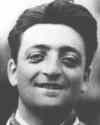
Died 14 Aug 1988 at age 90 (born 18 Feb 1898).
Italian automobile manufacturer, designer, and racing-car driver whose Ferrari cars often dominated world racing competition in the second half of the 20th century. In 1947, as a former racecar driver, Ferrari built cars under his own name for the first time. Within five years, his powerful 12-cylinder cars dominated racing. Within a decade, the road models had become status symbols. Individually crafted, their fenders were pounded into shape against tree trunks, their engines were cast like statues.
Italian automobile manufacturer, designer, and racing-car driver whose Ferrari cars often dominated world racing competition in the second half of the 20th century. In 1947, as a former racecar driver, Ferrari built cars under his own name for the first time. Within five years, his powerful 12-cylinder cars dominated racing. Within a decade, the road models had become status symbols. Individually crafted, their fenders were pounded into shape against tree trunks, their engines were cast like statues.
Enzo Ferrari: The Man, The Cars, The Races, The Machine, by Brock Yates. - book suggestion.
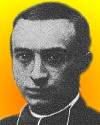
Died 14 Aug 1961 at age 84 (born 28 Feb 1877).
Henri-Édouard-Prosper Breuil was a French archaeologist, who was an authority on Paleolithic cave paintings, especially in France and Spain. He was ordained a priest (1900). At various important sites, he diligently recorded cave art in colour reproductions. When making interpretations, and related them, he was careful to avoid unsubstantiated conclusions regarding the religious or social aspects of the primitive painters. In a classic paper (1912), he made a reclassification of Paleolithic industries. In 1940, he was the first to visit and describe Lascaux. After WW II, he travelled extensively in Africa for nearly six years examining and creating images of the art in thousands of rock shelters.«
Henri-Édouard-Prosper Breuil was a French archaeologist, who was an authority on Paleolithic cave paintings, especially in France and Spain. He was ordained a priest (1900). At various important sites, he diligently recorded cave art in colour reproductions. When making interpretations, and related them, he was careful to avoid unsubstantiated conclusions regarding the religious or social aspects of the primitive painters. In a classic paper (1912), he made a reclassification of Paleolithic industries. In 1940, he was the first to visit and describe Lascaux. After WW II, he travelled extensively in Africa for nearly six years examining and creating images of the art in thousands of rock shelters.«
Father of Prehistory: The Abbe Henri Breuil: His Life and Times, by Alan Houghton Brodrick. - book suggestion.
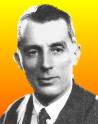
Died 14 Aug 1958 at age 58 (born 19 Mar 1900). quotes
French physicist and physical chemist who became personal assistant to Marie Curie at the Radium Institute, Paris, and the following year married her daughter Irène (who was also an assistant at the institute). Later they collaborated on research, and shared the 1935 Nobel Prize in Chemistry "in recognition of their synthesis of new radioactive elements." For example, they discovered that aluminium atoms exposed to alpha rays transmuted to radioactive phosphorus atoms. By 1939 he was investigating the fission of uranium atoms. After WW II he supervised the first atomic pile in France. He succeeded his wife as head of the Radium Institute upon her death in 1956.
French physicist and physical chemist who became personal assistant to Marie Curie at the Radium Institute, Paris, and the following year married her daughter Irène (who was also an assistant at the institute). Later they collaborated on research, and shared the 1935 Nobel Prize in Chemistry "in recognition of their synthesis of new radioactive elements." For example, they discovered that aluminium atoms exposed to alpha rays transmuted to radioactive phosphorus atoms. By 1939 he was investigating the fission of uranium atoms. After WW II he supervised the first atomic pile in France. He succeeded his wife as head of the Radium Institute upon her death in 1956.
Died 14 Aug 1954 at age 86 (born 10 Aug 1868).
German pioneer dirigible expert and Zeppelin commander.
German pioneer dirigible expert and Zeppelin commander.
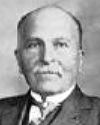
Died 14 Aug 1941 at age 86 (born 5 Nov 1854). quotes
Organic chemist who shared the Nobel Prize for Chemistry in 1912 with Victor Grignard. Sabatier researched in catalytic organic synthesis, and discovered the use of finely divided nickel as a catalyst in hydrogenation (the addition of hydrogen to molecules of carbon compounds). The margarine, oil hydrogenation, and synthetic methanol industries grew out of this work. He found that increasing the surface area of catalysts such as copper and nickel by finely dividing them greatly increases their effectiveness. Sabatier did wide-ranging research of the use of catalysts in organic chemistry syntheses, revealing metals other than nickel, though less effective, can also behave as catalysts.
Organic chemist who shared the Nobel Prize for Chemistry in 1912 with Victor Grignard. Sabatier researched in catalytic organic synthesis, and discovered the use of finely divided nickel as a catalyst in hydrogenation (the addition of hydrogen to molecules of carbon compounds). The margarine, oil hydrogenation, and synthetic methanol industries grew out of this work. He found that increasing the surface area of catalysts such as copper and nickel by finely dividing them greatly increases their effectiveness. Sabatier did wide-ranging research of the use of catalysts in organic chemistry syntheses, revealing metals other than nickel, though less effective, can also behave as catalysts.
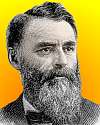
Died 14 Aug 1915 at age 76 (born 16 Apr 1839).
American archaeologist, naturalist and museum director who played a major role in the popularization of anthropology, its acceptance as a university study, and instigated more anthropological museums. After entering Harvard College as a student (1856), he was much influenced Louis Agassiz. As Curator of the Peabody Museum (1875-1909), Putnam organized numerous pioneering expeditions in Southwest and Central American archeology. As director of the anthropological section of the World's Columbian Exposition in Chicago (1891-93), he mounted an impressive exhibit. It created wide-spread interest in anthropology, and subsequently became the nucleus of the great collections of the Field Museum in Chicago.«
American archaeologist, naturalist and museum director who played a major role in the popularization of anthropology, its acceptance as a university study, and instigated more anthropological museums. After entering Harvard College as a student (1856), he was much influenced Louis Agassiz. As Curator of the Peabody Museum (1875-1909), Putnam organized numerous pioneering expeditions in Southwest and Central American archeology. As director of the anthropological section of the World's Columbian Exposition in Chicago (1891-93), he mounted an impressive exhibit. It created wide-spread interest in anthropology, and subsequently became the nucleus of the great collections of the Field Museum in Chicago.«
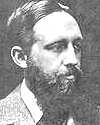
Died 14 Aug 1887 at age 38 (born 6 Nov 1848). quotes
John Richard Jefferies was an English naturalist, novelist and essayist who began his literary career as a local reporter in Wiltshire, and from then on he wrote many works of natural history and country life, and essays in journals and magazines. Jefferies relied greatly on “field notebooks”, where he entered his meticulous observations on the life of the countryside. Wild Life in a Southern Country, in which the author, sitting on a Wiltshire down, observes in ever widening circles the fields, woods, animals, and human inhabitants below him, was published with success in 1879. He wrote his autobiography, Story of My Heart (1883). His vision was unappreciated in his own Victorian age but has been increasingly recognized and admired since his death.
John Richard Jefferies was an English naturalist, novelist and essayist who began his literary career as a local reporter in Wiltshire, and from then on he wrote many works of natural history and country life, and essays in journals and magazines. Jefferies relied greatly on “field notebooks”, where he entered his meticulous observations on the life of the countryside. Wild Life in a Southern Country, in which the author, sitting on a Wiltshire down, observes in ever widening circles the fields, woods, animals, and human inhabitants below him, was published with success in 1879. He wrote his autobiography, Story of My Heart (1883). His vision was unappreciated in his own Victorian age but has been increasingly recognized and admired since his death.
Nature Near London, by Richard Jefferies. - book suggestion.
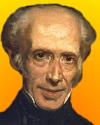
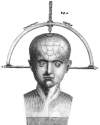
Scottish lawyer who turned to the promotion of phrenology and published several works on the subject. He followed Franz Josef Gall in Paris. Gall was a French physician who identified a number of areas on the surface of the head that he linked with specific localizations of cerebral functions and the underlying attributes of the human personality. Combe established the first infant school in Edinburgh and gave evening lectures. He studied the criminal classes and lunatic asylums wishing to reform them. Andrew Combe, physiologist, was his younger brother.«[Image right: Diagram of the Craniometer from Elements of Phrenology,by Combe, 1834.]
Reminiscences of Dr. Spurzheim and George Combe and ...Phrenology..., by Nahum Capen. - book suggestion.
In 1994, the Hubble space telescope photographed Uranus with its rings and several inner moons. Bright clouds showed up in the southern hemisphere of the planet. Hubble gave astronomers the ability to again study details of the planet previously seen only briefly while the Voyager 2 spacecraft flew by the planet a decade earlier.
Uranus (University of Arizona Space Science Series), by Jay T. Bergstralh et. al. - book suggestion.
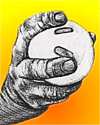
In 1953, the whiffle ball, a ball that curved when it was thrown, was invented by David Mullany Sr. for his 13-year-old son.
In 1919, A U.S. aeromarine flying boat carries the first air mail delivery at sea.
Lodge
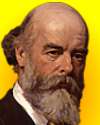
In 1894, the first wireless transmission of information using Morse code was demonstrated by Oliver Lodge during a meeting of the British Association at Oxford. A message was transmitted about 150 yards (50-m) from the old Clarendon Laboratory to the University Museum. However, as he later wrote in his Work of Hertz and Some of his Successors, the idea did not occur to Lodge at the time that this might be developed into long-distance telegraphy. “Stupidly enough, no attempt was made to apply any but the feeblest power, so as to test how far the disturbance could really be detected.” Nevertheless this demonstration predated the work of Guglielmo Marconi, who began his experiments in 1896.«
In 1888, Oliver B. Shallenberger, of Rochester, PA, received a patent for the electric meter.
In 1885, the first Japanese patent was issued. It was to Zuisho Hotta for his formulation of an antifouling paint for ship hulls made of lacquer, powdered iron, red lead, persimmon tannin, and other ingredients. Although a patent law in Japan was first established much earlier, in 1871, it had been abandoned in the next year. On 18 Apr 1885, the Patent Monopoly Act was enacted marking the effective beginning of the Japan Patent Office. Antifouling paint was first patented in Britain by William Beale on 31 Aug 1625. The first U.S. patent for an antifouling paint was issued on 3 Nov 1863 to James G Tarr and Augustus Wonson.«
Chatham St
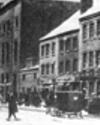
In 1820, the first U.S. eye hospital, was founded in New York City in two rooms at 45 Chatham Street. A young physician, Dr. Edward Delafield (17 May 1794 - 13 Feb 1875), conceived the idea to establish an institution for the exclusive treatment of diseases of the eye. He was assisted by his friend, Dr. John Kearney Rodgers (1793-1851), and others. In 1821, it was organized as the The New York Eye Infirmary. Hundreds of people were saved from blindness at a time that certain affections of the eye had been regarded as incurable. The charity's 35th Annual Report recorded serving 2,652 patients with diseases of the eye and 400 with diseases of the ear. From 30 Apr 1864, it was named the New York Eye and Ear Infirmary.«




