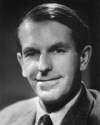
Born 13 Aug 1918; died 19 Nov 2013 at age 95. quotes
English biochemist who was twice the recipient of the Nobel Prize for Chemistry. He was awarded the prize in 1958 for his work on the structure of proteins, especially the determination of the structure of the insulin molecule. He shared the prize (with Paul Berg and Walter Gilbert of the United States) in 1980 for his contribution concerning the determination of base sequences in nucleic acids.
English biochemist who was twice the recipient of the Nobel Prize for Chemistry. He was awarded the prize in 1958 for his work on the structure of proteins, especially the determination of the structure of the insulin molecule. He shared the prize (with Paul Berg and Walter Gilbert of the United States) in 1980 for his contribution concerning the determination of base sequences in nucleic acids.
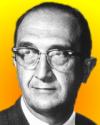
Born 13 Aug 1912; died 6 Feb 1991 at age 78. quotes
Salvador Edward Luria was an Italian-American microbiologist who (with Max Delbrück and Alfred Day Hershey) was awarded the Nobel Prize for Physiology or Medicine in 1969 for their discoveries concerning “the replication mechanism and the genetic structure of viruses.” From around 1940, they had investigated bacteriophages, a type of virus that infects bacteria, rather than ordinary cells. These offered as simple a living system as possible to research fundamental life processes, especially self-replication. Eventually, they demonstrated the role of nucleic acid as the carrier of the genetic information of the virus. Because of the short reproduction time, further information came from bacteriophages more quickly than work with other virus material.«
Salvador Edward Luria was an Italian-American microbiologist who (with Max Delbrück and Alfred Day Hershey) was awarded the Nobel Prize for Physiology or Medicine in 1969 for their discoveries concerning “the replication mechanism and the genetic structure of viruses.” From around 1940, they had investigated bacteriophages, a type of virus that infects bacteria, rather than ordinary cells. These offered as simple a living system as possible to research fundamental life processes, especially self-replication. Eventually, they demonstrated the role of nucleic acid as the carrier of the genetic information of the virus. Because of the short reproduction time, further information came from bacteriophages more quickly than work with other virus material.«
A Slot Machine, a Broken Test Tube: an Autobiography, by Salvador Edward Luria. - book suggestion.
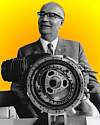
Born 13 Aug 1902; died 9 Oct 1988 at age 86.
German engineer who invented the first rotary internal combustion engine. His first job (1921-4), was with a scientific book publisher, but Wankel preferred tinkering. In 1924, he opened his own workshop and conceived the idea of a rotary engine. By 1927 he had drawn up the shape of his rotary piston engine. Although he received his first patent in 1929 (DRP 507,584), it was Feb 1957 before the first truly functional Wankel rotary engine was ready. Instead of moving pistons, the Wankel engine uses an orbiting rotor shaped as a curved equilateral triangle. Thus it needs few moving parts, is lightweight and compact. He stayed active throughout his life, filing a patent in 1987, a year before his death.«
German engineer who invented the first rotary internal combustion engine. His first job (1921-4), was with a scientific book publisher, but Wankel preferred tinkering. In 1924, he opened his own workshop and conceived the idea of a rotary engine. By 1927 he had drawn up the shape of his rotary piston engine. Although he received his first patent in 1929 (DRP 507,584), it was Feb 1957 before the first truly functional Wankel rotary engine was ready. Instead of moving pistons, the Wankel engine uses an orbiting rotor shaped as a curved equilateral triangle. Thus it needs few moving parts, is lightweight and compact. He stayed active throughout his life, filing a patent in 1987, a year before his death.«
Wankel Rotary Engine: A History, by John B. Hege. - book suggestion.
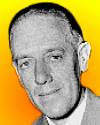
Born 13 Aug 1897; died 17 Nov 1975 at age 78.
American biophysicist credited with formulating the modern theory of the science of biophysics. He pioneered use of electro-microscopy to monitor human nerve network and was a leader in the study of human physiology in aeronautics. During WW II, he coordinated a group physiologists, located on air bases at home and abroad, who developed the Army Air Force altitude training and night vision training programs for pilots. Meanwhile, he studied the effects of low oxygen pressure on human performance. After the war, he became president of Rockefeller Institute/University (1953-68) and was prominent in scientific and governmental organizations including the National Science Foundation and the Presidential Science Advisory Committee.«
American biophysicist credited with formulating the modern theory of the science of biophysics. He pioneered use of electro-microscopy to monitor human nerve network and was a leader in the study of human physiology in aeronautics. During WW II, he coordinated a group physiologists, located on air bases at home and abroad, who developed the Army Air Force altitude training and night vision training programs for pilots. Meanwhile, he studied the effects of low oxygen pressure on human performance. After the war, he became president of Rockefeller Institute/University (1953-68) and was prominent in scientific and governmental organizations including the National Science Foundation and the Presidential Science Advisory Committee.«
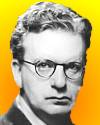
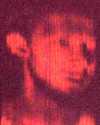
Scottish engineer who was the first man to televise outline pictures of objects (1924) followed the next year by recognizable human faces. By 1926, he was able to demonstrate TV for moving objects at the Royal Institution, London, and colour TV in 1928. In 1936, the BBC started the world's first regular high-definition service from Alexandra Palace using the Baird system, though it was abandoned one year later in favour of a system developed by Marconi-EMI. By 1939, 20,000 television sets were in use in Great Britain. In 1940, Baird gave a demonstration of a high-definition full colour stereo television. Baird continued experimenting, and was reported to have completed his researches on stereoscopic television in 1946.
Television And Me: The Memoirs of John Logie Baird, by John Logie Baird, Malcolm Baird. - book suggestion.
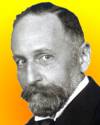
Born 13 Aug 1866; died 16 Dec 1945 at age 79.
Italian automobile manufacturer who founded the Fiat (Fabbrica Italiana Automobili Torino) automobile company. During the first half of the 20th century, he was one of Italy's foremost industrialists.
Italian automobile manufacturer who founded the Fiat (Fabbrica Italiana Automobili Torino) automobile company. During the first half of the 20th century, he was one of Italy's foremost industrialists.
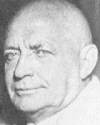
Born 13 Aug 1863; died 5 Dec 1947 at age 84.
William I(saac) Thomas was an American sociologist and social psychologist whose fields of study included cultural change and personality development and who made important contributions to methodology. He earned his PhD in sociology at the University of Chicago where he joined the faculty in 1894. After he was dismissed from there after a sex scandal in 1918, his career was was limited to obtaining research funding and visiting professorships. An empiricist, he helped to make sociology a scientific discipline; he also pioneered the study of social psychology. His most important books were Source Book for Social Origins (1909) and coauthor The Polish Peasant in Europe and America (ed, 5 vols 1918-20).
William I(saac) Thomas was an American sociologist and social psychologist whose fields of study included cultural change and personality development and who made important contributions to methodology. He earned his PhD in sociology at the University of Chicago where he joined the faculty in 1894. After he was dismissed from there after a sex scandal in 1918, his career was was limited to obtaining research funding and visiting professorships. An empiricist, he helped to make sociology a scientific discipline; he also pioneered the study of social psychology. His most important books were Source Book for Social Origins (1909) and coauthor The Polish Peasant in Europe and America (ed, 5 vols 1918-20).
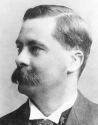
Born 13 Aug 1861; died 20 Aug 1930 at age 69.
English astronomer who pioneered many of the procedures now universally employed in determining stellar positions from astronomical photographs. After serving as chief assistant at the Royal Greenwich Observatory for nine years, he spent most of his career as Savilian professor of astronomy at Oxford University. One of the leaders in the worldwide effort to produce an astrographic chart of the sky, he developed improved methods for obtaining both positions and magnitudes from photographic plates. Most of his later work was in seismology; he compiled and published worldwide earthquake data starting in 1918, and he discovered the existence of deep-focus earthquakes in 1922.
English astronomer who pioneered many of the procedures now universally employed in determining stellar positions from astronomical photographs. After serving as chief assistant at the Royal Greenwich Observatory for nine years, he spent most of his career as Savilian professor of astronomy at Oxford University. One of the leaders in the worldwide effort to produce an astrographic chart of the sky, he developed improved methods for obtaining both positions and magnitudes from photographic plates. Most of his later work was in seismology; he compiled and published worldwide earthquake data starting in 1918, and he discovered the existence of deep-focus earthquakes in 1922.
Born 13 Aug 1844; died 26 Aug 1895 at age 51.
Swiss biochemist and biologist who studied cell metabolism and discovered nucleic acids. In 1869, while working under Ernst Felix Hoppe-Seyler at the University of Tübingen, Miescher investigated a substance containing both phosphorus and nitrogen in the nuclei of white blood cells found in pus. The substance, was first named nuclein because it seemed to come from cell nuclei. After 1874, it became known as nucleic acid, when Miescher separated it into a protein and an acid molecule. It is now known as deoxyribonucleic acid (DNA).
Swiss biochemist and biologist who studied cell metabolism and discovered nucleic acids. In 1869, while working under Ernst Felix Hoppe-Seyler at the University of Tübingen, Miescher investigated a substance containing both phosphorus and nitrogen in the nuclei of white blood cells found in pus. The substance, was first named nuclein because it seemed to come from cell nuclei. After 1874, it became known as nucleic acid, when Miescher separated it into a protein and an acid molecule. It is now known as deoxyribonucleic acid (DNA).

Neptune
Born 13 Aug 1822; died 14 Jun 1875 at age 52.
Heinrich Ludwig d' Arrest was a German astronomer who, while a student at the Berlin Observatory, hastened the discovery of Neptune by suggesting comparison of the sky, in the region indicated by Urbain Le Verrier's calculations, with a recently prepared star chart. The planet was found the same night. His father-in-law was A. F. Moebius (1790 - 1868). d'Arrest found several comets, the one of 1851 with a period of 6.6 years bears his name. One work he published was on the Asteroids between Mars and Jupiter, another work titled Siderum nebulosorum observationes Hafniensis contained 1942 nebula, 340 described for the first time.[DSB gives date of birth as 13 Aug 1822. EB states 13 July 1822.]
Heinrich Ludwig d' Arrest was a German astronomer who, while a student at the Berlin Observatory, hastened the discovery of Neptune by suggesting comparison of the sky, in the region indicated by Urbain Le Verrier's calculations, with a recently prepared star chart. The planet was found the same night. His father-in-law was A. F. Moebius (1790 - 1868). d'Arrest found several comets, the one of 1851 with a period of 6.6 years bears his name. One work he published was on the Asteroids between Mars and Jupiter, another work titled Siderum nebulosorum observationes Hafniensis contained 1942 nebula, 340 described for the first time.[DSB gives date of birth as 13 Aug 1822. EB states 13 July 1822.]
Born 13 Aug 1819; died 1 Feb 1903 at age 83. quotes
British theoretical physicist (1st Baronet) who studied viscous fluids and formulated his law of viscosity for the speed of a solid sphere falling in a fluid. Other laws and mathematical work for which he is known includes Stokes's theorem, in the field of vector analysis. Stokes also worked in optics, the wave theory of light, diffraction (1849), the ultraviolet spectrum and other spectrum analysis. He coined the word fluorescence (1852) while studying that phenomenon and was a founder of the field of geodesy with his study of variations in gravity (1849). From 1849 until his death in 1903, he held the Lucasian Chair of Mathematics at Cambridge (held earlier by Isaac Newton, and currently by Stephen Hawking). He came from a family with generations of scientists, mathematicians and engineers.«
British theoretical physicist (1st Baronet) who studied viscous fluids and formulated his law of viscosity for the speed of a solid sphere falling in a fluid. Other laws and mathematical work for which he is known includes Stokes's theorem, in the field of vector analysis. Stokes also worked in optics, the wave theory of light, diffraction (1849), the ultraviolet spectrum and other spectrum analysis. He coined the word fluorescence (1852) while studying that phenomenon and was a founder of the field of geodesy with his study of variations in gravity (1849). From 1849 until his death in 1903, he held the Lucasian Chair of Mathematics at Cambridge (held earlier by Isaac Newton, and currently by Stephen Hawking). He came from a family with generations of scientists, mathematicians and engineers.«
The Correspondence between Sir George Gabriel Stokes and Sir William Thomson, by David B. Wilson (ed.). - book suggestion.
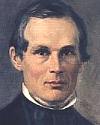
Born 13 Aug 1814; died 21 Jun 1874 at age 59.
Anders Jonas Ångström was a Swedish physicist whose pioneering use of spectroscopy is recognised in the name of the angstrom, a unit of length equal to 10-10 metre. In 1853, he studied the spectrum of hydrogen for which Balmer derived a formula. He announced in 1862 that analysis of the solar spectrum showed that hydrogen is present in the Sun's atmosphere. In 1867 he was the first to examine the spectrum of aurora borealis (northern lights). He published his extensive research on the solar spectrum in Recherches sur le spectre solaire (1868), with detailed measurements of more than 1000 spectral lines. He also published works on thermal theory and carried out geomagnetical measurements in different places around Sweden.«
Anders Jonas Ångström was a Swedish physicist whose pioneering use of spectroscopy is recognised in the name of the angstrom, a unit of length equal to 10-10 metre. In 1853, he studied the spectrum of hydrogen for which Balmer derived a formula. He announced in 1862 that analysis of the solar spectrum showed that hydrogen is present in the Sun's atmosphere. In 1867 he was the first to examine the spectrum of aurora borealis (northern lights). He published his extensive research on the solar spectrum in Recherches sur le spectre solaire (1868), with detailed measurements of more than 1000 spectral lines. He also published works on thermal theory and carried out geomagnetical measurements in different places around Sweden.«
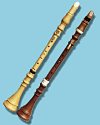
Born 13 Aug 1655; died 20 Apr 1707 at age 51.
German inventor, maker of musical instruments and inventor of the clarinet. He made improvements to the chalumeau, the first true single reed instrument, of the late 1600's. He and his son Jacob are attributed with innovating the speaker key which gave the clarinet a larger register. The clarinet overblows at the 12th. That is, when playing a C without the speaker key, then add the speaker key, the note that sounds is a G, which is the interval of a twelfth. The other woodwind instruments overblow at the octave. The clarinet bore is cylindrical, whereas every other woodwind instrument has a conical bore (even the flute!). This is why the clarinet overblows at the twelfth and is so laden with overtones, which contributes to its unique sound.
German inventor, maker of musical instruments and inventor of the clarinet. He made improvements to the chalumeau, the first true single reed instrument, of the late 1600's. He and his son Jacob are attributed with innovating the speaker key which gave the clarinet a larger register. The clarinet overblows at the 12th. That is, when playing a C without the speaker key, then add the speaker key, the note that sounds is a G, which is the interval of a twelfth. The other woodwind instruments overblow at the octave. The clarinet bore is cylindrical, whereas every other woodwind instrument has a conical bore (even the flute!). This is why the clarinet overblows at the twelfth and is so laden with overtones, which contributes to its unique sound.
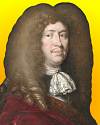
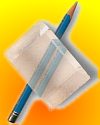
Danish physician, mathematician and physicist (Latin Bartholinus) who discovered the optical phenomenon of double refraction. In 1669, Bartholin observed that images seen through Icelandic feldspar (calcite) were doubled and that, when the crystal was rotated, one image remained stationary while the other rotated with the crystal. Such behaviour of light could not be explained using Isaac Newton's optical theories of the time. Subsequently, this was explained as the effect of the polarisation of the light. Bartholin wrote a large number of mathematical works, and made astronomical observations, including the comets of 1665. He is also famed for his medical work, in particular his introduction of quinine in the fight against malaria.[Image right: calcite crystal on pencil showing double refraction.]

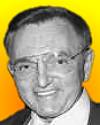

John W. “Jack” Ryan was an American inventor who for 20 years designed best-selling toys for Mattell Inc., including the Barbie doll, Hot Wheels and Chatty Cathy talking doll. His technical savvy and knowledge of materials came from his earlier employment, working as an engineer for the Raytheon Company designing the Navy's Sparrow III and Hawk guided missiles. Ryan's association with Mattell began as a self-employed consultant for several years prior to becoming its vice president for research and design. Ryan invented the joints that allowed Barbie to bend at the waist and the knee. He also introduced the pull-string, talking voice boxes for Mattel's dolls.«[Image right: Barbie doll.]
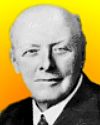
Died 13 Aug 1957 at age 82 (born 3 Sep 1874).
Fredrik (Carl Mülertz) Størmer was a Norwegian geophysicist and mathematician who developed a mathematical theory of auroral phenomena. An aurora is the light emitted by energetic protons and electrons at the top of Earth's atmosphere when they come in contact with solar wind particles. He also contributed both important photographic observations and mathematical data to the understanding of the polar aurora, of stratospheric and mesospheric clouds, and of the structure of the ionosphere. The discovery of the Van Allen Radiation Belts by James Van Allen confirmed with surprising accuracy Størmer's theoretical analysis of solar charged particle trajectories in Earth's magnetic field.
Fredrik (Carl Mülertz) Størmer was a Norwegian geophysicist and mathematician who developed a mathematical theory of auroral phenomena. An aurora is the light emitted by energetic protons and electrons at the top of Earth's atmosphere when they come in contact with solar wind particles. He also contributed both important photographic observations and mathematical data to the understanding of the polar aurora, of stratospheric and mesospheric clouds, and of the structure of the ionosphere. The discovery of the Van Allen Radiation Belts by James Van Allen confirmed with surprising accuracy Størmer's theoretical analysis of solar charged particle trajectories in Earth's magnetic field.
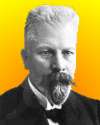
Died 13 Aug 1917 at age 57 (born 20 May 1860). quotes
German biochemist who was awarded the 1907 Nobel Prize for Chemistry for demonstrating that the fermentation of carbohydrates results from the action of different enzymes contained in yeast and not the yeast cell itself. He showed that an enzyme, zymase, can be extracted from yeast cells and that it causes sugar to break up.
German biochemist who was awarded the 1907 Nobel Prize for Chemistry for demonstrating that the fermentation of carbohydrates results from the action of different enzymes contained in yeast and not the yeast cell itself. He showed that an enzyme, zymase, can be extracted from yeast cells and that it causes sugar to break up.
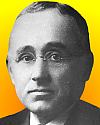
Died 13 Aug 1915 at age 53 (born 14 Jun 1862).
Swiss-American chemist whose studies demonstrated that carbon can have a valence (i.e., affinity for electrons) of two (such as quinone) as well as a valence of four, thus greatly advancing the understanding of theoretical organic chemistry. He provided a basis for the modern system of chemical notation. He studied tautomerism, especially of nitroparaffins, and discovered what is now called the "Nef reaction"; the acid-catalyzed conversion of primary and secondary nitroalkanes to aldehydes and ketones, respectively. His major research was on bivalent carbon, including isonitriles, carbon monoxide, fulminates and methylene. In later years, he studied the complex reactions of sugars in alkali and acid.
Swiss-American chemist whose studies demonstrated that carbon can have a valence (i.e., affinity for electrons) of two (such as quinone) as well as a valence of four, thus greatly advancing the understanding of theoretical organic chemistry. He provided a basis for the modern system of chemical notation. He studied tautomerism, especially of nitroparaffins, and discovered what is now called the "Nef reaction"; the acid-catalyzed conversion of primary and secondary nitroalkanes to aldehydes and ketones, respectively. His major research was on bivalent carbon, including isonitriles, carbon monoxide, fulminates and methylene. In later years, he studied the complex reactions of sugars in alkali and acid.
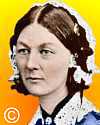
click to enlarge
Died 13 Aug 1910 at age 90 (born 12 May 1820). quotes
English nurse and statistician, “The Lady With The Lamp,” who established modern nursing practice. Her contributions to public health included developing methods of applying and displaying statistics to demonstrate the need for improvements. Her mission began from experience during the Crimean War as a nurse at British hospital in Turkey. There she witnessed appalling conditions endured by the sick: overcrowding, poor sanitation, lack of basic supplies, even malnutrition. With determination and influence, by the war's end in Jul 1856, she improved the comfort of the patients, increased efficiency and reduced the death toll. Throughout her life, she continued to advocate reform in the military medical system, supported by her compelling, novel graphical display of statistics and advice on hospital planning and organization.« more
English nurse and statistician, “The Lady With The Lamp,” who established modern nursing practice. Her contributions to public health included developing methods of applying and displaying statistics to demonstrate the need for improvements. Her mission began from experience during the Crimean War as a nurse at British hospital in Turkey. There she witnessed appalling conditions endured by the sick: overcrowding, poor sanitation, lack of basic supplies, even malnutrition. With determination and influence, by the war's end in Jul 1856, she improved the comfort of the patients, increased efficiency and reduced the death toll. Throughout her life, she continued to advocate reform in the military medical system, supported by her compelling, novel graphical display of statistics and advice on hospital planning and organization.« more
Florence Nightingale: The Making of an Icon, by Mark Bostridge. - book suggestion.
Died 13 Aug 1907 at age 65 (born 3 Apr 1842). quotes
German astronomer who discovered spectroscopic binaries (double-star systems that are too close for the individual stars to be discerned by any telescope but, through the analysis of their light, have been found to be two individual stars rapidly revolving around one another). He pioneered the study of light from distant stars, and introduced the use of photography in this field.
German astronomer who discovered spectroscopic binaries (double-star systems that are too close for the individual stars to be discerned by any telescope but, through the analysis of their light, have been found to be two individual stars rapidly revolving around one another). He pioneered the study of light from distant stars, and introduced the use of photography in this field.
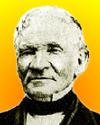
Died 13 Aug 1884 at age 92 (born 1 May 1792). quotes
American editor and inventor who put out the first issue of Scientific American on 28 Aug 1845, but sold that business 10 months later to Orson Munn and Alfred Ely Beach. He editted it for one more year. As an inventor, he had little business sense, but held over 100 patents, including a fire alarm, signal telegraph, fog whistle, and a washing machine. He sold his patent for a revolving rifle to Samuel Colt for $100 in 1844. He had an interest in painting portraits, and in 1820 built a camera obscura. From 1820, he became interested in the hot-air balloon. He constructed his first model in 1833. Porter built and exhibited other models. By 1853, he demonstrated a 22-foot model airship which circled in the rotunda of the New York Merchant's Exchange. Ultimately, despite trying, he had no major success in aerial navigation.«
American editor and inventor who put out the first issue of Scientific American on 28 Aug 1845, but sold that business 10 months later to Orson Munn and Alfred Ely Beach. He editted it for one more year. As an inventor, he had little business sense, but held over 100 patents, including a fire alarm, signal telegraph, fog whistle, and a washing machine. He sold his patent for a revolving rifle to Samuel Colt for $100 in 1844. He had an interest in painting portraits, and in 1820 built a camera obscura. From 1820, he became interested in the hot-air balloon. He constructed his first model in 1833. Porter built and exhibited other models. By 1853, he demonstrated a 22-foot model airship which circled in the rotunda of the New York Merchant's Exchange. Ultimately, despite trying, he had no major success in aerial navigation.«
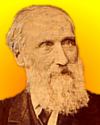
Died 13 Aug 1881 at age 64 (born 7 Apr 1817).
Italian chemist and toxicologist who is considered one of the founders of colloid chemistry. He coined (1870) the word ptomaine to denote certain nitrogenous compounds easily detectible by smell. Ptomaines (Greek ptoma, carcass or corpse) are the products of protein decay. Doubtless because they are extremely malodorous, Selmi believed these alkaloids to be the primary cause of food poisoning. Although the term "ptomaine poisoning" is still commonly used in the scientific community to designate food poisoning, it is now known that ptomaines do not themselves cause illness (which instead is caused by microorganisms and their toxins.)
Italian chemist and toxicologist who is considered one of the founders of colloid chemistry. He coined (1870) the word ptomaine to denote certain nitrogenous compounds easily detectible by smell. Ptomaines (Greek ptoma, carcass or corpse) are the products of protein decay. Doubtless because they are extremely malodorous, Selmi believed these alkaloids to be the primary cause of food poisoning. Although the term "ptomaine poisoning" is still commonly used in the scientific community to designate food poisoning, it is now known that ptomaines do not themselves cause illness (which instead is caused by microorganisms and their toxins.)
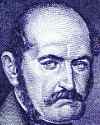
Died 13 Aug 1865 at age 47 (born 1 Jul 1818). quotes
Ignaz Philipp Semmelweis was a German physician who discovered the cause of puerperal (“child bed”) fever and introduced antisepsis into medical practice by insisting on health workers rigorously handwashing between patients, and clean bed sheets. While originally a student of law, he attended an anatomy lecture with a friend, resulting in Semmelweis changing his career. He observed that puerperal fever killed as many as 3 out of 10 of the offspring of mothers who gave birth in hospitals, yet it was rare among mothers who delivered at home. Against the prejudice of other doctors, Semmelweis proposed they were themselves transmitting the disease. Semmelweis insisted that those working under him wash their hands in strong chemicals between patient examinations, with the result that deaths from fever were significantly reduced.[Also known as Ignác Fülöp Semmelweis]] more
Ignaz Philipp Semmelweis was a German physician who discovered the cause of puerperal (“child bed”) fever and introduced antisepsis into medical practice by insisting on health workers rigorously handwashing between patients, and clean bed sheets. While originally a student of law, he attended an anatomy lecture with a friend, resulting in Semmelweis changing his career. He observed that puerperal fever killed as many as 3 out of 10 of the offspring of mothers who gave birth in hospitals, yet it was rare among mothers who delivered at home. Against the prejudice of other doctors, Semmelweis proposed they were themselves transmitting the disease. Semmelweis insisted that those working under him wash their hands in strong chemicals between patient examinations, with the result that deaths from fever were significantly reduced.[Also known as Ignác Fülöp Semmelweis]] more
The Doctors' Plague: Germs, Childbed Fever, and the Strange Story of Ignac Semmelweis, by Sherwin B. Nuland. - book suggestion.
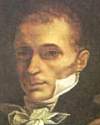
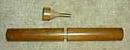
René Theophile Hyacinthe Laënnec was a French physician who invented the stethoscope and is generally considered the father of chest medicine. Using a foot-long wooden cylinder that he placed on the chests of his patients, he was able to hear the various sounds made by the lungs and heart. For three years he studied patients' chest sounds and correlated them with the diseases found in autopsy. He described his methods and findings in the classic De l'auscultation médiate (1819). Laënnec made numerous other contributions to the literature of respiratory and heart disease. more
Doctors: The Illustrated History of Medical Pioneers, by Sherwin B. Nuland. - book suggestion.
Died 13 Aug 1822 at age 54 (born 18 Jul 1768).
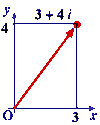
Swiss accountant and mathematician who was one of the earliest to use complex numbers, which he applied to show that all algebraic equations have roots. His name is associated with the Argand diagram, a geometrical representation of complex numbers as points in a Cartesian plane, with the real portion of the number on the x axis and the imaginary part on the y axis. He self-published this concept in an anonymous monograph (1806). Though talented in mathematics, he remained an amateur; his livelihood was as an accountant and bookkeeper. Although Argand's name became associated with this idea, the geometrical interpretation of complex numbers appeared earliest in work by Caspar Wessel (1787), first presented on 10 Mar 1797 to a the Royal Danish Academy of Sciences and published in 1799.«
Swiss accountant and mathematician who was one of the earliest to use complex numbers, which he applied to show that all algebraic equations have roots. His name is associated with the Argand diagram, a geometrical representation of complex numbers as points in a Cartesian plane, with the real portion of the number on the x axis and the imaginary part on the y axis. He self-published this concept in an anonymous monograph (1806). Though talented in mathematics, he remained an amateur; his livelihood was as an accountant and bookkeeper. Although Argand's name became associated with this idea, the geometrical interpretation of complex numbers appeared earliest in work by Caspar Wessel (1787), first presented on 10 Mar 1797 to a the Royal Danish Academy of Sciences and published in 1799.«
In 1987, fossil bones discovered in Texas in 1984 were proclaimed to be the remains of possibly the world's oldest birds.
In 1985, Jamie Gavin, age 3, of Dublin, Ireland, became the world's youngest heart and lung transplant patient in a four-hour operation at Harefield Hospital, Middlesex, England. He suffered from a congenital heart disease which had also progressively damaged his lungs. The surgeon, Britain's leading transplant specialist, was Egyptian-born Magdi Yacoub, who had previously performed 19 similar procedures. When Jamie died in Jul 1992, he was believed to be the world's longest-surviving heart and lung transplant recipient. In 1986, a 30-month-old boy became the youngest to have a heart-lung transplant.«
In 1960, the first two-way telephone conversation by satellite took place with the help of Echo 1, a balloon satellite.
In 1913, the first true stainless steel was cast in Sheffield, England. It was a steel alloy that contained 0.24% carbon and 12.8% chromium. English metallurgist, Harry Brearley was developing a more erosion-resistant steel for rifle barrels. In order to examine the grain structure of the steel he needed to etch samples with acid before examining them under the microscope. The etching reagents he used were based on nitric acid, and he found that this new steel strongly resisted chemical attack. He then exposed samples to vinegar and other food acids such as lemon juice and found the same result. Brearley realized that this new steel could also revolutionise the cutlery industry.
In 1903, the journal Nature reported that helium gas is produced by the radioactive decay of the radium. This key discovery by William Ramsay and Frederick Soddy helped to reveal the structure of atoms. In 1908, Ernest Rutherford confirmed that alpha rays and these radium emanations were one and the same: the nuclei of helium atoms, bearing a positive electrical charge. Each were future Nobel laureates in Chemistry. Ramsey won the Nobel Prize in 1904 for his discovery of the noble gases. Rutherford was recognized in 1908 for his investigations into the disintegration of the elements. Soddy was honoured in 1921 for his pioneering contributions to understanding the chemical properties of radioactive elements such as radium and uranium.[Ref: Ramsay, W. & Soddy, F. Experiments in radio-activity, and the production of helium from radium. Nature, 68, 354 - 355, (1903)]
In 1889, William Gray of Hartford, Connecticut, received U.S. Patent No. 408709 for a “Coin-Controlled Apparatus for Telephones.” It was developed by George A. Long, and the first pay phone was installed on the corner of Main Street and Central Row, in Hartford, Connecticut, that same year. A coin-controlled lock prevented the sending of messages, but messages were allowed to be received. It had a magneto-bell typical of a telephone at that time. That would be operated for the purpose of calling the central station by pressing the button 0 and turning a crank at the same time.
In 1642, Christiaan Huygens discovered the Martian south polar cap.




