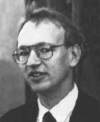
Born 28 Jul 1954.
German mathematician who was awarded the 1986 Fields Medal (the highest honour that a young mathematician can receive) primarily for his proof of the Mordell Conjecture which he achieved using methods of arithmetic algebraic geometry. He has also been closely linked with the work leading to the final proof of Fermat's Last Theorem by Andrew Wiles. In 1983 Faltings proved that for every n > 2 there are at most a finite number of coprime integers x, y, z with xn + yn = zn. This was a major step but a proof that the finite number was 0 in all cases did not seem likely to follow by extending Falting's arguments. However, Faltings was the natural person that Wiles turned to when he wanted an opinion on the correctness of his repair of his proof of Fermat's Last Theorem in 1994.
German mathematician who was awarded the 1986 Fields Medal (the highest honour that a young mathematician can receive) primarily for his proof of the Mordell Conjecture which he achieved using methods of arithmetic algebraic geometry. He has also been closely linked with the work leading to the final proof of Fermat's Last Theorem by Andrew Wiles. In 1983 Faltings proved that for every n > 2 there are at most a finite number of coprime integers x, y, z with xn + yn = zn. This was a major step but a proof that the finite number was 0 in all cases did not seem likely to follow by extending Falting's arguments. However, Faltings was the natural person that Wiles turned to when he wanted an opinion on the correctness of his repair of his proof of Fermat's Last Theorem in 1994.
Lectures on the Arithmetic Riemann-Roch Theorem, by Gerd Faltings. - book suggestion.
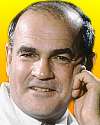
Born 28 Jul 1925; died 5 Apr 2011 at age 85.
Baruch Samuel Blumberg was an American physician who shared (with D. Carleton Gajdusek) the 1976 Nobel Prize in Physiology or Medicine “for their discoveries concerning new mechanisms for the origin and dissemination of infectious diseases.” In 1963, Blumberg accidentally discovered an antigen in the blood of an Australian aborigine which he subsequently identified as the hepatitis B surface antigen, a molecule from the surface of the hepatitis B molecule. His report of this discovery (1967) at first encountered indifference, but when confirmed by others, the virus was acknowledged to be the cause of the disease. He then developed a vaccine, though it had high production cost and limited distribution. But his work led to other researchers using recombinant DNA technology to produce a successful vaccine now in widespread use.«
Baruch Samuel Blumberg was an American physician who shared (with D. Carleton Gajdusek) the 1976 Nobel Prize in Physiology or Medicine “for their discoveries concerning new mechanisms for the origin and dissemination of infectious diseases.” In 1963, Blumberg accidentally discovered an antigen in the blood of an Australian aborigine which he subsequently identified as the hepatitis B surface antigen, a molecule from the surface of the hepatitis B molecule. His report of this discovery (1967) at first encountered indifference, but when confirmed by others, the virus was acknowledged to be the cause of the disease. He then developed a vaccine, though it had high production cost and limited distribution. But his work led to other researchers using recombinant DNA technology to produce a successful vaccine now in widespread use.«
Hepatitis B: The Hunt for a Killer Virus, by Baruch S. Blumberg. - book suggestion.
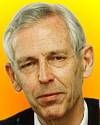
Born 28 Jul 1922; died 1 Nov 2008 at age 86.
Jacques-Ernest-Jean Piccard was a Swiss oceanic engineer, economist and physicist who assisted his father, Auguste Piccard, design bathyscaphes for deep-sea exploration, including the Trieste, in which he dived with his father, in 1953, to 10,168-ft (3,099-m) depth, off the Italian island of Ponza. Jacques (with U.S. Navy Lt. Don Walsh) took the Trieste on an ocean dive in the Marianas Trench on 23 Jan 1960, setting the world depth record at 35,810-ft (10,916-m). From the early 1960s, he also designed four mesoscaphes for exploration at middle depths. The first of these, the Auguste Piccard, was a 40-passenger tourist vessel operating during the 1964 Swiss National Exhibition in Lausanne, at mostly modest depths (300-ft, 90-m) in Lake Geneva. It was capable of 2,000-ft (600-m) dives. In 1969, he travelled with the Gulf Stream flow in the mesoscaphe Ben Franklin.«
Jacques-Ernest-Jean Piccard was a Swiss oceanic engineer, economist and physicist who assisted his father, Auguste Piccard, design bathyscaphes for deep-sea exploration, including the Trieste, in which he dived with his father, in 1953, to 10,168-ft (3,099-m) depth, off the Italian island of Ponza. Jacques (with U.S. Navy Lt. Don Walsh) took the Trieste on an ocean dive in the Marianas Trench on 23 Jan 1960, setting the world depth record at 35,810-ft (10,916-m). From the early 1960s, he also designed four mesoscaphes for exploration at middle depths. The first of these, the Auguste Piccard, was a 40-passenger tourist vessel operating during the 1964 Swiss National Exhibition in Lausanne, at mostly modest depths (300-ft, 90-m) in Lake Geneva. It was capable of 2,000-ft (600-m) dives. In 1969, he travelled with the Gulf Stream flow in the mesoscaphe Ben Franklin.«
Exploring the Sky and Sea: Auguste & Jacques Piccard, by Alida Malkus. - book suggestion.
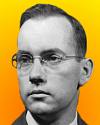
Born 28 Jul 1915; died 27 Jan 2015 at age 99. quotes
Charles Hard Townes was an American physicist who shared (with the Soviet physicists Aleksandr M. Prokhorov and Nikolay G. Basov) the 1964 Nobel Prize for Physics “for fundamental work in the field of quantum electronics, which has led to the construction of oscillators and amplifiers based on the maser-laser principle.” He had been applying microwave physics to study the interactions between microwaves and molecules, producing microwave spectra, which he thought could be used to determine the structure of molecules, atoms and nuclei. Instead, from this work, in 1951, he conceived the idea of the maser and pursued that goal. By early 1954, using ammonia gas as the medium, the first results of amplification and generation of electromagnetic waves by stimulated emission were obtained. They coined the word maser for this device, an acronym using the initial letters of “Microwave Amplification by Stimulated Emission of Radiation.”«
Charles Hard Townes was an American physicist who shared (with the Soviet physicists Aleksandr M. Prokhorov and Nikolay G. Basov) the 1964 Nobel Prize for Physics “for fundamental work in the field of quantum electronics, which has led to the construction of oscillators and amplifiers based on the maser-laser principle.” He had been applying microwave physics to study the interactions between microwaves and molecules, producing microwave spectra, which he thought could be used to determine the structure of molecules, atoms and nuclei. Instead, from this work, in 1951, he conceived the idea of the maser and pursued that goal. By early 1954, using ammonia gas as the medium, the first results of amplification and generation of electromagnetic waves by stimulated emission were obtained. They coined the word maser for this device, an acronym using the initial letters of “Microwave Amplification by Stimulated Emission of Radiation.”«
Making Waves, by Charles H. Townes. - book suggestion.
Born 28 Jul 1907; died 12 Sep 1995 at age 88.
Sir (John) Grahame Douglas Clark was a British archaeologist and authority on the prehistoric age in northwestern Europe known as the Mesolithic Period (8000-2700 BC)
Sir (John) Grahame Douglas Clark was a British archaeologist and authority on the prehistoric age in northwestern Europe known as the Mesolithic Period (8000-2700 BC)
Born 28 Jul 1907; died 5 Oct 1983 at age 76.
Earl Silas Tupper was an American inventor and manufacturer who introduced Tupperware. In the 1930s, Tupper invented a flexible, lightweight material that was used to make plastic gas masks during World War II. From working at DuPont (1937-38), he gained experience in plastics design and struck out on his own. In the '40s, plastic products had a reputation for being brittle, greasy, smelly and generally unreliable. Tupper's contributions were twofold. First, he developed a method for purifying black polyethylene slag, a waste product produced in oil refinement, into a substance that was flexible, tough, non-porous, non-greasy and translucent. Second, he developed the Tupper seal, an airtight, watertight lid modeled on the lid for paint containers. Together, these innovations laid the foundations for the future success of Tupperware as a consumer product. His company had great success by marketing through Brownie Wise's idea of Tupperware parties.
Earl Silas Tupper was an American inventor and manufacturer who introduced Tupperware. In the 1930s, Tupper invented a flexible, lightweight material that was used to make plastic gas masks during World War II. From working at DuPont (1937-38), he gained experience in plastics design and struck out on his own. In the '40s, plastic products had a reputation for being brittle, greasy, smelly and generally unreliable. Tupper's contributions were twofold. First, he developed a method for purifying black polyethylene slag, a waste product produced in oil refinement, into a substance that was flexible, tough, non-porous, non-greasy and translucent. Second, he developed the Tupper seal, an airtight, watertight lid modeled on the lid for paint containers. Together, these innovations laid the foundations for the future success of Tupperware as a consumer product. His company had great success by marketing through Brownie Wise's idea of Tupperware parties.
Tupperware Unsealed: Brownie Wise, Earl Tupper, and the Home Party Pioneers, by Bob Kealing. - book suggestion.
Born 28 Jul 1867; died 21 Jul 1951 at age 83.
U.S. astronomer who discovered the sixth and seventh moons of Jupiter in 1904 and 1905, respectively. In 1904 he published a calculation of the solar parallax (a measure of the Earth-Sun distance) based on observations of the minor planet Eros during one of its close approaches to the Earth.
U.S. astronomer who discovered the sixth and seventh moons of Jupiter in 1904 and 1905, respectively. In 1904 he published a calculation of the solar parallax (a measure of the Earth-Sun distance) based on observations of the minor planet Eros during one of its close approaches to the Earth.
Born 28 Jul 1861; died 26 Sep 1948 at age 87.
Major Henry Blanchard Hersey was an American meteorologist and balloonist who was co-pilot on the balloon United States when it won the first international balloon race (left Paris on 30 Sep 1906). His career began in the Signal Corps (29 Jun 1883) and received instruction in meteorology. After assignments in other states, he became an Inspector for the Weather Bureau and Official in Charge at Milwaukee, Wisconsin. He volunteered to be the meteorological observer for the Wellman Chicago Record-Herald Polar Expedition of 1907 on their (unsuccessful) attempt to make an airship flight from Spitzbergen to the North Pole. When he returned, Lt Frank P Lahm, the pilot of the 1906 race, was in poor health, so Hersey acted as pilot in the 1907 international balloon race for the Gordon-Bennett Cup. It began in St. Louis, Missouri, on 21 Oct 1907, but losing gas, he placed only eighth.« more
Major Henry Blanchard Hersey was an American meteorologist and balloonist who was co-pilot on the balloon United States when it won the first international balloon race (left Paris on 30 Sep 1906). His career began in the Signal Corps (29 Jun 1883) and received instruction in meteorology. After assignments in other states, he became an Inspector for the Weather Bureau and Official in Charge at Milwaukee, Wisconsin. He volunteered to be the meteorological observer for the Wellman Chicago Record-Herald Polar Expedition of 1907 on their (unsuccessful) attempt to make an airship flight from Spitzbergen to the North Pole. When he returned, Lt Frank P Lahm, the pilot of the 1906 race, was in poor health, so Hersey acted as pilot in the 1907 international balloon race for the Gordon-Bennett Cup. It began in St. Louis, Missouri, on 21 Oct 1907, but losing gas, he placed only eighth.« more
Born 28 Jul 1840; died 12 Apr 1897 at age 56.
American paleontologist and prolific taxonomist of vertebrate paleontology. He was also active in ichthyology and herpetology. He was an evolutionist, and was one of the founders of the Neo- Lamarckian school of evolutionary thought. This school believed that changes in developmental (embryonic) timing, not natural selection, was the driving force of evolution. Cope thought that groups of species that shared similar developmental patterns could be grouped into more inclusive groups (i.e. genera, families, and so on). He led many natural history surveys in the American West for the precursors of the U.S. Geological Survey, making many important finds on his trips, including dinosaur discoveries in western North America.
American paleontologist and prolific taxonomist of vertebrate paleontology. He was also active in ichthyology and herpetology. He was an evolutionist, and was one of the founders of the Neo- Lamarckian school of evolutionary thought. This school believed that changes in developmental (embryonic) timing, not natural selection, was the driving force of evolution. Cope thought that groups of species that shared similar developmental patterns could be grouped into more inclusive groups (i.e. genera, families, and so on). He led many natural history surveys in the American West for the precursors of the U.S. Geological Survey, making many important finds on his trips, including dinosaur discoveries in western North America.
The Bone Sharp: The Life of Edward Drinker Cope, by Jane P. Davidson. - book suggestion.

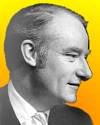
Died 28 Jul 2004 at age 88 (born 8 Jun 1916). quotes
Francis Harry Compton Crick was an English biochemist and biophysicist who shared (with James Watson and Maurice Wilkins) the 1962 Nobel Prize for Physiology or Medicine for their determination of the molecular structure of deoxyribonucleic acid (DNA), the chemical substance ultimately responsible for hereditary control of life functions. Crick and Watson began their collaboration in 1951, and published their paper on the double helix structure on 2 Apr 1953 in Nature. This accomplishment became a cornerstone of genetics and was widely regarded as one of the most important discoveries of 20th-century biology.
Francis Harry Compton Crick was an English biochemist and biophysicist who shared (with James Watson and Maurice Wilkins) the 1962 Nobel Prize for Physiology or Medicine for their determination of the molecular structure of deoxyribonucleic acid (DNA), the chemical substance ultimately responsible for hereditary control of life functions. Crick and Watson began their collaboration in 1951, and published their paper on the double helix structure on 2 Apr 1953 in Nature. This accomplishment became a cornerstone of genetics and was widely regarded as one of the most important discoveries of 20th-century biology.
What Mad Pursuit: A Personal View of Scientific Discovery, by Francis Crick. - book suggestion.
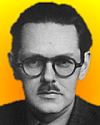
Died 28 Jul 2002 at age 92 (born 1 Mar 1910). quotes
Archer John Porter Martin was an English biochemist who shared (with R.L.M. Synge) the Nobel Prize for Chemistry in 1952 for development of paper partition chromatography using two different liquids moving at right angles. This quick and economical analytical technique separates the different components of a mixture, permitting their identification and analysis. As a new tool, it provided extensive advances in chemical, medical, and biological research. In 1941 Martin and Synge had realized that the partition of a solute between a gas and a liquid was possible, but it was in the early 1950s that Martin developed the technique of gas-liquid chromatography with A. T. James.
Archer John Porter Martin was an English biochemist who shared (with R.L.M. Synge) the Nobel Prize for Chemistry in 1952 for development of paper partition chromatography using two different liquids moving at right angles. This quick and economical analytical technique separates the different components of a mixture, permitting their identification and analysis. As a new tool, it provided extensive advances in chemical, medical, and biological research. In 1941 Martin and Synge had realized that the partition of a solute between a gas and a liquid was possible, but it was in the early 1950s that Martin developed the technique of gas-liquid chromatography with A. T. James.
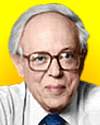
Died 28 Jul 2000 at age 82 (born 19 May 1918). quotes
Dutch-American physicist and science historian whose research became the building blocks of the theory of elemental particles. He wrote Subtle Is the Lord: The Science and Life of Albert Einstein, which is considered the definitive Einstein biography. In Holland, his Ph.D. in physics was awarded on 9 Jul 1941, five days before a Nazi deadline banning Jews from receiving degrees. Later, during WW II, while in hiding to evade the Gestapo, he worked out ideas in quantum electrodynamics that he later shared when working with Niels Bohr (Jan - Aug 1946). In Sep 1946, he went to the U.S. to work with Robert Oppenheimer at Princeton, where Pais contributed to the foundations of the modern theory of particle physics.
Dutch-American physicist and science historian whose research became the building blocks of the theory of elemental particles. He wrote Subtle Is the Lord: The Science and Life of Albert Einstein, which is considered the definitive Einstein biography. In Holland, his Ph.D. in physics was awarded on 9 Jul 1941, five days before a Nazi deadline banning Jews from receiving degrees. Later, during WW II, while in hiding to evade the Gestapo, he worked out ideas in quantum electrodynamics that he later shared when working with Niels Bohr (Jan - Aug 1946). In Sep 1946, he went to the U.S. to work with Robert Oppenheimer at Princeton, where Pais contributed to the foundations of the modern theory of particle physics.
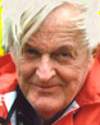
Died 28 Jul 1996 at age 87 (born 28 Aug 1908). quotes
American ornithologist, author and conservationist who wrote wildlife field books on birds, which as a artist, he illustrated with great skill. His first book, A Field Guide to the Birds, (1934; 4th edition 1980), increased public interest in the study of birds across the American and European continents. His own fascination began at age 11, when he joined a Junior Audubon Club. Shortly, he began field studies with the customary equipment: binoculars, camera and a reference book. He had developed a talent as an artist, which he applied to illustration birds to indicate their distinctive characteristics for identification. His first book, A Field Guide to Birds was published in 1934, and 46 years later, it had updated to its 4th edition. He was a committed environmentalist, including advocating the banning DDT, which harmed and thinned birds' egg shells.«
American ornithologist, author and conservationist who wrote wildlife field books on birds, which as a artist, he illustrated with great skill. His first book, A Field Guide to the Birds, (1934; 4th edition 1980), increased public interest in the study of birds across the American and European continents. His own fascination began at age 11, when he joined a Junior Audubon Club. Shortly, he began field studies with the customary equipment: binoculars, camera and a reference book. He had developed a talent as an artist, which he applied to illustration birds to indicate their distinctive characteristics for identification. His first book, A Field Guide to Birds was published in 1934, and 46 years later, it had updated to its 4th edition. He was a committed environmentalist, including advocating the banning DDT, which harmed and thinned birds' egg shells.«
Died 28 Jul 1994 at age 69 (born 23 Nov 1924).
Colin Macmillan Turnbull was an English-American anthropologist who is notable for his book The Forest People (1962), a detailed study of the tribe of Mbuti Pygmies in Zaire, with whom he lived in affectionate intimacy for several years. In 1972, he wrote his most controversial book, The Mountain People, describing the Ik, an obscure nomadic tribe of hunters on the Kenya-Uganda border. They were living on the brink of starvation and cultural extinction, surviving (in diminishing numbers). Within one generation they had changed to a gross ethic of selfishness, having discarded love and morality. After the death of his African-American partner of 30 years, Turnbull retreated to a Buddhist monastery where he lived out his remaining years.
Colin Macmillan Turnbull was an English-American anthropologist who is notable for his book The Forest People (1962), a detailed study of the tribe of Mbuti Pygmies in Zaire, with whom he lived in affectionate intimacy for several years. In 1972, he wrote his most controversial book, The Mountain People, describing the Ik, an obscure nomadic tribe of hunters on the Kenya-Uganda border. They were living on the brink of starvation and cultural extinction, surviving (in diminishing numbers). Within one generation they had changed to a gross ethic of selfishness, having discarded love and morality. After the death of his African-American partner of 30 years, Turnbull retreated to a Buddhist monastery where he lived out his remaining years.
In the Arms of Africa: The Life of Colin M. Turnbull, by Roy Richard Grinker. - book suggestion.
Died 28 Jul 1968 at age 89 (born 8 Mar 1879). quotes
German physical chemist who, with the radiochemist Fritz Strassmann, is credited with the discovery of nuclear fission. He was awarded the Nobel Prize for Chemistry in 1944 and shared the Enrico Fermi Award in 1966 with Strassmann and Lise Meitner. Element 105 carries the name hahnium in recognition of his work.
German physical chemist who, with the radiochemist Fritz Strassmann, is credited with the discovery of nuclear fission. He was awarded the Nobel Prize for Chemistry in 1944 and shared the Enrico Fermi Award in 1966 with Strassmann and Lise Meitner. Element 105 carries the name hahnium in recognition of his work.
Otto Hahn: Achievement and Responsibility, by Klaus Hoffmann. - book suggestion.
Died 28 Jul 1944 at age 55 (born 17 Jan 1889).
Ralph Howard Fowler was an English physicist and astronomer whose university education in mathematics led him to working on thermodynamics and statistical mechanics with important applications in physical chemistry. Turning to astronomy, he collaborated with Arthur Milne on the spectra of stars, and their temperatures, and pressures. He also worked on the statistical mechanics of white dwarf stars (1926) with P.A.M. Dirac, whom he had introduced to quantum theory. Fowler proposed that white dwarf stars consist of a degenerate gas of extremely high density.«
Ralph Howard Fowler was an English physicist and astronomer whose university education in mathematics led him to working on thermodynamics and statistical mechanics with important applications in physical chemistry. Turning to astronomy, he collaborated with Arthur Milne on the spectra of stars, and their temperatures, and pressures. He also worked on the statistical mechanics of white dwarf stars (1926) with P.A.M. Dirac, whom he had introduced to quantum theory. Fowler proposed that white dwarf stars consist of a degenerate gas of extremely high density.«
Died 28 Jul 1942 at age 89 (born 3 Jun 1853).
Sir William Matthew Flinders Petrie was a British archaeologist and Egyptologist who made valuable contributions to the techniques and methods of field excavation and invented a sequence dating method that enabled reconstruction of history from the remains of ancient cultures. He studied ancient British remains at Stonehenge (1875-80), then investigated pyramids at Giza and other Egyptian antiquities (1880-1914). He developed a principle of sequence dating by potsherds (1890). In 1895, he discovered remains of a prehistoric race at Nagada (1895). The stele of Merneptah he uncovered at Thebes in 1896 contained the earliest known Egyptian reference to Israel. He wrote The Formation of the Alphabet (1912).
Sir William Matthew Flinders Petrie was a British archaeologist and Egyptologist who made valuable contributions to the techniques and methods of field excavation and invented a sequence dating method that enabled reconstruction of history from the remains of ancient cultures. He studied ancient British remains at Stonehenge (1875-80), then investigated pyramids at Giza and other Egyptian antiquities (1880-1914). He developed a principle of sequence dating by potsherds (1890). In 1895, he discovered remains of a prehistoric race at Nagada (1895). The stele of Merneptah he uncovered at Thebes in 1896 contained the earliest known Egyptian reference to Israel. He wrote The Formation of the Alphabet (1912).
Flinders Petrie: A Life in Archaeology, by Margaret S. Drower. - book suggestion.
Died 28 Jul 1940 at age 76 (born 4 Mar 1864).
American marine engineer who used the first ship-model testing facility in the U.S. to evaluate basic principles in the design of ships. The Experimental Model Basin built at the Washington (D.C.) Navy Yard (1899) enabled experimentation on the shape of a ship's hull that affect its motion against the resistance of the water. He developed the internationally known Taylor Standard Series Method (1910) that enabled an estimation of water resistance from the planned dimensions before a ship was built.
American marine engineer who used the first ship-model testing facility in the U.S. to evaluate basic principles in the design of ships. The Experimental Model Basin built at the Washington (D.C.) Navy Yard (1899) enabled experimentation on the shape of a ship's hull that affect its motion against the resistance of the water. He developed the internationally known Taylor Standard Series Method (1910) that enabled an estimation of water resistance from the planned dimensions before a ship was built.
Died 28 Jul 1939 at age 78 (born 29 Jun 1861). quotes
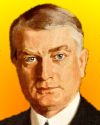
American surgeon who came from a family of surgeons. He practiced with his father, Dr. William Worrell Mayo, and brother, Dr. Charles Mayo. They specialized in surgery, pioneering the concept of group practice, and were renowned for adopting new techniques. Based in Rochester, Minn., their practice subsequently developed into the Mayo Clinic, which opened its own building in 1914.
American surgeon who came from a family of surgeons. He practiced with his father, Dr. William Worrell Mayo, and brother, Dr. Charles Mayo. They specialized in surgery, pioneering the concept of group practice, and were renowned for adopting new techniques. Based in Rochester, Minn., their practice subsequently developed into the Mayo Clinic, which opened its own building in 1914.
Died 28 Jul 1937 at age 75 (born 7 Mar 1862).
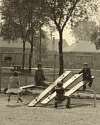
American inventor known as the “Father of the American playground movement,” who introduced the first contemporary neighborhood playground in the U.S.Born to a wealthy Boston family, Lee believed that with fortune comes responsibility. To counter social problems of the time, he promoted recreation activities as nurturing experiences. A Boston charity, copying a German practice, established sand-pile play areas among the Boston tenements. In the early 1890's, Lee extended this idea by establishing his own playground for research and demonstration purposes. In speeches and articles Lee supported the spread of the playground movement across the U.S.
American inventor known as the “Father of the American playground movement,” who introduced the first contemporary neighborhood playground in the U.S.Born to a wealthy Boston family, Lee believed that with fortune comes responsibility. To counter social problems of the time, he promoted recreation activities as nurturing experiences. A Boston charity, copying a German practice, established sand-pile play areas among the Boston tenements. In the early 1890's, Lee extended this idea by establishing his own playground for research and demonstration purposes. In speeches and articles Lee supported the spread of the playground movement across the U.S.
Died 28 Jul 1869 at age 81 (born 17 Dec 1787).
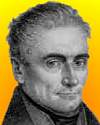
Czech pioneer of experimental physiology whose investigations in the fields of histology, embryology and pharmacology helped to create a modern understanding of the eye and vision, brain and heart function, mammalian reproduction and the composition of cells. In 1837, Purkinje described not only clusters of beautiful drop-like cells, but also subtle elongated fiber-like processes in their vicinity, which seemed to be peculiar to the nervous system. Purkinje was the first to use the microtome, potassium bichromate and Canada balsam in the preparation of histological slides for microscopy. Purkinje introduced the scientific terms plasma, a component of blood, and protoplasm, used to describe young animal embryos.
Czech pioneer of experimental physiology whose investigations in the fields of histology, embryology and pharmacology helped to create a modern understanding of the eye and vision, brain and heart function, mammalian reproduction and the composition of cells. In 1837, Purkinje described not only clusters of beautiful drop-like cells, but also subtle elongated fiber-like processes in their vicinity, which seemed to be peculiar to the nervous system. Purkinje was the first to use the microtome, potassium bichromate and Canada balsam in the preparation of histological slides for microscopy. Purkinje introduced the scientific terms plasma, a component of blood, and protoplasm, used to describe young animal embryos.
Died 28 Jul 1818 at age 72 (born 9 May 1746). quotes
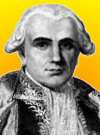
French mathematician who is known for his elaboration of descriptive geometry. Although the son of an itinerant tradesman, by age 22, he was teaching mathematics at the military school in Mézières, and later became professor at the École Polytechnique, which he helped found and organize. He developed the mathematics of projecting solid figures onto a plane (upon which modern engineering drawing is based) following a suggestion of the theory (1738) by Frézier. Monge further applied analysis techniques to the theory of curvature that was later taken up in the revolutionary work of Georg Riemann on geometry and curvature. He also studied aome physical science topics. While a close friend of Napoleon, Monge was appointed minister for the navy (1792-93), but was removed on the restoration of the Bourbons. He died in poverty.«[DSB gives date of birth 9 May 1746. EB gives 10 May 1746.]
French mathematician who is known for his elaboration of descriptive geometry. Although the son of an itinerant tradesman, by age 22, he was teaching mathematics at the military school in Mézières, and later became professor at the École Polytechnique, which he helped found and organize. He developed the mathematics of projecting solid figures onto a plane (upon which modern engineering drawing is based) following a suggestion of the theory (1738) by Frézier. Monge further applied analysis techniques to the theory of curvature that was later taken up in the revolutionary work of Georg Riemann on geometry and curvature. He also studied aome physical science topics. While a close friend of Napoleon, Monge was appointed minister for the navy (1792-93), but was removed on the restoration of the Bourbons. He died in poverty.«[DSB gives date of birth 9 May 1746. EB gives 10 May 1746.]
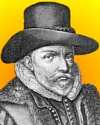
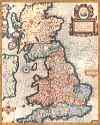
English cartographer and author who is the most famous of English map-makers. His best-known work is a landmark: the first atlas of the British Isles, the Theatre of the Empire of Great Britaine (1612). While pursuing his career as a tailor, he spent his spare time as a mapmaker and historian. His first cartographical work was a four sheet wall map of Canaan in Biblical Times (1595). He turned fully to those pursuits from age 50. In 1611, he published his book, Historie of Great Britaine, the amateurish text of which is of minimal importance. However, it is the numerous maps of British communities included in this work that are significant, as many were the first published maps of their cities and towns. His atlas was reprinted for well over a century after his death. Framed productions of maps from his atlas remain popular to hang in homes.«
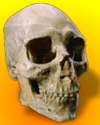
Reconstruction
In 1996, the skull of prehistoric Kennewick Man was found beside the Columbia River in Kennewick, Washington. Further archaeological digging uncovered bones of an almost complete skeleton, about 9,000 years old. As one of the very few specimens available to research the peopling of America in that era, it offered great value to science. However, the land where it was found was managed by the U.S. Corps of Engineers which planned to repatriate the relics to local Indian tribes claiming them as being remains of an ancestor. Eight scientists sued for access to the bones for research. The court found in their favour, saying the prehistoric remains did not meet the legal definition in the Act governing modern Indian repatriation.«
Kennewick Man: The Scientific Investigation of an Ancient American Skeleton, by Douglas W. Owsley. - book suggestion.

In 1977, the 800-mile Trans-Alaska Pipeline reached full operation as the first oil arrived at Valdez Marine Terminal. It had left Prudhoe Bay on 20 Jun 1977. The first tanker loaded with North Slope oil was the ARCO Juneau, which left the Port of Valdez on 1 Aug 1977. Shortly after the President’s signature on the enabling legislation (16 Nov 1973), construction had started on the road, pump stations and terminal. Pipes were laid in about two years from Mar 1975. The pipeline is insulated and elevated. In areas where the frozen-soil temperatures are near the thaw point, elaborate supports are used to ensure heat from the oil does not transfer through them to the soil. The supports contain heat pipes, and have finned radiators on top.«
800 Miles to Valdez: Building of the Alaska Pipeline, by James P. Roscow. - book suggestion.
In 1942, L.A. Thatcher of Stamford, CT received a patent this day - by mail. Appropriately, Mr. Thatcher had patented a coin-operated mailbox. When money was inserted, a meter stamped the envelope.
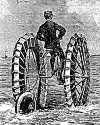
In 1883, Mr. Ferry pedalled a water tricycle across the English Channel. He started from Dover about nine o’clock in the morning, and arrived at Calais in less than eight hours. The distance as the crow flies was twenty miles, but on account of the currents, the effort required was considerably increased. The construction of his vehicle was illustrated in La Nature. Bulky paddlewheels (probably needing more displacement than shown) replace wheels of a land tricycle. The small wheel behind acted as a rudder. The event was reported in Science, 14 Dec 1883.
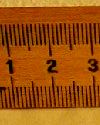
In 1866, the use of the metric system was authorized by act of Congress as legally acceptable weights and measures in the United States, though it was not made compulsory. A century and a half later, the nation has still not converted to the metric system.«
In 1863, the Alkali Works Act was passed in Britain, effective 1 Jan 1864, to limit the extensive environmental damage caused by atmospheric pollution from industrial alkali works in the English counties of Lancashire and Cheshire. The Act successfully enforced “the more effectual condensation of muriatic acid gas” (hydrochloric acid, HCl). In the era before electrolysis, alkali was manufactured by reacting salt with sulphuric acid, which produced HCl gas as an unwanted byproduct, released from tall chimneys intended to disperse the noxious vapours by dilution over a wide area. So this severely damaged the vegetation in a wide area. Buildings and iron structures were corroded. In the 1840s in the Merseyside area alone, an estimated 60,000 tons of the pollutant was released. The Act required a 95% reduction.«
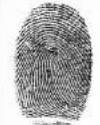
In 1858, fingerprints were used as a means of identification for the first time.
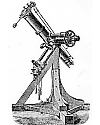
In 1851, a total solar eclipse was first captured on a daguerreotype photograph by Busch and Berkowski, at the Royal Observatory in Königsberg, Prussia (now Kalinigrad in Russia). It showed a slight but distinct impression of the corona duringthe total eclipse. Berkowski, a local daguerrotypist whose first name was never published, observed at the Royal Observatory. A small 6-cm refracting telescope was attached to a 15.8-cm Fraunhofer heliometer and a 84-second exposure was taken shortly after the beginning of totality.«[Image: Fraunhoffer heliometer at the Royal Observatory of Königsberg c. 1851 which was used to make first photograph of a total solar eclipse.]




