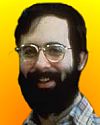
American computer scientist who with Bob Frankston created VisiCalc, the first spreadsheet computer program (1979) which created a market beyond hobbyists for the emerging personal computers. Businesses found the program very useful because of the speed and accuracy of its calculations. Originally written in 6502 assembly language to run on a 32K-byte Apple II, it was soon ported to virtually all major 6502- and Z80-based personal computers then available. They did not reap huge financial profits from the spreadsheet program, despite eventually selling over a half-million copies by 1983, because at the time, copyright protection was not generally sought for software, and it was subsequently surpassed by Lotus 1-2-3.«
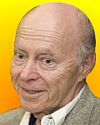
American biochemist who was a awarded a share of the 2004 Nobel Prize in Chemistry (with Israelis Aaron Ciechanover and Avram Hershko) for discovering the role of the protein ubiquitin in cells. This small protein molecule attaches to other proteins, tagging them for removal, which are thus recognized by the cell's proteasomes. These structures are the cell's waste-disposal units, where the proteins are broken down into tiny pieces for reuse. This ubiquitin-mediated process cleans up unwanted proteins resulting during cell division, and performs quality control on newly synthesized proteins. Faulty protein-breakdown processes lead to such conditions as cystic fibrosis, several neurodegenerative diseases, and certain types of cancer.«
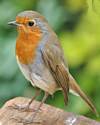
British ornithologist and author of books popularizing natural science, such as The Life of the Robin (1943). From the 1930s, he engaged in fieldwork investigating bird habitat and behaviour. A year spent studing the birds of the Galapagos (1938-9) yielded material he published in Darwin's Finches (1947), describing the14 specialized species of finch that have evolved from an original invading flock of ordinary seed-eating finches. During WW II, his involvement in the early work on radar later enabled him to employ radar to study bird migration. From 1945, for the rest of his life, he was director of the Edward Grey Institute of Field Ornithology, Oxford. He was one of the leading figures in British ornithology. His scientific research was on various aspects of speciation, population control, group selection, and ecological isolation.«
American agronomist and popcorn business founder, born in Brazil, Ind., Popcorn King whose devotion to creating and promoting a fluffier, tastier popcorn turned him into a bow-tied advertising icon. His interest in popcorn blossomed early. It was the favorite snack on his family's farm, and Redenbacher grew it to earn extra spending money. In the early '40s, while managing a 12,000-acre farm where he was growing popcorn, Redenbacher and a friend, Charles Bowman, used the fields to experiment with corn hybrids from Purdue University. Several decades and 30,000 hybrids later, they introduced gourmet popcorn.
Black-American biochemist and college president, who was the first to synthesize the essential amino acid threonine. Although he is best known for his studies of amino acids, he conducted research in a wider field, including the biochemistry of various bacilli, the B vitamins, and antibiotics. He spent his career from 1937 as professor of biochemistry at Meharry Medical College, Nashville until his retirement in 1973 where he held also the position of college president (1952-63). He was plagued and often hospitalized by severe asthma, which contributed his death.
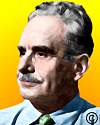
Italian biogeographer and botanist who wrote a critique of Darwinism. Rather than addressing the problem of form, as considered by other ctitics, Croizat took a unique and fascinating position. He believed in the problem of space, an aspect of biogeography, because it is through space and in time that the forms of organisms change. Croizat acknowledges Darwin knew the importance of the spatial aspect, but failed to expand beyond a passing mention. Croizat developed a track method of investigation to study the geographic distributions of organisms and map them into what he called “dispersal patterns.”«
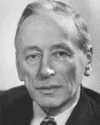
Dutch physicist who was awarded the Nobel Prize for Physics in 1953 for his invention of the phase-contrast microscope, an instrument that permits the study of internal cell structure without the need to stain and thus kill the cells. In addition to its capacity to render colourless and transparent objects visible in the microscope, it also enables one to detect slight flaws in mirrors, telescope lenses, and other instruments indispensable for research. In this connection, Zernike's phase-plate serves as an indicator which locates and measures small surface irregularities to a fraction of a light-wavelength.
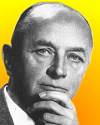
German chemist whose Stock system (1919) is used for inorganic chemical names, now with roman numerals for oxidation numbers, such as iron(II) chloride. He studied under Emil Fischer and Henri Moissan, and became a professor in 1906. From about 1909, he researched boron and silicon hydrides, for which he developed high-vacuum techniques. Stock showed a compound of phosphorus and sulphur could be substituted for the poisonous phosphorus used in matches. From Mar 1924, when he became aware that his years of exposure to mercury vapours in the laboratory had resulted in his chronic mercury poisoning, he initiated research in the pathology of mercury. He devised analytical methods to detect minute amounts of mercury. By avoiding exposure, even amalgam tooth fillings, he recovered his health.«
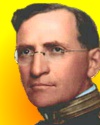
Joseph Goldberger was an Austrian-American epidemiologist who is best known for his work showing the connection between pellagra and a deficiency in the diet of poor people. Beginning in 1902, he investigated various diseases: yellow fever, typhoid fever, dengue fever, infections by trematodes (parasitic worms), typhus fever, and diphtheria. In 1914, the U.S. Surgeon General asked Dr. Goldberger to research the treatment of pellagra, the disease of the four D’s—dermatitis, diarrhea, dementia and, too often, death. Goldberger rejected the prevailing germ theory, and showed pellagra was not infectious. Instead, the disorder resulted from a poor corn-based diet, unless supplemented with yeast. After he died, it was Conrad A.Elevjhem who identified (1937) the missing nutrient was niacin, a B vitamin.«
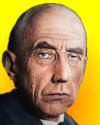
Roald Engelbregt Gravning Amundsen was a Norwegian explorer who was one of the great polar explorers. In his twenties, he interrupted his studies in medicine to join the first winter Antarctic, sailing (1897) as first mate on the Belgica, a Belgian expedition. On his next voyage (1903-06) he established the Northwest Passage. In 1904 he located the site of the North Magnetic pole. When he turned his attention again to the Antarctic, he achieved his quest to be the first to reach the South Pole (14 Dec 1911). After three unsuccessful attempts, he was among the first to cross the Arctic by air in 1926, making a flight by dirigible from Spitsbergen, across the North Pole, to Alaska. He died in another flight over the Arctic (Jun 1928) during a search for survivors of a shipwreck.«
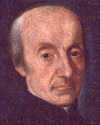
Italian astronomer and author who discovered the first asteroid, Ceres. He established an observatory at Palermo and mapped the positions of 7,646 stars. He also discovered that the star 61 Cygni had a large Proper Motion, which led Friedrich Bessel to chose it as the object of his parallax studies. He discovered Ceres on 1 Jan 1801, but was able to make only three observations. He named it after Ceres, the Roman goddess of agriculture and motherly love. The term “asteroid,” meaning “star-like” was coined (1803) by William Herschel. Fortuitously, Carl Gauss had recently developed mathematical techniques that allowed the orbit to be calculated. Within the next few years, astronomers discovered three more asteroids: Pallas, Juno, and Vesta. The thousandth asteroid discovered was named Piazzi in his honor.
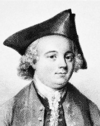
John Kay was an English machinist and engineer, inventor of the flying shuttle power loom, patented 1733, which was an important step toward automatic weaving. Kay placed shuttle boxes at each side of the loom connected by a long board, known as a shuttle race. By means of cords attached to a picking peg, a single weaver, using one hand, could cause the shuttle to be knocked back and forth across the loom from one shuttle box to the other. A weaver using Kay's flying shuttle could produce much wider cloth at faster speeds than before. However, at first, weavers had furiously resented him for, they thought, harming their livelihood. Thus, he was driven out of the country, and he died in poverty and obsurity in France.

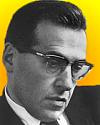
American physicist who shared (with Richard Feynman and Shin-Itiro Tomonaga) the 1965 Nobel Prize in Physics for work in quantum electrodynamics which reconciled quantum mechanics with Albert Einstein'sspecial theory of relativity. He published his first physics paper at age 16, and received a Ph.D. by age 21. During WW II, he developed important methods in electromagnetic field theory, which advanced the theory of wave guides. His variational techniques were applied in several fields of mathematical physics. In the 1940s he was one of the inventors of the “renormalization” technique. In 1957, he theorized that there were different neutrinos: one associated with the electron and one with the muon (verified experimentally 1962.) He invented and developed source theory.«A third family of neutrinos associated with the tau meson is now known (per email from David L. Wilson 17 Jul 2012).
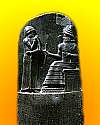
Dutch-American archaeologist who established the relationship between Egypt and Mesopotamia and completed a thoroughly documented reconstruction of ancient Mesopotamian culture and art. The excavations he directed in Egypt (1922, 1925-29) and Iraq (1929-37) were conducted with exemplary archaeological scholarship. In 1925, Frankfort resumed work which had been started by Naville at Abydos excavating the Osireion, discovered by Petrie (1902) who named it from his interpretation as a symbolic tomb of Osiris. Frankfort's initial project site was situated to the West of Seti's Temple but expanded to record the fine reliefs of the temple of Seti itself.«
Victor Alexander Haden Horsley was an English physiologist and neurosurgeon who was a pioneer in surgery on the brain and spinal cord. Before age 30, on 25 May 1886, he performed his first human brain surgery: excision of a scar. In 1887, he worked with his former professor, Sir William Gowers, in the controversial first surgery to remove a spinal cord tumour, treating an Army officer (age 45) with a spastic paralysis of the lower extremities, enabling him to walk again. He researched the thyroid gland's function in regulating the body's growth and metabolism, and how its malfunction was related to myxedema and cretinism. He confirmed Louis Pasteur's development of an effective rabies vaccine, and advocated its use in England to prevent the disease. In his research to find physiological analogs with humans, he investigated the anatomy as diverse as woodpeckers, ducks and armadillos.«
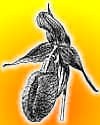
American illustrator, author and naturalist who began sketching flowers and insects when he was only eight years old. In addition to his interest in botany and entomology, Gibson was skilled in making wax flowers. His work appeared in various periodicals, including a popular, long series of nature articles in Harper's Weekly, Scribner's Monthly, and Century. Gibson’s technical drawings first appeared in 1870. They seemed to approach photographic quality in accuracy with almost microscopic detail. In fact, he was also an expert photographer. For his ability to vividly capture nature from the field and forest, his biographer listed him as part of a great trio of “nature-prohets” with Henry Thoreau and John Burroughs.«[Image right: Pink Lady's Slipper illustration by Gibson.]
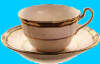
English inventor who was a potter recognised for creating bone china Before the invention of bone china, the English manufactured fine soft-paste porcelain at Chelsea, Bow, and Derby. It was Josiah Spode who is generally recognised as the inventor of Fine Bone China as we now know it (1800). In Stoke-on-Trent, his father, Josiah Spode I (1733-97) began the pottery business with the manufacture of porcelain ornamented with designs inspired by eastern art. His son, Josiah Spode II, later mixed kaolin, feldspar, and bone ash to make a bone china paste that became the standard English paste in 1800. Spode china featured a large number of designs but was especially noted for its exotic birds. In 1806 he was appointed potter to the Prince of Wales.
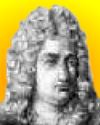
Charles François de Cisternay Du Fay was a French chemist who made early experiments in electricity. In 1733, he distinguished electrical fluid in two types he named “vitreous electricity” and “resinous electricity” depending on the objects that produced the charge (subsequently called “positive” and “negative” by Benjamin Franklin). Du Fay discovered that objects with like charges repel each other, but oppositely charged objects attract. He also noted the effect of electricity shock on his body, and visible spark when making contact with a highly charged object. He observed that electricity may be conducted in the gaseous matter (now called plasma) adjacent to a red-hot body. Du Fay was also a pioneer in crystal optics.«