
Born 9 Jul 1938; died 13 Jun 1994 at age 55.
American scientist who was a NASA researcher and who helped develop the theory that atomic war would result in a "nuclear winter" as a world-renowned expert in the study of planetary atmospheres and particulates using nongrey radiative transfer techniques. In other work, he examined evolutionary climate change on all the terrestrial planets and detailed models of the early evolution of the giant gas planets. He made fundamental contributions to the design of numerous NASA missions. Pollack discovered the first real evidence that the clouds of Venus are composed of sulphuric acid. He explained the reason for the paradox that Saturn's rings showed low microwave emissivity but high radar reflectivity.
American scientist who was a NASA researcher and who helped develop the theory that atomic war would result in a "nuclear winter" as a world-renowned expert in the study of planetary atmospheres and particulates using nongrey radiative transfer techniques. In other work, he examined evolutionary climate change on all the terrestrial planets and detailed models of the early evolution of the giant gas planets. He made fundamental contributions to the design of numerous NASA missions. Pollack discovered the first real evidence that the clouds of Venus are composed of sulphuric acid. He explained the reason for the paradox that Saturn's rings showed low microwave emissivity but high radar reflectivity.
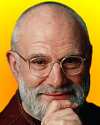
Born 9 Jul 1933; died 30 Aug 2015 at age 82. quotes
Oliver Wolf Sacks was an English neurologist and writer. Many of his books relate case histories of neurologically damaged people. His empathy with those afflicted with strange conditions, including. Tourette's syndrome, amnesia, and autism, has been the hallmark of his writings. In his first book, Migraine: Evolution of a Common Disorder (1970, he began his approach of considering mental and emotional states while stressing links between them and physical afflictions. In the late 1960s in New York, he encountered some 80 people suffering from a “sleeping sickness” (known from its spread around the world about 1916-20). He experimented by giving some of them the drug L-DOPA and obtained seemingly amazing results, an “awakening,” but most soon regressed.
Oliver Wolf Sacks was an English neurologist and writer. Many of his books relate case histories of neurologically damaged people. His empathy with those afflicted with strange conditions, including. Tourette's syndrome, amnesia, and autism, has been the hallmark of his writings. In his first book, Migraine: Evolution of a Common Disorder (1970, he began his approach of considering mental and emotional states while stressing links between them and physical afflictions. In the late 1960s in New York, he encountered some 80 people suffering from a “sleeping sickness” (known from its spread around the world about 1916-20). He experimented by giving some of them the drug L-DOPA and obtained seemingly amazing results, an “awakening,” but most soon regressed.
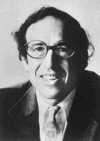
Born 9 Jul 1926.
American-Danish physicist, born in Chicago, Ill., who shared the 1975 Nobel Prize for Physics with Aage N. Bohr and James Rainwater for "for the discovery of the connection between collective motion and particle motion in atomic nuclei and the development of the theory of the structure of the atomic nucleus based on this connection." This work determined the asymmetrical shapes of certain atomic nuclei and the reasons behind such asymmetries. Later research investigated the fact that nuclear matter has properties reminiscent of superconductors.
American-Danish physicist, born in Chicago, Ill., who shared the 1975 Nobel Prize for Physics with Aage N. Bohr and James Rainwater for "for the discovery of the connection between collective motion and particle motion in atomic nuclei and the development of the theory of the structure of the atomic nucleus based on this connection." This work determined the asymmetrical shapes of certain atomic nuclei and the reasons behind such asymmetries. Later research investigated the fact that nuclear matter has properties reminiscent of superconductors.
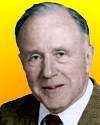
Born 9 Jul 1911; died 13 Apr 2008 at age 96. quotes
John Archibald Wheeler was the first American physicist involved in the theoretical development of the atomic bomb. He also originated a novel approach to the unified field theory. Wheeler was awarded the 1997 Wolf Prize "for his seminal contributions to black hole physics, to quantum gravity, and to the theories of nuclear scattering and nuclear fission." After recognizing that any large collection of cold matter has no choice but to yield to the pull of gravity and undergo total collapse, Wheeler first coined the term "black hole" in 1967.
John Archibald Wheeler was the first American physicist involved in the theoretical development of the atomic bomb. He also originated a novel approach to the unified field theory. Wheeler was awarded the 1997 Wolf Prize "for his seminal contributions to black hole physics, to quantum gravity, and to the theories of nuclear scattering and nuclear fission." After recognizing that any large collection of cold matter has no choice but to yield to the pull of gravity and undergo total collapse, Wheeler first coined the term "black hole" in 1967.
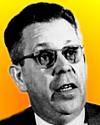
Born 9 Jul 1894; died 7 Sep 1970 at age 76.
Percy Le Baron Spencer was an American engineer and inventor who had the idea for the microwave oven. In 1940, Sir John Randall and Dr. H. A. Boot invented the magnetron tube to produce radar microwaves. After the war, Dr. Percy Spencer at the Raytheon Company was investigating the magnetron tube. During one experiment, as the story goes, he discovered that a chocolate bar in his pocket had totally melted. Since the heating effect of microwaves was known earlier, Dr. Spencer deduced the magnetron radiation had melted the chocolate, not his body heat. This led Spencer to research cooking food. The first commercial microwave ovens were large equipment, made for restaurants.
Percy Le Baron Spencer was an American engineer and inventor who had the idea for the microwave oven. In 1940, Sir John Randall and Dr. H. A. Boot invented the magnetron tube to produce radar microwaves. After the war, Dr. Percy Spencer at the Raytheon Company was investigating the magnetron tube. During one experiment, as the story goes, he discovered that a chocolate bar in his pocket had totally melted. Since the heating effect of microwaves was known earlier, Dr. Spencer deduced the magnetron radiation had melted the chocolate, not his body heat. This led Spencer to research cooking food. The first commercial microwave ovens were large equipment, made for restaurants.
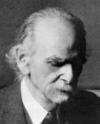
Age 70
Born 9 Jul 1858; died 21 Dec 1942 at age 84. quotes
German-born American anthropologist who is best known for his work with the Kwakiutl Indians from Northern Vancouver, B.C., Canada. While studying the Kwakiutl, he established a culture-centred school of thought in anthropology that came to the forefront in the 20th century. He maintained that cultural traits - behaviors, beliefs, and symbols - were to be examined in their local context with historical, social and geographic conditions. The approach he established was continued by his students, which included Margaret Mead, Ruth Benedict, linguist Edward Sapir and Alfred L. Kroeber, who in turn influenced Claude Lévi-Strauss.«Date of death: DSB and NYT obituary gives 21 Dec 1942; EB gives 22 Dec 1942.
German-born American anthropologist who is best known for his work with the Kwakiutl Indians from Northern Vancouver, B.C., Canada. While studying the Kwakiutl, he established a culture-centred school of thought in anthropology that came to the forefront in the 20th century. He maintained that cultural traits - behaviors, beliefs, and symbols - were to be examined in their local context with historical, social and geographic conditions. The approach he established was continued by his students, which included Margaret Mead, Ruth Benedict, linguist Edward Sapir and Alfred L. Kroeber, who in turn influenced Claude Lévi-Strauss.«Date of death: DSB and NYT obituary gives 21 Dec 1942; EB gives 22 Dec 1942.
Anthropology and Modern Life, by Franz Boas. - book suggestion.

Born 9 Jul 1847; died 1 Mar 1914 at age 66.
Edwin James Houston was an American electrical engineer who, together with Elihu Thomson (another Philadelphia high school teacher) experimented with electricity. Houston invented, patented in 1881 and manufactured arc street-lighting. He presented the first paper, Notes on Phenomena in Incandescent Lamps, to The American Institute of Electrical Engineers when it began in 1884 (AIEE - the predecessor society of the present IEEE, The Institute of Electrical and Electronics Engineers, Inc.). The merger of Thomson-Houston and Edison General Electric companies (1892) formed General Electric. In 1894 he joined with Arthur Kennelly (who resigned from Edison's laboratory) to form a consulting company.
Edwin James Houston was an American electrical engineer who, together with Elihu Thomson (another Philadelphia high school teacher) experimented with electricity. Houston invented, patented in 1881 and manufactured arc street-lighting. He presented the first paper, Notes on Phenomena in Incandescent Lamps, to The American Institute of Electrical Engineers when it began in 1884 (AIEE - the predecessor society of the present IEEE, The Institute of Electrical and Electronics Engineers, Inc.). The merger of Thomson-Houston and Edison General Electric companies (1892) formed General Electric. In 1894 he joined with Arthur Kennelly (who resigned from Edison's laboratory) to form a consulting company.
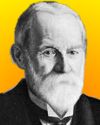
Born 9 Jul 1845; died 7 Dec 1912 at age 67. quotes
Sir George (Howard) Darwin, the second son of the famous biologist Charles Darwin, was an English astronomer who championed a theory (no longer accepted) that the Moon was once part of the Earth, in what is now the Pacific Ocean. His was the first mathematical analysis of the evolution of Earth's Moon. He suggested that since the effect of the tides has been to slow the Earth's rotation and to cause the Moon to recede from the Earth, then by extrapolating back 4.5 billion years ago the Moon and the Earth would have been very close, with a day being less than five hours. Before this time the two bodies would actually have been one, until the Moon was torn away from the Earth by powerful solar tides that would have deformed the Earth every 2.5 hours.
Sir George (Howard) Darwin, the second son of the famous biologist Charles Darwin, was an English astronomer who championed a theory (no longer accepted) that the Moon was once part of the Earth, in what is now the Pacific Ocean. His was the first mathematical analysis of the evolution of Earth's Moon. He suggested that since the effect of the tides has been to slow the Earth's rotation and to cause the Moon to recede from the Earth, then by extrapolating back 4.5 billion years ago the Moon and the Earth would have been very close, with a day being less than five hours. Before this time the two bodies would actually have been one, until the Moon was torn away from the Earth by powerful solar tides that would have deformed the Earth every 2.5 hours.
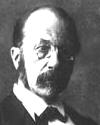
Born 9 Jul 1831; died 1 May 1904 at age 72. quotes
Wilhelm His, born in Basel, Switzerland, was a German anatomist and embryologist who created the science of histogenesis, or the study of the embryonic origins of different types of animal tissue. His discovery, in 1886, that each nerve fibre stems from a single nerve cell was essential to the development of the neuron theory. He invented the microtome - a device to slice very thin serial specimens for microscope slides (1865). With it, he could examine embryos. He was the first to accurate describe the human embryo.
Wilhelm His, born in Basel, Switzerland, was a German anatomist and embryologist who created the science of histogenesis, or the study of the embryonic origins of different types of animal tissue. His discovery, in 1886, that each nerve fibre stems from a single nerve cell was essential to the development of the neuron theory. He invented the microtome - a device to slice very thin serial specimens for microscope slides (1865). With it, he could examine embryos. He was the first to accurate describe the human embryo.
Born 9 Jul 1824; died 8 Feb 1919 at age 94.
French soil scientist who (with Achille Muntz) proved (1877) that nitrification is a biological process in the soil by using chloroform vapors to inhibit the production of nitrate. Although years before (1859), Louis Pasteur had theorized that the process was biological, he was never able to prove it. Schloesing and Muntz used antiseptic followed by heating to sterilize a soil sample, thus completely halting the nitrification process. They demonstrated that by mixing a small amount of non-sterile soil into sterile soil, the nitrification process would be restored. One of the greatest practical applications of this knowledge has been to utilize a community of nitrifying bacteria in the treatment of sewerage.«[Schloesing, J., and Muntz, A., 1877, Sur La Nitrification Par Les Ferments Organises, Comptes Rendus de l’Academie des Sciences, Paris, LXXXXIV:301]
French soil scientist who (with Achille Muntz) proved (1877) that nitrification is a biological process in the soil by using chloroform vapors to inhibit the production of nitrate. Although years before (1859), Louis Pasteur had theorized that the process was biological, he was never able to prove it. Schloesing and Muntz used antiseptic followed by heating to sterilize a soil sample, thus completely halting the nitrification process. They demonstrated that by mixing a small amount of non-sterile soil into sterile soil, the nitrification process would be restored. One of the greatest practical applications of this knowledge has been to utilize a community of nitrifying bacteria in the treatment of sewerage.«[Schloesing, J., and Muntz, A., 1877, Sur La Nitrification Par Les Ferments Organises, Comptes Rendus de l’Academie des Sciences, Paris, LXXXXIV:301]

Born 9 Jul 1819; died 3 Oct 1867 at age 48.
American inventor who invented a commercially successful sewing machine. Although it was Walter Hunt who built America's first sewing machine, in 1834, (then thought about it as a destroyer of home stitchers' jobs) but Hunt did not pursue it. Later, Howe spent years developing a functional design, and was granted a patent on his own machine on 10 Sep 1846. Commercial success came slowly, requiring the defense of his patent against Isaac Singer's better marketed machine. Eventually he gained riches, but died young at 49. By then, his sewing machine helped revolutionize garment manufacture in the factory and in the home. more
American inventor who invented a commercially successful sewing machine. Although it was Walter Hunt who built America's first sewing machine, in 1834, (then thought about it as a destroyer of home stitchers' jobs) but Hunt did not pursue it. Later, Howe spent years developing a functional design, and was granted a patent on his own machine on 10 Sep 1846. Commercial success came slowly, requiring the defense of his patent against Isaac Singer's better marketed machine. Eventually he gained riches, but died young at 49. By then, his sewing machine helped revolutionize garment manufacture in the factory and in the home. more
Elias Howe: Inventive Boy, by Jean Corcoran. - book suggestion.

Born 9 Jul 1802; died 6 Jul 1851 at age 48. quotes
American inventor of what was probably the first commercially successful electric motor, which he used with great ingenuity to power a number of established inventions. Though several other inventors had experimented with motors, Davenport was the first to secure a US patent (No. 132 on 25 Feb 1837) for his direct current motor. He incorporated the concept of the electromagnet invented by Joseph Henry in a way that produced a rotary motion using his own idea of a commutator and brushes to control the direction of current flow. He used a motor he built to power shop machinery, and also built the first electric model railroad car.
American inventor of what was probably the first commercially successful electric motor, which he used with great ingenuity to power a number of established inventions. Though several other inventors had experimented with motors, Davenport was the first to secure a US patent (No. 132 on 25 Feb 1837) for his direct current motor. He incorporated the concept of the electromagnet invented by Joseph Henry in a way that produced a rotary motion using his own idea of a commutator and brushes to control the direction of current flow. He used a motor he built to power shop machinery, and also built the first electric model railroad car.
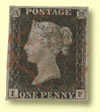
Born 9 Jul 1766; died 30 Jul 1849 at age 83.
Jacob Perkins was an American inventor, of Newburyport, Mass., a Freemason, who produced innovations in diverse fields. For example, in 1794, under his patent of January 16 of that year, he made the first nails which were both cut and headed by machine in America. Around 1817, he installed a hot air furnace of his own design in the Massachusetts Medical College. While living in London, England, he advocated high pressure steam techniques and designed in 1827-28 a steam gun for the French Government. Also, Perkins advanced the art of engraving and platemaking for bank notes. In 1834, he was issued the first US patent for a refrigerating machine for sulphuric ether compression in a closed cycle. (It utilized a concept displayed by Oliver Evans, 1805.) Back in England, he printed 64 million of the first penny postage stamp in 1840.
Jacob Perkins was an American inventor, of Newburyport, Mass., a Freemason, who produced innovations in diverse fields. For example, in 1794, under his patent of January 16 of that year, he made the first nails which were both cut and headed by machine in America. Around 1817, he installed a hot air furnace of his own design in the Massachusetts Medical College. While living in London, England, he advocated high pressure steam techniques and designed in 1827-28 a steam gun for the French Government. Also, Perkins advanced the art of engraving and platemaking for bank notes. In 1834, he was issued the first US patent for a refrigerating machine for sulphuric ether compression in a closed cycle. (It utilized a concept displayed by Oliver Evans, 1805.) Back in England, he printed 64 million of the first penny postage stamp in 1840.

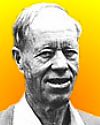
Died 9 Jul 1996 at age 76 (born 20 Mar 1920).
Douglas George Chapman was a Canadian-born U.S. mathematical statistician and an expert on wildlife statistics. He was one of the scientific advisors to the International Whaling Commission that warned in the 1960s that the number of whales being taken by the whaling industry was far in excess of what the population could stand, and proposed annual fin whale catch quotas that would permit the depleted populations of this species to recover. His later research on fish farming expanded to include mollusk aquaculture and he directed a program to develop quantitative methods to aid in the management of fisheries resources.«
Douglas George Chapman was a Canadian-born U.S. mathematical statistician and an expert on wildlife statistics. He was one of the scientific advisors to the International Whaling Commission that warned in the 1960s that the number of whales being taken by the whaling industry was far in excess of what the population could stand, and proposed annual fin whale catch quotas that would permit the depleted populations of this species to recover. His later research on fish farming expanded to include mollusk aquaculture and he directed a program to develop quantitative methods to aid in the management of fisheries resources.«
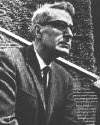
Died 9 Jul 1977 at age 69 (born 3 Sep 1907). quotes
Loren Corey Eiseley was an American anthropologist and ecologist was one of the preeminent literary naturalists of our time. He wrote for the lay person in an eloquent, poetic style about anthropology, the history of the civilization and our relationship with the natural world. Scientific American published Loren Eiseley’s first popular essay, The Folsum Mystery (1942). Eiseley’s best-known book, The Immense Journey, combines science and humanism in a collection of essays, many with origins to his own early Nebraska experiences. Eiseley became known internationally, winning major prizes and honorary degrees for his unique work.
Loren Corey Eiseley was an American anthropologist and ecologist was one of the preeminent literary naturalists of our time. He wrote for the lay person in an eloquent, poetic style about anthropology, the history of the civilization and our relationship with the natural world. Scientific American published Loren Eiseley’s first popular essay, The Folsum Mystery (1942). Eiseley’s best-known book, The Immense Journey, combines science and humanism in a collection of essays, many with origins to his own early Nebraska experiences. Eiseley became known internationally, winning major prizes and honorary degrees for his unique work.
Died 9 Jul 1948 (born c. 1882).
American chemist and manufacturer who was known as the “gumdrop king.” He founded the P.S. Truesdell Candy Manufacturing Company, and was credited with developing the soft, chewy form of the gumdrop. In its earliest form, the gumdrop had been tough. After years of experimenting at Ohio State University's chemistry department, Truesdell found that by reducing the starch content, he could make a gumdrop with a more appealing texture. In 1915, he began producing the gumdrops in the loft of a building in Columbus, Ohio, and travelled around the state marketing it.[Year of birth estimated from obituary notice stating he died at age 66.]
American chemist and manufacturer who was known as the “gumdrop king.” He founded the P.S. Truesdell Candy Manufacturing Company, and was credited with developing the soft, chewy form of the gumdrop. In its earliest form, the gumdrop had been tough. After years of experimenting at Ohio State University's chemistry department, Truesdell found that by reducing the starch content, he could make a gumdrop with a more appealing texture. In 1915, he began producing the gumdrops in the loft of a building in Columbus, Ohio, and travelled around the state marketing it.[Year of birth estimated from obituary notice stating he died at age 66.]
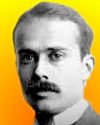
Died 9 Jul 1943 at age 67 (born 30 Mar 1876).
Clifford Whittingham Beers was an American author and social reformer who wrote an autobiography documenting appalling conditions and maltreatment by staff of mental patients. His classic book, A Mind That Found Itself (1908) raised public consciousness of the need for reform. He had already himself experienced treatment as a mental patient, first in 1900, diagnosed with depression and paranoia. His four siblings also suffered mental health problems and died in mental hospitals, as he also did. In 1909, Beers founded the National Committee for Mental Hygiene (since renamed as Mental Health America) with the mission to improve the treatment in mental health institutions. By 1913, he was able to establish the Clifford Beers Clinic in New Haven, an outpatient mental health clinic, the first of its kind in the U.S., which continues his legacy to the present.»
Clifford Whittingham Beers was an American author and social reformer who wrote an autobiography documenting appalling conditions and maltreatment by staff of mental patients. His classic book, A Mind That Found Itself (1908) raised public consciousness of the need for reform. He had already himself experienced treatment as a mental patient, first in 1900, diagnosed with depression and paranoia. His four siblings also suffered mental health problems and died in mental hospitals, as he also did. In 1909, Beers founded the National Committee for Mental Hygiene (since renamed as Mental Health America) with the mission to improve the treatment in mental health institutions. By 1913, he was able to establish the Clifford Beers Clinic in New Haven, an outpatient mental health clinic, the first of its kind in the U.S., which continues his legacy to the present.»
The Mind That Found Itself, by Clifford Beers. - book suggestion.
Died 9 Jul 1934 at age 65 (born 7 Apr 1869). quotes
William Hultz Walker was an American chemical engineer who reorganized the undergraduate program in industrial chemistry at the Massachusetts Institute of Technology to create a course of study in Chemical Engineering. He coauthored a seminal text on chemical engineering, Principles of Chemical Engineering (1923).
William Hultz Walker was an American chemical engineer who reorganized the undergraduate program in industrial chemistry at the Massachusetts Institute of Technology to create a course of study in Chemical Engineering. He coauthored a seminal text on chemical engineering, Principles of Chemical Engineering (1923).
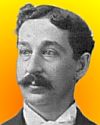
Died 9 Jul 1932 at age 77 (born 5 Jan 1855). quotes
King Camp Gillette was an American inventor and manufacturer who invented and manufactured the safety razor with disposable blades. After persistent efforts to invent something that everyone would use, by 1895 produced a crude version of a disposable razor blade. it took another six years to refine his invention. On 15 Nov 1904 he was issued U.S. patent No. 775,134 for his idea and founded the Gillette Safety Razor Company in Boston, Mass., to make his razor and blades. In 1903, he sold 168 blades, but in the following year he sold 90,000 razors and over 12 million blades. Although he remained president of the company until 1931, he retired to Los Angeles in 1913, having become a millionaire. A utopian, he wrote four books translating his business experience into social theories, culminating with The People's Corporation (1924).«
King Camp Gillette was an American inventor and manufacturer who invented and manufactured the safety razor with disposable blades. After persistent efforts to invent something that everyone would use, by 1895 produced a crude version of a disposable razor blade. it took another six years to refine his invention. On 15 Nov 1904 he was issued U.S. patent No. 775,134 for his idea and founded the Gillette Safety Razor Company in Boston, Mass., to make his razor and blades. In 1903, he sold 168 blades, but in the following year he sold 90,000 razors and over 12 million blades. Although he remained president of the company until 1931, he retired to Los Angeles in 1913, having become a millionaire. A utopian, he wrote four books translating his business experience into social theories, culminating with The People's Corporation (1924).«
King C. Gillette, the Man and his Wonderful Shaving Device, by Russell B Adams. - book suggestion.
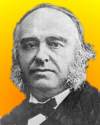
Died 9 Jul 1880 at age 56 (born 28 Jun 1824). quotes
French surgeon who was closely associated with the development of modern physical anthropology in France and whose study of brain lesions contributed significantly to understanding the origins of aphasia, the loss or impairment of the ability to form or articulate words. His research was largely devoted to the comparative study of the craniums of the various human races. He established (1861) that the seats of articulate speech were in the left frontal region of the brain, now known as the convolution of Broca. This was the first time an anatomical link had been made between a location and in the brain and its function. He founded the anthropology laboratory at the École des Hautes.
French surgeon who was closely associated with the development of modern physical anthropology in France and whose study of brain lesions contributed significantly to understanding the origins of aphasia, the loss or impairment of the ability to form or articulate words. His research was largely devoted to the comparative study of the craniums of the various human races. He established (1861) that the seats of articulate speech were in the left frontal region of the brain, now known as the convolution of Broca. This was the first time an anatomical link had been made between a location and in the brain and its function. He founded the anthropology laboratory at the École des Hautes.
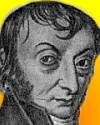
Died 9 Jul 1856 at age 79 (born 9 Aug 1776). quotes
Italian chemist and physicist who found that at the same temperature and pressure equal volumes of all perfect gases contain the same number of particles, known as Avogadro's Law (1811) leading to the Avogadro's constant being 6.022 x 10²³units per mole of a substance. He realized the particules could be either atoms, or more often, combinations of atoms, for which he coined the word "molecule." This explained Gay-Lussac's law of combining volumes (1809). Further, Avogadro determined from the electrolysis of water that it contained molecules formed from two hydrogen atoms for each atom of oxygen, by which the individual oxygen atom was 16 times heavier than one hydrogen atom (not 8 times as suggested earlier by John Dalton.)«
Italian chemist and physicist who found that at the same temperature and pressure equal volumes of all perfect gases contain the same number of particles, known as Avogadro's Law (1811) leading to the Avogadro's constant being 6.022 x 10²³units per mole of a substance. He realized the particules could be either atoms, or more often, combinations of atoms, for which he coined the word "molecule." This explained Gay-Lussac's law of combining volumes (1809). Further, Avogadro determined from the electrolysis of water that it contained molecules formed from two hydrogen atoms for each atom of oxygen, by which the individual oxygen atom was 16 times heavier than one hydrogen atom (not 8 times as suggested earlier by John Dalton.)«
Amedeo Avogadro: A Scientific Biography, by M. Morselli. - book suggestion.
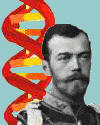
In 1993, British and Russian scientists using DNA genetic fingerprinting tests, identified the bone fragments discovered in Ekaterinburg in 1979 to be those of the Russian Tzar Nicholas II and members of his family executed on 17 July 1918. This was work done by Drs. Peter Gill and Kevin Sullivan of the British Forensic Science Service in Birmingham. However, a slight ambiguity remained for the identification of the Tzar until a heteroplasmy was confirmed. Additional mitochondrial DNA (MtDNA) testing was carried in 1995 out by the US Armed Forces DNA Identification Laboratory (AFDIL) who identified the Tzar using sequence analysis and comparison of the profiles with remains of Georgij Romanov, the Tzar's younger brother, exhumed in 1994. They shared the same rare genetic partial mutation called heteroplasmy. Together with with other physical and circumstantial data, this provided indisputable evidence for identification of the Tzar.
In 1979, Voyager 2, passed by Jupiter. It was one of a pair of unmanned U.S. interplanetary probes launched in 1977. Although it was launched first (20 Aug), followed by the launch of Voyager 1 (5 Sep), Voyager 2 was designed to travel more slowly, and pass all the giant planets. Voyager 1 visited Jupiter (Mar 1979) and Saturn (Nov 1980) then to leave the Solar System. Voyager 2 passed Saturn (25 Aug 1981), but continued on to Uranus (24 Jan 1986) and Neptune (24 Aug 1989). Data from the two probes included photographs of Jupiter showing a variety of cloud forms around Jupiter, and volcanic activity on its moon, Io.
In 1960, Thresher was launched, the first of a class of U.S. nuclear-powered attack submarines. During sea trials after commissioning it sank in Apt 1963 for reasons that remain unknown. With 129 persons on board, it was the worst loss in submarine history. It was armed with Subroc antisubmarine missiles that could be fitted with either high explosives of a nuclear warhead. The wreckage was observed from the bathyscaphe Trieste at a depth of about 8,500-ft.
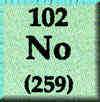
In 1957, an announcement was made of the discovery of element 102, and the name of nobelium proposed, for an isotope believed found with a half-life of 10 minutes at 8.5 MeV. Later tests showed that no isotopes of nobelium have this half-life. Nobelium was truly discovered by Albert Ghiorso, T. Sikkeland, J.R. Walton, and Glenn T. Seaborg in Apr 1958. However, IUPAC accepted the name Nobelium given to the prematurely discovered element. Ten isotopes of nobelium are known to exist, with No-255 having the longest half-life of 3 minutes. Nobelium is an artificially made, radioactive, “rare earth metal” named after Alfred Nobel who discovered dynamite.
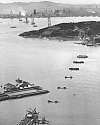
In 1933, construction began on the Oakland Bay Bridge, California, U.S., to be a toll bridge across the San Francisco Bay linking Oakland and San Francisco. It is in effect two bridges connecting a central island, Yerba Buena Island, with each shore. From San Francisco, two suspension bridges end-to-end with a central anchorage reach the island, then traffic continues to Oakland over a truss causeway of five medium-span truss bridges and a double-tower cantilever span. The bridges were designed by Ralph Modjeski. It was opened for traffic on 12 Nov 1939, six months before the Golden Gate Bridge, which opened for traffic on 28 May 1937. At that time, the Oakland Bay Bridge made two world records: the longest suspended-deck bridge and the longest cantilever bridge.«
The Bay Bridge, by Paul C. Trimble and John C. Alioto Jr. - book suggestion.

In 1902, a patent is obtained for barbituric acid - hope for insomniacs. In 1864 Adolf von Baeyer, a twenty-nine-year-old assistant of Friedrich August Kekule (the discoverer of the molecular structure of benzene) in Ghent, synthesized barbituric acid, the first barbiturate. In 1903, the German chemist Emil Fischer and his collaborator Joseph von Mering modified a class of drugs originally synthesized in 1864 in a way that made them effective as sedatives and hypnotics. Fischer and Mering realized that their new drug, "diethyl barbituric acid," or barbital, was a sedative. It improved vastly upon the congeries of previous sedatives by not tasting unpleasant, by having few side effects, and by acting at therapeutic levels far beneath the toxic dose (unlike potassium bromide, which tasted awful and had a therapeutic level close to the toxic dose). Diallyl barbituric acid is a colourless crystalline organic compound. used in medicine as a soporific.
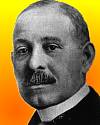
In 1893, the suture of the pericardium (the fluid sac surrounding the heart muscle) was performed by Dr. Daniel Hale Williams. When a 24-yr-old victim of a stabbing during a bar-fight was brought to Provident Hospital in Chicago, Williams operated without using anesthesia to remove the knife, open the thoracic cavity, then suture the wound to the pericardium, a daring procedure for the time. He allowed a small (1/10" long) nick to heal on its own. The patient recovered and lived for at least 20 years afterward. Dr. Williams was the only African-American in a group of 100 charter members of the American College of Surgeons in 1913. He founded and became the first vice-president of the National Medical Association.«
Daniel Hale Williams: Negro Surgeon, by Helen Buckler. - book suggestion.
In 1878, an improved corncob pipe was patented by Henry Tibbe in Washington, Missouri, which he assigned to himself and Anton Tibbe, his son. (No.205,816). In 1869, Tibbe, Dutch immigrant woodworker, began manufacture of the corncob pipe, and founded what became the Missouri Meerschaum Company in 1907. The pipe was made from a special type of white kernel corn with smaller kernels on the cob(the kind used to make taco and tortilla flour). Famous corncob smokers included presidents Ford and Eisenhower, Gen. Douglas MacArthur, Mark Twain (Samuel Clemens) and of course, Popeye, Mammy Yokum and Frosty the Snowman.«

In 1872, New England sea captain, John F. Blondel of Thomaston, Maine, patented the doughnut cutter, (but can't take credit for the hole). The origin of the doughnut as a deep-fried egg-batter pastry was from Holland with the Dutch name of olykoeks -- "oily cakes." In 1847, another New England ship captain's enjoyed his mother's pastries. Made using a deep-fried spiced dough, Elizabeth Gregory put hazelnuts or walnuts in the center, where the dough might not cook through - "doughnuts." Captain Hanson Gregory claimed credit for originating the hole in the doughnut. Originally, he cut the hole using the top of a round tin pepper box. This made more uniform frying possible with increased surface area, commemorated by a bronze plaque at his hometown, Rockport, Maine.
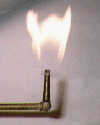
In 1815, the first developed natural gas well in the U.S. was discovered accidentally at Burning Springs during the digging of a salt brine well near Charleston, West Virginia. In the U.S., natural seepage had been observed centuries earlier in various places, but here, there was development and use of the natural gas and oil. In 1921, Fredonia, New York, the first gas well dug specifically for natural gas in the U.S. was drilled to 27 feet by gunsmith, William Hart to develop the seepage seen on the banks of Canadaway Creek. Early use was limited. The first industrial use of natural gas in the US was to evaporate brine for its salt, in 1841 by William Tompkins. Earlier, manufactured gas was first used in the U.S. for street lamps in Baltimore (1816).«
In 1808, The leather splitting machine was patented this day by Samuel Parker of Billerica, MA. (located 20 miles northwest of Boston.)
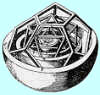
Johannes Kepler And the New Astronomy, by James R. Voelkel. - book suggestion.




