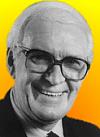
Born 14 Jun 1924; died 22 Mar 2010 at age 85. quotes
Sir James Whyte Black was a Scottish pharmacologist who (along with George H. Hitchings and Gertrude B. Elion) received the Nobel Prize for Physiology or Medicine in 1988 for his development of two important drugs, propranolol and cimetidine. Propranolol was the first clinically useful beta-receptorblocking drug (1964). This type of drug is now being used in the treatment of coronary heart disease (angina pectoris, myocardial infarction) and hypertension. In 1972 Black characterized a new group of histamine receptors, H2-receptors, and subsequently developed the first clinically useful H2-receptorantagonist, cimetidine (Tagamet). This introduced a new principle in the treatment of peptic ulcer.
Sir James Whyte Black was a Scottish pharmacologist who (along with George H. Hitchings and Gertrude B. Elion) received the Nobel Prize for Physiology or Medicine in 1988 for his development of two important drugs, propranolol and cimetidine. Propranolol was the first clinically useful beta-receptorblocking drug (1964). This type of drug is now being used in the treatment of coronary heart disease (angina pectoris, myocardial infarction) and hypertension. In 1972 Black characterized a new group of histamine receptors, H2-receptors, and subsequently developed the first clinically useful H2-receptorantagonist, cimetidine (Tagamet). This introduced a new principle in the treatment of peptic ulcer.
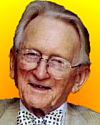
Born 14 Jun 1917; died 6 Aug 2007 at age 90.
Norwegian mathematician who is one of the foremost analytic number theorists. After working in isolation during WW II, due to the occupation of Norway by the Nazis, his accomplishments in the theory of the Riemann zeta function became known. During the 1950's he developed the Selberg trace formula, his most famous accomplishment. It establishes a duality between the length spectrum of a Riemann surface and the eigenvalues of the Laplacian which is analogous to the duality between the prime numbers and the zeros of the zeta function. He was awarded the Fields Medal in 1950 for his work in number theory on generalisations of the sieve methods of Viggo Brun. In 1986 he won the Wolf Prize.
Norwegian mathematician who is one of the foremost analytic number theorists. After working in isolation during WW II, due to the occupation of Norway by the Nazis, his accomplishments in the theory of the Riemann zeta function became known. During the 1950's he developed the Selberg trace formula, his most famous accomplishment. It establishes a duality between the length spectrum of a Riemann surface and the eigenvalues of the Laplacian which is analogous to the duality between the prime numbers and the zeros of the zeta function. He was awarded the Fields Medal in 1950 for his work in number theory on generalisations of the sieve methods of Viggo Brun. In 1986 he won the Wolf Prize.
Born 14 Jun 1912; died 3 Nov 1986 at age 74.
Edward Cuyler Hammond was an American epidemiologist who was the first to link smoking with lung cancer. In 1957, while research director of the American Cancer Society, Hammond told congressional investigators that cigarette smoking is a cause of lung cancer and has a severe effect on a number of other diseases. "Evidence that smoking is a serious health hazard has been accumulating slowly since about 1915," he said, and that recent studies have produced "overwhelming" evidence that cigarette smoking "is a causative factor of great importance in the occurrence of lung cancer." He continued that there has been an "alarming trend in the death rates from lung cancer," with the number of deaths rising from 2,500 in 1930 to an estimated 29,000 in 1956.
Edward Cuyler Hammond was an American epidemiologist who was the first to link smoking with lung cancer. In 1957, while research director of the American Cancer Society, Hammond told congressional investigators that cigarette smoking is a cause of lung cancer and has a severe effect on a number of other diseases. "Evidence that smoking is a serious health hazard has been accumulating slowly since about 1915," he said, and that recent studies have produced "overwhelming" evidence that cigarette smoking "is a causative factor of great importance in the occurrence of lung cancer." He continued that there has been an "alarming trend in the death rates from lung cancer," with the number of deaths rising from 2,500 in 1930 to an estimated 29,000 in 1956.
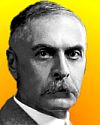
Born 14 Jun 1868; died 26 Jun 1943 at age 75. quotes
Austrian-American physician, immunologist and pathologist who received the 1930 Nobel Prize for Physiology or Medicine for his discovery of the major blood groups and development of the ABO system of blood typing that much reduced risk and made blood transfusion a routine medical practice. Such blood type analysis proved useful also in genetic and legal applications. He first reported that blood had types in 1901. The basis of these types are specific proteins called antigens that are found on the surface of the red blood cells and anti-bodies found in the plasma. He also discovered the Rh factor which explained some complications of pregnancy and birth when the Rh factor of the mother and baby do not match.
Austrian-American physician, immunologist and pathologist who received the 1930 Nobel Prize for Physiology or Medicine for his discovery of the major blood groups and development of the ABO system of blood typing that much reduced risk and made blood transfusion a routine medical practice. Such blood type analysis proved useful also in genetic and legal applications. He first reported that blood had types in 1901. The basis of these types are specific proteins called antigens that are found on the surface of the red blood cells and anti-bodies found in the plasma. He also discovered the Rh factor which explained some complications of pregnancy and birth when the Rh factor of the mother and baby do not match.
The Specificity of Serological Reactions, by Karl Landsteiner. - book suggestion.
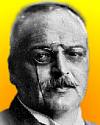
Born 14 Jun 1864; died 19 Dec 1915 at age 51.
German psychiatrist who recognized the disease named after him. In Nov 1901, a 51-year old female patient with signs of dementia had been admitted to the Frankfurt hospital where Dr. Alzheimer was working. At a meeting German psychiatrists in Nov 1906, Alzheimer reported on this patient. The title of his lecture was Über eiene eigenartige Erkrankung der Hirnrinde (On a peculiar disorder of the cerebral cortex). Later on, at the suggestion of Emil Kraepelin, presenile dementia was designated “Alzheimer's disease.” This disease is a progressive, degenerative disorder that affects the brain. The first symptoms are loss of memory, inability to think and understand and gradual behaviour changes. Death follows in from 8 to 20 years.«
German psychiatrist who recognized the disease named after him. In Nov 1901, a 51-year old female patient with signs of dementia had been admitted to the Frankfurt hospital where Dr. Alzheimer was working. At a meeting German psychiatrists in Nov 1906, Alzheimer reported on this patient. The title of his lecture was Über eiene eigenartige Erkrankung der Hirnrinde (On a peculiar disorder of the cerebral cortex). Later on, at the suggestion of Emil Kraepelin, presenile dementia was designated “Alzheimer's disease.” This disease is a progressive, degenerative disorder that affects the brain. The first symptoms are loss of memory, inability to think and understand and gradual behaviour changes. Death follows in from 8 to 20 years.«
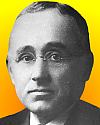
Born 14 Jun 1862; died 13 Aug 1915 at age 53.
Swiss-American chemist whose studies demonstrated that carbon can have a valence (i.e., affinity for electrons) of two (such as quinone) as well as a valence of four, thus greatly advancing the understanding of theoretical organic chemistry. He provided a basis for the modern system of chemical notation. He studied tautomerism, especially of nitroparaffins, and discovered what is now called the "Nef reaction"; the acid-catalyzed conversion of primary and secondary nitroalkanes to aldehydes and ketones, respectively. His major research was on bivalent carbon, including isonitriles, carbon monoxide, fulminates and methylene. In later years, he studied the complex reactions of sugars in alkali and acid.
Swiss-American chemist whose studies demonstrated that carbon can have a valence (i.e., affinity for electrons) of two (such as quinone) as well as a valence of four, thus greatly advancing the understanding of theoretical organic chemistry. He provided a basis for the modern system of chemical notation. He studied tautomerism, especially of nitroparaffins, and discovered what is now called the "Nef reaction"; the acid-catalyzed conversion of primary and secondary nitroalkanes to aldehydes and ketones, respectively. His major research was on bivalent carbon, including isonitriles, carbon monoxide, fulminates and methylene. In later years, he studied the complex reactions of sugars in alkali and acid.
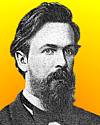
Born 14 Jun 1856; died 20 Jul 1922 at age 66.
Russian mathematician who helped to develop the theory of stochastic processes, especially those called Markov chains, sequences of random variables in which the future variable is determined by the present variable but is independent of the way in which the present state arose from its predecessors. (For example, the probability of winning at the game of Monopoly can be determined using Markov chains.) His work based on the study of the probability of mutually dependent events has been developed and widely applied to the biological and social sciences.
Russian mathematician who helped to develop the theory of stochastic processes, especially those called Markov chains, sequences of random variables in which the future variable is determined by the present variable but is independent of the way in which the present state arose from its predecessors. (For example, the probability of winning at the game of Monopoly can be determined using Markov chains.) His work based on the study of the probability of mutually dependent events has been developed and widely applied to the biological and social sciences.
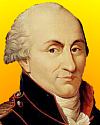
Born 14 Jun 1736; died 23 Aug 1806 at age 70. quotes
French physicist best known for the formulation of Coulomb's law, which states that the force between two electrical charges is proportional to the product of the charges and inversely proportional to the square of the distance between them. Coulombic force is one of the principal forces involved in atomic reactions. The inverse-square relationship is also seen in the relationship of the gravitation force between masses. In 1777, he invented a torsion balance which he subsequently modified for electrical measurements. He also did research on friction of machinery, on windmills, and on the elasticity of metal and silk fibres. more
French physicist best known for the formulation of Coulomb's law, which states that the force between two electrical charges is proportional to the product of the charges and inversely proportional to the square of the distance between them. Coulombic force is one of the principal forces involved in atomic reactions. The inverse-square relationship is also seen in the relationship of the gravitation force between masses. In 1777, he invented a torsion balance which he subsequently modified for electrical measurements. He also did research on friction of machinery, on windmills, and on the elasticity of metal and silk fibres. more
Coulomb and the Evolution of Physics and Engineering in Eighteenth Century France, by C. Stewart Gilmor. - book suggestion.
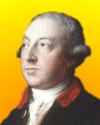
Born 14 Jun 1726; died 16 Dec 1798 at age 72.
Welsh naturalist and traveller, one of the leading zoologists of his time. His extensive travels took him through Europe, mostly on horseback, where he observed and recorded not only the flora and fauna, but also the local people and antiquities. He was a prolific author of natural history and topographical works. Pennant wrote about these is an exceptionally readable style. His first book was the 1766 folio, British Zoology, which generated new interest in animal research, especially birds. He published more works of natural history on the following years including the Synopsis of Quadrupeds, Arctic Zoology, Genera of Birds, and Indian Zoology. Pennant believed in meticulous research and preparation and in the importance of high quality illustrations. Thus, he popularized and promoted the study of natural history, though on the whole he was not a propounder of new theories. Pennant is best known for his travels and extensive writings about touring in Wales, her language, people, history and landscape.
Welsh naturalist and traveller, one of the leading zoologists of his time. His extensive travels took him through Europe, mostly on horseback, where he observed and recorded not only the flora and fauna, but also the local people and antiquities. He was a prolific author of natural history and topographical works. Pennant wrote about these is an exceptionally readable style. His first book was the 1766 folio, British Zoology, which generated new interest in animal research, especially birds. He published more works of natural history on the following years including the Synopsis of Quadrupeds, Arctic Zoology, Genera of Birds, and Indian Zoology. Pennant believed in meticulous research and preparation and in the importance of high quality illustrations. Thus, he popularized and promoted the study of natural history, though on the whole he was not a propounder of new theories. Pennant is best known for his travels and extensive writings about touring in Wales, her language, people, history and landscape.

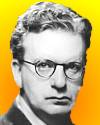
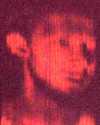
Scottish engineer who was the first man to televise outline pictures of objects (1924) followed the next year by recognizable human faces. By 1926, he was able to demonstrate TV for moving objects at the Royal Institution, London, and colour TV in 1928. In 1936, the BBC started the world's first regular high-definition service from Alexandra Palace using the Baird system, though it was abandoned one year later in favour of a system developed by Marconi-EMI. By 1939, 20,000 television sets were in use in Great Britain. In 1940, Baird gave a demonstration of a high-definition full colour stereo television. Baird continued experimenting, and was reported to have completed his researches on stereoscopic television in 1946.
Television And Me: The Memoirs of John Logie Baird, by John Logie Baird, Malcolm Baird. - book suggestion.
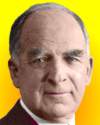
Died 14 Jun 1938 at age 76 (born 11 Apr 1862). quotes
William Wallace Campbell was an American astronomer who was director at Lick Observatory (1900-1930). He had first worked there as a summer volunteer (1890), learning spectroscopy under James E. Keeler, whom he succeeded (1891) as a staff astronomer. Campbell designed the classic Mills spectrograph (1893), and determined that the Martian atmosphere was deficient in oxygen and water vapor. He discovered and cataloged numerous spectroscopic binary stars (published 1924). Campbell is remembered for the systematic observation of radial velocity of stars (their motions toward or away from the Earth), to determine the Sun’s motion relative to the surrounding stars. He led several eclipse expeditions, including one (1922) confirming Einstein’s gravitational bending of light.«
William Wallace Campbell was an American astronomer who was director at Lick Observatory (1900-1930). He had first worked there as a summer volunteer (1890), learning spectroscopy under James E. Keeler, whom he succeeded (1891) as a staff astronomer. Campbell designed the classic Mills spectrograph (1893), and determined that the Martian atmosphere was deficient in oxygen and water vapor. He discovered and cataloged numerous spectroscopic binary stars (published 1924). Campbell is remembered for the systematic observation of radial velocity of stars (their motions toward or away from the Earth), to determine the Sun’s motion relative to the surrounding stars. He led several eclipse expeditions, including one (1922) confirming Einstein’s gravitational bending of light.«
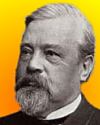
Died 14 Jun 1903 at age 76 (born 21 Aug 1826). quotes
German anatomist who laid emphasis on comparative anatomy. This research led him to become one of Europe's strongest supporters of the theory of evolution. Gegenbaur's work on fishes provided evidence in support of Huxley's stand against a theory that held that the skull originated from expanded vertebrae. From studies in embryology, he asserted that all eggs are simple cells (1861) as suggested earlier by Schwann (1838). Thus not only the eggs and sperm of mammals, but all eggs and sperm were single cells, and so were even the relatively huge eggs of birds and reptiles.«
German anatomist who laid emphasis on comparative anatomy. This research led him to become one of Europe's strongest supporters of the theory of evolution. Gegenbaur's work on fishes provided evidence in support of Huxley's stand against a theory that held that the skull originated from expanded vertebrae. From studies in embryology, he asserted that all eggs are simple cells (1861) as suggested earlier by Schwann (1838). Thus not only the eggs and sperm of mammals, but all eggs and sperm were single cells, and so were even the relatively huge eggs of birds and reptiles.«
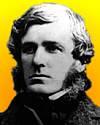
Died 14 Jun 1876 at age 56 (born 5 May 1820).
Canadian geologist and paleontologist, who was the first Canadian paleontologist. For three years as the editor of the Ottawa Citizen, he wrote a series of articles on science, including geology and paleontology. He published his first scientific paper on Trenton fossils in 1854. He launched a new monthly periodical, The Canadian Naturalist and Geologist in 1856, which he also edited and was the major contributor. In Aug 1856 he was appointed staff paleontologist with the Canadian Geological Survey by William Edmond Logan, the founder of the Survey. Billings immediately began the task of identifying a 20-year backlog of fossils collected by the Survey. By 1863 he had published descriptions of no fewer than 526 new species of fossils.
Canadian geologist and paleontologist, who was the first Canadian paleontologist. For three years as the editor of the Ottawa Citizen, he wrote a series of articles on science, including geology and paleontology. He published his first scientific paper on Trenton fossils in 1854. He launched a new monthly periodical, The Canadian Naturalist and Geologist in 1856, which he also edited and was the major contributor. In Aug 1856 he was appointed staff paleontologist with the Canadian Geological Survey by William Edmond Logan, the founder of the Survey. Billings immediately began the task of identifying a 20-year backlog of fossils collected by the Survey. By 1863 he had published descriptions of no fewer than 526 new species of fossils.

Neptune
Died 14 Jun 1875 at age 52 (born 13 Aug 1822).
Heinrich Ludwig d' Arrest was a German astronomer who, while a student at the Berlin Observatory, hastened the discovery of Neptune by suggesting comparison of the sky, in the region indicated by Urbain Le Verrier's calculations, with a recently prepared star chart. The planet was found the same night. His father-in-law was A. F. Moebius (1790 - 1868). d'Arrest found several comets, the one of 1851 with a period of 6.6 years bears his name. One work he published was on the Asteroids between Mars and Jupiter, another work titled Siderum nebulosorum observationes Hafniensis contained 1942 nebula, 340 described for the first time.[DSB gives date of birth as 13 Aug 1822. EB states 13 July 1822.]
Heinrich Ludwig d' Arrest was a German astronomer who, while a student at the Berlin Observatory, hastened the discovery of Neptune by suggesting comparison of the sky, in the region indicated by Urbain Le Verrier's calculations, with a recently prepared star chart. The planet was found the same night. His father-in-law was A. F. Moebius (1790 - 1868). d'Arrest found several comets, the one of 1851 with a period of 6.6 years bears his name. One work he published was on the Asteroids between Mars and Jupiter, another work titled Siderum nebulosorum observationes Hafniensis contained 1942 nebula, 340 described for the first time.[DSB gives date of birth as 13 Aug 1822. EB states 13 July 1822.]
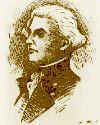
Died 14 Jun 1825 at age 70 (born 2 Aug 1754).
French-American architect. L'Enfant came to the U.S. as a French engineer who assisted the American Continental Army in its fight against the British during the American Revolution. Appointed by President Washington in 1791 to design the new federal city, L'Enfant designed the basic plan for Washington, D.C., based on many European cityscapes. L'Enfant was dismissed from his job in 1792 following professional disagreements and personality clashes with the three commissioners appointed by President Washington to oversee the project.
French-American architect. L'Enfant came to the U.S. as a French engineer who assisted the American Continental Army in its fight against the British during the American Revolution. Appointed by President Washington in 1791 to design the new federal city, L'Enfant designed the basic plan for Washington, D.C., based on many European cityscapes. L'Enfant was dismissed from his job in 1792 following professional disagreements and personality clashes with the three commissioners appointed by President Washington to oversee the project.
Died 14 Jun 1768 at age 58 (born 10 Jun 1710).
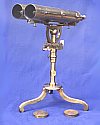
British optician and astronomer who produced the first truly parabolic and elliptic (hence nearly distortionless) mirrors for reflecting telescopes. During his working life of over 35 years, Short made about 1,360 instruments - not only for customers in Britain but also for export: one is still preserved in Leningrad, another at Uppsala and several in America. Short was principal British collator and computer of the Transit of Venus observations made throughout the world on 6th June 1761. His instruments travelled on Endeavour with Captain Cook to observe the next Transit of Venus on 3rd June 1769, but Short died before this event took place.[Image: .Binocular Gregorian telescope by James Short, c. 1765, focal length 9.5 inches. Tubes numbered 275/1307 and 276/1308. The 275 and 276 are the numbers made of this focal length, and 1307 and 1308 are the total number of telescopes he made.]
British optician and astronomer who produced the first truly parabolic and elliptic (hence nearly distortionless) mirrors for reflecting telescopes. During his working life of over 35 years, Short made about 1,360 instruments - not only for customers in Britain but also for export: one is still preserved in Leningrad, another at Uppsala and several in America. Short was principal British collator and computer of the Transit of Venus observations made throughout the world on 6th June 1761. His instruments travelled on Endeavour with Captain Cook to observe the next Transit of Venus on 3rd June 1769, but Short died before this event took place.[Image: .Binocular Gregorian telescope by James Short, c. 1765, focal length 9.5 inches. Tubes numbered 275/1307 and 276/1308. The 275 and 276 are the numbers made of this focal length, and 1307 and 1308 are the total number of telescopes he made.]
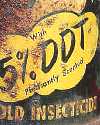
In 1972, the insecticide DDT was banned from use in the U.S. after 31 Dec 1972, by executive order of the Environmental Protection Agency.
DDT, Silent Spring, and the Rise of Environmentalism: Classic Texts, by Thomas R. Dunlap. - book suggestion.
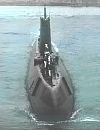
In 1952, the keel was laid for the first American nuclear submarine, U.S.S. Nautilus, in a ceremony attended by President Harry S. Trumann. It was built by the Electric Boat Company division of General Dynamics Corp. at Groton, Conn., under the supervision of Captain Hyman George Rickover. Its liquid-cooled atomic reactor provided power for steam turbines. The submarine was launched in on 21 Jan 1954, and commisioned later that year on 30 Sep 1954. It was tested under nuclear power on 17 Jan 1955 and completed 22 Apr 1955.
In 1951, the Univac1 was unveiled in Washington, DC. and dedicated as the world's first commercial computer. The Univac was manufactured for the U.S. Census Bureau by Remington Rand Corp. The massive computer was 8 feet high, 7-1/2 feet wide and 14-1/2 feet long. It could retain a maximum of 1000 numbers and was able to add, subtract, multiply, divide, sort, collate and take square and cube roots. Its transfer rate to and from magnetic tape was 10,000 characters per second. This was five years after the ENIAC, the first electronic computer in the U.S., was completed.
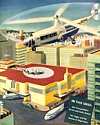
In 1943, helicopter buses were proposed by Greyhound for large-scale public travel in an application filed with the Civil Aeronautics Board (CAB). Industrial designer Raymond Loewy and inventor Igor Sikorsky created the concept for a streamlined 14-seat air bus. A scale model was shown at hearings before the CAB, but none were built. Overly-optimistic plans were to provide landing ports by adapting Greyhound bus terminals. The proposed venture was publicized in a New York Times article on 9 Sep 1945. However, Greyhound Skyways began with a pair of four-place S-51 Sikorsky Helicopters, painted in blue-and-white with a greyhound logo. Within just a few years, it closed after facing the reality of being non-economic.«[Image: Artist's conception of a Greyhound Heliport from Standard Oil's quarterly Bulletin in late 1943, showing Loewy's helicopter design.]
In 1938, chlorophyll was patented as a "therapeutic agent for the use in the treatment of infection" of the blood stream, infected parts, and for open cuts and wounds. (U.S. No. 2,120,667). The patent was issued to Dr. Benjamin Gruskin of Philadelphia, Pa., who assigned it to the Lakeland Foundation of Chicago, Ill. Chlorophyll is the green pigment responsible for photosynthesis in plants. Gruskin proposed that chlorophyll could be prepared in a water-soluble form (chlorophyllins) to be applied directly to infected parts, or applied intravenously to the blood stream. He stated he had discovered that in this way there would be a gradual attenuation of infectious bacteria. Also, the formation of granulation tissue is enhanced, promoting healing.
In 1932, Thomas Alva Edision was issued his next to last patent, for a method of "Production of Molded Articles" (U.S. No. 1,862,740).
In 1898, three patents were issued Thomas A. Edison, which were for a "Drying Apparatus" (U.S. No. 605,475), a "Phonograph" (No. 605,667) and a "Mixer" (No. 605,668).
In 1892, a number of patents were issued to Thomas A. Edison for a variety of inventions: U.S. Nos. 476,983 to 476,993. They were for, respectively, a “Pyromagnetic Generator,” an “Expansible Pulley,” a “Trolley for Electric Railways,” a “Means for “Propelling Electric Cars,” an “Electric Locomotive,” a “Lightning-Arrester,” a “Conductor for Electric Railways,” an “Electric Meter,” a “Method of and Apparatus for Separating Ores,” an “Incandescent Electric Lamp” and an “Electric-Arc Lamp.”
In 1884, New York was the first state in the U.S. to enact legislation requiring the burying of utility wires. It required that in any incorporated city with a population over 500,000 "all telegraph, telephonic and electric light wires and cables ... be placed under the surface of the streets, lanes and avenues." Furthermore, the act required that telegraph pole were to be removed prior to 1 Nov 1885.
(USPTO)
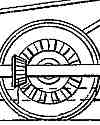
In 1881, a U.S. patent was issued for the gear-driven steam locomotive invented by Ephraim Shay (No. 242,992). He designed an engine suitable to haul heavy logging trains at low speeds over rough terrain with even poorly-laid, uneven track, sharp curves, and grades up to 14 percent. The locomotive bogie-wheels were formed with bevel-gear teeth driven by a bevel-gear on a shaft directly connected to the engine. Power to the shaft was transferred through a crankshaft and universal joints from vertically mounted pistons. Having been in the saw-mill business since 1869, Shaw developed his locomotive when he saw the need for a better way to move logs harvested from the forest to the mill to replace horse-drawn sleds.«[Image: detail from patent diagram showing bevel gears on wheel and longitudinal drive shaft.]
In 1881, six patents were issued to Thomas A. Edison for electrical inventions, U.S. Nos. 242,896 to 242,901. They were for, respectively, two concerning an "Incandescent Electric Lamp," an "Incandescent Electric Lamp," a "Magneto or Dynamo Electric Machine," about "Electric Lighting," about "Manufacturing Carbons for Electric Lamps" and an "Electric Meter."
In 1881, a patent was issued for his invention of a piano player to John McTammany, Jr., of Cambridge, Mass. He had earlier filed a caveat on 7 Sep 1876. His patent descibed his "mechanical mucical instrument" as a mechanism for automatic playing of organs using narrow sheets of perforated flexible paper which governed the notes to be played. The first completely automatic piano player to be manufactured in the U.S. was the Angelus made in Feb 1897, which was patented by its inventor, Edward H. Leveaux, in England on 27 Feb 1879, and who was issued a U.S. patent on 4 Oct 1881 for an "apparatus for storing and transmitting motive power."
In 1854, the first U.S. federal entomologist was commissioned. Townend Glover was selected as the “expert for collecting statistics and other information on seeds, fruits and insects of the United States.” His first report was printed the same year under the imprint of the U.S. Patent Office, entitled Insects Injurious and Beneficial to Vegetation. Two months earlier, on 15 Apr 1854, the New York state legislature provided funding for an entomologist to do research in their state. Asa Fitch was appointed 4 May 1854 to produce a report describing local insects, especially those injurious to vegetation.
In 1834, the first U.S. invention of sandpaper was covered by four patents issued on this date to Isaac Fisher, Jr., of Springfield, Vt. These patents were titled "Coating Paper." (No X8246, -7)
(USPTO)
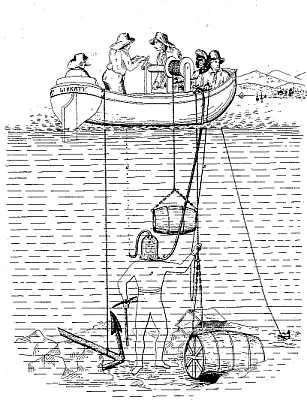
In 1834, the first U.S. patent for a practical underwater diving suit was issued to Leonard Norcross of Dixfield, Maine (No. X8255).* Calling it a “Diving Armor,” he designed an airtight outfit made from India rubber and leather. It had a brass helmet connected via a rubber hose to an air bellows pump on a boat. To reduce buoyancy, the feet were weighted with lead shot. In May 1834, one month earlier, he tested the diving suit in the Webb River. Norcross named his son Submarinus in honor of the achievement.* The first truly effective diving suit with pump is attributed to an Englishman, Augustus Siebe, who designed it in 1829 and was entrusted with equipping the French Navy until 1857.*
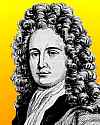
In 1699, Thomas Savery, at the weekly meeting at Gresham-College, demonstrated before the Royal Society a small model of his invention - a steam-powered water pump - which he patented 25 Jul 1698, "for raiseing water and occasioning motion to all sorts of mill-work by the impellant force of fire; which will be of great use and advantage for drayning mines, serveing townes with water, and for the working of all sorts of mills where they have not the benefit of water nor constant windes." Steam in a vessel condensed by an external spray of cold water caused a partial vacuum to lift water into the vessel from a lower sump, which was then forced further upward when more high-pressure steam entered.«[Ref: Philosphical Transactions of the Royal Society, London, vol. 21, p.228.]




