
Born 13 Jun 1926; died 3 Apr 1994 at age 67.
French geneticist who made the first positive identification (1959) linking a human disorder to a chromosome aberration. The anomaly he pinpointed, the trisomy 21, causes Down syndrome, one of the most common forms of mental retardation. In Jul 1958, while examining the chromosomes of a so-called "Mongol" child, Lejeune discovered the existence of an extra chromosome on the 21st pair. On 26 Jan 1959, Jérôme Lejeune, with Marthe Gauthier and Raymond Turpin, presented their discovery to the Académie des Sciences. This began to shed light on the existence of diseases by chromosomal aberration, unsuspected until then. Lejeune continued to identify more connections between specific disorders and chromosomal anomalies.
French geneticist who made the first positive identification (1959) linking a human disorder to a chromosome aberration. The anomaly he pinpointed, the trisomy 21, causes Down syndrome, one of the most common forms of mental retardation. In Jul 1958, while examining the chromosomes of a so-called "Mongol" child, Lejeune discovered the existence of an extra chromosome on the 21st pair. On 26 Jan 1959, Jérôme Lejeune, with Marthe Gauthier and Raymond Turpin, presented their discovery to the Académie des Sciences. This began to shed light on the existence of diseases by chromosomal aberration, unsuspected until then. Lejeune continued to identify more connections between specific disorders and chromosomal anomalies.
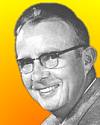
Born 13 Jun 1911; died 1 Sep 1988 at age 77. quotes
Luis Walter Alvarez was an American physicist who was awarded the Nobel Prize for Physics in 1968 for work that included the discovery of many resonance particles (subatomic particles having extremely short lifetimes and occurring only in high-energy nuclear collisions). Alvarez invented a radio distance and direction indicator. During World War II, he designed a landing system for aircraft and a radar system for locating planes. He participated in the development of the atomic bomb at the Los Alamos Scientific Laboratory, Los Alamos, N.M. (1944-45). He suggested the technique for detonating the implosion type of atomic bomb. Later, he helped develop the hydrogen bubble chamber, used to detect subatomic particles. This research led to the discovery of over 70 elementary particles and resulted in a major revision of nuclear theories.
Luis Walter Alvarez was an American physicist who was awarded the Nobel Prize for Physics in 1968 for work that included the discovery of many resonance particles (subatomic particles having extremely short lifetimes and occurring only in high-energy nuclear collisions). Alvarez invented a radio distance and direction indicator. During World War II, he designed a landing system for aircraft and a radar system for locating planes. He participated in the development of the atomic bomb at the Los Alamos Scientific Laboratory, Los Alamos, N.M. (1944-45). He suggested the technique for detonating the implosion type of atomic bomb. Later, he helped develop the hydrogen bubble chamber, used to detect subatomic particles. This research led to the discovery of over 70 elementary particles and resulted in a major revision of nuclear theories.
Adventures of a Physicist, by Luis W. Alvarez. - book suggestion.
Born 13 Jun 1911; died 17 May 1977 at age 65.
German-American physicist who invented the field emission microscope (FIM), which provided magnifications in excess of one million. For the first time made it possible to take pictures of individual atoms. Images of the atomic structures of tungsten were first published in 1951 in the journal Zeitschrift für Physik. In FIM, a voltage of about 10kV is applied to a sharp metal tip, cooled to below 50 kelvin in a low-pressure helium gas atmosphere. Gas atoms are ionized by the strong electric field in the vicinity of the tip and repelled perpendicular to the tip surface. A detector images the spatial distribution of these ions giving a magnification of the curvature of the surface. (Also spelled Mueller.)
German-American physicist who invented the field emission microscope (FIM), which provided magnifications in excess of one million. For the first time made it possible to take pictures of individual atoms. Images of the atomic structures of tungsten were first published in 1951 in the journal Zeitschrift für Physik. In FIM, a voltage of about 10kV is applied to a sharp metal tip, cooled to below 50 kelvin in a low-pressure helium gas atmosphere. Gas atoms are ionized by the strong electric field in the vicinity of the tip and repelled perpendicular to the tip surface. A detector images the spatial distribution of these ions giving a magnification of the curvature of the surface. (Also spelled Mueller.)
Born 13 Jun 1903; died 28 Sep 1987 at age 84.
Willard Harrison Bennett was an American physicist who discovered (1934) the pinch effect, an electromagnetic process that may offer a way to magnetically confine a plasma at temperatures high enough for controlled nuclear fusion reactions to occur. He proposed (1936) the tandem Van de Graaff accelerator, which later became widely used in nuclear research. He invented a radio-frequency mass spectrometer, developed in 1955. Since it required no heavy magnet, it was the first launched into space to measure the masses of atoms. Sputnik III carried the first R-F mass spectrometer into space. It was the only space instrument used by the Russians and credited to an American inventor in their own Russian-language publications.
Willard Harrison Bennett was an American physicist who discovered (1934) the pinch effect, an electromagnetic process that may offer a way to magnetically confine a plasma at temperatures high enough for controlled nuclear fusion reactions to occur. He proposed (1936) the tandem Van de Graaff accelerator, which later became widely used in nuclear research. He invented a radio-frequency mass spectrometer, developed in 1955. Since it required no heavy magnet, it was the first launched into space to measure the masses of atoms. Sputnik III carried the first R-F mass spectrometer into space. It was the only space instrument used by the Russians and credited to an American inventor in their own Russian-language publications.
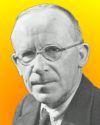
Born 13 Jun 1893; died 13 Oct 1963 at age 70.
Alan Arnold Griffith was a British aeronautical engineer. During the late 1920s, A.A. Griffith and F. Whittle independently made the first practical proposals for the use of gas turbine engines in aircraft. Griffith concentrated on developing an axial flow compressor, and in 1929 he proposed a gas turbine engine driving a propeller, the so called turbo-prop engine. Earlier, in 1917, with G.I.Taylor, he published a pioneering article on the use of soap films in solving torsion problems. In 1920, he published a seminal article on the theory of the brittle fracture. At Rolls Royce (1939-60) he designed turbojet engines, and in the 1950s, vertical take-off aircraft. He developed the remarkable "flying bedstead" which first flew in 1954.
Alan Arnold Griffith was a British aeronautical engineer. During the late 1920s, A.A. Griffith and F. Whittle independently made the first practical proposals for the use of gas turbine engines in aircraft. Griffith concentrated on developing an axial flow compressor, and in 1929 he proposed a gas turbine engine driving a propeller, the so called turbo-prop engine. Earlier, in 1917, with G.I.Taylor, he published a pioneering article on the use of soap films in solving torsion problems. In 1920, he published a seminal article on the theory of the brittle fracture. At Rolls Royce (1939-60) he designed turbojet engines, and in the 1950s, vertical take-off aircraft. He developed the remarkable "flying bedstead" which first flew in 1954.
(EB)
Born 13 Jun 1870; died 6 Apr 1961 at age 90. quotes
Jules Jean Baptiste Vincent Bordet was a Belgian bacteriologist and immunologist who discovered (1895) the complement, a complex of proteins in the blood that causes the destruction of foreign cells in an immune response. In 1906, he isolated the bacterium responsible for whooping cough, which is named after him - Bordetella (Haemophilus) pertussis - for which he developed a vaccine. He also isolated a number of other pathogenic bacteria. For his discovery of immunity factors in blood serum, he received the Nobel Prize for Physiology or Medicine in 1919. This development was vital to the diagnosis and treatment of many dangerous contagious bacterial diseases. For example, it is the basis of the Wassermann test for syphilis.
Jules Jean Baptiste Vincent Bordet was a Belgian bacteriologist and immunologist who discovered (1895) the complement, a complex of proteins in the blood that causes the destruction of foreign cells in an immune response. In 1906, he isolated the bacterium responsible for whooping cough, which is named after him - Bordetella (Haemophilus) pertussis - for which he developed a vaccine. He also isolated a number of other pathogenic bacteria. For his discovery of immunity factors in blood serum, he received the Nobel Prize for Physiology or Medicine in 1919. This development was vital to the diagnosis and treatment of many dangerous contagious bacterial diseases. For example, it is the basis of the Wassermann test for syphilis.
Born 13 Jun 1868; died 10 Jan 1919 at age 50.
Wallace Clement Ware Sabine was an American physicist who founded the science of architectural acoustics. After experimenting in the Fogg lecture room at Harvard, to investigate the effect of absorption on the reverberation time, on 29 Oct 1898 he discovered the type of relation between these quantities. The duration T of the residual sound to decay below the audible intensity, starting from a 1,000,000 times higher initial intensity is given by: T = 0.161 V/A (V=room volume in m³, A=total absorption in m². The first auditorium Sabine designed applying his new insight in acoustics, was the new Boston Music Hall, formally opened on 15 Oct 1900. Now known as the Symphony Hall, and still considered one of the world's three finest concert halls.
Wallace Clement Ware Sabine was an American physicist who founded the science of architectural acoustics. After experimenting in the Fogg lecture room at Harvard, to investigate the effect of absorption on the reverberation time, on 29 Oct 1898 he discovered the type of relation between these quantities. The duration T of the residual sound to decay below the audible intensity, starting from a 1,000,000 times higher initial intensity is given by: T = 0.161 V/A (V=room volume in m³, A=total absorption in m². The first auditorium Sabine designed applying his new insight in acoustics, was the new Boston Music Hall, formally opened on 15 Oct 1900. Now known as the Symphony Hall, and still considered one of the world's three finest concert halls.
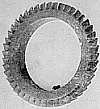
Straight blading of Parsons first turbine (1884)
British engineer whose invention of a multi-stage steam turbine revolutionized marine propulsion (1884). Each stage was designed to control and maximize the power delivered. By 1891, he had designed his turbine with a condenser for powering dynamos in electric generating stations. In 1897, using his turbine to power his 100-ft ship Turbinia, he reached 35 knots. The first vessel to be propelled by turbines, with its amazing speed led to the construction of many turbine propelled warships for the British navy. He further improved efficiency with a mechanical reducing gear to link the engine to the propellers. Parsons also invented a device for improving phonographs, pioneered in aviation, and produced a nonskid device for automobile tires.
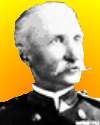
1912 (EB)
Born 13 Jun 1854; died 6 Apr 1942 at age 87.
U.S. naval officer and inventor whose new instruments greatly improved the efficiency and effectiveness of late 19th-century warships. In 1898, while the navigator of the gunboat Petrel during the Battle of Manila Bay, he determined the ranges of enemy ships for use by the gunners by using his own invention, a stadimeter range finder. Fiske's prolific activity as an inventor began in the mid-1870s with some applications in each World War. His major inventions in electrical and gun-control systems included range finding, ammunition hoists and gun-turret motors and torpedo radio control.
U.S. naval officer and inventor whose new instruments greatly improved the efficiency and effectiveness of late 19th-century warships. In 1898, while the navigator of the gunboat Petrel during the Battle of Manila Bay, he determined the ranges of enemy ships for use by the gunners by using his own invention, a stadimeter range finder. Fiske's prolific activity as an inventor began in the mid-1870s with some applications in each World War. His major inventions in electrical and gun-control systems included range finding, ammunition hoists and gun-turret motors and torpedo radio control.
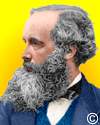
Born 13 Jun 1831; died 5 Nov 1879 at age 48. quotes
Scottish physicist and mathematician. Maxwell's researches united electricity and magnetism into the concept of the electro-magnetic field. In London, around 1862, Maxwell calculated that the speed of propagation of an electromagnetic field is approximately that of the speed of light. He proposed that the phenomenon of light is therefore an electromagnetic phenomenon. The four partial differential equations, now known as Maxwell's equations, first appeared in fully developed form in Electricity and Magnetism (1873). He died relatively young; some of the theories he advanced in physics were only conclusively proved long after his death. Maxwell's ideas also paved the way for Einstein's special theory of relativity and the quantum theory.
Scottish physicist and mathematician. Maxwell's researches united electricity and magnetism into the concept of the electro-magnetic field. In London, around 1862, Maxwell calculated that the speed of propagation of an electromagnetic field is approximately that of the speed of light. He proposed that the phenomenon of light is therefore an electromagnetic phenomenon. The four partial differential equations, now known as Maxwell's equations, first appeared in fully developed form in Electricity and Magnetism (1873). He died relatively young; some of the theories he advanced in physics were only conclusively proved long after his death. Maxwell's ideas also paved the way for Einstein's special theory of relativity and the quantum theory.
The Man Who Changed Everything: The Life of James Clerk Maxwell, by Basil Mahon. - book suggestion.
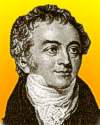
Born 13 Jun 1773; died 10 May 1829 at age 55. quotes
English physician, physicist and Egyptologist who reinforced the wave theory of light with his study of interference of light. As a medical student, he had discovered the how the shape of the eye's lens changes to focus. In 1801, he recognized the cause of astigmatism. Young demonstrated the wave nature of light, polarization of light, interference fringes, and explained the colours seen in thin films such as soap bubbles. He associated wavelength with colour of light, and the eye's perception of any colour as a mixture of red, blue and green. Young's modulus is named after his work with elasticity. He also worked measuring the size of molecules, liquid surface tension. He was also an Egyptologist who helped decipher the Rosetta Stone. more
English physician, physicist and Egyptologist who reinforced the wave theory of light with his study of interference of light. As a medical student, he had discovered the how the shape of the eye's lens changes to focus. In 1801, he recognized the cause of astigmatism. Young demonstrated the wave nature of light, polarization of light, interference fringes, and explained the colours seen in thin films such as soap bubbles. He associated wavelength with colour of light, and the eye's perception of any colour as a mixture of red, blue and green. Young's modulus is named after his work with elasticity. He also worked measuring the size of molecules, liquid surface tension. He was also an Egyptologist who helped decipher the Rosetta Stone. more

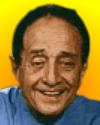
Died 13 Jun 2003 at age 81 (born 21 May 1922).
American surgeon, a pioneer of modern immunology who performed the world's first successful human bone marrow transplant (1968) from his sister to a 4-month-old baby boy with an inherited immune disorder. From age 6, Good wished to become a doctor because his father died of cancer. While a junior undergraduate he suffered but recovered from a poliolike disease. He identified the thymus and the tonsils as crucial organs of the immune system in humans. He helped establish that problems with the body's immune response were more common than had been thought and were actually a frequent basis of serious diseases. His research also led to the identification of T-cells and B-cells. In 1987 he helped establish the National Bone Marrow Registry.«
American surgeon, a pioneer of modern immunology who performed the world's first successful human bone marrow transplant (1968) from his sister to a 4-month-old baby boy with an inherited immune disorder. From age 6, Good wished to become a doctor because his father died of cancer. While a junior undergraduate he suffered but recovered from a poliolike disease. He identified the thymus and the tonsils as crucial organs of the immune system in humans. He helped establish that problems with the body's immune response were more common than had been thought and were actually a frequent basis of serious diseases. His research also led to the identification of T-cells and B-cells. In 1987 he helped establish the National Bone Marrow Registry.«
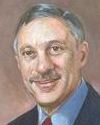
Died 13 Jun 1994 at age 55 (born 9 Jul 1938).
American scientist who was a NASA researcher and who helped develop the theory that atomic war would result in a "nuclear winter" as a world-renowned expert in the study of planetary atmospheres and particulates using nongrey radiative transfer techniques. In other work, he examined evolutionary climate change on all the terrestrial planets and detailed models of the early evolution of the giant gas planets. He made fundamental contributions to the design of numerous NASA missions. Pollack discovered the first real evidence that the clouds of Venus are composed of sulphuric acid. He explained the reason for the paradox that Saturn's rings showed low microwave emissivity but high radar reflectivity.
American scientist who was a NASA researcher and who helped develop the theory that atomic war would result in a "nuclear winter" as a world-renowned expert in the study of planetary atmospheres and particulates using nongrey radiative transfer techniques. In other work, he examined evolutionary climate change on all the terrestrial planets and detailed models of the early evolution of the giant gas planets. He made fundamental contributions to the design of numerous NASA missions. Pollack discovered the first real evidence that the clouds of Venus are composed of sulphuric acid. He explained the reason for the paradox that Saturn's rings showed low microwave emissivity but high radar reflectivity.
Died 13 Jun 1977 at age 85 (born 15 Aug 1891).
Tor Harold Percival Bergeron was a Swedish meteorologist best known for his work on cloud physics. He was the first meteorologist to take into account the upper atmospheric phenomena and their effect on climate. He demonstrated that raindrops can form in the upper parts of clouds, which contain little liquid water, through the growth of ice crystals. This happens at temperatures between -10°C and -30°C (14°F and -22°F) and is known as the Bergeron process. Work done in the 1930s by Tor Bergeron and W. Findeisen led to the concept that clouds may contain both supercooled water and ice crystals. This led further to the concepts of “warm rain” and “cold rain.”
Tor Harold Percival Bergeron was a Swedish meteorologist best known for his work on cloud physics. He was the first meteorologist to take into account the upper atmospheric phenomena and their effect on climate. He demonstrated that raindrops can form in the upper parts of clouds, which contain little liquid water, through the growth of ice crystals. This happens at temperatures between -10°C and -30°C (14°F and -22°F) and is known as the Bergeron process. Work done in the 1930s by Tor Bergeron and W. Findeisen led to the concept that clouds may contain both supercooled water and ice crystals. This led further to the concepts of “warm rain” and “cold rain.”
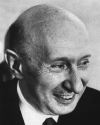
Died 13 Jun 1972 at age 73 (born 3 Jun 1899). quotes
Hungarian-American physicist and physiologist who received the 1961 Nobel Prize for Physiology or Medicine for his discovery of the physical mechanism of stimulation within the cochlea by which sound is analyzed and communicated in the cochlea, a portion of the inner ear. Békésy developed anatomical techniques that allowed rapid, nondestructive dissection of the cochlea. Békésy was able to observe the traveling waves along the basilar membrane that were produced by sound. He observed the shape of these waves by stroboscopic examination of the motion of particles of silver which he sprinkled on the nearly transparent basilar membrane.
Hungarian-American physicist and physiologist who received the 1961 Nobel Prize for Physiology or Medicine for his discovery of the physical mechanism of stimulation within the cochlea by which sound is analyzed and communicated in the cochlea, a portion of the inner ear. Békésy developed anatomical techniques that allowed rapid, nondestructive dissection of the cochlea. Békésy was able to observe the traveling waves along the basilar membrane that were produced by sound. He observed the shape of these waves by stroboscopic examination of the motion of particles of silver which he sprinkled on the nearly transparent basilar membrane.
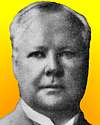
Died 13 Jun 1948 at age 83 (born 29 Dec 1864).
Henry Pelouze deForest was an American gynaecologist and surgeon who in 1902 established the first fingerprint file in the U.S., and invented the dactyloscope, a measuring device to analyze finger print patterns. Shortly after becoming its chief medical examiner, he was requested by the New York Civil Service Commission, to devise a system of personal identification to combat fraud at civil service examinations for police and fire department jobs. Hired stand-ins had been taking the test on behalf of candidates. A scandal resulted when a particular stand-in revealed he had taken the test for a dozen different candidates. DeForest first thought of utilizing the Bertillon anthropometric method, but instead adopted the simpler fingerprinting procedure used by Scotland Yard. This fingerprint file thus began for bureaucratic rather than criminal purposes. The first record was created on 19 Dec 1902.«
Henry Pelouze deForest was an American gynaecologist and surgeon who in 1902 established the first fingerprint file in the U.S., and invented the dactyloscope, a measuring device to analyze finger print patterns. Shortly after becoming its chief medical examiner, he was requested by the New York Civil Service Commission, to devise a system of personal identification to combat fraud at civil service examinations for police and fire department jobs. Hired stand-ins had been taking the test on behalf of candidates. A scandal resulted when a particular stand-in revealed he had taken the test for a dozen different candidates. DeForest first thought of utilizing the Bertillon anthropometric method, but instead adopted the simpler fingerprinting procedure used by Scotland Yard. This fingerprint file thus began for bureaucratic rather than criminal purposes. The first record was created on 19 Dec 1902.«
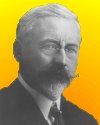
Died 13 Jun 1938 at age 77 (born 15 Feb 1861).
French physicist who studied ferronickel alloys and discovered invar (a nickel-steel alloy) which gained him the Nobel Prize for Physics in 1920. In 1883, Guillaume became an assistant at the newly established International Bureau of Weights and Measures at Sèvres, near Paris, and became director (1915-36). He was concerned with thermometry; and developing the international standards for the meter, kilogram, and liter. From 1890, he intensively investigated various alloys. After a methodical study of nickel-steel alloys he devised the alloy invar, having a very small expansion with temperature rise, and immediately adopted in springs of clocks and watches. He also produced elinvar, with an elasticity that remains nearly constant over a wide range of temperatures.
French physicist who studied ferronickel alloys and discovered invar (a nickel-steel alloy) which gained him the Nobel Prize for Physics in 1920. In 1883, Guillaume became an assistant at the newly established International Bureau of Weights and Measures at Sèvres, near Paris, and became director (1915-36). He was concerned with thermometry; and developing the international standards for the meter, kilogram, and liter. From 1890, he intensively investigated various alloys. After a methodical study of nickel-steel alloys he devised the alloy invar, having a very small expansion with temperature rise, and immediately adopted in springs of clocks and watches. He also produced elinvar, with an elasticity that remains nearly constant over a wide range of temperatures.
Died 13 Jun 1931 at age 81 (born 2 Jun 1850). quotes
(1st Baron Trent) English chemist who founded Boots Company, Ltd. At 13 he inherited his father's herbalist shop, and in 1877 opened his first chemist's shop in Nottingham. In 1880, under the “Boots Cash Chemists” name, Boot advertised herbal preparations, household products and basic remedies at reduced prices. That year, the business extended to Lincoln and Sheffield. Boots Pure Drug Company Limited began production in 1888 of simple pharmaceuticals. He began large-scale drug manufacture in 1892. He retired and sold the business in 1920. By 1931, Boots shops had the largest pharmaceutical retail trade in the world, with over a thousand branches. As a philanthropist, he donated land and development support for Nottingham University.
(1st Baron Trent) English chemist who founded Boots Company, Ltd. At 13 he inherited his father's herbalist shop, and in 1877 opened his first chemist's shop in Nottingham. In 1880, under the “Boots Cash Chemists” name, Boot advertised herbal preparations, household products and basic remedies at reduced prices. That year, the business extended to Lincoln and Sheffield. Boots Pure Drug Company Limited began production in 1888 of simple pharmaceuticals. He began large-scale drug manufacture in 1892. He retired and sold the business in 1920. By 1931, Boots shops had the largest pharmaceutical retail trade in the world, with over a thousand branches. As a philanthropist, he donated land and development support for Nottingham University.
Died 13 Jun 1931 at age 78 (born 20 Dec 1852).
Japanese bacteriologist who, with Alexandre Yersin, co-discovered the infectious agent of bubonic plague, Pasteurella pestis (now called Yersinia pestis), during an epidemic in Hong Kong (1894). During 1885-91, as a bacteriologist at Robert Koch's laboratory in Germany, he worked with Emil von Behring on tetanus and diphtheria, demonstrating the value of antitoxin in conferring passive immunity. They showed that nonimmune animals, injected with increasing sublethal doses of tetanus toxin, became resistant to the disease. Their milestone paper laid the basis for all future treatment with antitoxins and founded the new field of serology. In 1898, he isolated the microorganism that causes dysentery.«Name also spelled Kitazato. Date of birth: DSB gives 20 Dec 1852; Enc. Brit. gives 29 Jan 1853.
Japanese bacteriologist who, with Alexandre Yersin, co-discovered the infectious agent of bubonic plague, Pasteurella pestis (now called Yersinia pestis), during an epidemic in Hong Kong (1894). During 1885-91, as a bacteriologist at Robert Koch's laboratory in Germany, he worked with Emil von Behring on tetanus and diphtheria, demonstrating the value of antitoxin in conferring passive immunity. They showed that nonimmune animals, injected with increasing sublethal doses of tetanus toxin, became resistant to the disease. Their milestone paper laid the basis for all future treatment with antitoxins and founded the new field of serology. In 1898, he isolated the microorganism that causes dysentery.«Name also spelled Kitazato. Date of birth: DSB gives 20 Dec 1852; Enc. Brit. gives 29 Jan 1853.
Plague: A Story of Rivalry, Science, and the Scourge That Won't Go Away, by Edward Marriott. - book suggestion.
Died 13 Jun 1916 at age 67 (born 27 Jul 1848).
German physicist who was prompted by Madame Curie's discoveries to make his own study of radioactivity. In 1900, he observed that radium emitted both radiation and a colourless radioactive gas. The gas was accumulating inside ampules of radium. He called it radium emanation. (William Ramsay named it niton when he investigated it in 1908. This element was named radon, in 1923, the heaviest in the noble gas group.) Dorn had demonstrated one element transmuting to another, while releasing radiation. This work was continued by Boltwood and Soddy. Radon is not totally inert, as since 1962, chemists have been able to make radon compounds. In 1899, the release of a radioactive gas was detected by Ernest Rutherford and R.B. Owens from thorium (now known to be radon-220), and by the Curies from radium (radon-222).«Radon was first detected in 1899 as a radioactive gas released from samples of thorium by Ernest Rutherford and R.B. Owens. In the same year, the Curies detected a radioactive gas coming from the radium in their experiments.
German physicist who was prompted by Madame Curie's discoveries to make his own study of radioactivity. In 1900, he observed that radium emitted both radiation and a colourless radioactive gas. The gas was accumulating inside ampules of radium. He called it radium emanation. (William Ramsay named it niton when he investigated it in 1908. This element was named radon, in 1923, the heaviest in the noble gas group.) Dorn had demonstrated one element transmuting to another, while releasing radiation. This work was continued by Boltwood and Soddy. Radon is not totally inert, as since 1962, chemists have been able to make radon compounds. In 1899, the release of a radioactive gas was detected by Ernest Rutherford and R.B. Owens from thorium (now known to be radon-220), and by the Curies from radium (radon-222).«Radon was first detected in 1899 as a radioactive gas released from samples of thorium by Ernest Rutherford and R.B. Owens. In the same year, the Curies detected a radioactive gas coming from the radium in their experiments.
Died 13 Jun 1899 at age 54 (born 1 May 1845).
British surgeon who was the first to both diagnose and remove a diseased appendix (1880). He drained an abscess associated with the perforated appendix, a procedure which was not novel, as several surgeons had done the same previously. Tait was the first to actually remove the appendix as part of the planned treatment. (Nearly 150 years earlier, Claudius Amyand described a surgery in 1736 for a hernia in an 11-year-old boy during which his perforated appendix was found within the hernia sac. This first recorded removal of the appendix was not the subject of the operation but was only secondary to the hernia repair.) By 1889, work published by Charles McBurney established treating appendicitis early to avert a tragic outcome of delay.
British surgeon who was the first to both diagnose and remove a diseased appendix (1880). He drained an abscess associated with the perforated appendix, a procedure which was not novel, as several surgeons had done the same previously. Tait was the first to actually remove the appendix as part of the planned treatment. (Nearly 150 years earlier, Claudius Amyand described a surgery in 1736 for a hernia in an 11-year-old boy during which his perforated appendix was found within the hernia sac. This first recorded removal of the appendix was not the subject of the operation but was only secondary to the hernia repair.) By 1889, work published by Charles McBurney established treating appendicitis early to avert a tragic outcome of delay.
Died 13 Jun 1881 at age 75 (born 10 Dec 1805).
Czech physician who developed diagnoses in the practice of internal medicine. After graduating, he set up a medical practice in his home town, and faced dealing with the approach of a cholera outbreak. He realized the importance of hygenic procedures for prevention that would be more effective than the routine use of medicines as treatment. He shortly moved to study at Vienna. There, about 1836, he improved the techniques of percussion and ausculation. In the days long before X-rays, he could use a better understanding of the range of sounds from those methods to diagnose diseases of the heart and other organs. Škoda made statistical analyses of the results of treatment. While in Vienna, his insight to have a fresh water supply piped in from mountain springs, a preventive measure, effectively controlled typhoid fever there.«
Czech physician who developed diagnoses in the practice of internal medicine. After graduating, he set up a medical practice in his home town, and faced dealing with the approach of a cholera outbreak. He realized the importance of hygenic procedures for prevention that would be more effective than the routine use of medicines as treatment. He shortly moved to study at Vienna. There, about 1836, he improved the techniques of percussion and ausculation. In the days long before X-rays, he could use a better understanding of the range of sounds from those methods to diagnose diseases of the heart and other organs. Škoda made statistical analyses of the results of treatment. While in Vienna, his insight to have a fresh water supply piped in from mountain springs, a preventive measure, effectively controlled typhoid fever there.«
Died 13 Jun 1817 at age 73 (born 31 May 1744).
English-Irish inventor of mechanical innovations including an attempt at telegraphic communication (possibly the first), the creation of various sailing carriages, a velocipede (cycle), a “perambulator” (landmeasuring machine), a turnip cutter, improved agricultural machinery, and made discoveries in the field of electricity. In the late 1790s, he proposed the tellograph for “conveying secret and swift intelligence” using 30 tall towers spaced between Dublin and Galway (130 miles). Relayed from tower to tower using large triangular pointers, encoded messages could reach Dublin in just eight minutes. Unfortunately, poor visibility due to the weather doomed the idea. Edgeworth was also an educationalist.
English-Irish inventor of mechanical innovations including an attempt at telegraphic communication (possibly the first), the creation of various sailing carriages, a velocipede (cycle), a “perambulator” (landmeasuring machine), a turnip cutter, improved agricultural machinery, and made discoveries in the field of electricity. In the late 1790s, he proposed the tellograph for “conveying secret and swift intelligence” using 30 tall towers spaced between Dublin and Galway (130 miles). Relayed from tower to tower using large triangular pointers, encoded messages could reach Dublin in just eight minutes. Unfortunately, poor visibility due to the weather doomed the idea. Edgeworth was also an educationalist.
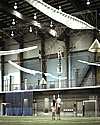
In 2013, the AeroVelo Atlas Human-Powered Helicopter made a flight lasting 64 seconds at a height of up to 3.3 m (10ft 10in), to win the AHS Sikorsky Prize. The challenge was set in 1980, for a human to hover at a height of 3 meters for 60 seconds. Until this day, the $250,000 prize went unclaimed for 33 years, despite the best efforts of dozens of teams around the world. The winning design was a quadcopter with a bicycle-mounted pilot (Todd Reichert) at the center of a vast but light four-truss frame. By pedalling, the humanpowered four huge, aerofoil rotors, turning quite slowly but still providing the necessary lift. The American Helicopter Society (AHS) funded the prize. «
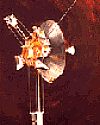
(NASA)
In 1983, space probe vehicle Pioneer 10 crossed the orbit of Neptune and became the first man-made object to leave our Solar System. It was launched 2 Mar 1972. It is moving in a straight line away from the Sun at a constant velocity of about 12 km/sec. Some 30 years after its launch, on 27 Apr 2002, NASA made successful contact with telemetry received from Pioneer 10 when it was at a distance from Earth of 7.57 billion miles, and the round-trip time for the signal (at the speed of light) was 22-hr 35-min. The probe sent information from the one scientific instrument that was still working, the Geiger Tube Telescope. The spacecraft is heading generally towards the red star Aldebaran, which forms the eye of Taurus (The Bull).
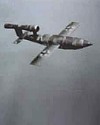
In 1944, the first German V1 flying bomb hit London, England. A V-1 flying bomb resembled a 25-ft aircraft, with a wingspan of 17-ft. Ordinary truck fuel kept its pulse-jet engine running, which was mounted above the bomb fuselage carrrying a 1,870-pound warhead. It was simple, inexpensive to build, but it was inaccurate, unable to target even a village. However, it was accurate enough to hit a target the size of London, and that was all that was expected - a way to hit London with flying bombs launched from ramps in Europe without risking the depleted reserves of the Luftwaffe's bomber fleet. It had a maximum speed of about 400 mph. The engine's pulsing combustion process gave the flying bomb a distinctive sound in flight.
In 1944, several patents for the wire recorder were issued to Marvin Camras (U.S. No. 2,351,004; -11). Wire recorders were the precursor of much easier touse magnetic tape recorders.

In 1933, the first sodium vapor lamps in the U.S. for road illumination were installed on a half-mile stretch of Balltown Road, in Schenectady, New York, to reduce night-time accidents. It was a joint project by New York Power and Light Corp., with engineers of General Electric Co. These newly developed lights were more efficient, softer, with less glare, and said to provide two to three times the light output of similar wattage filament bulbs. Sodium vapor lamps provide a monochromatic (single-color) light—an orange-yellow—which is near the maximum sensitivity of the eye. Germany already had some sodium vapor street lighting in Aug 1931, Holland in Jun 1932, and England in Dec 1932.«
In 1925, the first telecast in the U.S. of objects in motion was invented by Charles Jenkins. He called it "visions by radio." The first mechanical TV system broadcast used 48 scanning lines and showed a model of Dutch windmill with its blades turning.
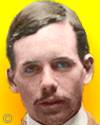
In 1915, physicist Henry Moseley at age 27 departed with the military from England to fight in Turkey. He died at Gallipoli two months later. Britain lost a brilliant young scientist who had developed X-ray analysis of elements and the concept of atomic number.
In 1899, black American inventor F.W. Griffin obtained a patent for a "Pool Table Attachment" (U.S. No. 626,902).
The Inventive Spirit of African Americans: Patented Ingenuity, by Patricia Carter Sluby. - book suggestion.
In 1893, black American inventor T.W. Stewart was granted a patent for a mop (U.S. No. 499,402).
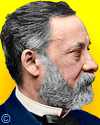
In 1877, Louis Pasteur began his quest to develop an anthrax vaccine by visiting the slaughterhouses of Chartres to take blood samples from corpses of farm animals that have died of anthrax.
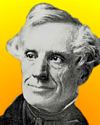
In 1848, Samuel F. B. Morse obtained a reissued patent for Morse code (U.S. Re. 117).
Lightning Man: The Accursed Life of Samuel F. B. Morse, by Kenneth Silverman. - book suggestion.
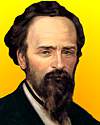
In 1844, a door lock was patented by Linus Yale (U.S. No. 3,630).
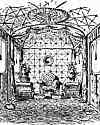
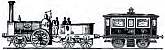
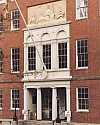
In 1816, the first U.S public building to use gas lighting was the Peale Museum in Baltimore, Md. It was built (1813) by artist Rembrandt Peale to be “Peale’s Baltimore Museum and Gallery of Fine Arts,” similar to the Philadelphia museum opened by his father (painter Charles Willson Peale). Exhibits included portraits by Rembrandt Peale and other artists, of famous Americans and a prehistoric mastodon skeleton unearthed by his father in 1801. Rembrandt Peale installed gaslights for their publicity value. Rembrandt purchased the patent for Dr. Kugler's coal gas manufacturing, and organized a group of men to charter the Gas Light Company of Baltimore.« more
more
more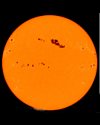
In 1611, a publication on the newly discovered phenomenon of sunspots was dedicated. Narratio de maculis in sole observatis et apparente earum cum sole conversione. (“Narration on Spots Observed on the Sun and their Apparent Rotation with the Sun”). This first publication on such observations, was the work of Johannes Fabricius, a Dutch astronomer who was perhaps the first ever to observe sunspots. On 9 Mar 1611, at dawn, Johannes had used his telescope to view the rising sun and had seen several dark spots on it. He called his father to investigate this new phenomenon with him. The brightness of the Sun's center was very painful, and the two quickly switched to a projection method by means of a camera obscura.




