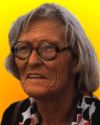
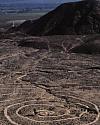
German-born Peruvian mathematician and archaeologist who was the self-appointed keeper of the Nazca Lines, a series of desert ground drawings over 1,000 years old, near Nazcain in southern Peru. For 50 years the "Lady of the Lines" studied and protected these etchings of animals and geometric patterns in 60 km (35 mi) of desert. Protected by a lack of wind and rain, the figures are hundreds of feet long best seen from the air. She investigated the Nazca lines from a mathematical point of view. Death at age 95 interrupted her new mathematical calculations: the possibility that the lines predicted cyclical natural phenomena like El Nino, a weather system that for centuries has periodically caused disastrous flooding along the Peruvian coast.[Image right: source ]
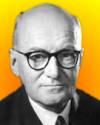
Born 15 May 1899; died 27 Sep 1968 at age 69.
British metallurgist, internationally known for his work on the formation of alloys and intermetallic compounds. During WW II, he supervised many government contracts for work on complex aluminium and magnesium alloys. He established that the microstructure of an alloy depends on the different sizes of the component atoms, the valency electron concentration, and electrochemical differences. Hume-Rothery rules are an empirical guide to when two metals are sufficiently similar to be completely miscible (form a single phase at all relative concentrations). They are: (1). Atomic radii no more than about 15% different. (2). Pure metals have the same crystal structure. (3). Atoms have similar electronegativities. (4). Atoms have the same valence.
British metallurgist, internationally known for his work on the formation of alloys and intermetallic compounds. During WW II, he supervised many government contracts for work on complex aluminium and magnesium alloys. He established that the microstructure of an alloy depends on the different sizes of the component atoms, the valency electron concentration, and electrochemical differences. Hume-Rothery rules are an empirical guide to when two metals are sufficiently similar to be completely miscible (form a single phase at all relative concentrations). They are: (1). Atomic radii no more than about 15% different. (2). Pure metals have the same crystal structure. (3). Atoms have similar electronegativities. (4). Atoms have the same valence.
Born 15 May 1871; died 3 Sep 1942 at age 71.
German chemist.
German chemist.
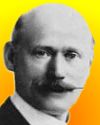
Born 15 May 1863; died 21 Sep 1936 at age 73. quotes
English inventor and manufacturer who patented the Meccano construction set in 1901. This toy used perforated metal strips, wheels, roods, brackets, clips and assembly nuts and bolts to build unlimited numbers of models. His original sets, marketed as "Mechanics Made Easy" produced in a rented room, were initially sold at only one Liverpool toy shop. By 1908, he had formed his company, Meccano Ltd., and within five more years had established manufacturing in France, Germany, Spain and the U.S. He introduced Hornby model trains in 1920, originally clockwork and eventually electrically powered with tracks and scale replicas of associated buildings. The "Dinky" range of miniature cars and other motor vehicles was added in 1933.«
English inventor and manufacturer who patented the Meccano construction set in 1901. This toy used perforated metal strips, wheels, roods, brackets, clips and assembly nuts and bolts to build unlimited numbers of models. His original sets, marketed as "Mechanics Made Easy" produced in a rented room, were initially sold at only one Liverpool toy shop. By 1908, he had formed his company, Meccano Ltd., and within five more years had established manufacturing in France, Germany, Spain and the U.S. He introduced Hornby model trains in 1920, originally clockwork and eventually electrically powered with tracks and scale replicas of associated buildings. The "Dinky" range of miniature cars and other motor vehicles was added in 1933.«
Frank Hornby: The Boy Who Made $1,000,000 With a Toy, by Maurice Philip Gould. - book suggestion.
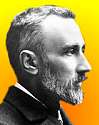
Born 15 May 1859; died 19 Apr 1906 at age 46. quotes
French physical chemist and cowinner of the Nobel Prize for Physics in 1903. His studies of radioactive substances were made together with his wife, Marie Curie, whom he married in 1895. They were achieved under conditions of much hardship - barely adequate laboratory facilities and under the stress of having to do much teaching in order to earn their livelihood. Together, they discovered radium and polonium in their investigation of radioactivity by fractionation of pitchblende (announced in 1898). Later they did much to elucidate the properties of radium and its transformation products. Their work in this era formed the basis for much of the subsequent research in nuclear physics and chemistry.
French physical chemist and cowinner of the Nobel Prize for Physics in 1903. His studies of radioactive substances were made together with his wife, Marie Curie, whom he married in 1895. They were achieved under conditions of much hardship - barely adequate laboratory facilities and under the stress of having to do much teaching in order to earn their livelihood. Together, they discovered radium and polonium in their investigation of radioactivity by fractionation of pitchblende (announced in 1898). Later they did much to elucidate the properties of radium and its transformation products. Their work in this era formed the basis for much of the subsequent research in nuclear physics and chemistry.
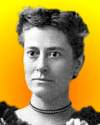
Born 15 May 1857; died 21 May 1911 at age 54.
Williamina Paton Stevens Fleming was a Scottish-American astronomer (née Stevens) who pioneered in the classification of stellar spectra and the first to discover stars called “white dwarfs.” She emigrated to Boston at age 21. Prof. Edward Pickering, director of the Harvard Observatory first employed Fleming as a maid, but in 1881 hired her to do clerical work and some mathematical calculations at the Observatory. She further proved capable of doing science. After devising her system of classifying stars by their spectra, she cataloged over 10,000 stars within the next nine years. Her duties were expanded and she was put in charge of dozens of young women hired to do mathematical computations (as now done by computers). more
Williamina Paton Stevens Fleming was a Scottish-American astronomer (née Stevens) who pioneered in the classification of stellar spectra and the first to discover stars called “white dwarfs.” She emigrated to Boston at age 21. Prof. Edward Pickering, director of the Harvard Observatory first employed Fleming as a maid, but in 1881 hired her to do clerical work and some mathematical calculations at the Observatory. She further proved capable of doing science. After devising her system of classifying stars by their spectra, she cataloged over 10,000 stars within the next nine years. Her duties were expanded and she was put in charge of dozens of young women hired to do mathematical computations (as now done by computers). more
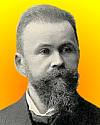
Born 15 May 1848; died 15 Jun 1905 at age 57.
German neurologist who related nerve diseases to specific areas of the brain. Interested in psychiatry, traditionally he studied anatomy initially and neuropathology later. He published a small volume on aphasias (disorders interfering with the ability to communicate in speech or writing) which vaulted him into international fame. In it was precise pathoanatomic analysis paralleling the clinical picture. He is best known for his work on sensory aphasia and poliomyelitis hemorrhagia superior. Both of these descriptions bear his name, as well as a form of encephalopathy induced by thiamine deficiency. He wrote books on the disorders of the internal capsule and textbooks on diseases of the nervous system. Wernicke died in a road accident.
German neurologist who related nerve diseases to specific areas of the brain. Interested in psychiatry, traditionally he studied anatomy initially and neuropathology later. He published a small volume on aphasias (disorders interfering with the ability to communicate in speech or writing) which vaulted him into international fame. In it was precise pathoanatomic analysis paralleling the clinical picture. He is best known for his work on sensory aphasia and poliomyelitis hemorrhagia superior. Both of these descriptions bear his name, as well as a form of encephalopathy induced by thiamine deficiency. He wrote books on the disorders of the internal capsule and textbooks on diseases of the nervous system. Wernicke died in a road accident.
Born 15 May 1847; died 15 Aug 1929 at age 82. quotes
English zoologist whose fields of interest spanned comparative anatomy, protozoology, parasitology, embryology and anthropology. He was among the first to explore protozoan parasites present in vertebrate blood. The parasite Lankestrella, related to the organism responsible for malaria, bears his name, to honor his contributions to knowledge of that disease. Lankester’s studies of the comparative anatomy of invertebrate embryos, gave support to Darwin's theory of evolution. In anthropology, his discovery of flint implements in Pliocene sediments, provided evidence of early man in Suffolk. He was Director of the British Museum of Natural History (1898-1907).«
English zoologist whose fields of interest spanned comparative anatomy, protozoology, parasitology, embryology and anthropology. He was among the first to explore protozoan parasites present in vertebrate blood. The parasite Lankestrella, related to the organism responsible for malaria, bears his name, to honor his contributions to knowledge of that disease. Lankester’s studies of the comparative anatomy of invertebrate embryos, gave support to Darwin's theory of evolution. In anthropology, his discovery of flint implements in Pliocene sediments, provided evidence of early man in Suffolk. He was Director of the British Museum of Natural History (1898-1907).«
Diversions of a Naturalist, by Edwin Ray Lankester. - book suggestion.
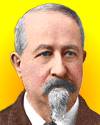
Born 15 May 1841; died 4 Jan 1912 at age 70. quotes
American geologist who coined the term isostasy for his explanation that continents rise higher on the Earth's surface by virtue of their less dense crustal rock; ocean basins are denser material. After the civil war, while still an army officer, from 1875, he assisted in Powell's survey of the Rocky Mountains. From 1880 until his retirement from the army in 1891, he worked for the U.S. Geological Survey (USGS). He made geological investigations of the Grand Canyon in Colorado, the plateaus of Utah, and the 1886 Charleston earthquake. In seismology, he pioneered a method to determine the depth of the focus of an earthquake and the speed of its seismic waves. In 1887, he became the first head of the USGS division of volcanic geology.«
American geologist who coined the term isostasy for his explanation that continents rise higher on the Earth's surface by virtue of their less dense crustal rock; ocean basins are denser material. After the civil war, while still an army officer, from 1875, he assisted in Powell's survey of the Rocky Mountains. From 1880 until his retirement from the army in 1891, he worked for the U.S. Geological Survey (USGS). He made geological investigations of the Grand Canyon in Colorado, the plateaus of Utah, and the 1886 Charleston earthquake. In seismology, he pioneered a method to determine the depth of the focus of an earthquake and the speed of its seismic waves. In 1887, he became the first head of the USGS division of volcanic geology.«
Tertiary History of the Grand Canyon District, by Clarence Edward Dutton. - book suggestion.
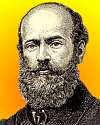
Born 15 May 1826; died 10 Nov 1861 at age 35.
Alexandre-Henri Mouhot was a French naturalist and explorer of the interior of Siam, Cambodia and Laos (1858-61). He is remembered for his reports of the ruins of Angkor, capital of the ancient Khmer civilization of Cambodia. The location was known to the local population, had been visited by several westerners since the 16th century, but it was Mouhot's evocative accounts and detailed sketches that popularized the Angkor series of sites with the western public. He drew the attention of western scholars to the many ancient terraces, pools, moated cities, palaces and temples as important archaeological sites. His books were published posthumously as he died in Laos at the young age of 35 from malarial fever on his fourth jungle expedition.«
Alexandre-Henri Mouhot was a French naturalist and explorer of the interior of Siam, Cambodia and Laos (1858-61). He is remembered for his reports of the ruins of Angkor, capital of the ancient Khmer civilization of Cambodia. The location was known to the local population, had been visited by several westerners since the 16th century, but it was Mouhot's evocative accounts and detailed sketches that popularized the Angkor series of sites with the western public. He drew the attention of western scholars to the many ancient terraces, pools, moated cities, palaces and temples as important archaeological sites. His books were published posthumously as he died in Laos at the young age of 35 from malarial fever on his fourth jungle expedition.«
Travels in the Central Parts of Indo-China..., by M. Henri Mouhot. - book suggestion.
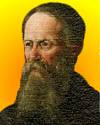
Born 15 May 1821; died 8 Jul 1895 at age 74. quotes
Johann Joseph Loschmidt was an Austrian chemist and physicist who was the first to propose (1861) some kind of cyclic structure for benzene and many aromatic hydrocarbons. (Four years later, Kekulé devised the correct ring structure, for which his name is remembered while Loschmidt's contribution is overlooked.) He deduced the size of air molecules to be around one nanometer, with two approaches: relating the size of gas molecules to the distance travelled between collisions, and considering the packed volume of molecules in a cold liquid. Completing Avogadro's insight that all gases have the same number of molecules in a given volume, Loschmidt measured Avogadro's constant to be 6.03 x 10²³ molecules in one mole of a gas (1865).«
Johann Joseph Loschmidt was an Austrian chemist and physicist who was the first to propose (1861) some kind of cyclic structure for benzene and many aromatic hydrocarbons. (Four years later, Kekulé devised the correct ring structure, for which his name is remembered while Loschmidt's contribution is overlooked.) He deduced the size of air molecules to be around one nanometer, with two approaches: relating the size of gas molecules to the distance travelled between collisions, and considering the packed volume of molecules in a cold liquid. Completing Avogadro's insight that all gases have the same number of molecules in a given volume, Loschmidt measured Avogadro's constant to be 6.03 x 10²³ molecules in one mole of a gas (1865).«
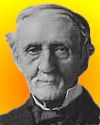
Born 15 May 1803; died 14 Jul 1899 at age 96.
British engineer whose life-work was constructing irrigation, navigation canals and dams for water storage in Southern India, saving thousands from famine and promoting local economy. He joined the Madras engineers in 1819, fought in the first Burmese war (1824-26) and began his ambitious irrigation project (1826-62). He built dams on several rivers, transforming the drought-stricken Tanjore district into the richest part of the state of Madras. His ambitious masterplan was not completed in his lifetime, but his ideas anticipated projects that were subsequently taken up. In the present time, India’s goal of a National Water Grid confronts the problem of increasingly scarce water. Cotton founded the Indian school of hydraulic engineering.«
British engineer whose life-work was constructing irrigation, navigation canals and dams for water storage in Southern India, saving thousands from famine and promoting local economy. He joined the Madras engineers in 1819, fought in the first Burmese war (1824-26) and began his ambitious irrigation project (1826-62). He built dams on several rivers, transforming the drought-stricken Tanjore district into the richest part of the state of Madras. His ambitious masterplan was not completed in his lifetime, but his ideas anticipated projects that were subsequently taken up. In the present time, India’s goal of a National Water Grid confronts the problem of increasingly scarce water. Cotton founded the Indian school of hydraulic engineering.«
General Sir Arthur Cotton - His Life and Work, by E.R. Hope. - book suggestion.
Born 15 May 1788; died 2 Mar 1874 at age 85.
Scottish physician and scientist who invented a water-bed for the comfort of patients during a prolonged illness. He is also known for his invention of the economical Arnott stove, which he called a thermometer-stove with a self-regulating fire.«
Scottish physician and scientist who invented a water-bed for the comfort of patients during a prolonged illness. He is also known for his invention of the economical Arnott stove, which he called a thermometer-stove with a self-regulating fire.«
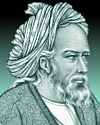
Born c. 15 May 1048; died c. 4 Dec 1131. quotes
Persian poet, mathematician, and astronomer. Khayyam, who was born at Nishapur (now in Iran), produced a work on algebra that was used as a textbook in Persia until this century. In geometry, he studied generalities of Euclid and contributed to the theory of parallel lines. Around 1074, he set up an observatory and led work on compiling astronomical tables, and also contributed to the reform of the Persian calendar. His contributions to other fields of science included developing methods for the accurate determination of specific gravity. He is known to English-speaking readers for his "quatrains" as The Rubáiyát of Omar Khayyám, published in 1859 by Edward Fitzgerald, though it is now regarded as an anthology of which little or nothing may be by Omar.Birth date: DSB gives 15 May 1048; Enc. Brit. gives 18 May 1048.
Persian poet, mathematician, and astronomer. Khayyam, who was born at Nishapur (now in Iran), produced a work on algebra that was used as a textbook in Persia until this century. In geometry, he studied generalities of Euclid and contributed to the theory of parallel lines. Around 1074, he set up an observatory and led work on compiling astronomical tables, and also contributed to the reform of the Persian calendar. His contributions to other fields of science included developing methods for the accurate determination of specific gravity. He is known to English-speaking readers for his "quatrains" as The Rubáiyát of Omar Khayyám, published in 1859 by Edward Fitzgerald, though it is now regarded as an anthology of which little or nothing may be by Omar.Birth date: DSB gives 15 May 1048; Enc. Brit. gives 18 May 1048.

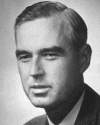
Died 15 May 2008 at age 94 (born 12 Jul 1913).
Willis Eugene Lamb, Jr. was an American physicist and joint winner, with Polykarp Kusch, of the Nobel Prize for Physics in 1955 "for his discoveries concerning the fine structure of the hydrogen spectrum." His experimental work spurred refinements in the quantum theories of electromagnetic phenomena.
Willis Eugene Lamb, Jr. was an American physicist and joint winner, with Polykarp Kusch, of the Nobel Prize for Physics in 1955 "for his discoveries concerning the fine structure of the hydrogen spectrum." His experimental work spurred refinements in the quantum theories of electromagnetic phenomena.
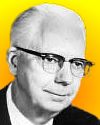

American physicist who invented the technology for pulse radar while employed at the U.S. Naval Research Laboratory. From pioneering work with early radio leaders, Dr. Page conceived and developed circuitry and components in the 1930's for early pulse radar systems which used short bursts of electromagnetic radiation to detect and locate distant objects. During WW II, this invention was vital to the Allies for detection of enemy planes, ships, and other targets. After the war, Page continued research into peacetime applications of radar, airborne radio and other fields of electronics. He held sixty-five patents for innovations in these fields, now applied in navigation, weather forecasting, astronomy, automation and related technical fields.«
The Origin of Radar, by Robert Morris Page. - book suggestion.
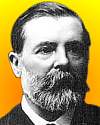
1880

sphygmograph
French physiologist and chronophotographer who, while studying how blood moves in the body, invented the sphygmograph. This device made a graphical record of the pulse and variations in blood pressure. One end of a lever rested on the veins in the wrist, while a stylus on the other end inscribed the fluctuations of the heart onto a carbon-blacked strip of paper moving at a uniform speed. He took an interest in the flight of insects and birds. In 1869, Marey demonstrated how an insect flies by moving its wings in a figure-8 shape. Inspired by Muybridge's work, Marey studied the movement of animals by photographing multiple images on a single plate. He also used a high-speed motion camera to produce film to view in slow motion.«
Picturing Time: The Work of Etienne-Jules Marey, by Marta Braun. - book suggestion.
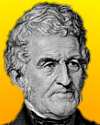
Died 15 May 1858 at age 77 (born 17 Jan 1781).
American chemist who devised the first oxy-hydrogen blowpipe for the purpose of producing great heat. He was able to melt sizeable quantities of platinum with this blowpipe. Later, it was discovered that when such a blowpipe flame acted on a block of calcium oxide, a brilliant white light resulted—limelight. His device was also the ancestor of the modern welding torches. He presented a paper describing his invention on 10 Dec 1801 to the Chemical Society of Philadelphia.
American chemist who devised the first oxy-hydrogen blowpipe for the purpose of producing great heat. He was able to melt sizeable quantities of platinum with this blowpipe. Later, it was discovered that when such a blowpipe flame acted on a block of calcium oxide, a brilliant white light resulted—limelight. His device was also the ancestor of the modern welding torches. He presented a paper describing his invention on 10 Dec 1801 to the Chemical Society of Philadelphia.
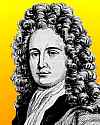
Died 15 May 1715 (born c. 1650). quotes
English engineer and inventor of a steam-powered water pump which he patented (1698). His pump used a vessel first filled with steam When externally cooled with water, the resulting vacuum lifted water to be pumped from a lower sump. Then more high-pressure steam filled the vessel to force the water to a higher level. High fuel consumption and failures, due to construction materials unable to contain the pressure, meant the design was unsuccessful for use in mines. However, it provided a basis for Thomas Newcomen to improve for his pumps. His other patents included a method for polishing glass plate (1649), and an idea for capstan-driven paddle-wheels for becalmed ships.«[Note: Year of birth, and date of death are known only approximately.]
English engineer and inventor of a steam-powered water pump which he patented (1698). His pump used a vessel first filled with steam When externally cooled with water, the resulting vacuum lifted water to be pumped from a lower sump. Then more high-pressure steam filled the vessel to force the water to a higher level. High fuel consumption and failures, due to construction materials unable to contain the pressure, meant the design was unsuccessful for use in mines. However, it provided a basis for Thomas Newcomen to improve for his pumps. His other patents included a method for polishing glass plate (1649), and an idea for capstan-driven paddle-wheels for becalmed ships.«[Note: Year of birth, and date of death are known only approximately.]
Died 15 May 1482 (born 1397).
Italian physician and mapmaker, interested in astronomy and observer of comets. His lone claim to fame, however, was his mistaken belief that Asia lay three thousand miles west of Europe. He drew a map showing these two continents on each side of the Atlantic Ocean. This is the map that started Columbus thinking about making his voyage.
Italian physician and mapmaker, interested in astronomy and observer of comets. His lone claim to fame, however, was his mistaken belief that Asia lay three thousand miles west of Europe. He drew a map showing these two continents on each side of the Atlantic Ocean. This is the map that started Columbus thinking about making his voyage.
In 1993, a woman in Paris was surgically given two new lungs, both of which were cut from the single lung of a large man. Only previously attempted in animal trials, this was the first human to receive such surgery. The procedure is of particular interest for children, for whom finding donor lungs of the correct size is a problem.
In 1963, astronaut L. Gordon Cooper blasted off aboard Faith 7 on the final mission of the Project Mercury space program.
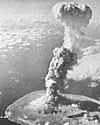
In 1953, Stanley L. Miller's paper on the synthesis of amino acids under conditions that simulated primitive Earth's atmosphere was published in Science. Miller had applied an electric discharge to a mixture of CH4, NH3, H2O, and H2(which was believed at the time to be the atmospheric composition of early Earth.) Instead of producing a random mixture of organic molecules, the surprising result was a mixture of amino acids, hydroxy acids, and urea. These compounds are so significant in the biochemistry of life, that this discovery marked the beginning of the modern study to understand the origin of life on Earth. Miller's paper was published only a few weeks after Watson and Crick reported their DNA double-helix model in Nature. Geoscientists now tend to believe in other sources for the origin of life, but Miller's experiment focussed interest on the primordial formation of amino acids

In 1941, Britain's first jet-propelled aircraft, the Gloster-Whittle E.28/39, flew for the first time, taking off from RAF Cranwell on a historic 17 minute flight. Its jet engines were designed by Frank Whittle, “the father of the jet engine.” The planes of the 1920s were powered by piston engines, with propellers providing the necessary thrust. This was limiting with regards to speed and height. While he was at Cranwell, still only 21 years old, Whittle began to consider the possibilities of jet propulsion as applied to aircraft. By 1930 he had designed and patented a jet aircraft engine. After 11 years, Whittle's engine, tested and modified, successfully powered an aircraft in flight.

In 1940, nylon stockings went on general sale for the first time in the U.S. in Wilmington, Delaware, and at stores arond the U.S. Four million pairs were sold in several hours, with a few option of colors and weights priced in the range of $1.15 to $1.35 a pair. Because of their greater durability and rather more elasticity, nylons soon replaced silk stockings.The sale represented the a landmark after years of research and development by the duPont company, which experimented with many applications for the new polymer. A newspaper article at the tim claimed the company had invested $17,000,000. The new polymer was first discovered by Dr. Wallace H. Carothers of DuPont on 28 Feb 1935.«.
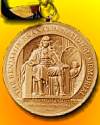
In 1935, at the Franklin Institute, Philadelphia, Albert Einstein was awarded the Benjamin Franklin Medal for his outstanding fundamental contributions to theoretical physics, especially his relativity theory. According to Time magazine, "A throng of scientists and dignitaries was assembled to hear what the medalist had to say. Einstein genially informed the chairman that he had nothing to say, that inspiration which he had awaited until the last moment had failed him. The chairman, much more embarrassed than the medalist, conveyed this information to the audience." In atonement, Einstein wrote a 44-page essay entitled "Physics and Reality," published in the Mar 1936 issue of their Journal of the Franklin Institute. «Ref: Time magazine 16 Mar 1936.
Subtle Is the Lord: The Science and the Life of Albert Einstein, by Abraham Pais. - book suggestion.
In 1935, the Moscow metro opened, transporting an estimated 285,000 people that day. Its subterranean spaces still feature chandeliers, marble, mozaics, murals and heroic statutes. Tsar Nicholas II had the first designs drawn up in 1902, intended to rival the Underground which was already established in London, as well as services in Paris and Berlin. Revolution and war delayed any construction until Joseph Stalin set it in motion with new plans in 1931. The first line was built between Sokolniki and Dvorets Sovetov (renamed Kropotkinskaya in the 1950s). During WW II, the spacious stations served as shelters during Nazi bombing. Since first opening, expansions have been ongoing, with more planned into the future. Its subterranean spaces still have original chandeliers, marble, mozaics, murals, stained glass and heroic statutes.«
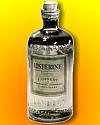
In 1923, Listerine was registered as a trademark. The modern Listerine is a mouthwash, but the original amber-coloured product was a disinfectant for surgical procedures, dating back to its formulation in 1879 by Dr Joseph Lawrence and Jordan Wheat Lambert. The name they chose incorporated the name of the English surgeon, Joseph Lister, famous for performing the first antiseptic surgical procedure on 12 Aug 1865 and pioneering wider use of antiseptics by surgeons. Other than that, Lister had no relationship to the product, or to the company founded in 1884 by Jordan Wheat Lambert to market it. In a few years, its usefulness was discovered as an oral antiseptic, and in 1895, Lambert extended the sale of Listerine to dentists. By 1914, it became available as a non-prescription mouthwash.«
In 1908, a declaration supporting conservation was issued at the conclusion of a three-day Conference of Governors held at the White House, called by Roosevelt to consider the problems of conservation. It recognized that the U.S. "natural resources include the land on which we live and which yields our food; the living waters which fertilize the soil, supply power, and form great avenues of commerce; the forests which yield the materials for our homes, prevent erosion of the soil, and conserve the navigation and other uses of our streams; and the minerals which form the basis of our industrial life, an supply us with heat, light, and power." It recommended that each State appoint a Commission on the Conservation of Natural Resources.
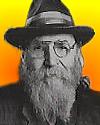
In 1902, according to local legend, an unwitnessed heavier than air flight took place in a 20-h.p. steam-engined aircraft as claimed by Lyman Gilmore of Grass Valley, California. History cannot document Gilmore's fantasy of becoming the first person to achieve powered flight. Doubt was overwhelming, yet he spent the rest of his life trying to prove his claim, and he remains a skeptical footnote in history. Nevertheless, he was was an inventive aeronautical visionary, even while being a secretive, eccentric recluse. He did patent a steam-powered aircraft, and built model airplanes. He has a more substantiated claim for building the first commercial airport, the Gilmore Aerodrome. His airplanes and hangers burned to the ground in 1935.«
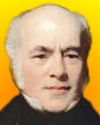

Modern photo of Bailey's Beads
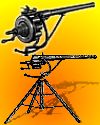
In 1718, a "Defence" rapid-fire gun was patented by a London lawyer, James Puckle (1667 - 1724). It is sometimes considered an ancestor of the machine gun. It was, in effect, a flintlock revolver with a barrel 3 feet long and a bore of 1.25 inches. A pre-loaded "cylinder" held 11 charges and could fire 63 shots in 7 minutes. (This rate of 9 shots/min was three times quicker than the fastest infantryman.) The patent described it as "A portable gun or machine called a Defence, that discharges soe often and soe many bullets, and can be soe quickly loaded as renders it next to impossible to carry any ship by boarding," which indicates shipboard use was intended. British patent No. 418 (1718). He began manufacture at White Cross Alley factory in 1721.«[Image: (top) detail of gun (bottom) gun shown in patent drawing on tripod mount.]
The Social History of the Machine Gun, by John Ellis. - book suggestion.
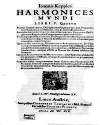
In 1618, Johannes Kepler discovered his harmonics law published in his five-volume work Harmonices Mundi (Harmony of the Worlds, 1619). He attempted to explain proportions and geometry in planetary motions by relating them to musical scales and intervals (an extension of what Pythagoras had described as the “harmony of the spheres”.) Kepler said each planet produces musical tones during its revolution about the sun, and the pitch of the tones varies with the angular velocities of those planets as measured from the sun. The Earth sings Mi, Fa, Mi. At very rare intervals all planets would sing in perfect concord. Kepler proposed that this may have happened only once in history, perhaps at the time of creation.«[Image: Title page from Kepler's Harmonices Mundi.]
The Harmony of the World, by Johannes Kepler. - book suggestion.
In 1501, Ottaviano Petrucci of Venice founded the first modern-style music publishing house, by producing the first book of music made from movable type.




