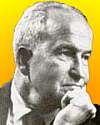
Born 13 May 1893; died 23 Jun 1988 at age 95.
Henry Alexander Murray was an American psychologist who developed a theory of human personality based on an individual's inborn needs and his relationship with the physical and social environment. In 1938 he was asked by the U.S. Government to put together a psychological profile on Adolph Hitler. During WW II, he served the U.S. Army by helping the forerunner of the CIA assess the psychological fitness of its agents. Murray's main interest included personology, Melville and the welfare of the world in the atomic age. In his Basic Concepts for a Psychology of Personality, (Journal of Psychology, 15, 1936), he described personology as “the disciplined study of human nature.”
Henry Alexander Murray was an American psychologist who developed a theory of human personality based on an individual's inborn needs and his relationship with the physical and social environment. In 1938 he was asked by the U.S. Government to put together a psychological profile on Adolph Hitler. During WW II, he served the U.S. Army by helping the forerunner of the CIA assess the psychological fitness of its agents. Murray's main interest included personology, Melville and the welfare of the world in the atomic age. In his Basic Concepts for a Psychology of Personality, (Journal of Psychology, 15, 1936), he described personology as “the disciplined study of human nature.”
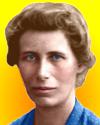
Born 13 May 1888; died 21 Feb 1993 at age 104. quotes
Danish seismologist and geophysicist who was the first person in that field in her home country, and the first true female geophysicist in the world. In a paper published in 1936, she identified the Lehmann Discontinuity in the seismic structure of the earth which marks a previously unknown boundary at the solid inner core of the Earth. Titled simply “P” (for Prime), this paper was based on her interpretation of worldwide shock wave records from a large earthquake near New Zealand in 1929. She continued to add to the knowledge of the earth's internal structure by studying the body-wave amplitudes and travel times of seismic waves in the upper mantle. She once described herself as “the only Danish seismologist” but received awards from around the world.«
Danish seismologist and geophysicist who was the first person in that field in her home country, and the first true female geophysicist in the world. In a paper published in 1936, she identified the Lehmann Discontinuity in the seismic structure of the earth which marks a previously unknown boundary at the solid inner core of the Earth. Titled simply “P” (for Prime), this paper was based on her interpretation of worldwide shock wave records from a large earthquake near New Zealand in 1929. She continued to add to the knowledge of the earth's internal structure by studying the body-wave amplitudes and travel times of seismic waves in the upper mantle. She once described herself as “the only Danish seismologist” but received awards from around the world.«
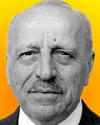
Born 13 May 1883; died 19 Feb 1962 at age 78. quotes
George Nicholas Papanicolaou was a Greek-American cytologist and pathologist who devised the test now known as the 'Pap smear'. Cancer of the uterus and cervix can be detected by smearing mucus secretions on a microscope slide, and examining the stained cells for abnormalities indicating cancer. A few years after receiving his M.D. in Greece, he emigrated to the U.S. with his wife, landing on Ellis Island on 19 Sep 1913. He shortly thereafter became a medical assistant in New York and turned to research. As early as 1923, he had started using his smear technique. He recognised it as an easily performed screening test for cancer, which he announced at a 1928 medical conference. It was initially received with scepticism, but its widespread use began in the early 1950s.
George Nicholas Papanicolaou was a Greek-American cytologist and pathologist who devised the test now known as the 'Pap smear'. Cancer of the uterus and cervix can be detected by smearing mucus secretions on a microscope slide, and examining the stained cells for abnormalities indicating cancer. A few years after receiving his M.D. in Greece, he emigrated to the U.S. with his wife, landing on Ellis Island on 19 Sep 1913. He shortly thereafter became a medical assistant in New York and turned to research. As early as 1923, he had started using his smear technique. He recognised it as an easily performed screening test for cancer, which he announced at a 1928 medical conference. It was initially received with scepticism, but its widespread use began in the early 1950s.
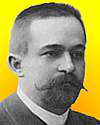
c.1890
Born 13 May 1865; died 17 Apr 1918 at age 52. quotes
Friedrich Karl Johannes Thiele was a German chemist who researched conjugated unsaturated organic molecules (involving alternating single and double bonds along a carbon chain) followed by other chemists, yielding new ideas for theories on the mechanisms of organic reactions. He extended the idea (1865) of August Kekulé for the ring structure of benzene with a “partial valence” hypothesis, for which he suggested a resonance structure with partial bonds represented by a dashed circle drawn inside the carbon ring (1899). He also studied the chemistry of nitrogen compounds, and discovered many new compounds and synthesis methods. He investigated guanidine, hydrazine, and their derivatives (of which some were explosive). He invented the Thiele tube for measuring melting points.«
Friedrich Karl Johannes Thiele was a German chemist who researched conjugated unsaturated organic molecules (involving alternating single and double bonds along a carbon chain) followed by other chemists, yielding new ideas for theories on the mechanisms of organic reactions. He extended the idea (1865) of August Kekulé for the ring structure of benzene with a “partial valence” hypothesis, for which he suggested a resonance structure with partial bonds represented by a dashed circle drawn inside the carbon ring (1899). He also studied the chemistry of nitrogen compounds, and discovered many new compounds and synthesis methods. He investigated guanidine, hydrazine, and their derivatives (of which some were explosive). He invented the Thiele tube for measuring melting points.«
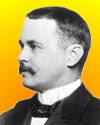
Born 13 May 1857; died 16 Sep 1932 at age 75. quotes
English physician, bacteriologist and mathematician who located the malarial parasite in the gut of the Anopheles mosquito, identifying it as the disease vector. For this discovery he became the first British Nobelist, when he was awarded the 1902 Nobel Prize for Physiology or Medicine. His study of malaria began in 1892. By 1894 he conducted experiments in India to determine the validity of the hypothesis of Alphonse Laveran and Patrick Manson that mosquitoes spread the disease. It took two and a half years' effort before Ross succeeded in elucidating the life-cycle of malarial parasites in mosquitoes. In later work, in West Africa, he also determined the mosquito species carrying the deadly African fever.« more
English physician, bacteriologist and mathematician who located the malarial parasite in the gut of the Anopheles mosquito, identifying it as the disease vector. For this discovery he became the first British Nobelist, when he was awarded the 1902 Nobel Prize for Physiology or Medicine. His study of malaria began in 1892. By 1894 he conducted experiments in India to determine the validity of the hypothesis of Alphonse Laveran and Patrick Manson that mosquitoes spread the disease. It took two and a half years' effort before Ross succeeded in elucidating the life-cycle of malarial parasites in mosquitoes. In later work, in West Africa, he also determined the mosquito species carrying the deadly African fever.« more
Ronald Ross: Malariologist and Polymath: A Biography, by E. R. Nye and Mary E. Gibson. - book suggestion.
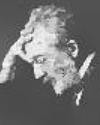
Born 13 May 1854; died 7 Oct 1920 at age 66.
French zoologist known for his research and elucidation of invertebrate physiology and anatomy. He also discovered the equilibrium-stabilizing function of the semicircular canals in the inner ear (1886). Delage studied circulation in crustaceans, made important discoveries in the embryology of sponges (such as Sacculina), and investigated the nervous system of barnacles (Peltogaster) and flatworms (Convoluta). He developed a method for culturing sea urchins following artificial fertilization of the eggs with chemicals. Turning late in his career to more general problems of biology, he considered how life in individual organisms and species is manifested through cytoplasm, and he examined mechanical problems of the cell.
French zoologist known for his research and elucidation of invertebrate physiology and anatomy. He also discovered the equilibrium-stabilizing function of the semicircular canals in the inner ear (1886). Delage studied circulation in crustaceans, made important discoveries in the embryology of sponges (such as Sacculina), and investigated the nervous system of barnacles (Peltogaster) and flatworms (Convoluta). He developed a method for culturing sea urchins following artificial fertilization of the eggs with chemicals. Turning late in his career to more general problems of biology, he considered how life in individual organisms and species is manifested through cytoplasm, and he examined mechanical problems of the cell.
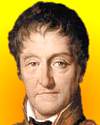
Born 13 May 1753; died 2 Aug 1823 at age 70. quotes
French mathematician and military engineer who wrote several works on mathematics and military engineering. His military masterpiece is considered to be De la défense des places fortes (1810), the classic work on fortification, but he also studied the mechanics of machines and published works on mathematics. When the first steam engine came to Magdeburg in 1818, Carnot took an interest in analysing how it functioned. This in turn influenced his son Sadi Carnot, now known for his seminal work on thermodynamics (published 1824).
French mathematician and military engineer who wrote several works on mathematics and military engineering. His military masterpiece is considered to be De la défense des places fortes (1810), the classic work on fortification, but he also studied the mechanics of machines and published works on mathematics. When the first steam engine came to Magdeburg in 1818, Carnot took an interest in analysing how it functioned. This in turn influenced his son Sadi Carnot, now known for his seminal work on thermodynamics (published 1824).
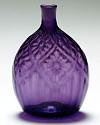
Born 13 May 1729; died 10 Jan 1785 at age 55.
German-American who emigrated to Philadelphia in 1750, and established iron forges in Lancaster and Berks Counties, Pennsylvania. Profits from the business enabled him in 1762 to buy huge amounts of land, on which he designed and built the town of Manheim in Lancaster County. Two years later he began work on a glass factory, having already made plate glass at one of the iron forges. He imported glassblowers from Venice, England, and Germany to produce glass tableware. Though none of the pieces was signed, his use of color, including high-quality blue, green, and purple, became his signature, and he also produced crystal-clear glassware.
German-American who emigrated to Philadelphia in 1750, and established iron forges in Lancaster and Berks Counties, Pennsylvania. Profits from the business enabled him in 1762 to buy huge amounts of land, on which he designed and built the town of Manheim in Lancaster County. Two years later he began work on a glass factory, having already made plate glass at one of the iron forges. He imported glassblowers from Venice, England, and Germany to produce glass tableware. Though none of the pieces was signed, his use of color, including high-quality blue, green, and purple, became his signature, and he also produced crystal-clear glassware.

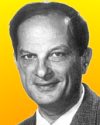
Died 13 May 1984 at age 75 (born 13 Apr 1909). quotes
Polish-American mathematician who played a major role in the development of the hydrogen bomb at Los Alamos. He solved the problem of how to initiate fusion in the hydrogen bomb by suggesting that compression was essential to explosion and that shock waves from a fission bomb could produce the compression needed. He further suggested that careful design could focus mechanical shock waves in such a way that they would promote rapid burning of the fusion fuel. Ulam, with J.C. Everett, also proposed the "Orion" plan for nuclear propulsion of space vehicles. While Ulam was at Los Alamos, he developed "Monte-Carlo method" which searched for solutions to mathematical problems using a statistical sampling method with random numbers.
Polish-American mathematician who played a major role in the development of the hydrogen bomb at Los Alamos. He solved the problem of how to initiate fusion in the hydrogen bomb by suggesting that compression was essential to explosion and that shock waves from a fission bomb could produce the compression needed. He further suggested that careful design could focus mechanical shock waves in such a way that they would promote rapid burning of the fusion fuel. Ulam, with J.C. Everett, also proposed the "Orion" plan for nuclear propulsion of space vehicles. While Ulam was at Los Alamos, he developed "Monte-Carlo method" which searched for solutions to mathematical problems using a statistical sampling method with random numbers.
Adventures of a Mathematician, by Stanislaw M. Ulam, William G. Mathews (Designer). - book suggestion.
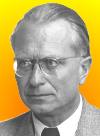
Died 13 May 1983 at age 81 (born 23 Jun 1901).
Otto (Hermann Leopold) Heckmann was a German astronomer noted for measuring stellar positions and his studies of relativity and cosmology. He also made notable contributions to statistical mechanics. In 1931, He proved that, under the assumptions that matter is homogeneously distributed throughout the universe and is isotropic (having identical properties in every direction), the theory of general relativity could result in an open, or Euclidean, universe as readily as a closed one. Heckmann organized an international program to photograph and chart the positions of the stars in the Northern Hemisphere, which led to the publication in 1975 of the third German Astronomical Society catalog, Astronomische Gesellschaft Katalog (AGK3).
Otto (Hermann Leopold) Heckmann was a German astronomer noted for measuring stellar positions and his studies of relativity and cosmology. He also made notable contributions to statistical mechanics. In 1931, He proved that, under the assumptions that matter is homogeneously distributed throughout the universe and is isotropic (having identical properties in every direction), the theory of general relativity could result in an open, or Euclidean, universe as readily as a closed one. Heckmann organized an international program to photograph and chart the positions of the stars in the Northern Hemisphere, which led to the publication in 1975 of the third German Astronomical Society catalog, Astronomische Gesellschaft Katalog (AGK3).
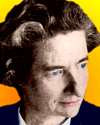
Died 13 May 1975 at age 65 (born 19 Oct 1909).
Marguerite Catherine Perey was a French chemist who identified francium, element 87, the last naturally occurring element to be discovered (7 Jan 1939). She joined the Institut du Radium in 1929 as a technician to be the personal assistant of Marie Curie. Perey focussed on actinium for many years because it was considered a possible source of francium by alpha decay. However, the necessary purification of actinium and concentration required dozens of difficult and painstaking procedures. After submitting a thesis concerning her work on element 87, in 1946 she received a doctorate degree in physics. From 1949, she held the chair of a new nuclear chemistry department at the University of Strasbourg. In 1962, she became the first woman member of the French Academy of Sciences. She retired as her health declined from cancer caused by radiation.«
Marguerite Catherine Perey was a French chemist who identified francium, element 87, the last naturally occurring element to be discovered (7 Jan 1939). She joined the Institut du Radium in 1929 as a technician to be the personal assistant of Marie Curie. Perey focussed on actinium for many years because it was considered a possible source of francium by alpha decay. However, the necessary purification of actinium and concentration required dozens of difficult and painstaking procedures. After submitting a thesis concerning her work on element 87, in 1946 she received a doctorate degree in physics. From 1949, she held the chair of a new nuclear chemistry department at the University of Strasbourg. In 1962, she became the first woman member of the French Academy of Sciences. She retired as her health declined from cancer caused by radiation.«
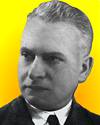
Died 13 May 1961 at age 65 (born 9 Aug 1895).
Yuri Yurijevich Voronoy was a Russian surgeon who achieved the first human kidney allotransplant of a human cadaver kidney implanted into the thigh of a patient on 3 Apr 1933. In a six hour operation, the kidney was connected to blood vessels at the graft site. The kidney excreted urine until the second day after surgery. The patient had acute mercury intoxication from a suicide attempt by taking poison. When conventional treatment was ineffective, and with a kidney available from another patient that had just died from a skull fracture injury, the unprecedented kidney transplant was tried. The blood mismatch meant the attempt failed, with acute rejection. Although this was the first human allograft kidney transplantation, there had been some earlier attempts with animals.«
Yuri Yurijevich Voronoy was a Russian surgeon who achieved the first human kidney allotransplant of a human cadaver kidney implanted into the thigh of a patient on 3 Apr 1933. In a six hour operation, the kidney was connected to blood vessels at the graft site. The kidney excreted urine until the second day after surgery. The patient had acute mercury intoxication from a suicide attempt by taking poison. When conventional treatment was ineffective, and with a kidney available from another patient that had just died from a skull fracture injury, the unprecedented kidney transplant was tried. The blood mismatch meant the attempt failed, with acute rejection. Although this was the first human allograft kidney transplantation, there had been some earlier attempts with animals.«
c.1910
Died 13 May 1939 at age 53 (born 30 Mar 1886). quotes
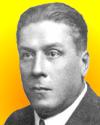
Stanisław Leśniewski was a Polish logician and mathematician who co-founded the Warsaw school of logic, which flourished between the World Wars in Poland. As its leading representative, he teamed with together with Alfred Tarski (then his doctoral pupil), and Jan Łukasiewicz at the University of Warsaw, making it perhaps the world’s foremost research center for formal logic. His approach applied the utmost rigor in the formalization and execution of logic. With original ideas, he devised the three formal systems, now known as protothetic, ontology, and mereology, as a concrete alternative to set theory. Though at first less known internationally, his university teachings influenced subsequent Polish mathematicians.«
Stanisław Leśniewski was a Polish logician and mathematician who co-founded the Warsaw school of logic, which flourished between the World Wars in Poland. As its leading representative, he teamed with together with Alfred Tarski (then his doctoral pupil), and Jan Łukasiewicz at the University of Warsaw, making it perhaps the world’s foremost research center for formal logic. His approach applied the utmost rigor in the formalization and execution of logic. With original ideas, he devised the three formal systems, now known as protothetic, ontology, and mereology, as a concrete alternative to set theory. Though at first less known internationally, his university teachings influenced subsequent Polish mathematicians.«
Leśniewski's Systems of Logic and Foundations of Mathematics, by Rafal Urbaniak. - book suggestion.
(EB)
Died 13 May 1930 at age 68 (born 10 Oct 1861). quotes
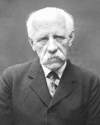
Norwegian explorer, oceanographer, statesman, and humanitarian who led a number of expeditions to the Arctic (1888, 1893, 1895-96) and oceanographic expeditions in the North Atlantic (1900, 1910-14). Nansen wrote The Oceanography of the North Polar Basin (1902). For his relief work after WW I he was awarded the Nobel Prize for Peace (1922).
Norwegian explorer, oceanographer, statesman, and humanitarian who led a number of expeditions to the Arctic (1888, 1893, 1895-96) and oceanographic expeditions in the North Atlantic (1900, 1910-14). Nansen wrote The Oceanography of the North Polar Basin (1902). For his relief work after WW I he was awarded the Nobel Prize for Peace (1922).
Died 13 May 1920 at age 70 (born 2 Nov 1849).
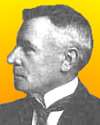
Hungarian geologist who first scientifically described the mountains bordering the Tibetan Plateau that connect the Kunlun Mountains with the north-south-oriented belt of mountains and gorges in central China. In 1878, with the Hungarian Count Széchenyi Béla and Gustav Kreitner, he was the first western visitor to remote ancient Buddhist sites such as the oasis town of Dunhuang, situated at the edge of the Gobi desert, in the west of the present-day Chinese province of Gansu. He wrote many accounts his discoveries, and during his expeditions made many pictures for documentation.
Hungarian geologist who first scientifically described the mountains bordering the Tibetan Plateau that connect the Kunlun Mountains with the north-south-oriented belt of mountains and gorges in central China. In 1878, with the Hungarian Count Széchenyi Béla and Gustav Kreitner, he was the first western visitor to remote ancient Buddhist sites such as the oasis town of Dunhuang, situated at the edge of the Gobi desert, in the west of the present-day Chinese province of Gansu. He wrote many accounts his discoveries, and during his expeditions made many pictures for documentation.
Died 13 May 1907 at age 78 (born 11 Apr 1829).
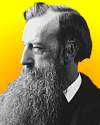
Scottish meteorologist, eminent in his field, who brought the weather map to the forefront of weather forecasting, as when he traced (1868) the path of a storm that traversed North America, continued across the Atlantic Ocean and on into northern Europe. From 1907 to 1920, Buchan was Director of the Meteorological Office. Buchan helped establish an observatory (Nov 1883-Sep 1904) on top of Ben Nevis, the highest mountain in Scotland. With Sir Arthur Mitchell he wrote articles on the 'Influence of Weather on Mortality from different Diseases and at different Ages' and on 'Influenza and Weather in London.' As a hobby, he also had skills as a botanist. He published several books on meteorology.«
Scottish meteorologist, eminent in his field, who brought the weather map to the forefront of weather forecasting, as when he traced (1868) the path of a storm that traversed North America, continued across the Atlantic Ocean and on into northern Europe. From 1907 to 1920, Buchan was Director of the Meteorological Office. Buchan helped establish an observatory (Nov 1883-Sep 1904) on top of Ben Nevis, the highest mountain in Scotland. With Sir Arthur Mitchell he wrote articles on the 'Influence of Weather on Mortality from different Diseases and at different Ages' and on 'Influenza and Weather in London.' As a hobby, he also had skills as a botanist. He published several books on meteorology.«
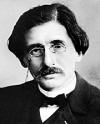
1899 (EB)
Died 13 May 1904 at age 61 (born 12 Mar 1843).
French sociologist and criminologist who was one of the most versatile social scientists of his time. His theory of social interaction (“intermental activity”) emphasized the individual in an aggregate of persons and brought Tarde into conflict with Émile Durkheim, who conceived of society as a collective unity.
French sociologist and criminologist who was one of the most versatile social scientists of his time. His theory of social interaction (“intermental activity”) emphasized the individual in an aggregate of persons and brought Tarde into conflict with Émile Durkheim, who conceived of society as a collective unity.
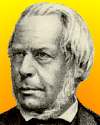
Died 13 May 1884 at age 75 (born 15 Feb 1809).
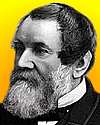
American inventor of the first practical, commercially successful reaping machine. His father had worked unsuccessfully between 1809-1816 to design a reaping machine. He followed his father's lead and by 1831, Cyrus was able to publicly demonstrate a functional machine able to cut a 4-ft swathe. In 1834, he patented his design. To defend his patent against a competitor, in 1843, a widely publicized competition was held between their rival products in which McCormick's machine was judged the better. He sold 29 harvesters that year, 50 the next, and by 1848 he was in business with a factory in Chicago, Illinois, able to produce 500 machines. With production-line assembly, within a few years, McCormick dominated the market.«
American inventor of the first practical, commercially successful reaping machine. His father had worked unsuccessfully between 1809-1816 to design a reaping machine. He followed his father's lead and by 1831, Cyrus was able to publicly demonstrate a functional machine able to cut a 4-ft swathe. In 1834, he patented his design. To defend his patent against a competitor, in 1843, a widely publicized competition was held between their rival products in which McCormick's machine was judged the better. He sold 29 harvesters that year, 50 the next, and by 1848 he was in business with a factory in Chicago, Illinois, able to produce 500 machines. With production-line assembly, within a few years, McCormick dominated the market.«
Cyrus Hall McCormick: His Life and Work, by Herbert N. Casson. - book suggestion.
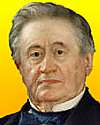
Died 13 May 1878 at age 80 (born 17 Dec 1797). quotes
American physicist who was one of the notable American scientists after Benjamin Franklin. As an adolescent, Henry was interested in the theater, but after reading a book of lectures on science, his life forever turned to that pursuit. He assisted Samuel F.B. Morse in the development of the telegraph. Independently of Michael Faraday, Henry investigated electricity and magnetism, and discovered the phenomenon of self-induction. (His name was given to the SI unit for inductance, the henry, H). He was the first Secretary (director) of the Smithsonian Institution (1846-1878), where he initiated the foundation of a national weather service. Henry insisted that basic research was of fundamental importance, not a luxury.«
American physicist who was one of the notable American scientists after Benjamin Franklin. As an adolescent, Henry was interested in the theater, but after reading a book of lectures on science, his life forever turned to that pursuit. He assisted Samuel F.B. Morse in the development of the telegraph. Independently of Michael Faraday, Henry investigated electricity and magnetism, and discovered the phenomenon of self-induction. (His name was given to the SI unit for inductance, the henry, H). He was the first Secretary (director) of the Smithsonian Institution (1846-1878), where he initiated the foundation of a national weather service. Henry insisted that basic research was of fundamental importance, not a luxury.«
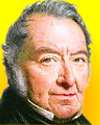
Died 13 May 1852 at age 78 (born 25 Jan 1774).
English optician who improved various precision instruments for astronomy, and navigation devices. He inherited the family business from his father, Peter Dollond, maintaining their reputation for high-quality optical instruments. George is noted for his work significantly improving the clarity and effectiveness of telescopes and other optical devices advancing the field of astronomy in the 19th century. His micrometer made of rock crystal (1821), enabled English astronomer William Rutter Dawes to measure close double stars. Dollond invented an atmospheric recorder to simultaneously measure, and record on paper tape, temperature, atmospheric pressure, wind speed and direction, evaporation, and electrical phenomena.«
English optician who improved various precision instruments for astronomy, and navigation devices. He inherited the family business from his father, Peter Dollond, maintaining their reputation for high-quality optical instruments. George is noted for his work significantly improving the clarity and effectiveness of telescopes and other optical devices advancing the field of astronomy in the 19th century. His micrometer made of rock crystal (1821), enabled English astronomer William Rutter Dawes to measure close double stars. Dollond invented an atmospheric recorder to simultaneously measure, and record on paper tape, temperature, atmospheric pressure, wind speed and direction, evaporation, and electrical phenomena.«
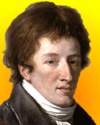
Died 13 May 1832 at age 62 (born 23 Aug 1769). quotes
Baron Georges Léopold Chrêtien Frédéric Dagobert Cuvier was a French zoologist, statesman, anatomist and paleontologist who did important work in comparative anatomy, paleontology, and extended the work by Linnaeus on the classification of the animal kingdom. His careful study of fossil remains established paleontology as its own new field of research. He coined the name for the pterodactyl based on his identifcation of its fossil remains. He understood fossils represented the preservation of an former organic life form, and his classification scheme incorporated such life forms. In analysis of anatomic structures, he recognized a correlation of parts, by which he was able to make astute insights in reconstructing an entire extinct animal from its disjointed parts. He believed in catastrophism, whereby the ancient world underwent periodic massive flooding, which eliminated some life forms.«
Baron Georges Léopold Chrêtien Frédéric Dagobert Cuvier was a French zoologist, statesman, anatomist and paleontologist who did important work in comparative anatomy, paleontology, and extended the work by Linnaeus on the classification of the animal kingdom. His careful study of fossil remains established paleontology as its own new field of research. He coined the name for the pterodactyl based on his identifcation of its fossil remains. He understood fossils represented the preservation of an former organic life form, and his classification scheme incorporated such life forms. In analysis of anatomic structures, he recognized a correlation of parts, by which he was able to make astute insights in reconstructing an entire extinct animal from its disjointed parts. He believed in catastrophism, whereby the ancient world underwent periodic massive flooding, which eliminated some life forms.«
In 1958, the Velcro trademark was registered for a fabric hook and loop fastener.
In 1949, the first gas turbine to pump natural gas was installed at Wilmar, Ark by the Mississippi River Fuel Corp.
In 1913, the first four-engine airplane was first built and flown by Igor Sikorsky of Russia.
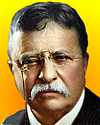
In 1908, the three-day Conference of Governors opened at the White House, called by President Theodore Roosevelt to consider the problems of conservation. It was attended by the governors of the states and territories, the members of the Supreme Court and the Cabinet, scientists, and various national leaders. On 15 May 1908, the governors adopted a declaration supporting conservation. One result was The National Conservation Commission, appointed by Roosevelt on 8 Jun 1908 which prepared the first inventory of the natural resources of the United States with chairmen for water, forests, lands, and minerals. Also, the conference led to annual governors' conferences, and the appointment of 38 state conservation commissions. Throughout his life—before, during and after his presidency—Roosevelt was an ardent and knowledgeable naturalist, which was reflected in his concern for the land while President.«
more
In 1890, Nikola Tesla was issued a patent for an electric generator (No. 428,057).
In 1884, the American Institute of Electrical Engineers (AIEE) was formed. It was the predecessor to the Institute of Electrical and Electronics Engineers, Inc. (IEEE)
In 1873, Ludwig M. Wolf of Avon, CT, patented the sewing machine lamp holder (No. 138,831). It was introduced by the Singer Sewing Machine Co. in 1876, to meet the need of those who wished to sew at night, because the lamp would not "jar off the table or upset," and it could be moved "without soiling the fingers."
In 1821, Samuel Rust of New York City patented the Washington press, the first, practical and successful printing press to be built in America. A previous invention, in 1816, by George E Clymer, the Columbian Press had not been widely adopted in the U.S., and Clymer had taken his business to England.
In 1637, the table knife was created by Cardinal Richelieu in France. Until this time, daggers were used to cut meat, as well as to pick one's teeth. Richelieu had the points rounded off all of the knives to be used at his table




