
Born 18 Apr 1949.
American mathematician who received the Fields Medal in 1978 for his work in mathematical analysis. As a child prodigy, his accelerated schooling reached B.S. degrees in physics and mathematics by age 17 and a Ph.D. in mathematics from Princeton University at age 20 (1969). By 1971, as a professor at the University of Chicago at age 22, he was the youngest full professor ever in the U.S. Two years later, he returned to Princeton as a professor (1973). His Ph.D. dissertation was on “Inequalities for Strongly Regular Convolution Operators.” His field of study includes his interest in physics - applied mathematics in vibrations, heat, turbulence - though he is best known for his theoretical work.«
American mathematician who received the Fields Medal in 1978 for his work in mathematical analysis. As a child prodigy, his accelerated schooling reached B.S. degrees in physics and mathematics by age 17 and a Ph.D. in mathematics from Princeton University at age 20 (1969). By 1971, as a professor at the University of Chicago at age 22, he was the youngest full professor ever in the U.S. Two years later, he returned to Princeton as a professor (1973). His Ph.D. dissertation was on “Inequalities for Strongly Regular Convolution Operators.” His field of study includes his interest in physics - applied mathematics in vibrations, heat, turbulence - though he is best known for his theoretical work.«
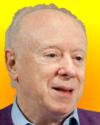
Born 18 Apr 1940. quotes
Joseph Leonard Goldstein is an American molecular geneticist who, along with Michael S. Brown, was awarded the 1985 Nobel Prize for Physiology or Medicine for their elucidation of a key link in the metabolism of cholesterol in the human body. They compared cells of normal persons with those of persons having familial hypercholesterolemia, (who inherit a tendency to abnormally high blood cholesterol levels and circulatory ailments). They traced a genetic defect that resulted in their being deficient in cell receptors for LDL (low-density lipoproteins - the primary cholesterol carrying particles). These cell receptors draw the LDL particles into the cells as a prelude to breaking them down, and thus remove them from the bloodstream.
Joseph Leonard Goldstein is an American molecular geneticist who, along with Michael S. Brown, was awarded the 1985 Nobel Prize for Physiology or Medicine for their elucidation of a key link in the metabolism of cholesterol in the human body. They compared cells of normal persons with those of persons having familial hypercholesterolemia, (who inherit a tendency to abnormally high blood cholesterol levels and circulatory ailments). They traced a genetic defect that resulted in their being deficient in cell receptors for LDL (low-density lipoproteins - the primary cholesterol carrying particles). These cell receptors draw the LDL particles into the cells as a prelude to breaking them down, and thus remove them from the bloodstream.
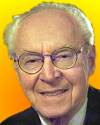
Born 18 Apr 1911; died 11 May 2011 at age 100.
Austrian-American physicist who devised an experiment to show that neutrinos always rotate in one direction (only counterclockwise). His method was simple, elegant, and used an apparatus small enough to fit on a benchtop, rather than employing a huge accelerator. He also discovered that the nucleus of the deuterium atom consists of a proton and a neutron. In the decade (1961-73) that he headed the Brookhaven National Laboratory in New York, he oversaw the experiments there which led to three Nobel Prizes. He died at age 100.«
Austrian-American physicist who devised an experiment to show that neutrinos always rotate in one direction (only counterclockwise). His method was simple, elegant, and used an apparatus small enough to fit on a benchtop, rather than employing a huge accelerator. He also discovered that the nucleus of the deuterium atom consists of a proton and a neutron. In the decade (1961-73) that he headed the Brookhaven National Laboratory in New York, he oversaw the experiments there which led to three Nobel Prizes. He died at age 100.«
Born 18 Apr 1907; died 11 Oct 1996 at age 89.
Finnish mathematician who was awarded one of the first two Fields Medals in 1936 for his work with Riemann surfaces. He also won the Wolf Prize in 1981.
Finnish mathematician who was awarded one of the first two Fields Medals in 1936 for his work with Riemann surfaces. He also won the Wolf Prize in 1981.
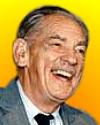
Born 18 Apr 1905; died 27 Feb 1998 at age 92.
American pharmacologist was a medical research pioneer who was awarded a share of the Nobel Prize for Physiology or Medicine in 1988 (with Gertrude B. Elion and Sir James W. Black) for development of drugs for several major diseases. In the 1950s, he and colleague Elion developed thioguanine and 6-mercaptopurine, that treated leukemia, and in 1957, azathioprine, used in treating severe rheumatoid arthritis and other autoimmune disorders. Their drug allopurinol was effective treatment for gout. Other important drugs they developed include pyrimethamine, an antimalarial agent; trimethoprim, a treatment for urinary and respiratory tract infections; and acyclovir, the first effective treatment for viral herpes.«
American pharmacologist was a medical research pioneer who was awarded a share of the Nobel Prize for Physiology or Medicine in 1988 (with Gertrude B. Elion and Sir James W. Black) for development of drugs for several major diseases. In the 1950s, he and colleague Elion developed thioguanine and 6-mercaptopurine, that treated leukemia, and in 1957, azathioprine, used in treating severe rheumatoid arthritis and other autoimmune disorders. Their drug allopurinol was effective treatment for gout. Other important drugs they developed include pyrimethamine, an antimalarial agent; trimethoprim, a treatment for urinary and respiratory tract infections; and acyclovir, the first effective treatment for viral herpes.«
Born 18 Apr 1872; died 9 Aug 1960 at age 88.
American botanist and pioneer researcher on heredity in fungi.
American botanist and pioneer researcher on heredity in fungi.
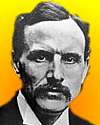
Born 18 Apr 1863; died 21 Jan 1930 at age 66.
Hugh Longbourne Callendar was an English physicist who was famous for work in calorimetry, thermometry and especially, the thermodynamic properties of steam. He published the first steam tables (1915). In 1886, he invented the platinum resistance thermometer using the electrical resistivity of platinum, enabling the precise measurement of temperatures. He also invented the electrical continuous-flow calorimeter, the compensated air thermometer (1891), a radio balance (1910) and a rolling-chart thermometer (1897) that enabled long-duration collection of climatic temperature data. His son, Guy S. Callendar linked climatic change with increases in carbon dioxide (CO2) resulting from mankind's burning of carbon fuels (1938), known as the Callendar effect, part of the greenhouse effect.«
Hugh Longbourne Callendar was an English physicist who was famous for work in calorimetry, thermometry and especially, the thermodynamic properties of steam. He published the first steam tables (1915). In 1886, he invented the platinum resistance thermometer using the electrical resistivity of platinum, enabling the precise measurement of temperatures. He also invented the electrical continuous-flow calorimeter, the compensated air thermometer (1891), a radio balance (1910) and a rolling-chart thermometer (1897) that enabled long-duration collection of climatic temperature data. His son, Guy S. Callendar linked climatic change with increases in carbon dioxide (CO2) resulting from mankind's burning of carbon fuels (1938), known as the Callendar effect, part of the greenhouse effect.«
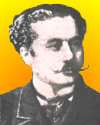
Born 18 Apr 1838; died 28 May 1912 at age 74.
French chemist who developed improved spectroscopic methods which had recently been developed by Kirchhoff. In 1859, he set out to scan minerals for unknown spectral lines. Fifteen years of persistence paid off when he discovered the elements gallium (1875), samarium (1880), and dysprosium (1886). He ranks with Robert Bunsen, Gustav Kirchhoff and William Crookes as one of the founders of the science of spectroscopy. Guided by the general arrangement of spectral lines for elements in the same family, he believed the element he called gallium (in honour of France) was the eka-aluminium predicted by Mendeleev between aluminium and indium. Since it is liquid between about 30 - 1700 deg C, a gallium in quartz thermometer can measure high temperatures.
French chemist who developed improved spectroscopic methods which had recently been developed by Kirchhoff. In 1859, he set out to scan minerals for unknown spectral lines. Fifteen years of persistence paid off when he discovered the elements gallium (1875), samarium (1880), and dysprosium (1886). He ranks with Robert Bunsen, Gustav Kirchhoff and William Crookes as one of the founders of the science of spectroscopy. Guided by the general arrangement of spectral lines for elements in the same family, he believed the element he called gallium (in honour of France) was the eka-aluminium predicted by Mendeleev between aluminium and indium. Since it is liquid between about 30 - 1700 deg C, a gallium in quartz thermometer can measure high temperatures.
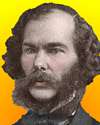
Born 18 Apr 1817; died 28 Nov 1878 at age 61. quotes
English philosopher and naturalist who is most remembered for his literary work contributing articles to reviews (1840-49) and for a couple of years was editor of the Fortnightly Review. Although without formal training, he later took an interest in science, especially physiology and pyschology, which he popularized through his books, including Physiology of Common Life. He separated from his wife in 1854, to live with Mary Ann Evans (pen-name George Eliot) as her common-law (unmarried) husband.«
English philosopher and naturalist who is most remembered for his literary work contributing articles to reviews (1840-49) and for a couple of years was editor of the Fortnightly Review. Although without formal training, he later took an interest in science, especially physiology and pyschology, which he popularized through his books, including Physiology of Common Life. He separated from his wife in 1854, to live with Mary Ann Evans (pen-name George Eliot) as her common-law (unmarried) husband.«

Died 18 Apr 2003 at age 79 (born 23 Aug 1923).
British-American computer scientist and mathematician who laid the theoretical foundation for relational databases, for storing and retrieving information in computer records. He also contributed knowledge in the area of cellular automata.
British-American computer scientist and mathematician who laid the theoretical foundation for relational databases, for storing and retrieving information in computer records. He also contributed knowledge in the area of cellular automata.
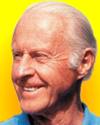
Died 18 Apr 2002 at age 87 (born 6 Oct 1914). quotes
Norwegian ethnologist and adventurer who organized and led the famous Kon-Tiki (28 Apr 1947) and Ra (1969-70) transoceanic scientific expeditions. Both expeditions were intended to prove the possibility of ancient transoceanic contacts between distant civilizations and cultures. The Kon Tiki voyage from Peru to Polynesia was a 101-day, 4,300-mile drifting voyage on the 40-sq.ft. raft, a replica of pre-Inca vessels. He wished to show that Polynesia's first settlers could have come from South America. Few scholars at the time, and almost none today, endorsed the idea. They discount the Heyerdahl hypothesis largely on linguistic, genetic and cultural grounds, all of which point to the settlers having come from the west, not the east.
Norwegian ethnologist and adventurer who organized and led the famous Kon-Tiki (28 Apr 1947) and Ra (1969-70) transoceanic scientific expeditions. Both expeditions were intended to prove the possibility of ancient transoceanic contacts between distant civilizations and cultures. The Kon Tiki voyage from Peru to Polynesia was a 101-day, 4,300-mile drifting voyage on the 40-sq.ft. raft, a replica of pre-Inca vessels. He wished to show that Polynesia's first settlers could have come from South America. Few scholars at the time, and almost none today, endorsed the idea. They discount the Heyerdahl hypothesis largely on linguistic, genetic and cultural grounds, all of which point to the settlers having come from the west, not the east.
Kon-Tiki: Across the Pacific in a Raft, by Thor Heyerdahl. - book suggestion.
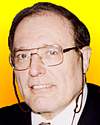
Died 18 Apr 1999 at age 66 (born 27 Apr 1932). quotes
Italian-American mathematician, philosopher and author.[Also known as Juan Carlos Rota.]
Italian-American mathematician, philosopher and author.[Also known as Juan Carlos Rota.]
Indiscrete Thoughts, by Gian-Carlo Rota and Fabrizio Palombi. - book suggestion.
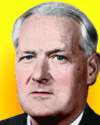
Died 18 Apr 1991 at age 93 (born 8 Jul 1897). quotes
English medical statistician and epidemiologist who pioneered randomized clinical trials, and is known for creating Hill’s criteria for causation, used to substantiate a link between an observed effect and a suspected cause. The nine principles of the Bradford Hill criteria continue to be widely applied in public health research and epidemiology. In particular, with an exact and controlled field survey, he helped validate how lung cancer had a cause from cigarette smoking. He has been called “the world’s leading medical statistician.” The understanding of the link between tobacco smoking and lung cancer was also furthered by Richard Doll. Hill was honored for his indications of various aspects of causation in medicine and biology.«
English medical statistician and epidemiologist who pioneered randomized clinical trials, and is known for creating Hill’s criteria for causation, used to substantiate a link between an observed effect and a suspected cause. The nine principles of the Bradford Hill criteria continue to be widely applied in public health research and epidemiology. In particular, with an exact and controlled field survey, he helped validate how lung cancer had a cause from cigarette smoking. He has been called “the world’s leading medical statistician.” The understanding of the link between tobacco smoking and lung cancer was also furthered by Richard Doll. Hill was honored for his indications of various aspects of causation in medicine and biology.«
Died 18 Apr 1985 at age 96 (born 1 Feb 1889).
English archaeologist who distinguished two prehistoric cultures in the Al-Fayyum depression of Upper Egypt, the older dating to about 5000 BC and the younger to about 4500 BC.
English archaeologist who distinguished two prehistoric cultures in the Al-Fayyum depression of Upper Egypt, the older dating to about 5000 BC and the younger to about 4500 BC.
Mixed Memoirs, by Gertrude Caton-Thompson. - book suggestion.
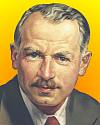
Died 18 Apr 1958 at age 53 (born 9 Jun 1904).
English paleontologist, an authority on Jurassic fossils (those dating from 208 to 144 million years ago). Arkell taught at Trinity College, Cambridge University. His work includes the classification of Jurassic ammonites and an interpretation of the environments of that period. He wrote Jurassic Geology of the World (1956), which critically reviewed the information dispersed throughout the world's enormous literature on the world's Jurassic stratigraphy. He made numerous contributions to knowledge of the Jurassic stratigraphy, and gradually stabilized many stratigraphically significant zonal assemblages. In 1946, his "Standard of the European Jurassic" advocated a commission formulate a code of rules for stratigraphical nomenclature.
English paleontologist, an authority on Jurassic fossils (those dating from 208 to 144 million years ago). Arkell taught at Trinity College, Cambridge University. His work includes the classification of Jurassic ammonites and an interpretation of the environments of that period. He wrote Jurassic Geology of the World (1956), which critically reviewed the information dispersed throughout the world's enormous literature on the world's Jurassic stratigraphy. He made numerous contributions to knowledge of the Jurassic stratigraphy, and gradually stabilized many stratigraphically significant zonal assemblages. In 1946, his "Standard of the European Jurassic" advocated a commission formulate a code of rules for stratigraphical nomenclature.
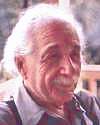
Died 18 Apr 1955 at age 76 (born 14 Mar 1879). quotes
German-American physicist who developed the special and general theories of relativity and won the Nobel Prize for Physics in 1921 for his explanation of the photoelectric effect. Recognized in his own time as one of the most creative intellects in human history, in the first 15 years of the 20th century Einstein advanced a series of theories that proposed entirely new ways of thinking about space, time, and gravitation. His theories of relativity and gravitation were a profound advance over the old Newtonian physics and revolutionized scientific and philosophic inquiry. more
German-American physicist who developed the special and general theories of relativity and won the Nobel Prize for Physics in 1921 for his explanation of the photoelectric effect. Recognized in his own time as one of the most creative intellects in human history, in the first 15 years of the 20th century Einstein advanced a series of theories that proposed entirely new ways of thinking about space, time, and gravitation. His theories of relativity and gravitation were a profound advance over the old Newtonian physics and revolutionized scientific and philosophic inquiry. more
Subtle Is the Lord: The Science and the Life of Albert Einstein, by Abraham Pais. - book suggestion.
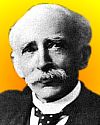
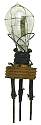
John Ambrose Fleming was an English electrical engineer who invented, and coined the name for, the diode—first thermonic valve (tube). It was a vacuum tube with two electrodes in which the electrons flowed from filament to anode only. Thus, it acted as a rectifier in a circuit, restricting current to flow in only one direction (patented 1904). For an alternating current, only the positive halves of the waves were passed, rectifying from a.c. to d.c. It was used in circuits for the growing telecommunications industry, because it stripped the intermittent Morse code signal from its radio carrier wave. His name is remembered in the Fleming “Left Hand Rule” mnemonic for relating the directions of motion, current and magnetic field for a motor.«
The Inventor of the Valve: a Biography of Sir Ambrose Fleming, by J.T. MacGregor. - book suggestion.
Died 18 Apr 1883 at age 62 (born 17 Oct 1820).
Édouard Albert Roche was a French mathematical astronomer who studied the internal structure of celestial bodies and was the first to propose a model of the Earth with a solid core. He determined (1850) the Roche Limit for a satellite to have a stable orbit around a planet of equal density. The smaller body could not lie within 2.44 radii of the larger body without breaking apart from effect of the gravitational force between them. He later made a rigorous mathematical analysis of Pierre Laplace's nebular hypothesis and showed (1873) the instability of a rapidly rotating lens-shaped body.«
Édouard Albert Roche was a French mathematical astronomer who studied the internal structure of celestial bodies and was the first to propose a model of the Earth with a solid core. He determined (1850) the Roche Limit for a satellite to have a stable orbit around a planet of equal density. The smaller body could not lie within 2.44 radii of the larger body without breaking apart from effect of the gravitational force between them. He later made a rigorous mathematical analysis of Pierre Laplace's nebular hypothesis and showed (1873) the instability of a rapidly rotating lens-shaped body.«
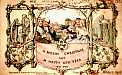
British industrial designer who produced the first commercial Christmas card.* Cole played a pivotal role in the introduction of the Penny Post, the English postal system (assistant to Rowland Hill, 1837-40), influenced the expansion of railways, helped establish the Victoria and Albert Museum, contributed greatly to the success of London's Great Exhibition of 1851, and promoted art and science education. In 1843, wishing to save much handwriting of seasonal correspondence, Cole introduced the world's first commercial Christmas card. He commissioned artist John Callcott Horsley to make the artwork for 1000 hand-coloured lithographs. (Individuals' homemade Christmas cards had existed earlier.)«[Image right: Cole's 1843 Christmas card.]
The Great Exhibitor: The Life and Work of Henry Cole, by Elizabeth Bonython. - book suggestion.
Died 18 Apr 1880 at age 77 (born 27 Dec 1802).
Dutch chemist remembered for his analysis of proteins, for which he coined the name (perhaps suggested to him by Berzelius), in French, protéine (1838) based on the stem “proto” from Greek, as a primary or fundamental substance forming the bodies of animals and plants. Further, he isolated fibrin, the protein associated with clotting blood. He also worked in soil chemistry, was the first to analyze phytol correctly during research on chlorophyll, and confirmed Bezelius' suspicion that theine and caffein were the same compound. He published technical works on the chemistry of indigo (1833), wine (1855) and beer (1857).«
Dutch chemist remembered for his analysis of proteins, for which he coined the name (perhaps suggested to him by Berzelius), in French, protéine (1838) based on the stem “proto” from Greek, as a primary or fundamental substance forming the bodies of animals and plants. Further, he isolated fibrin, the protein associated with clotting blood. He also worked in soil chemistry, was the first to analyze phytol correctly during research on chlorophyll, and confirmed Bezelius' suspicion that theine and caffein were the same compound. He published technical works on the chemistry of indigo (1833), wine (1855) and beer (1857).«
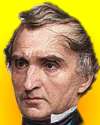
Died 18 Apr 1873 at age 69 (born 12 May 1803). quotes
(baron) German chemist who made many important contributions to the early systematization of organic chemistry, to the application of chemistry to biology (biochemistry), to chemical education, and to the basic principles of agricultural chemistry. more
(baron) German chemist who made many important contributions to the early systematization of organic chemistry, to the application of chemistry to biology (biochemistry), to chemical education, and to the basic principles of agricultural chemistry. more
Justus von Liebig: The Chemical Gatekeeper, by William H. Brock. - book suggestion.
Died 18 Apr 1860 at age 63 (born 13 Oct 1796).
Swedish anatomist.
Swedish anatomist.
Died 18 Apr 1845 at age 77 (born 14 Oct 1767).
Swiss chemist and plant physiologist whose quantitative experiments on the influence of water, air, and nutrients on plants laid the foundation for phytochemistry.
Swiss chemist and plant physiologist whose quantitative experiments on the influence of water, air, and nutrients on plants laid the foundation for phytochemistry.
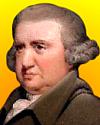
c.1792
Died 18 Apr 1802 at age 70 (born 12 Dec 1731). quotes
Prominent English physician, poet , philosopher, botanist, naturalist and the grandfather of naturalist Charles Darwin and the biologist Francis Galton. Erasmus Darwin was one of the leading intellectuals of 18th century England. As a naturalist, he formulated one of the first formal theories on evolution in Zoonomia, or, The Laws of Organic Life (1794-1796). Although he did not come up with natural selection, he did discuss ideas that his grandson elaborated on sixty years later, such as how life evolved from a single common ancestor, forming "one living filament". Although some of his ideas on how evolution might occur are quite close to those of Lamarck, Erasmus Darwin also talked about how competition and sexual selection could cause changes in species.
Prominent English physician, poet , philosopher, botanist, naturalist and the grandfather of naturalist Charles Darwin and the biologist Francis Galton. Erasmus Darwin was one of the leading intellectuals of 18th century England. As a naturalist, he formulated one of the first formal theories on evolution in Zoonomia, or, The Laws of Organic Life (1794-1796). Although he did not come up with natural selection, he did discuss ideas that his grandson elaborated on sixty years later, such as how life evolved from a single common ancestor, forming "one living filament". Although some of his ideas on how evolution might occur are quite close to those of Lamarck, Erasmus Darwin also talked about how competition and sexual selection could cause changes in species.
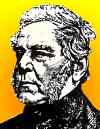
Died 18 Apr 1674 at age 53 (born 24 Apr 1620). quotes
English statistician who is considered by many historians to have founded the science of demography (statistical study of human populations). For his published analysis of the parish records of christenings and deaths, he was made a charter member of the Royal Society. His 90-page book, “Natural and Political Observations Mentioned in a Following Index, and Made upon the Bills of Mortality” was distributed at the Royal Society meeting on 5 Feb 1662. He described his work as having “reduced several great confused volumes” of parish records into a few easily to understood tables, and “abridged such Observations... into a few succinct Paragraphs.” He initiated “life tables” of life expectancy. His use of demographics was further pioneered by his friend Sir William Petty and Edmond Halley, the Astronomer Royal.«
English statistician who is considered by many historians to have founded the science of demography (statistical study of human populations). For his published analysis of the parish records of christenings and deaths, he was made a charter member of the Royal Society. His 90-page book, “Natural and Political Observations Mentioned in a Following Index, and Made upon the Bills of Mortality” was distributed at the Royal Society meeting on 5 Feb 1662. He described his work as having “reduced several great confused volumes” of parish records into a few easily to understood tables, and “abridged such Observations... into a few succinct Paragraphs.” He initiated “life tables” of life expectancy. His use of demographics was further pioneered by his friend Sir William Petty and Edmond Halley, the Astronomer Royal.«
In 1997, researchers reported that the AIDS virus penetrates cells by a harpoonlike mechanism. They conducted their work at the Whitehead Institute for Biomedical Research, Cambridge, Mass.,
In 1966, James M. Schlatter applied for a patent for “Peptide Sweetening Agents” (U.S. No. 3,492,131), an invention which eventually led led to the marketing of aspartame under the name NutraSweet. A few months earlier, in Dec 1965, he had accidentally discovered the first example of such compounds. To pick up a paper, he had licked his finger. He tasted an unexpectedly sweet trace of a substance that had, he realized, earlier splashed onto the outside of a flask he had handled. It contained L-aspartyl-L-phenylalnine methyl ester. The patent was issued 27 Jan 1970, assigned to his employer, G.D. Searle & Co. After development and much scrutiny of the testing of aspartame, the U.S. Food and Drug Administration approved it (22 Oct 1981) with many permitted uses as a food sweetener.«
In 1950, the first U.S. jet passenger international trip was a flight from Malton Airport in Toronto, Canada to the International Airport, New York City. The Avro Canada jetliner carried a crew of three, with three passengers, and 15,000 airmail letters (which became the first airmail letters carried in the U.S. by jet plane). The 359 mile flight took one hour, powered by four Rolls-Royce Derwent jet engines.
In 1925, the first U.S. commercial transcontinental radio transmission of a radio facsimile was sent from San Francisco, California to New York City. The photograph showed Marion Davies receiving a make-up box as a gift from Louis B. Mayer of Metro-Goldwyn-Mayer Pictures. The service had been tried out the previous month by the American Telephone and Telegraph Company on 4 Mar 1925. The first photograph sent showed the inauguration of President Calvin Coolidge taken in Washington, D.C. Nine photographs were transmitted, each taking seven minutes, going to New York, Chicago, and San Francisco.
In 1925, the first Woman's World's Fair in U.S. was officially opened in Chicago, Illinois, by Mrs Calvin Coolidge. For eight days, it displayed women's progress in 70 industries. This showed the diversification since the 1893 World's Fair, where the only example of woman's handiwork was the sewing exhibit.
In 1910, the first night airplane flight made in the U.S. was made by Walter R. Brookins in Montgomery, Alabama.
In 1885, in Japan, a Patent Monopoly Act was proclaimed, which effectively established the Japanese Patent Office at that time. The need for a patent system had become clearly apparent in order to speed up modernization efforts (An earlier patent law passed in 1871 had been short-lived, but was abandoned in the following year because it was poorly understood by the people and the government office experience problems with its operation.) The first patent issued by the new office, on 14 Aug 1885, was to Zuisho Hotta for his formulation of an antifouling paint for ship hulls made of lacquer, powdered iron, red lead, persimmon tannin, and other ingredients. A New Utility Model Law was enacted in the 1905 to complement the patent system.«
In 1846, the first U.S. patent for a telegraph ticker that would print letters of the alphabet was issued to R.E. House of New York City (No. 4,464). It was able to print at the rate of 50 words a minute in Roman letters. It had first been publically exhibited in 1844 at the American Institute Fair in New York City. It was widely used for ten years, until replaced by improved versions.





