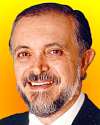
Born 19 Mar 1943.
Mexican-American chemist who shared the 1995 Nobel Prize for Chemistry, along with chemists F. Sherwood Rowland and Paul Crutzen, for research in the 1970s concerning the decomposition of the ozonosphere, which shields the Earth from dangerous solar radiation. The discoveries of Molina and Rowland, that some industrially manufactured gases deplete the ozone layer, led to an international movement in the late 20th century to limit the widespread use of chlorofluorocarbon (CFC) gases.
Mexican-American chemist who shared the 1995 Nobel Prize for Chemistry, along with chemists F. Sherwood Rowland and Paul Crutzen, for research in the 1970s concerning the decomposition of the ozonosphere, which shields the Earth from dangerous solar radiation. The discoveries of Molina and Rowland, that some industrially manufactured gases deplete the ozone layer, led to an international movement in the late 20th century to limit the widespread use of chlorofluorocarbon (CFC) gases.
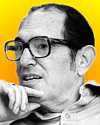
Born 19 Mar 1910; died 10 Feb 1997 at age 86.
American meteorologist who served as the first chief of the Extended Forecast Division of the U.S. Weather Bureau (1941-1971). His pioneering work extended weather forecasting with five-day predictictions in the 1940s. The forecasts were of value to the rapidly expanding passenger airlines, and to the military in wartime. By the 1960s, Namias expanded the advance forecasts to 30 and 90 days by making inferences from weather patterns, and the interactions of the upper layers of the ocean and the atmosphere. In the 1970s, he began making long-range seasonal forecasts. He also studied the conditions which led to the Dust Bowl of the 1930s and investigated the El Niño phenomenon. From 1968, Namias split his time between the Weather Bureau and as a climate researcher with the Scripps Institue of Oceanography.«
American meteorologist who served as the first chief of the Extended Forecast Division of the U.S. Weather Bureau (1941-1971). His pioneering work extended weather forecasting with five-day predictictions in the 1940s. The forecasts were of value to the rapidly expanding passenger airlines, and to the military in wartime. By the 1960s, Namias expanded the advance forecasts to 30 and 90 days by making inferences from weather patterns, and the interactions of the upper layers of the ocean and the atmosphere. In the 1970s, he began making long-range seasonal forecasts. He also studied the conditions which led to the Dust Bowl of the 1930s and investigated the El Niño phenomenon. From 1968, Namias split his time between the Weather Bureau and as a climate researcher with the Scripps Institue of Oceanography.«
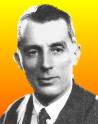
Born 19 Mar 1900; died 14 Aug 1958 at age 58. quotes
French physicist and physical chemist who became personal assistant to Marie Curie at the Radium Institute, Paris, and the following year married her daughter Irène (who was also an assistant at the institute). Later they collaborated on research, and shared the 1935 Nobel Prize in Chemistry "in recognition of their synthesis of new radioactive elements." For example, they discovered that aluminium atoms exposed to alpha rays transmuted to radioactive phosphorus atoms. By 1939 he was investigating the fission of uranium atoms. After WW II he supervised the first atomic pile in France. He succeeded his wife as head of the Radium Institute upon her death in 1956.
French physicist and physical chemist who became personal assistant to Marie Curie at the Radium Institute, Paris, and the following year married her daughter Irène (who was also an assistant at the institute). Later they collaborated on research, and shared the 1935 Nobel Prize in Chemistry "in recognition of their synthesis of new radioactive elements." For example, they discovered that aluminium atoms exposed to alpha rays transmuted to radioactive phosphorus atoms. By 1939 he was investigating the fission of uranium atoms. After WW II he supervised the first atomic pile in France. He succeeded his wife as head of the Radium Institute upon her death in 1956.
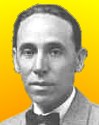
Born 19 Mar 1886; died 26 Dec 1960 at age 74.
Italian-American aviator who designed and built airplanes, including the first U.S. monoplane with an enclosed cabin (1917). He had a flying school (1912-16) at Long Island, N.Y., where he built and learned to fly his first plane. In 1917, he designed the first enclosed-cabin monoplane, which he flew successfully in air races. The CF airliner he created in 1920 could carry four passengers in an enclosed cabin. It won three major performance contests in 1922. Although regarded as “the world's best airplane,” he couldn't sell them, in a market glutted with surplus WW I airplanes. In 1931, Pangborn and Herdon flew a Bellanca plane on the first Japan-to-U.S. nonstop flight.«
Italian-American aviator who designed and built airplanes, including the first U.S. monoplane with an enclosed cabin (1917). He had a flying school (1912-16) at Long Island, N.Y., where he built and learned to fly his first plane. In 1917, he designed the first enclosed-cabin monoplane, which he flew successfully in air races. The CF airliner he created in 1920 could carry four passengers in an enclosed cabin. It won three major performance contests in 1922. Although regarded as “the world's best airplane,” he couldn't sell them, in a market glutted with surplus WW I airplanes. In 1931, Pangborn and Herdon flew a Bellanca plane on the first Japan-to-U.S. nonstop flight.«
Giuseppe Bellanca's Golden Age: The Golden Age of Aviation Series, by A. and D.W. Abel. - book suggestion.
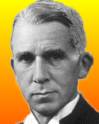
Born 19 Mar 1883; died 19 Mar 1950 at age 67.
Sir Walter Norman Haworth was an English chemist who shared (with the Swiss chemist Paul Karrer) the 1937 Nobel Prize for Chemistry for his work in determining the chemical structures of various carbohydrates and the synthesis of vitamin C (1934), which was the first artificial preparation of any vitamin. He died on his birthday.
Sir Walter Norman Haworth was an English chemist who shared (with the Swiss chemist Paul Karrer) the 1937 Nobel Prize for Chemistry for his work in determining the chemical structures of various carbohydrates and the synthesis of vitamin C (1934), which was the first artificial preparation of any vitamin. He died on his birthday.
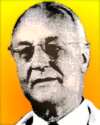
Born 19 Mar 1883; died 4 Mar 1957 at age 73.
Evarts Ambrose Graham was an American surgeon who performed the first one-stage subtotal removal of a lung (pneumonectomy) to treat lung cancer. On 5 Apr 1933, at Barnes Hospital, St. Louis, Missouri, he operated on a fellow physician. Because the cancer involved more than one lobe, a routine removal of just one lobe was not adequate. Graham used mass ligation to remove (almost) the whole lung. It was a “subtotal” pneumonectomy because some tissue was retained in the stump and utilized for burying the open ends of the bronchi. Seven ribs were removed to permit the soft tissues of the chest wall to fill the resulting cavity. The patient recovered, was cured of the disease, and lived a full life. Graham devoted many years to the study of lung cancer and its link to cigarette smoking.«
Evarts Ambrose Graham was an American surgeon who performed the first one-stage subtotal removal of a lung (pneumonectomy) to treat lung cancer. On 5 Apr 1933, at Barnes Hospital, St. Louis, Missouri, he operated on a fellow physician. Because the cancer involved more than one lobe, a routine removal of just one lobe was not adequate. Graham used mass ligation to remove (almost) the whole lung. It was a “subtotal” pneumonectomy because some tissue was retained in the stump and utilized for burying the open ends of the bronchi. Seven ribs were removed to permit the soft tissues of the chest wall to fill the resulting cavity. The patient recovered, was cured of the disease, and lived a full life. Graham devoted many years to the study of lung cancer and its link to cigarette smoking.«
Evarts A. Graham: The Life, Lives, and Times of the Surgical Spirit of St. Louis, by C. Barber Mueller. - book suggestion.
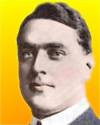
Born 19 Mar 1876; died 19 Dec 1933 at age 57.
U.S. mechanical engineer who advanced the design of steam turbines with simplifications, increased capacity and improved methods of manufacturing. Early in his career as a machinist and draftsman for a railroad, he invented a braking control for trains having several locomotives (1904) and a mechanism to regulate braking power according to the weight of the car. By 1908, he was vice president and general manager of the Westinghouse Machine Company. In developing steam turbines (1913), he brought together elements of the highly efficient Parsons system with elements of the lighter Curtis- Rateau impulse system. He also pioneered in propulsion of marine vessels, and remote-control to operate a ship's engine from the bridge (1916).« more
U.S. mechanical engineer who advanced the design of steam turbines with simplifications, increased capacity and improved methods of manufacturing. Early in his career as a machinist and draftsman for a railroad, he invented a braking control for trains having several locomotives (1904) and a mechanism to regulate braking power according to the weight of the car. By 1908, he was vice president and general manager of the Westinghouse Machine Company. In developing steam turbines (1913), he brought together elements of the highly efficient Parsons system with elements of the lighter Curtis- Rateau impulse system. He also pioneered in propulsion of marine vessels, and remote-control to operate a ship's engine from the bridge (1916).« more
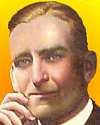
Born 19 Mar 1876; died 17 Aug 1958 at age 82.
English archaeologist who was director general of the Indian Archaeological Survey (1902-31). His aim was to bring to life Indian culture in the past by uncovering all possible details of her cities, tools, ornaments, laws and customs. In the 1920's, Marshall he began a systematic program of excavations that revealed Harappa and Mohenjo-daro, the two largest cities of the previously unknown Indus Valley Civilization, which he firmly believed was comparable in every way with the ancient civilizations of Egypt and Mesopotamia. He excavated Taxila, Vaisali, Nalanda, Rajagriha and Sarnath; enacted the Ancient Monuments Act (1904), built up a library, reorganised publications and recruited Indians to high positions in the Survey.
English archaeologist who was director general of the Indian Archaeological Survey (1902-31). His aim was to bring to life Indian culture in the past by uncovering all possible details of her cities, tools, ornaments, laws and customs. In the 1920's, Marshall he began a systematic program of excavations that revealed Harappa and Mohenjo-daro, the two largest cities of the previously unknown Indus Valley Civilization, which he firmly believed was comparable in every way with the ancient civilizations of Egypt and Mesopotamia. He excavated Taxila, Vaisali, Nalanda, Rajagriha and Sarnath; enacted the Ancient Monuments Act (1904), built up a library, reorganised publications and recruited Indians to high positions in the Survey.
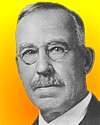
Born 19 Mar 1865; died 19 Apr 1937 at age 72.
American entomologist who published extensively on the classification, structure and behaviour of ants, on which he was a recognized world authority. Several of his books became classics, including Ants: Their Structure, Development, and Behavior (1910) and Social Life Among the Insects (1923). Wheeler also wrote on problems of embryology, evolution, parasitism and the social life of animals in general. Thus he was also prominent as an ethologist (a branch of zoology concerning with the scientific study of the behaviour of animals in their natural environment). In fact, he popularized the term “ethology,” in the English language with a paper in Science (1902). Wheeler was contributed in the history and philosophy of science.«
American entomologist who published extensively on the classification, structure and behaviour of ants, on which he was a recognized world authority. Several of his books became classics, including Ants: Their Structure, Development, and Behavior (1910) and Social Life Among the Insects (1923). Wheeler also wrote on problems of embryology, evolution, parasitism and the social life of animals in general. Thus he was also prominent as an ethologist (a branch of zoology concerning with the scientific study of the behaviour of animals in their natural environment). In fact, he popularized the term “ethology,” in the English language with a paper in Science (1902). Wheeler was contributed in the history and philosophy of science.«
William Morton Wheeler, Biologist, by Mary Alice Evans and Howard Ensign Evans. - book suggestion.
Born 19 Mar 1845; died 4 Aug 1904 at age 59. quotes
German pathologist, histologist and neurologist who pioneered techniques to stain bacteria in tissue sections (1871), fibrin (1887), and elastic fibers (1884, published 1898). His most important advance was made in neurohistology. He provided a definitive method (1884) for staining medullary sheaths. This enabled scientists to gain greater insights into the fine structure of the central nervous system. He became director of the pathological-anatomical institute of the Senckenberg Foundation in Frankfurt, and spent the final years of his career there, until his death at age 59. Weigert’s law states that loss or destruction of tissue results in compensatory replacement and overproduction of new tissue during the process of regeneration and/or repair. Paul Ehrlich was his cousin.«
German pathologist, histologist and neurologist who pioneered techniques to stain bacteria in tissue sections (1871), fibrin (1887), and elastic fibers (1884, published 1898). His most important advance was made in neurohistology. He provided a definitive method (1884) for staining medullary sheaths. This enabled scientists to gain greater insights into the fine structure of the central nervous system. He became director of the pathological-anatomical institute of the Senckenberg Foundation in Frankfurt, and spent the final years of his career there, until his death at age 59. Weigert’s law states that loss or destruction of tissue results in compensatory replacement and overproduction of new tissue during the process of regeneration and/or repair. Paul Ehrlich was his cousin.«
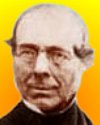
Born 19 Mar 1799; died 15 Feb 1868 at age 68.
English amateur astronomer who set up a private observatory and made extensive measurements of binary stars and on 25 Nov 1850 discovered Saturn's inner Crepe Ring (independently of American William Bond). In 1864, he was the first to make an accurate map of Mars. He was called "Eagle-eyed Dawes" for the keenness of his sight with a telescope (though otherwise, he was very near-sighted). He devised a useful empirical formula by which the resolving power of a telescope - known as the Dawes limit - could be quickly determined. For a given telescope with an aperture of d cm, a double star of separation 11/d arcseconds or more can be resolved, that is, be visually recognized as two stars rather than one.«
English amateur astronomer who set up a private observatory and made extensive measurements of binary stars and on 25 Nov 1850 discovered Saturn's inner Crepe Ring (independently of American William Bond). In 1864, he was the first to make an accurate map of Mars. He was called "Eagle-eyed Dawes" for the keenness of his sight with a telescope (though otherwise, he was very near-sighted). He devised a useful empirical formula by which the resolving power of a telescope - known as the Dawes limit - could be quickly determined. For a given telescope with an aperture of d cm, a double star of separation 11/d arcseconds or more can be resolved, that is, be visually recognized as two stars rather than one.«
Born 19 Mar 1782; died 18 Feb 1856 at age 73.
Austrian astronomer who was known for his measurement (1826) of a previously known comet as having an orbital period of 6.6 years. Subsequently, known as Biela's Comet, it was observed to break in two (1846), and in 1852 the fragments returned as widely separated twin comets that were not seen again. However, in 1872 and 1885, bright meteor showers (known as Andromedids, or Bielids) were observed when the Earth crossed the path of the comet's known orbit. This observation provided the first concrete evidence for the idea that some meteors are composed of fragments of disintegrated comets.
Austrian astronomer who was known for his measurement (1826) of a previously known comet as having an orbital period of 6.6 years. Subsequently, known as Biela's Comet, it was observed to break in two (1846), and in 1852 the fragments returned as widely separated twin comets that were not seen again. However, in 1872 and 1885, bright meteor showers (known as Andromedids, or Bielids) were observed when the Earth crossed the path of the comet's known orbit. This observation provided the first concrete evidence for the idea that some meteors are composed of fragments of disintegrated comets.
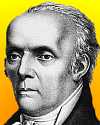
Born 19 Mar 1745; died 24 Apr 1821 at age 76.
German physician, hospital administrator and public health pioneer who wrote many medical works, including System einer vollständigen medicinischen Polizey (1779-1825, six volumes, “System of a Complete Medical Police”) which detailed hygiene throughout a person's life. His vision of systematic medical care resembled a modern welfare state, covering both preventative and curative medical services, which he extended by proposing international regulation of health. In his treatment of mental patients, he regarded insanity as an illness. He founded (with R. Vetter) the pathological-anatomical museum of the Vienna General Hospital. He was Beethoven's doctor (1800-1809).«
German physician, hospital administrator and public health pioneer who wrote many medical works, including System einer vollständigen medicinischen Polizey (1779-1825, six volumes, “System of a Complete Medical Police”) which detailed hygiene throughout a person's life. His vision of systematic medical care resembled a modern welfare state, covering both preventative and curative medical services, which he extended by proposing international regulation of health. In his treatment of mental patients, he regarded insanity as an illness. He founded (with R. Vetter) the pathological-anatomical museum of the Vienna General Hospital. He was Beethoven's doctor (1800-1809).«
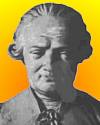
Born 19 Mar 1727; died 20 Jun 1807 at age 80.
Swiss horologist and author of extensive treatises on timekeeping who became involved in the attempt to solve the problem of determining longitude at sea. His major achievement was his further development of an accurate and practical marine clock, or chronometer. (Such an instrument had previously been constructed in expensive and delicate prototypes by Pierre Leroy of France and John Harrison of England.) He made his first chronometer in 1754, which was sent for trial in 1761. Berthoud's improvements to the chronometer have been largely retained in present-day designs.
Swiss horologist and author of extensive treatises on timekeeping who became involved in the attempt to solve the problem of determining longitude at sea. His major achievement was his further development of an accurate and practical marine clock, or chronometer. (Such an instrument had previously been constructed in expensive and delicate prototypes by Pierre Leroy of France and John Harrison of England.) He made his first chronometer in 1754, which was sent for trial in 1761. Berthoud's improvements to the chronometer have been largely retained in present-day designs.

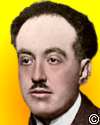
Died 19 Mar 1987 at age 94 (born 15 Aug 1892). quotes
Louis Victor Pierre Raymond duc de Broglie was a French physicist best known for his research on quantum theory and for his discovery of the wave nature of electrons. De Broglie was of the French aristocracy - hence the title “duc” (Prince). In 1923, as part of his Ph.D. thesis, he argued that since light could be seen to behave under some conditions as particles (photoelectric effect) and other times as waves (diffraction), we should consider that matter has the same ambiguity of possessing both particle and wave properties. For this, he was awarded the 1929 Nobel Prize for Physics.
Louis Victor Pierre Raymond duc de Broglie was a French physicist best known for his research on quantum theory and for his discovery of the wave nature of electrons. De Broglie was of the French aristocracy - hence the title “duc” (Prince). In 1923, as part of his Ph.D. thesis, he argued that since light could be seen to behave under some conditions as particles (photoelectric effect) and other times as waves (diffraction), we should consider that matter has the same ambiguity of possessing both particle and wave properties. For this, he was awarded the 1929 Nobel Prize for Physics.
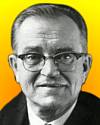
Died 19 Mar 1968 at age 60 (born 9 Jan 1908).
Karl (Theodore) Dussik was an Austrian neurologist and psychiatrist who has been called the "Father of Ultrasonic Diagnosis". In 1942, he published the first transmission ultrasound investigation of the brain Hyperphonography of the Brain, which he used to image a cerebral ventrical. He placing a patient's head between an ultrasound emitter and a receiver. In this way, he tried to visualize the cerebral ventricles by measuring the ultrasound beam modification through the head. However, the bone of the skull absorbed much of the ultrasound energy, and the image created by different bone thickness obscured any reliable image of the brain alone. However, his work with transmitted ultrasound stimulated the use of reflection techniques.«
Karl (Theodore) Dussik was an Austrian neurologist and psychiatrist who has been called the "Father of Ultrasonic Diagnosis". In 1942, he published the first transmission ultrasound investigation of the brain Hyperphonography of the Brain, which he used to image a cerebral ventrical. He placing a patient's head between an ultrasound emitter and a receiver. In this way, he tried to visualize the cerebral ventricles by measuring the ultrasound beam modification through the head. However, the bone of the skull absorbed much of the ultrasound energy, and the image created by different bone thickness obscured any reliable image of the brain alone. However, his work with transmitted ultrasound stimulated the use of reflection techniques.«
Died 19 Mar 1950 at age 67 (born 19 Mar 1883).
Sir Walter Norman Haworth was an English chemist who shared (with the Swiss chemist Paul Karrer) the 1937 Nobel Prize for Chemistry for his work in determining the chemical structures of various carbohydrates and the synthesis of vitamin C (1934), which was the first artificial preparation of any vitamin. He died on his birthday.
Sir Walter Norman Haworth was an English chemist who shared (with the Swiss chemist Paul Karrer) the 1937 Nobel Prize for Chemistry for his work in determining the chemical structures of various carbohydrates and the synthesis of vitamin C (1934), which was the first artificial preparation of any vitamin. He died on his birthday.
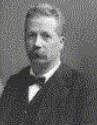
Died 19 Mar 1942 at age 86 (born 5 Dec 1855). quotes
American biologist and ethnologist, who helped found the National Geographic Society (1888) and what is now the U.S. Fish and Wildlife Service. During his tenure at the latter, Merriam greatly influenced the manner in which the government studied and responded to wildlife. His seven "life zones" concept, detailing the relationship between animal and plant distribution and temperature patterns is still taught today. However, in steering the Division away from agricultural studies on the economics and control of noxious and predatory animals, Merriam caused difficulties for the very agency he headed. Most of all, his surveys and research studies on food habits of various animal and bird species remain lasting contributions to the wildlife management field.
American biologist and ethnologist, who helped found the National Geographic Society (1888) and what is now the U.S. Fish and Wildlife Service. During his tenure at the latter, Merriam greatly influenced the manner in which the government studied and responded to wildlife. His seven "life zones" concept, detailing the relationship between animal and plant distribution and temperature patterns is still taught today. However, in steering the Division away from agricultural studies on the economics and control of noxious and predatory animals, Merriam caused difficulties for the very agency he headed. Most of all, his surveys and research studies on food habits of various animal and bird species remain lasting contributions to the wildlife management field.
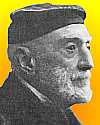
Died 19 Mar 1930 at age 86 (born 1 Jun 1843).
Scottish physician who, from 1873, became a missionary in Japan, where he worked as a surgeon superintendent at a Tokyo hospital, taught at the local univeristy, and founded the Tokyo Institute for the Blind. In the late 1870s, his attention was drawn to fingerprints of ancient potters remaining on their work that he helped unearth at an archaeological dig site in Japan. He commenced a study of fingerprints, and became convinced that each individual had a unique pattern. He corresponded on the subject with Charles Darwin, and published a paper about his ideas in Nature (28 Oct 1880). When he returned to Britain in 1886, he unsuccessfully offered his fingerprinting identification scheme for forensic uses to Scotland Yard. Undeserved confusion on priority for the discovery with Francis Galton and Sir William J. Herschel lasted until 1917.«
Scottish physician who, from 1873, became a missionary in Japan, where he worked as a surgeon superintendent at a Tokyo hospital, taught at the local univeristy, and founded the Tokyo Institute for the Blind. In the late 1870s, his attention was drawn to fingerprints of ancient potters remaining on their work that he helped unearth at an archaeological dig site in Japan. He commenced a study of fingerprints, and became convinced that each individual had a unique pattern. He corresponded on the subject with Charles Darwin, and published a paper about his ideas in Nature (28 Oct 1880). When he returned to Britain in 1886, he unsuccessfully offered his fingerprinting identification scheme for forensic uses to Scotland Yard. Undeserved confusion on priority for the discovery with Francis Galton and Sir William J. Herschel lasted until 1917.«
Died 19 Mar 1928 at age 66 (born 26 Dec 1861). quotes
German seismologist and physicist who made significant contributions which developed geophysics and seismology as major scientific disciplines. In 1900, he invented the “inverted pendulum” seismograph, (an improvement still incorporated in today's instruments), with which he was able to detect some of the Earth's inner structure. He suggested the Earth has an inner, dense core of nickel-iron metal which had settled to the center like iron settles from slag on the hearth of an iron mill. As a student of his, Beno Gutenberg learned much, and went on to make advances in seismology. Although little remembered now, Wiechert made contributions in fundamental physics involving cathode rays, the Liénard–Wiechert potentials and his electron theory.«
German seismologist and physicist who made significant contributions which developed geophysics and seismology as major scientific disciplines. In 1900, he invented the “inverted pendulum” seismograph, (an improvement still incorporated in today's instruments), with which he was able to detect some of the Earth's inner structure. He suggested the Earth has an inner, dense core of nickel-iron metal which had settled to the center like iron settles from slag on the hearth of an iron mill. As a student of his, Beno Gutenberg learned much, and went on to make advances in seismology. Although little remembered now, Wiechert made contributions in fundamental physics involving cathode rays, the Liénard–Wiechert potentials and his electron theory.«
Died 19 Mar 1928 at age 85 (born 13 Jan 1843).
Scottish neurologist.
Scottish neurologist.
Died 19 Mar 1914 at age 63 (born 21 May 1850). quotes
Italian volcanologist, seismologist and clergyman who devised the Mercalli Intensity Scale (1902), as an improvement of the Rossi-Forel Scale. He was ordained as a Roman catholic priest and later became a professor at the seminary of Milan. The intensity on Mercalli's scale is and estimate based on the observations of persons that experienced the earthquake. Using Roman numerals, it ranges from I for imperceptible shaking to XII for catastrophic destruction of structures. The revision produced in 1931 by American seismologists, Harry Wood and Frank Neumann, is known as the Modified Mercalli Intensity Scale, now in use. Whereas “magnitude,” as on the Richter Scale, ranks an earthquake by the energy released at the source, “intensity” describes the local effects as experienced by observers at any given location from the epicenter.«
Italian volcanologist, seismologist and clergyman who devised the Mercalli Intensity Scale (1902), as an improvement of the Rossi-Forel Scale. He was ordained as a Roman catholic priest and later became a professor at the seminary of Milan. The intensity on Mercalli's scale is and estimate based on the observations of persons that experienced the earthquake. Using Roman numerals, it ranges from I for imperceptible shaking to XII for catastrophic destruction of structures. The revision produced in 1931 by American seismologists, Harry Wood and Frank Neumann, is known as the Modified Mercalli Intensity Scale, now in use. Whereas “magnitude,” as on the Richter Scale, ranks an earthquake by the energy released at the source, “intensity” describes the local effects as experienced by observers at any given location from the epicenter.«
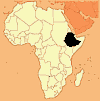
French geographer, was born with his younger brother Arnaud-Michel d’Abbadie (1815-93) in Ireland to a French father. For 12 years, they traveled extensively in Ethiopia, studying its geology, natural history and archaeology. Antoine d’Abbadie was the first scientific explorer to travel throughout eastern Africa. He returned to France with numerous astronomic, geodaesical, geophysical, geographical and meteorological results. He contributed to the challenging task of understanding the sources of the Blue and White tributories of the Nile. He had the magnificent castle of Abbadia built at Hendaye, in southern France, where he continued his astronomical observations. He left this estate to the Académie des Sciences.«[Image right: (source)]
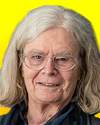
On 19 Mar, the Norwegian Academy of Science and Letters announced the award of the Abel Prize to the U.S. mathematician, Karen Keskulla Uhlenbeck. She became the first woman so honored since the prize was initiated in 2003. The award, regarded as prestigious as a Nobel Prize, was worth 6-million-kroner (US$702,500). It recognized her wide-ranging work in analysis, geometry and mathematical physics. In particular, as noted in the journal Science, she contributed pioneering work in the field of geometric analysis—which combines the technical power of analysis (a branch of math that extends and generalizes calculus) with the more conceptual areas of geometry and topology.«
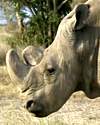
In 2018, the world lost the last male northern white rhinoceros, age 45. Sudan was survived by Najin, his daughter, and granddaughter, Fatu, who became the last two remaining rhinos of the subspecies on Earth. Because of great suffering after several weeks battling a severe leg infection, his veterinary team decided to euthanize Sudan. He was captured at age 2 in 1975, believed to be the last of his species born in the wild, to live in safety under care of conservationists. Physical problems prevented the females from carrying young. Using in vitro fertilization of collected sperm and eggs, with a surrogate southern white rhino, perhaps the subspecies can still be regenerated. Poachers caused the extinction of the subspecies in the wild.«
In 1969, the use of californium-252 radioactive material in monitoring the sulphur content of coal was announced by the Atomic Energy Commission. Using this intense neutron source to measure the sulphur content of coal, as it moved on a conveyor belt through a coal processing plant, would enable better control of the air pollution caused by burning coal. When coal is burned, for example at electrical power plants, its sulphur is released as sulphur dioxide, a pollutant which needs to be reduced, because it contributes to acid rain. In turn, this results in acidified soils, forest damage and building corrosion. A shipment of 18 micrograms of the isotope had been sent from its Savannah River plant to South Carolina to the Bureau of Mines research centre at Morgantown, West Virginia. (A microgram is one millionth of a gram.)«
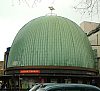
In 1958, Britain's first planetarium, the London Planetarium, opened in the west wing of Madame Tussaud's. It is one of the world's largest. The site used was that of the former Cinema and Restaurant added in 1929, that had been destroyed by a German bomb in 1940.«
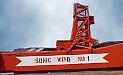
Sonic Wind I sled
In 1949, The American Museum of Atomic Energy, the first U.S. museum devoted exclusively to the history of atomic energy opened to the public in a building that was an old wartime cafeteria in Oak Ridge, Tennessee. During WW II, this city had been the site for processing uranium-235 for the atomic bombs dropped on Japan. Guided tours through the museum showed visitors the peaceful uses of atomic energy. The present facility, opened in 1975, continues to provide the general public with energy information. The name of the museum was changed to the American Museum of Science and Energy in 1978.«

In 1932, the Sydney Harbour Bridge, Australia, was opened.

Howe
In 1861, the Elias Howe sewing machine patent was reissued (re. #1,154).
In 1827, Charles Darwin made his earliest scientific discovery, at age 18. He dissected some specimens of a baranacle-like marine organism, the polyzoan Flustra. Thus he began what became a lifelong interest in natural history. 
From So Simple a Beginning: Darwin's Four Great Books, by Charles Darwin, Edward O. Wilson. - book suggestion.
Alexander von Humboldt: A Metabiography, by Nicolaas A. Rupke. - book suggestion.
In 1474, the Venetian Patent Law, the first of its kind in the world, declared that “each person who will make in this city any new and ingenious contrivance, not made heretofore in our dominion, as soon as it is reduced to perfection... It being forbidden to any other in any territory and place of ours to make any other contrivance in the form and resemblance thereof, without the consent and licence of the author up to ten years.” The law was intended to attract inventors and investors to Venice and stimulate new economic activities.«




