Born 16 Mar 1932. quotes
Ronnie Walter Cunningham is an American astronaut and civilian participant in the Apollo 7 mission , in which the first manned flight of Apollo Command and Service modules was made. On 11 Oct 1968, he occupied the lunar module pilot seat for the eleven-day flight of Apollo 7. With Walter M. Schirra, Jr., and Donn F. Eisele, he participated in maneuvers enabling the crew to perform exercises in transposition and docking and lunar orbit rendezvous with the S-IVB stage of their Saturn IB launch vehicle; in test ignitions of the service module propulsion engine; in measuring the accuracy of performance of all spacecraft systems; and provided the first effective television transmission of onboard crew activities.
Ronnie Walter Cunningham is an American astronaut and civilian participant in the Apollo 7 mission , in which the first manned flight of Apollo Command and Service modules was made. On 11 Oct 1968, he occupied the lunar module pilot seat for the eleven-day flight of Apollo 7. With Walter M. Schirra, Jr., and Donn F. Eisele, he participated in maneuvers enabling the crew to perform exercises in transposition and docking and lunar orbit rendezvous with the S-IVB stage of their Saturn IB launch vehicle; in test ignitions of the service module propulsion engine; in measuring the accuracy of performance of all spacecraft systems; and provided the first effective television transmission of onboard crew activities.
Born 16 Mar 1927; died 24 Apr 1967 at age 40.
Soviet cosmonaut who was the first man known to have died during a space mission. He flew on two space missions. He was Command Pilot of Voskhod I, on a day-long mission, 12-13 Oct 1964. Also on board were Dr. Yegorov, a medical doctor as flight physiologist; and the spacecraft engineer Konstantin Feoktistov. For this landing, the spacecraft's parachutes opened at an altitude of 7 km followed by a soft-landing system that used streams of gases from nozzles to reduce touchdown velocity to near zero. Komarov died during the landing after his second space mission, when he was Commander of Soyuz-I, 23-24 Apr 1967, on a nearly 27 hour flight. On its return, his spacecraft became entangled in its main parachute and fell several miles to Earth.
Soviet cosmonaut who was the first man known to have died during a space mission. He flew on two space missions. He was Command Pilot of Voskhod I, on a day-long mission, 12-13 Oct 1964. Also on board were Dr. Yegorov, a medical doctor as flight physiologist; and the spacecraft engineer Konstantin Feoktistov. For this landing, the spacecraft's parachutes opened at an altitude of 7 km followed by a soft-landing system that used streams of gases from nozzles to reduce touchdown velocity to near zero. Komarov died during the landing after his second space mission, when he was Commander of Soyuz-I, 23-24 Apr 1967, on a nearly 27 hour flight. On its return, his spacecraft became entangled in its main parachute and fell several miles to Earth.
Born 16 Mar 1918; died 26 Aug 1998 at age 80.
American physicist who was awarded the 1995 Nobel Prize for Physics for his detection in 1956 of neutrinos, working with his colleague Clyde L. Cowan, Jr. The neutrino is a subatomic particle, a tiny lepton with little or no mass and a neutral charge which had been postulated by Wolfgang Pauli in the early 1930s but had previously remained undiscovered. (Reines shared the Nobel Prize with physicist Martin Lewis Perl, who discovered the tau lepton.)
American physicist who was awarded the 1995 Nobel Prize for Physics for his detection in 1956 of neutrinos, working with his colleague Clyde L. Cowan, Jr. The neutrino is a subatomic particle, a tiny lepton with little or no mass and a neutral charge which had been postulated by Wolfgang Pauli in the early 1930s but had previously remained undiscovered. (Reines shared the Nobel Prize with physicist Martin Lewis Perl, who discovered the tau lepton.)

Born 16 Mar 1915; died 26 Jul 1997 at age 82.
Japanese mathematician who was awarded the Fields Medal in 1954 for his work in algebraic geometry and complex analysis. Kodaira's work includes applications of Hilbert space methods to differential equations which was an important topic in his early work and was largely the result of influence by Weyl. Through the influence of Hodge, he also worked on harmonic integrals and later he applied this work to problem in algebraic geometry. Another important area of Kodaira's work was to apply sheaves to algebraic geometry. In around 1960 he became involved in the classification of compact, complex analytic spaces. One of the themes running through much of his work is the Riemann-Roch theorem. He won the 1985 Wolf Prize.
Japanese mathematician who was awarded the Fields Medal in 1954 for his work in algebraic geometry and complex analysis. Kodaira's work includes applications of Hilbert space methods to differential equations which was an important topic in his early work and was largely the result of influence by Weyl. Through the influence of Hodge, he also worked on harmonic integrals and later he applied this work to problem in algebraic geometry. Another important area of Kodaira's work was to apply sheaves to algebraic geometry. In around 1960 he became involved in the classification of compact, complex analytic spaces. One of the themes running through much of his work is the Riemann-Roch theorem. He won the 1985 Wolf Prize.
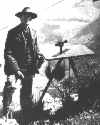
Born 16 Mar 1874; died 21 Jun 1948 at age 74.
Dutch-born American geologist and topographer whose mapping, with marvelous draftsmanship, of some of the most rugged and scenic features of the western United States was instrumental in the establishment of several notable national parks. He came to the U.S.A. in 1891, studied at the Massachusetts Institute of Technology, and worked with the US Geological Survey (1896-1947). An authority on glaciers and glaciation, he was chairman of the committee on glaciers of the American Geophysical Union (1932-46), and developed an international glacier study program. During both world wars, he engaged in military geology.[Image: Plane station table at Cape Royal in 1904]
Dutch-born American geologist and topographer whose mapping, with marvelous draftsmanship, of some of the most rugged and scenic features of the western United States was instrumental in the establishment of several notable national parks. He came to the U.S.A. in 1891, studied at the Massachusetts Institute of Technology, and worked with the US Geological Survey (1896-1947). An authority on glaciers and glaciation, he was chairman of the committee on glaciers of the American Geophysical Union (1932-46), and developed an international glacier study program. During both world wars, he engaged in military geology.[Image: Plane station table at Cape Royal in 1904]
Born 16 Mar 1859; died 13 Jan 1906 at age 46.
Russian physicist.
Russian physicist.

Born 16 Mar 1853; died 14 Oct 1940 at age 87.
Heinrich (Gustav Johannes) Kayser was a German physicist who discovered the presence of helium in the Earth's atmosphere. Prior to that scientists had detected helium only in the sun and in some minerals. Kayser's early research work was on the properties of sound. In collaboration with the physicist and mathematician Carl D.T. Runge, Kayser carefully mapped the spectra of a large number of elements. He wrote a handbook of spectroscopy (1901–12) and a treatise on the electron theory (1905).[Image: Helium spectrum]
Heinrich (Gustav Johannes) Kayser was a German physicist who discovered the presence of helium in the Earth's atmosphere. Prior to that scientists had detected helium only in the sun and in some minerals. Kayser's early research work was on the properties of sound. In collaboration with the physicist and mathematician Carl D.T. Runge, Kayser carefully mapped the spectra of a large number of elements. He wrote a handbook of spectroscopy (1901–12) and a treatise on the electron theory (1905).[Image: Helium spectrum]
Born 16 Mar 1851; died 1 Jan 1931 at age 79. quotes
Dutch botanist who was one of the first microbiologists to recognize the importance of lactic acid bacteria for food production. He contributed to agriculture, botany, microbiology, chemistry and genetics. In research on gall wasps and the formation of galls (1882) he laid groundwork for the theory of ontogeny in higher plants and animals whereby growth enzymes act in series in a fixed order (1917). Since his father was a tobacco dealer who went bankrupt, he researched the tobacco mosaic virus, which causes a disease of tobacco plants with serious economic impact. He discovered that even after filtering the sap of an infected plant to remove bacteria, the liquid was still able to carry infection to another plant. Thus he knew the disease was not due to bacteria, but by something else in the the liquid, which he called a filterable virus (from Latin word for poison) but which later researchers demonstrated in fact had a particle form.«
Dutch botanist who was one of the first microbiologists to recognize the importance of lactic acid bacteria for food production. He contributed to agriculture, botany, microbiology, chemistry and genetics. In research on gall wasps and the formation of galls (1882) he laid groundwork for the theory of ontogeny in higher plants and animals whereby growth enzymes act in series in a fixed order (1917). Since his father was a tobacco dealer who went bankrupt, he researched the tobacco mosaic virus, which causes a disease of tobacco plants with serious economic impact. He discovered that even after filtering the sap of an infected plant to remove bacteria, the liquid was still able to carry infection to another plant. Thus he knew the disease was not due to bacteria, but by something else in the the liquid, which he called a filterable virus (from Latin word for poison) but which later researchers demonstrated in fact had a particle form.«
Born 16 Mar 1846; died 7 Jul 1927 at age 81. quotes
Swedish mathematician who founded the international mathematical journal Acta Mathematica and whose contributions to mathematical research helped advance the Scandinavian school of mathematics. Mittag-Leffler made numerous contributions to mathematical analysis (concerned with limits and including calculus, analytic geometry and probability theory). He worked on the general theory of functions, concerning relationships between independent and dependent variables. His best known work concerned the analytic representation of a one-valued function, this work culminated in the Mittag-Leffler theorem.
Swedish mathematician who founded the international mathematical journal Acta Mathematica and whose contributions to mathematical research helped advance the Scandinavian school of mathematics. Mittag-Leffler made numerous contributions to mathematical analysis (concerned with limits and including calculus, analytic geometry and probability theory). He worked on the general theory of functions, concerning relationships between independent and dependent variables. His best known work concerned the analytic representation of a one-valued function, this work culminated in the Mittag-Leffler theorem.
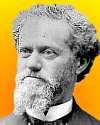
Born 16 Mar 1836; died 24 Apr 1900 at age 64. quotes
English-American engineer and inventor who built the cable car system first used on the steep hills of San Francisco streets (1 Aug 1873). Streetcars on rails were fitted with a mechanical device that gripped an underground endless moving cable to travel and released to stop. The cable passed around pulleys and was driven by a large wheel at an engine house. He had learned the business of making wire rope from his father before moving to the U.S. (1853), where he designed and built wire suspension bridges and flumes. He began manufacturing wire rope in 1857. Hallidie also developed a method of moving freight over canyons using an endless wire rope, and inventions for the transmission of power with wire rope, which seeded his idea for cable cars.« more
English-American engineer and inventor who built the cable car system first used on the steep hills of San Francisco streets (1 Aug 1873). Streetcars on rails were fitted with a mechanical device that gripped an underground endless moving cable to travel and released to stop. The cable passed around pulleys and was driven by a large wheel at an engine house. He had learned the business of making wire rope from his father before moving to the U.S. (1853), where he designed and built wire suspension bridges and flumes. He began manufacturing wire rope in 1857. Hallidie also developed a method of moving freight over canyons using an endless wire rope, and inventions for the transmission of power with wire rope, which seeded his idea for cable cars.« more
Cable Car Days in San Francisco, by Edgar Myron Kahn. - book suggestion.
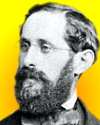
Born 16 Mar 1821; died 21 Oct 1881 at age 60. quotes
Heinrich Eduard Heine was a German mathematician whose published work includes contributions on partial differential equations, the theory of heat, summation of series, continued fractions and elliptic functions. Heine also worked on Legendre polynomials, Lamé functions and Bessel functions. He remains known for the Heine-Borel theorem, which can be given in a simplified form as “a subset of the reals is compact if and only if it is closed and bounded.” Heine also formulated the concept of uniform continuity.«
Heinrich Eduard Heine was a German mathematician whose published work includes contributions on partial differential equations, the theory of heat, summation of series, continued fractions and elliptic functions. Heine also worked on Legendre polynomials, Lamé functions and Bessel functions. He remains known for the Heine-Borel theorem, which can be given in a simplified form as “a subset of the reals is compact if and only if it is closed and bounded.” Heine also formulated the concept of uniform continuity.«
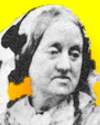
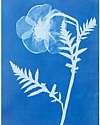
Poppy, c.1852
English botanist and photographer who is recognized as the first female photographer. She learned the calograph technique directly from William Fox Talbot, a family friend. Another family friend, Sir John Herschel, taught her the cyanotype photogram contact printing method he had invented. She had developed an interest in biological subjects from her father, John George Children, and illustrated his book, a translation of Lamarck’s Genera of Shells. Atkins combined these talents to become the first person to publish a book with photographs, and eventually produced three volumes of her own cyanotypes of seaweed in Photographs of British Algae, privately publishing the first volume in Oct 1843.«
Anna Atkins: The First Woman Photographer, by Daniel and Denise Ankele. - book suggestion.
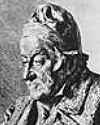
Born 16 Mar 1794; died 21 Nov 1881 at age 87.
Austrian geological pioneer who fostered international cooperation in geological research. While studying medicine in Edinburgh, he was influenced by the noted Scottish geologist Robert Jameson and studied the volcanic rocks in various parts of Scotland and the Hebrides. After he received his M.D. (1817) Boué continued his medical studies in Europe, but ultimately decided to devote himself to geology. He settled in Paris in 1830 and was a founder of the Société Géologique de France. For the next four years he published reports on geological progress in other countries. In 1845 he finished his comprehensive overview of geology, Essai de carte géologique du globe terrestre ("Essay on a Geological Map of the World").
Austrian geological pioneer who fostered international cooperation in geological research. While studying medicine in Edinburgh, he was influenced by the noted Scottish geologist Robert Jameson and studied the volcanic rocks in various parts of Scotland and the Hebrides. After he received his M.D. (1817) Boué continued his medical studies in Europe, but ultimately decided to devote himself to geology. He settled in Paris in 1830 and was a founder of the Société Géologique de France. For the next four years he published reports on geological progress in other countries. In 1845 he finished his comprehensive overview of geology, Essai de carte géologique du globe terrestre ("Essay on a Geological Map of the World").
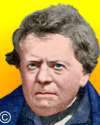
Born 16 Mar 1789; died 6 Jul 1854 at age 65. quotes
German physicist who showed by experiment (1825) that there are no “perfect” electrical conductors. All conductors have some resistance. He stated the famous Ohm's law (1826), now written as: “If the given temperature remains constant, the current flowing through certain conductors is proportional to the potential difference (voltage) across it.” or V=iR. more
German physicist who showed by experiment (1825) that there are no “perfect” electrical conductors. All conductors have some resistance. He stated the famous Ohm's law (1826), now written as: “If the given temperature remains constant, the current flowing through certain conductors is proportional to the potential difference (voltage) across it.” or V=iR. more
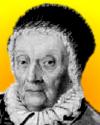
Born 16 Mar 1750; died 9 Jan 1848 at age 97. quotes
German-born British astronomer, sister of Sir William Herschel, who assisted in his astronomical researches making calculations associated with his studies. In her own telescope observations, she found three nebulae (1783) and eight comets (1786-97). In 1787, King George III gave Caroline a salary of 50 pounds per year as assistant to William. She published the Index to Flamsteed's Observations of the Fixed Stars and a list of his mistakes in 1797. At the age of 10 she had been struck with typhus, which subsequently stunted her growth. She never grew taller than 4' 3" and remained frail throughout her life.
German-born British astronomer, sister of Sir William Herschel, who assisted in his astronomical researches making calculations associated with his studies. In her own telescope observations, she found three nebulae (1783) and eight comets (1786-97). In 1787, King George III gave Caroline a salary of 50 pounds per year as assistant to William. She published the Index to Flamsteed's Observations of the Fixed Stars and a list of his mistakes in 1797. At the age of 10 she had been struck with typhus, which subsequently stunted her growth. She never grew taller than 4' 3" and remained frail throughout her life.
Searching the Stars: The Story of Caroline Herschel, by Marilyn B. Ogilvie. - book suggestion.

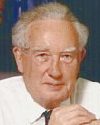
Died 16 Mar 1998 at age 79 (born 8 Sep 1918). quotes
Sir Derek Harold Richard Barton was an English chemist, a joint recipient (with Norwegian Odd Hassel) of the 1969 Nobel Prize for Chemistry for research that helped establish conformational analysis (the study of the 3-D geometric structure of complex molecules). In a brief paper in Experienta entitled “The Conformation of the Steroid Nucleus” (1950), Barton showed that organic molecules in general and steroid molecules in particular could be assigned a preferred conformation based on work of chemical physicists, in particular by Odd Hassel. Conformational analysis is useful in the elucidation of configuration, in the planning of organic synthesis, and in the analysis of reaction mechanisms. It is fundamental to a complete understanding of enzymatic processes.
Sir Derek Harold Richard Barton was an English chemist, a joint recipient (with Norwegian Odd Hassel) of the 1969 Nobel Prize for Chemistry for research that helped establish conformational analysis (the study of the 3-D geometric structure of complex molecules). In a brief paper in Experienta entitled “The Conformation of the Steroid Nucleus” (1950), Barton showed that organic molecules in general and steroid molecules in particular could be assigned a preferred conformation based on work of chemical physicists, in particular by Odd Hassel. Conformational analysis is useful in the elucidation of configuration, in the planning of organic synthesis, and in the analysis of reaction mechanisms. It is fundamental to a complete understanding of enzymatic processes.
Some Recollections of Gap-Jumping (autobiography), by Derek H.R. Barton. - book suggestion.
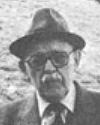
Died 16 Mar 1992 at age 88 (born 22 May 1903).
French mathematician and physicist who contributed to the development of the French atomic bomb and to the understanding of such diverse fields of research as semiconductors, seismology, and radio astronomy. During WW II, as Head of the Research Department of the Free French Naval Forces in England, he learnt about radars in England and interference from strong radio emission from the Sun. After the war, Rocard returned to France and proposed that France started a project to conduct radio astronomy. In the last part of his life he studied biomagnetism and dowsing which reduced his standing in the eyes of many of his colleagues.
French mathematician and physicist who contributed to the development of the French atomic bomb and to the understanding of such diverse fields of research as semiconductors, seismology, and radio astronomy. During WW II, as Head of the Research Department of the Free French Naval Forces in England, he learnt about radars in England and interference from strong radio emission from the Sun. After the war, Rocard returned to France and proposed that France started a project to conduct radio astronomy. In the last part of his life he studied biomagnetism and dowsing which reduced his standing in the eyes of many of his colleagues.
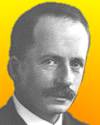
Died 16 Mar 1935 at age 58 (born 6 Sep 1876).
John James Rickard Macleod was a Scottish physiologist and educator who researched carbohydrate metabolism and diabetes. He coined the name for the hormone insulin. In 1923, he shared the Nobel Prize in Physiology or Medicine with Sir Frederick Banting for the discovery of insulin, and its role in the metabolism of sugar in the body.
John James Rickard Macleod was a Scottish physiologist and educator who researched carbohydrate metabolism and diabetes. He coined the name for the hormone insulin. In 1923, he shared the Nobel Prize in Physiology or Medicine with Sir Frederick Banting for the discovery of insulin, and its role in the metabolism of sugar in the body.
Physiology and Biochemistry in Modern Medicine, by John James Rickard Macleod. - book suggestion.
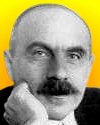
Died 16 Mar 1925 at age 59 (born 21 Feb 1866).
German bacteriologist whose discovery of a universal blood-serum test (1906) for syphilis helped extend the basic tenets of immunology to diagnosis. "The Wassermann reaction," in combination with other diagnostic procedures, is still employed as a reliable indicator for the disease. A positive reaction when the blood or spinal fluid of the patient is tested indicates the presence of antibodies formed as a result of infection with syphilis (even though symptoms of the disease may not be observable at the time). A few other diseases, however (such as leprosy), also sometimes produce a positive Wassermann reaction. In addition, he developed inoculations against cholera, typhoid, and tetanus. He was a student of bacteriologist Robert Koch.
German bacteriologist whose discovery of a universal blood-serum test (1906) for syphilis helped extend the basic tenets of immunology to diagnosis. "The Wassermann reaction," in combination with other diagnostic procedures, is still employed as a reliable indicator for the disease. A positive reaction when the blood or spinal fluid of the patient is tested indicates the presence of antibodies formed as a result of infection with syphilis (even though symptoms of the disease may not be observable at the time). A few other diseases, however (such as leprosy), also sometimes produce a positive Wassermann reaction. In addition, he developed inoculations against cholera, typhoid, and tetanus. He was a student of bacteriologist Robert Koch.
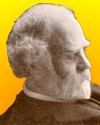
Died 16 Mar 1914 at age 73 (born 3 Mar 1841). quotes
Scottish naturalist who, as one of its founders, coined the name oceanography. He studied ocean basins, deep-sea deposits, and coral-reef formation. As a marine scientist, he took part in the Challenger Expedition (1872-76), the first major oceanographic expedition of the world. He was first to observe the Mid-Atlantic Ridge and the existence of marine trenches. He attempted with Buchan to construct from temperature and salinity observations a qualitative theory of water movement in the world's oceans. With Alexander Agassiz, he put forward a modified hypothesis for coral reef development, arguing against Charles Darwin's hypothesis and suggesting that subsidence was not always a controlling mechanism. He died in 1914, killed by a motor car.
Scottish naturalist who, as one of its founders, coined the name oceanography. He studied ocean basins, deep-sea deposits, and coral-reef formation. As a marine scientist, he took part in the Challenger Expedition (1872-76), the first major oceanographic expedition of the world. He was first to observe the Mid-Atlantic Ridge and the existence of marine trenches. He attempted with Buchan to construct from temperature and salinity observations a qualitative theory of water movement in the world's oceans. With Alexander Agassiz, he put forward a modified hypothesis for coral reef development, arguing against Charles Darwin's hypothesis and suggesting that subsidence was not always a controlling mechanism. He died in 1914, killed by a motor car.
Died 16 Mar 1864 at age 74 (born 22 Apr 1789).
Welsh mechanical engineer and inventor who was versatile in his creativity. One of his earliest inventions was the first successful gas meter. His first patent (1822) was for improvements in looms. He was one of the inventors of the first metal planing machines (1817). Roberts also developed a screw-cutting lathe, and machines for gearcutting and slotting. The self-acting spinning mule (1825) he invented was his most important contribution to the textile industry, which he also set up in France. In the 1830s, his firm built railway locomotives in one of the earliest applications of the use of interchangeable parts. In the 1840s he devised machinery for punching patterns of holes in bridge and boiler plate, automated using punched cards similar to the Jacquard loom.
Welsh mechanical engineer and inventor who was versatile in his creativity. One of his earliest inventions was the first successful gas meter. His first patent (1822) was for improvements in looms. He was one of the inventors of the first metal planing machines (1817). Roberts also developed a screw-cutting lathe, and machines for gearcutting and slotting. The self-acting spinning mule (1825) he invented was his most important contribution to the textile industry, which he also set up in France. In the 1830s, his firm built railway locomotives in one of the earliest applications of the use of interchangeable parts. In the 1840s he devised machinery for punching patterns of holes in bridge and boiler plate, automated using punched cards similar to the Jacquard loom.
Died 16 Mar 1841 at age 49 (born 30 Jun 1791).
French physicist who researched various manifestations of vibration. With Jean-Baptiste Biot, he developed the Biot-Savart Law (1820) concerning the magnetic field intensity around a current-carrying wire. After earning a degree in medicine (1816), he took an interest in physics, beginning with a study of the violin to explain the contributions from its components to the sound from the strings. He presented a memoir on the subject to the Paris Academy of Sciences in 1819. He conducted extensive research in acoustics, the nodal patterns of vibrating systems (including air columns), and related enquiries into the elasticity of substances. He also investigated the voice and hearing. He devised a rotating toothed wheel to produce a sound of any frequency by a reed held against it, to measure high frequency hearing limits.«
French physicist who researched various manifestations of vibration. With Jean-Baptiste Biot, he developed the Biot-Savart Law (1820) concerning the magnetic field intensity around a current-carrying wire. After earning a degree in medicine (1816), he took an interest in physics, beginning with a study of the violin to explain the contributions from its components to the sound from the strings. He presented a memoir on the subject to the Paris Academy of Sciences in 1819. He conducted extensive research in acoustics, the nodal patterns of vibrating systems (including air columns), and related enquiries into the elasticity of substances. He also investigated the voice and hearing. He devised a rotating toothed wheel to produce a sound of any frequency by a reed held against it, to measure high frequency hearing limits.«
Died 16 Mar 1838 at age 64 (born 26 Mar 1773). quotes
Self-educated American mathematician and astronomer. He learnt Latin to study Newton's Principia and later other languages to study mathematics in these languages. Between 1795 and 1799 he made four sea voyages and in 1802 he was in command of a merchant ship. He was author of the best book on navigation of his time, New American Practical Navigator (1802), and his translation (assisted by Benjamin Peirce) of Laplace's Mécanique céleste gave him an international reputation. Bowditch was the discoverer of the Bowditch curves, which have important applications in astronomy and physics.
Self-educated American mathematician and astronomer. He learnt Latin to study Newton's Principia and later other languages to study mathematics in these languages. Between 1795 and 1799 he made four sea voyages and in 1802 he was in command of a merchant ship. He was author of the best book on navigation of his time, New American Practical Navigator (1802), and his translation (assisted by Benjamin Peirce) of Laplace's Mécanique céleste gave him an international reputation. Bowditch was the discoverer of the Bowditch curves, which have important applications in astronomy and physics.
In 2013, the “First Inventor to File”, the first major change of the U.S. patent system in the America Invents Act, became effective. It gave priority for a U.S. patent to the first inventor to file. This aligned America with most of the world. Formerly, the filing of a patent in the U.S. could be challenged by another inventor claiming to have had the idea earlier, with documentation and litigation. Henceforth, lab notebooks carefully kept to record earlier work on an idea will no longer preserve a claim to a patent; only being the first to file matters. The bill was sponsored by Patrick Leahy and Chuck Grassley, and signed into law by President Obama on 16 Sep 2011.«
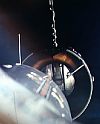
In 1966, the first US manned docking of two spacecraft was accomplished by the Gemini VIII. The Gemini space vehicle with command pilot was Astronaut Neil A. Armstrong and pilot Astronaut David R. Scott, was launched at 10:41 a.m. The primary objective of the scheduled three-day mission was to rendezvous and dock with the Gemini Agena target vehicle and to conduct extravehicular activities. Though this was accomplished, some problems developed that required the mission and its other planed objectives and experiments to be terminated early.[Image: The Gemini VIII spacecraft approaching the Gemini Agena target vehicle in the final stage of rendezvous. The distance between the two craft is approximately two feet.]
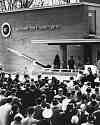
In 1961, the Goddard Space Flight Center was formally dedicated. This was NASA’s first research center, and it was named on 1 May 1959 in memory of Robert Goddard, the rocketry pioneer. The $27 million facility was still being built, but enough work had been completed to justify holding the dedication ceremony. As described in the New York Times, the center’s mission was to “develop and fabricate satelittle and sounding rocket instrumentation to probe space in the immediate vicinity of the earth.” It was on this same day, 16 Mar, that in 1926, Goddard had first successfully launched his small test liquid-fuel rocket.«
Dreams, Hopes, Realities: NASA’s Goddard Space Flight Center - The First Forty Years, by Lane E. Wallace. - book suggestion.
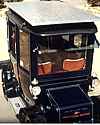
In 1960, in Central Park, New York, a car was displayed, powered by battery, charged by solar cells. A renovated royal blue 1912 Baker Electric automobile with maroon plush upholstery, was driven by Dr. Charles A. Escoffery, of the International Rectifier Corp. of El Segundo, which sold solar cells. Space satellites were already being powered by such cells. The car roof had a 26 sq ft panel with 10,240 cells, wired together, able to charge the car’s 72V battery in 8-10 hrs of sunlight. With a ¾ h.p. electric motor, the car had a top speed of 20 mph. At lower speeds it had a range of 50 miles before needing a recharge. He toured the car in the U.S. and Europe to advertise the company’s solar cells.«
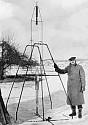
In 1926, the first US liquid-fuel rocket flight was launched by Robert Goddard in a field in Auburn, Mass. He thought stable flight could be obtained by mounting the rocket ahead of the fuel tank. The tank was shielded from the flame by a metal cone and was pulled behind the rocket by the lines for gasoline fuel and oxygen. The design worked, but did not produce the hoped-for stability. The rocket burned about 20 seconds before reaching sufficient thrust (or sufficiently lightening the fuel tank) for taking off. During that time it melted part of the nozzle. It took off to a height of 41-ft, leveled off and within 2.5 seconds hit the ground 184 feet away, averaging about 60 mph. The camera ran out of film, so no photographic record of that flight remains.
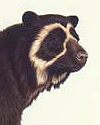
In 1902, Dr. Baker of the U.S. National Zoo published a list of South American fauna required for the collection including a spectacled bear from the Andes. It has distinctive circular or semicircular creamy white markings on the face around the eyes, reminiscent of spectacles. Lines and patches of white usually extend onto the throat and chest though the amount and pattern of the white markings can be quite variable.
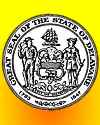
In 1871, the first US state fertilizer law (Chap. 35) was enacted in Delaware. The text included: “The Professor of Chemistry of Delaware Del. College College, at Newark, Delaware, is hereby appointed State Chemist to be State … it shall be the duty of the State Chemist to analyze samples of all fertilizers, whether natural or artificial, submitted to him by manufacturers, vendors or persons using the same.…” The law in full as first written was unworkable, and was amended 8 Apr 1881 (Chap. 348) and several times later. The current state law still includes: “Each brand and grade of commercial fertilizer shall be registered before being distributed in this State.”«[The Delaware State Seal includes a farmer with a hoe, wheat sheaf, ear of maize, and an ox, which symbolize the agricultural basis of Delaware’s economy.]
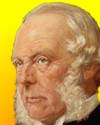
In 1867, the Lancet published a paper by Joseph Lister, the first of a series of articles in the Lancet on his discovery of antiseptic surgery: On a New Method of Treating Compound Fractures, Abscess, &c. Lister applied Louis Pasteur's idea that the micro-organisms causing gangrene might be controlled with chemical solutions. Since the use carbolic acid (phenol) was known as means of deodorizing sewage, Lister tested the results of using a solution of it for spraying instruments, on surgical incisions, and applied to dressings. Upon finding this procedure substantially reduced the incidence of gangrene, Lister published his results in series of articles in the Lancet on the Antiseptic Principle of the Practice of Surgery.«[Ref: Lancet (16 Mar 1867), 327, (23 Mar), 357, (30 Mar), 387.]
Germ Theory & The Antiseptic Principle, by Louis Pasteur, Joseph Lister. - book suggestion.
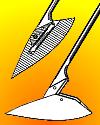
(USPTO)
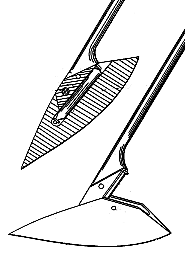
In 1844, a U.S. patent for "a new and Improved Harpoon for the Destruction and Taking of Whales" was issued to Albert Moor of Hampden Maine (No. 3490). In his design for an explosive harpoon, the fluke of the harpoon pivoted on the shank, held in place by a wooden pin. A small vial of explosive powder was placed in the fluke and under the end of the shank of the harpoon. It was arranged so that the power of the whale pulling upon the tow-line attached to the harpoon would break the wooden pin allowing the fluke of the harpoon to turn, crush the vial, and cause the powder to explode to destroy the whale.[At the time of writing, this is the earliest patent listed in the 102/371 "Bomb Lance" classification at the U.S. Patents and Trademarks Office web site.]