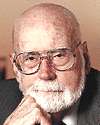
Born 15 Mar 1920.
American physician who in 1990 was corecipient (with Joseph E. Murray) of the Nobel Prize for Physiology or Medicine for his work in transplanting bone marrow from one person to another - an achievement related to the cure of patients with acute leukemia and other blood cancers or blood diseases. Although this prize usually goes to scientists doing basic research with test tubes, Thomas was a doctor doing hands-on clinical research with patients.
American physician who in 1990 was corecipient (with Joseph E. Murray) of the Nobel Prize for Physiology or Medicine for his work in transplanting bone marrow from one person to another - an achievement related to the cure of patients with acute leukemia and other blood cancers or blood diseases. Although this prize usually goes to scientists doing basic research with test tubes, Thomas was a doctor doing hands-on clinical research with patients.
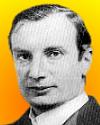
Born 15 Mar 1860; died 25 Oct 1930 at age 70.
Waldemar Mordecai Wolfe Haffkine was a Russian-British bacteriologist who worked to reduce deaths by cholera. He worked under Émile Roux at the Pasteur Institute in Paris, taking a particular interest in cholera, since epidemics were frequent in Europe. In 1892, he prepared an attenuated strain of cholera culture. He believed in its safely and he tested it on himself after self-injecting a concentrated strain. In 1893, he went to India, where he inoculated 45,000 people to protect them against endemic cholera, despite difficult working conditions, a suspicious population, even with opposition from British medical officials. He reduced the death rate by 70% among those inoculated. He also attempted to produce a vaccine against the plague.
Waldemar Mordecai Wolfe Haffkine was a Russian-British bacteriologist who worked to reduce deaths by cholera. He worked under Émile Roux at the Pasteur Institute in Paris, taking a particular interest in cholera, since epidemics were frequent in Europe. In 1892, he prepared an attenuated strain of cholera culture. He believed in its safely and he tested it on himself after self-injecting a concentrated strain. In 1893, he went to India, where he inoculated 45,000 people to protect them against endemic cholera, despite difficult working conditions, a suspicious population, even with opposition from British medical officials. He reduced the death rate by 70% among those inoculated. He also attempted to produce a vaccine against the plague.
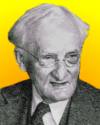
Born 15 Mar 1858; died 25 Dec 1954 at age 96. quotes
American horticulturist who helped create the science of horticulture, made systematic studies of cultivated plants, and advanced knowledge in hybridization, plant pathology, and agriculture. He was a recognized authority on sedges, tropical palms, blackberries, grapes, cabbages, pumpkins and squashes, among others. He is particularly notable for his great encyclopedias (Cyclopedia of American Agriculture, in four volumes, 1907-9) and important manuals (Cyclopedia of Horticulture in six volumes). He was the first to experiment with continuous electric illumination (Influence of the electric arc lamp upon greenhouse plants, 1891) and coined the term cultivar (1920s) for a cultivated variety of plant, not a wild variety, produced through cultivation.«
American horticulturist who helped create the science of horticulture, made systematic studies of cultivated plants, and advanced knowledge in hybridization, plant pathology, and agriculture. He was a recognized authority on sedges, tropical palms, blackberries, grapes, cabbages, pumpkins and squashes, among others. He is particularly notable for his great encyclopedias (Cyclopedia of American Agriculture, in four volumes, 1907-9) and important manuals (Cyclopedia of Horticulture in six volumes). He was the first to experiment with continuous electric illumination (Influence of the electric arc lamp upon greenhouse plants, 1891) and coined the term cultivar (1920s) for a cultivated variety of plant, not a wild variety, produced through cultivation.«
Hortus Third: A Concise Dictionary of Plants Cultivated..., by Liberty Hyde Bailey. - book suggestion.
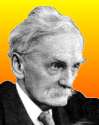
Born 15 Mar 1855; died 30 Mar 1944 at age 89.
English physicist and inventor of sensitive instruments. His studies included in mining, metallurgy, chemistry and physics. He was also self-taught in a wide knowledge of geometrical methods. In 1881, he invented the integraph, a machine for drawing the antiderivative of a function. Boys is known particularly for his definitive book (1890) on the physics soap bubbles. He employed the torsion of quartz fibres to measure minute forces, repeating (1895) Henry Cavendish's experiment, to improve the measurement of the Newtonian gravitational constant. He also invented an improved automatic recording calorimeter for testing city coal gas (1905) and high-speed cameras to photograph rapidly moving objects, such as bullets and lightning discharges. He was knighted in 1935. Upon retirement in 1939, he grew and studied garden weeds.«
English physicist and inventor of sensitive instruments. His studies included in mining, metallurgy, chemistry and physics. He was also self-taught in a wide knowledge of geometrical methods. In 1881, he invented the integraph, a machine for drawing the antiderivative of a function. Boys is known particularly for his definitive book (1890) on the physics soap bubbles. He employed the torsion of quartz fibres to measure minute forces, repeating (1895) Henry Cavendish's experiment, to improve the measurement of the Newtonian gravitational constant. He also invented an improved automatic recording calorimeter for testing city coal gas (1905) and high-speed cameras to photograph rapidly moving objects, such as bullets and lightning discharges. He was knighted in 1935. Upon retirement in 1939, he grew and studied garden weeds.«
Soap Bubbles and the Forces Which Mould Them, by Charles Vernon Boys. - book suggestion.
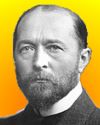
Born 15 Mar 1854; died 31 Mar 1917 at age 63.
Emil Adolf von Behring was a German bacteriologist who is considered the founder of the science of immunology. He received in 1901 the first Nobel Prize for Physiology or Medicine for his work on serum therapy, especially its application against diphtheria. In 1890, working with S. Kitasato, he discovered that immunity against tetanus and diphtheria could be produced by injecting serum from an animal that had recovered from the disease. He coined the word antitoxin for such substances. They also showed that the antitoxins thus produced by one animal could immunize another animal and that it could cure an animal actually showing symptoms of diphtheria. This great discovery was soon confirmed and successfully used by other workers.
Emil Adolf von Behring was a German bacteriologist who is considered the founder of the science of immunology. He received in 1901 the first Nobel Prize for Physiology or Medicine for his work on serum therapy, especially its application against diphtheria. In 1890, working with S. Kitasato, he discovered that immunity against tetanus and diphtheria could be produced by injecting serum from an animal that had recovered from the disease. He coined the word antitoxin for such substances. They also showed that the antitoxins thus produced by one animal could immunize another animal and that it could cure an animal actually showing symptoms of diphtheria. This great discovery was soon confirmed and successfully used by other workers.
Emil von Behring: Infectious Disease, Immunology, Serum Therapy, by Derek S. Linton. - book suggestion.
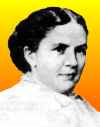
Born 15 Mar 1838; died 6 Apr 1923 at age 85. quotes
American anthropologist who made pioneer studies of Native American Indian life. Her early interests began in archaeology, but evolved into ethnology. Fletcher was one of the first to live among the people whom she studied, the Omaha, after she met (1880) the children of Omaha chief Joseph La Flesche on their tour. During her lifelong interest in Native American music, customs, and language, she collaborated in transcribing hundreds of songs of the Plains Indians. Fletcher became well-known on the public lecture circuit. She helped write and get passed the well-meaning, but tragically flawed, Dawes Act (1887). It gave each Indian legal title to a plot of land and also granted them citizenship. The resulting deterioration of traditional Indian life was wholly unanticipated.«
American anthropologist who made pioneer studies of Native American Indian life. Her early interests began in archaeology, but evolved into ethnology. Fletcher was one of the first to live among the people whom she studied, the Omaha, after she met (1880) the children of Omaha chief Joseph La Flesche on their tour. During her lifelong interest in Native American music, customs, and language, she collaborated in transcribing hundreds of songs of the Plains Indians. Fletcher became well-known on the public lecture circuit. She helped write and get passed the well-meaning, but tragically flawed, Dawes Act (1887). It gave each Indian legal title to a plot of land and also granted them citizenship. The resulting deterioration of traditional Indian life was wholly unanticipated.«
A Stranger in Her Native Land: Alice Fletcher and the American Indians, by Joan T. Mark. - book suggestion.
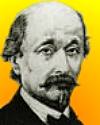
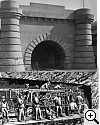
French-Italian engineer who bored the Mount Cenis Fréjus Rail Tunnel (1857-70) through the Alps for a two-track railway. As the world's first important mountain tunnel, it united Italian Savoy (north of the mountains) through Switzerland with the rest of Italy to the south. At 8 miles long and it was more than double the length of any previous tunnel. In 1861, after three years of tedious hand-boring a mere eight inches a day into the rock face, Sommeiller introduced the first industrial-scale pneumatics for tunnel digging. He built a special reservoir, high above the tunnel entrance, to produce a head of water that compressed air (to 6 atm.) for pneumatic drills, able to dig up to 20 times faster. Authorised on 15 Aug 1857, the tunnel opened on 17 Sep 1871, as a major triumph of engineering.«[Image right top: Mont Cenis Tunnel entrance arch; right bottom: Sommeiller Boring Machines.] more
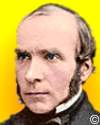
Born 15 Mar 1813; died 16 Jun 1858 at age 45. quotes
English obstetrician, epidemiologist and public health reformer who was among the first to use anesthesia, renowned as a pioneer epidemiologist. In On the Mode of Communication of Cholera (1849), Snow suggested that cholera was a contagious disease easily transmitted by contaminated water. The widely-held theory was that diseases are caused by bad air and his idea was ignored. Then, in London's 1854 cholera emergency, he painstakingly correlated individual cholera casualties to the water supply they had used in each case. He thus solved the deadly epidemic by removing a pump handle of the community water pump that he found to be the culprit. Investigation showed raw sewage from a cesspit had contaminated the well.« more
English obstetrician, epidemiologist and public health reformer who was among the first to use anesthesia, renowned as a pioneer epidemiologist. In On the Mode of Communication of Cholera (1849), Snow suggested that cholera was a contagious disease easily transmitted by contaminated water. The widely-held theory was that diseases are caused by bad air and his idea was ignored. Then, in London's 1854 cholera emergency, he painstakingly correlated individual cholera casualties to the water supply they had used in each case. He thus solved the deadly epidemic by removing a pump handle of the community water pump that he found to be the culprit. Investigation showed raw sewage from a cesspit had contaminated the well.« more
Cholera, Chloroform and the Science of Medicine: A Life of John Snow, by Peter Vinten-Johansen. - book suggestion.
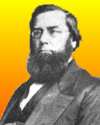
Born 15 Mar 1801; died 23 Jul 1882 at age 81. quotes
American conservationist, whose book Man and Nature, or Physical Geography as Modified by Human Action (1864) was one of the 19th century's classic influences on geography, ecology, and resource management. Marsh demonstrated a remarkably wide range expertise in philology, etymology, the study of reptiles, engravings, music, the artificial propagation of fish, comparative grammar, physiognomy, and geography. Lewis Mumford was called "the fountain- head of the conservation movement" by Lewis Mumford. In his extensive touring of the Mediterranean world, Marsh became convinced that human civilization had remade the natural world but reshaped the face of nature with disastrous consequences. more
American conservationist, whose book Man and Nature, or Physical Geography as Modified by Human Action (1864) was one of the 19th century's classic influences on geography, ecology, and resource management. Marsh demonstrated a remarkably wide range expertise in philology, etymology, the study of reptiles, engravings, music, the artificial propagation of fish, comparative grammar, physiognomy, and geography. Lewis Mumford was called "the fountain- head of the conservation movement" by Lewis Mumford. In his extensive touring of the Mediterranean world, Marsh became convinced that human civilization had remade the natural world but reshaped the face of nature with disastrous consequences. more
George Perkins Marsh, Prophet of Conservation, by David Lowenthal. - book suggestion.
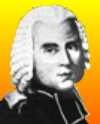
Born 15 Mar 1713; died 21 Mar 1762 at age 49. quotes
Abbé Nicolas Louis de Lacaille was a French astronomer who named 15 of the 88 constellations in the sky. He spent 1750-1754 mapping the constellations visible from the Southern Hemisphere, as observed from the Cape of Good Hope, the southernmost part of Africa. In his years there, he was said to have observed over 10,000 stars using just his 1/2-inch refractor. He established the first southern star catalogue containing 9776 stars (Caelum Australe Stelliferum, published partly in 1763 and completely in 1847), and a catalogue of 42 nebulae in 1755 containing 33 true deep sky objects (26 his own discoveries).[DSB gives birth date as 15 Mar 1713.EB gives 15 May 1713.]
Abbé Nicolas Louis de Lacaille was a French astronomer who named 15 of the 88 constellations in the sky. He spent 1750-1754 mapping the constellations visible from the Southern Hemisphere, as observed from the Cape of Good Hope, the southernmost part of Africa. In his years there, he was said to have observed over 10,000 stars using just his 1/2-inch refractor. He established the first southern star catalogue containing 9776 stars (Caelum Australe Stelliferum, published partly in 1763 and completely in 1847), and a catalogue of 42 nebulae in 1755 containing 33 true deep sky objects (26 his own discoveries).[DSB gives birth date as 15 Mar 1713.EB gives 15 May 1713.]
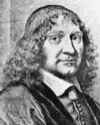
(EB)
Born 15 Mar 1614; died 15 Nov 1672 at age 58.
Dutch physician, chemist and physiologist who was the founder of the seventeenth century's "iatrochemical school of medicine," which related living processes to chemical reactions. Thus, Sylvius helped move medicine away from mysticism (with its "humours" of blood, phlegm and biles) and towards an approach based in physics and chemistry. Sylvius strongly supported Harvey's view of blood circulation, and viewed the body chemistry as a balance between base and acids, capable of neutralizing each other. Sylvius and his followers studied the digestive juices, with which they recognized saliva, and viewed digestion as a kind of fermenting process. He may also have organized the first university chemistry laboratory.
Dutch physician, chemist and physiologist who was the founder of the seventeenth century's "iatrochemical school of medicine," which related living processes to chemical reactions. Thus, Sylvius helped move medicine away from mysticism (with its "humours" of blood, phlegm and biles) and towards an approach based in physics and chemistry. Sylvius strongly supported Harvey's view of blood circulation, and viewed the body chemistry as a balance between base and acids, capable of neutralizing each other. Sylvius and his followers studied the digestive juices, with which they recognized saliva, and viewed digestion as a kind of fermenting process. He may also have organized the first university chemistry laboratory.

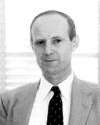
Died 15 Mar 2004 at age 93 (born 24 Dec 1910).
Engineer and physicist, head of the team that developed Explorer 1, the first U.S. satellite. He collaborated with Neher and Robert Millikan on cosmic ray experiments in the 1930s, taught electronics in the 1930s, and was at Caltech during the war. He spent the rest of his career with the Jet Propusion Laboratory, becoming its Director (1954) with responsibility for the U.S. unmanned exploration of the planets and the solar system. Among these were the Mariner spacecraft to Venus and Mercury, and the Viking mission to Mars. The Voyager spacecraft yielded stunning photographs of the planets Jupiter and Saturn.
Engineer and physicist, head of the team that developed Explorer 1, the first U.S. satellite. He collaborated with Neher and Robert Millikan on cosmic ray experiments in the 1930s, taught electronics in the 1930s, and was at Caltech during the war. He spent the rest of his career with the Jet Propusion Laboratory, becoming its Director (1954) with responsibility for the U.S. unmanned exploration of the planets and the solar system. Among these were the Mariner spacecraft to Venus and Mercury, and the Viking mission to Mars. The Voyager spacecraft yielded stunning photographs of the planets Jupiter and Saturn.
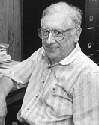
Died 15 Mar 2004 at age 78 (born 31 Oct 1925).
British mathematician and chemist who shared (with Walter Kohn) the 1998 Nobel Prize in Chemistry for his work on computational methodology to study the quantum mechanics of molecules, their properties and how they act together in chemical reactions. Using Schrödinger's fundamental laws of quantum mechanics, he developed a computer program which, when provided with particulars of a molecule or a chemical reaction, outputs a description of the properties of that molecule or how a chemical reaction may take place - often used to illustrate or explain the results of different kinds of experiment. Pople provided his GAUSSIAN computer program to researchers (first published in 1970). Further developed, it is now used by thousands of chemists the world over.
British mathematician and chemist who shared (with Walter Kohn) the 1998 Nobel Prize in Chemistry for his work on computational methodology to study the quantum mechanics of molecules, their properties and how they act together in chemical reactions. Using Schrödinger's fundamental laws of quantum mechanics, he developed a computer program which, when provided with particulars of a molecule or a chemical reaction, outputs a description of the properties of that molecule or how a chemical reaction may take place - often used to illustrate or explain the results of different kinds of experiment. Pople provided his GAUSSIAN computer program to researchers (first published in 1970). Further developed, it is now used by thousands of chemists the world over.
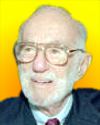
Age 90
Died 15 Mar 1998 at age 94 (born 2 May 1903).
Benjamin McLane Spock was an American pediatrician whose books influenced generations of parents worldwide. After earning his medical degree he spent some time as a resident in pediatrics. Then he decided he should add psychological training to improve his skills in that field, which he subsequently regarded as having been important during his life in the development of his ideas. He began writing his first book in 1943, intending to depart from the rigidity of conventional wisdom and empower more common-sense. It was published as Common Sense Book of Baby and Child Care in 1946. It sold more than four million copies in its first six years, and was eventually translated into many languages, including Urdu, Thai and Tamil. Over the years, he made revisions to reflect new insights. He was also known for campaigning for nuclear disarmament and antiwar protests.«
Benjamin McLane Spock was an American pediatrician whose books influenced generations of parents worldwide. After earning his medical degree he spent some time as a resident in pediatrics. Then he decided he should add psychological training to improve his skills in that field, which he subsequently regarded as having been important during his life in the development of his ideas. He began writing his first book in 1943, intending to depart from the rigidity of conventional wisdom and empower more common-sense. It was published as Common Sense Book of Baby and Child Care in 1946. It sold more than four million copies in its first six years, and was eventually translated into many languages, including Urdu, Thai and Tamil. Over the years, he made revisions to reflect new insights. He was also known for campaigning for nuclear disarmament and antiwar protests.«
Spock on Spock: A Memoir of Growing Up with the Century, by Benjamin Spock. - book suggestion.
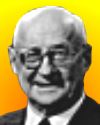
Died 15 Mar 1998 at age 90 (born 2 Jun 1907).
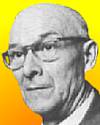
American inventor and engineer who created the recliner chair and started the La-Z-Boy furniture company to manufacture it. He learned some drafting through correspondence school lessons, and by 1925 he held his first patent - a band saw guide. In 1928, he and his cousin Edward M. Knabusch made a reclining porch chair out of some wooden slats. It would automatically reclined as a sitter leaned back. Since it was a seasonal item, his sales prospects improved by adding plush upholstery for year-round indoor use. He planned and designed a manufacturing facility (opened Nov 1941) which utilized the mass-production methods of Detroit's automotive industry. By the 1960s, he created a model incorporated rocking together with reclining.«
American inventor and engineer who created the recliner chair and started the La-Z-Boy furniture company to manufacture it. He learned some drafting through correspondence school lessons, and by 1925 he held his first patent - a band saw guide. In 1928, he and his cousin Edward M. Knabusch made a reclining porch chair out of some wooden slats. It would automatically reclined as a sitter leaned back. Since it was a seasonal item, his sales prospects improved by adding plush upholstery for year-round indoor use. He planned and designed a manufacturing facility (opened Nov 1941) which utilized the mass-production methods of Detroit's automotive industry. By the 1960s, he created a model incorporated rocking together with reclining.«
Died 15 Mar 1970 at age 84 (born 7 Mar 1886).
Wilson Dallam Wallis was an American anthropologist who spent a lifetime studying the cultures of the native New World. He began his career education at a time that anthropology had scarcely achieved the status of a profession, Yet, after earning his B.Sc. (Oxford, 1910), he spent summers of 1911-12 in Nova Scotia with the Canadian Micmac Indians and in summer 1914 with the Dakota Indians in Manitoba, while working towards his Ph.D. (1915). He was interested in intellectual aspects of religion, primitive science, human behavior and biology, linguistics, and archaeology. During WW I, as a 1st Lieutenant in the Sanitary Corps, he applied his interest in physical anthropology and accumulated much data on the physical measurements of army recruits. He published several books and made methodological contributions to cultural anthropology.«
Wilson Dallam Wallis was an American anthropologist who spent a lifetime studying the cultures of the native New World. He began his career education at a time that anthropology had scarcely achieved the status of a profession, Yet, after earning his B.Sc. (Oxford, 1910), he spent summers of 1911-12 in Nova Scotia with the Canadian Micmac Indians and in summer 1914 with the Dakota Indians in Manitoba, while working towards his Ph.D. (1915). He was interested in intellectual aspects of religion, primitive science, human behavior and biology, linguistics, and archaeology. During WW I, as a 1st Lieutenant in the Sanitary Corps, he applied his interest in physical anthropology and accumulated much data on the physical measurements of army recruits. He published several books and made methodological contributions to cultural anthropology.«
The Canadian Dakota, by Wilson D. Wallis. - book suggestion.
(EB)
Died 15 Mar 1962 at age 69 (born 10 Sep 1892). quotes
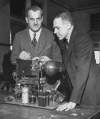
American physicist who was a joint winner, with C.T.R. Wilson of England, of the Nobel Prize for Physics (1927) for his discovery and explanation of the change in the wavelength of X rays when they collide with electrons in metals. This so-called Compton effect is caused by the transfer of energy from a photon to a single electron, then a quantum of radiation is re-emitted in a definite direction by the electron, which in so doing must recoil in a direction forming an acute angle with that of the incident radiation. During WW II, in 1941, he was appointed Chairman of the National Academy of Sciences Committee to Evaluate Use of Atomic Energy in War, assisting in the development of the atomic bomb.[Image: Compton (left) with his assistant Richard L. Doan, 1936.]
American physicist who was a joint winner, with C.T.R. Wilson of England, of the Nobel Prize for Physics (1927) for his discovery and explanation of the change in the wavelength of X rays when they collide with electrons in metals. This so-called Compton effect is caused by the transfer of energy from a photon to a single electron, then a quantum of radiation is re-emitted in a definite direction by the electron, which in so doing must recoil in a direction forming an acute angle with that of the incident radiation. During WW II, in 1941, he was appointed Chairman of the National Academy of Sciences Committee to Evaluate Use of Atomic Energy in War, assisting in the development of the atomic bomb.[Image: Compton (left) with his assistant Richard L. Doan, 1936.]
The Cosmos of Arthur Holly Compton, by Arthur Holly Compton, edited by Marjorie Johnson. - book suggestion.
Died 15 Mar 1952 at age 78 (born 8 May 1873). quotes
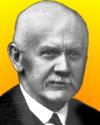
English chemist who contributed to the understanding of chemical bonding, especially in coordination compounds. He worked on kinetics (studying the rates of isomerisation of triphenylmethane dye intermediates and the hydration of carboxylic anhydrides), thermodynamics (investigating phase equilibria and the solubility of organic acids and bases), as well as investigating the colour of copper complexes. During WW I, he set to work on a process for the production of acetone (propanone) from ethanol and other wartime projects, such as the production of phenol from benzene. His book, The Electronic Theory of Valency (1927) was a culmination of many years' interest in the nature of covalent and dative bonds.
English chemist who contributed to the understanding of chemical bonding, especially in coordination compounds. He worked on kinetics (studying the rates of isomerisation of triphenylmethane dye intermediates and the hydration of carboxylic anhydrides), thermodynamics (investigating phase equilibria and the solubility of organic acids and bases), as well as investigating the colour of copper complexes. During WW I, he set to work on a process for the production of acetone (propanone) from ethanol and other wartime projects, such as the production of phenol from benzene. His book, The Electronic Theory of Valency (1927) was a culmination of many years' interest in the nature of covalent and dative bonds.
Died 15 Mar 1934 at age 49 (born 25 Jul 1884).
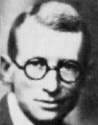
Canadian physician and physical anthropologist who first postulated the existence of a distinct form of early man, popularly known as Peking man. In 1920 he had a position at a Peking, China, college which gave him opportunity to investigate nearby Chou K'ou-tien. In 1927 he found a single human molar which he took to be an indicator of a small-brained ancestor, dubbed Peking man. Subsequently, more teeth, skulls, bones, tools and campfire remains were found (1929-30). These are now classifieded as examples of Homo erectus.
Canadian physician and physical anthropologist who first postulated the existence of a distinct form of early man, popularly known as Peking man. In 1920 he had a position at a Peking, China, college which gave him opportunity to investigate nearby Chou K'ou-tien. In 1927 he found a single human molar which he took to be an indicator of a small-brained ancestor, dubbed Peking man. Subsequently, more teeth, skulls, bones, tools and campfire remains were found (1929-30). These are now classifieded as examples of Homo erectus.
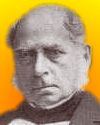
Died 15 Mar 1898 at age 85 (born 19 Jan 1813). quotes
English industrialist, metallurgist, inventor and engineer who developed the first process for manufacturing steel inexpensively (1856), leading to the development of the Bessemer converter. Bessemer invented his steel making process to solve a specific problem vexing another of his inventions, the self-spinning artillery shell. The converter removed impurities from molten pig iron by oxidation through air being blown through the molten iron. The oxidation also raised the temperature of the iron mass, keeping it molten. The oxidation process removed impurities such as silicon, manganese, and carbon as oxides, which oxides either escapd as gas or formed a solid slag. He also solved problems about the chemistry of ores, fuels, and steel. He held 110 patents at his death.
English industrialist, metallurgist, inventor and engineer who developed the first process for manufacturing steel inexpensively (1856), leading to the development of the Bessemer converter. Bessemer invented his steel making process to solve a specific problem vexing another of his inventions, the self-spinning artillery shell. The converter removed impurities from molten pig iron by oxidation through air being blown through the molten iron. The oxidation also raised the temperature of the iron mass, keeping it molten. The oxidation process removed impurities such as silicon, manganese, and carbon as oxides, which oxides either escapd as gas or formed a solid slag. He also solved problems about the chemistry of ores, fuels, and steel. He held 110 patents at his death.
Sir Henry Bessemer: An Autobiography, by Henry Bessemer. - book suggestion.
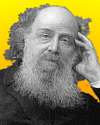
Died 15 Mar 1897 at age 82 (born 3 Sep 1814). quotes
British mathematician who, with Arthur Cayley, founded the theory of algebraic invariants, algebraic-equation coefficients that are unaltered when the coordinate axes are translated or rotated. Beginning in 1833, he studied at St John's College, Cambridge. However, at this time signing a religious oath to the Church of England was required to graduate. Being Jewish, he refused and so he did not graduate. He taught physics at the University of London (1838-41), one of the few places which did not bar him because of his religion. Sylvester did important work on matrix theory, in particular, to study higher dimensional geometry. In 1851 he discovered the discriminant of a cubic equation. Earlier in his life, he tutored Florence Nightingale.
British mathematician who, with Arthur Cayley, founded the theory of algebraic invariants, algebraic-equation coefficients that are unaltered when the coordinate axes are translated or rotated. Beginning in 1833, he studied at St John's College, Cambridge. However, at this time signing a religious oath to the Church of England was required to graduate. Being Jewish, he refused and so he did not graduate. He taught physics at the University of London (1838-41), one of the few places which did not bar him because of his religion. Sylvester did important work on matrix theory, in particular, to study higher dimensional geometry. In 1851 he discovered the discriminant of a cubic equation. Earlier in his life, he tutored Florence Nightingale.
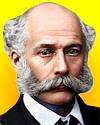
Died 15 Mar 1891 at age 71 (born 28 Mar 1819). quotes
British civil engineer and civil engineer who designed the main drainage system for London. As an engineer, he built some major bridges in London, but his greatest accomplishment was to solve a growing problem with sewage pollution in the Thames River. By the mid-1800s, so many Londoners were using the new "water closets" that theriver was horribly polluted with sewage. The "Great Stink" crisis escalated with cholera outbreaks. Bazalgette was chosen to design and build London's sewer system, a 20-year project. Some of his ideas still influence urban engineering today. more
British civil engineer and civil engineer who designed the main drainage system for London. As an engineer, he built some major bridges in London, but his greatest accomplishment was to solve a growing problem with sewage pollution in the Thames River. By the mid-1800s, so many Londoners were using the new "water closets" that theriver was horribly polluted with sewage. The "Great Stink" crisis escalated with cholera outbreaks. Bazalgette was chosen to design and build London's sewer system, a 20-year project. Some of his ideas still influence urban engineering today. more
The Great Stink of London: Sir Joseph Bazalgette and the Cleansing of the Victorian Metropolis, by Stephen Halliday. - book suggestion.
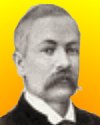
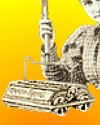
U.S. inventor of the carpet sweeper. Melville Bissell and his wife, Anna, owned a crockery shop in Grand Rapids, Mich. The dust from the packings was affecting Anna's health and, from a desperate need for self-preservation, he invented the carpet sweeper (issued a U.S. patent on 19 Sep 1876). They recognized the sweeper's marketing possibilities and began to assemble them in a room over the store. The inner workings and cases were made by women working in their homes. Tufts of hog bristles were bound with string, dipped in hot pitch, inserted in brush rollers and finally trimmed them with scissors. Anna Bissell gathered the parts together in clothes baskets and brought them back to the store for assembling. She grew the business after Melville's death.
Died 15 Mar 1888 at age 83 (born 16 Sep 1804).
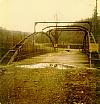
U.S. civil engineer, inventor, and theoretician who provided the first scientifically based rules for bridge construction, was considered one of the top engineers of the 19th Century, and was known as the "father of iron bridges." He began his career as a bridge-builder in 1840 by designing and patenting an iron-bridge truss. During the next ten years he built several bridges on the Erie canal and the New York and Erie railroad. His design of the Whipple truss bridge was the model for hundreds of bridges that crossed the Erie Canal in the late 19-th century. Before developing his design, Whipple worked for several years on surveys, estimates, and reports for the enlargement of the Erie Canal, and in 1840 he patented a scale for weighing canal boats. He later built the first weighing lock scale constructed on the Erie Canal. The invention of the steam engine required bridges which could support heavy live loads and this motivated Squire to turn his attention to bridges. In 1853, he completed a 146-ft span iron railroad bridge near West Troy (now Watervliet), N.Y. His book on the design of bridges using scientific methods (1847) was the first of its kind. The formulas and his methods are still useful. He obtained a patent for his lift draw-bridge in 1872.[Image: Bowstring Truss designed by Squire Whipple. This rare cast-and wrought iron bridge, built in 1872, was located in Coshocton County, Ohio, crossing Wills Creek on Linton Township Road 144.]
U.S. civil engineer, inventor, and theoretician who provided the first scientifically based rules for bridge construction, was considered one of the top engineers of the 19th Century, and was known as the "father of iron bridges." He began his career as a bridge-builder in 1840 by designing and patenting an iron-bridge truss. During the next ten years he built several bridges on the Erie canal and the New York and Erie railroad. His design of the Whipple truss bridge was the model for hundreds of bridges that crossed the Erie Canal in the late 19-th century. Before developing his design, Whipple worked for several years on surveys, estimates, and reports for the enlargement of the Erie Canal, and in 1840 he patented a scale for weighing canal boats. He later built the first weighing lock scale constructed on the Erie Canal. The invention of the steam engine required bridges which could support heavy live loads and this motivated Squire to turn his attention to bridges. In 1853, he completed a 146-ft span iron railroad bridge near West Troy (now Watervliet), N.Y. His book on the design of bridges using scientific methods (1847) was the first of its kind. The formulas and his methods are still useful. He obtained a patent for his lift draw-bridge in 1872.[Image: Bowstring Truss designed by Squire Whipple. This rare cast-and wrought iron bridge, built in 1872, was located in Coshocton County, Ohio, crossing Wills Creek on Linton Township Road 144.]

In 1959, at Brookhaven National Laboratory in Upton, N.Y., the first U.S. atomic reactor built specifically for medical research, Brookhaven Medical Research Reactor, reached criticality. The BMRR was a 5 megawatt, modified tank-type reactor, which superceded the Brookfield Graphite Research Reactor. It produced a neutron flux of as many as 20 trillion neutrons per square centimeter per second. The reactor was mainly used for developing and testing boron neutron capture therapy (BNCT), a promising treatment for patients with a deadly form of brain cancer called glioblastoma multiforme. BNCT uses radiation and a boron compound to destroy cancer cells while leaving healthy cells intact. Use of the reactor ceased in Dec 2000.«
Making Physics: A Biography of Brookhaven National Laboratory, 1946-1972, by Robert P. Crease. - book suggestion.
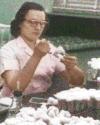
In 1950, Terramycin® was approved by the U.S. Food and Drug Administration. Made by Charles Pfizer & Co., it was isolated from Indiana soil, and found effective against pneumonia, dysentery, and other infections. It was the first pharmaceutical discovered and developed exclusively by Pfizer scientists. This was the result of the company's intensive quest to find new organisms to fight disease. Acting on theories that bacteria-fighting organisms would be found in soil, Pfizer solicited soil samples worldwide, received 135,000 soil samples and conducted more than 20 million tests. One of the researchers said, “We got soil samples from the bottom of mine shafts… from the bottom of the ocean… from the desert… mountains and in between.” Terramycin was announced in the journal Science on 27 Jan 1950.
In 1892, an escalator design was patented in the U.S. by inventor Jesse W. Reno of New York City. It was built and opened in Sep 1895 as a new Coney Island amusement ride, a conveyor belt that moved people up a 25 degree slope. The first escalator-type patent issued in the U.S. on 9 Aug 1859, was held by Nathan Ames of Saugus, Mass. (No. 25,076), which had steps mounted on an inclined endless belt or chain. The Otis Elevator Company registered the U.S. trademark Escalator on 29 May 1901. Otis manufactured their first escalator in 1900 which they had exhibited at the Paris Exposition in that year, and then installed at the Gimbal Brothers store in Philadelphia, Penn. in 1901. Otis later bought Reno's company.«
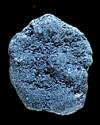
In 1806, a 6-kg chondrite meteorite - carrying carbon-based, organic chemicals - was unequivocally identified for the first time. Its arrival on earth was noted at 5:30 pm, outside Alais, France. The organic chemicals it carried suggested the possibility of life on whatever body was the source, somewhere in the universe. According to the observations of Berzelius and a commission appointed by the French Academy it “emits a faint bituminous substance” when heated. Berzelius reported his analysis of the Alais meteorite in 1833 that destructive distillation yielded a blackish substance, indiginous water, carbon dioxide gas, a soluble salt containing ammonia, and a blackish-brown sublimate, which Berzelius confessed was unknown to him.
In 1693, hackney cabs (horse-drawn taxis) were authorised for the first time in Glasgow, Scotland.




