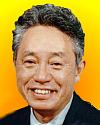
Born 12 Mar 1925.
Japanese physicist who shared (with Ivar Giaever and Brian Josephson) the Nobel Prize in Physics (1973) in recognition of his pioneering work on electron tunneling in solids. From some deceptively simple experiments published in 1958, he was able to lay bare the tunneling processes in solids, a phenomena which had been clouded by questions for decades. Tunneling is a quantum mechanical effect in which an electron passes through a potential barrier even though classical theory predicted that it could not. Dr. Esaki's discovery led to the creation of the Esaki diode, an important component of solid state physics with practical applications in high-speed circuits found in computers and communications networks.
Japanese physicist who shared (with Ivar Giaever and Brian Josephson) the Nobel Prize in Physics (1973) in recognition of his pioneering work on electron tunneling in solids. From some deceptively simple experiments published in 1958, he was able to lay bare the tunneling processes in solids, a phenomena which had been clouded by questions for decades. Tunneling is a quantum mechanical effect in which an electron passes through a potential barrier even though classical theory predicted that it could not. Dr. Esaki's discovery led to the creation of the Esaki diode, an important component of solid state physics with practical applications in high-speed circuits found in computers and communications networks.
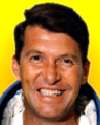
Born 12 Mar 1923; died 3 May 2007 at age 84. quotes
Walter Marty (“Wally”) Schirra Jr. was an American astronaut and pilot who was the only astronaut to fly Mercury, Gemini and Apollo missions. He studied aeronautical engineering, joined the U.S. Navy, became a Naval aviator. and then a test pilot. Schirra was one of the seven men NASA named (9 Apr 1959) as the original Mercury astronauts for one-man missions. After the first U.S. Earth-orbit space flight by John Glenn, Schirra’s turn came to pilot his capsule Sigma 7 on the fifth U.S. manned mission, making six orbits in a little over 9 hours. He took off again on 15 Dec 1965, as command pilot on Gemini 6, which made a non-docking orbital rendezvous with Gemini 7. He launched as commander of Apollo 7 on 11 Oct 1968 for a 163 orbit flight in about 11 days.«
Walter Marty (“Wally”) Schirra Jr. was an American astronaut and pilot who was the only astronaut to fly Mercury, Gemini and Apollo missions. He studied aeronautical engineering, joined the U.S. Navy, became a Naval aviator. and then a test pilot. Schirra was one of the seven men NASA named (9 Apr 1959) as the original Mercury astronauts for one-man missions. After the first U.S. Earth-orbit space flight by John Glenn, Schirra’s turn came to pilot his capsule Sigma 7 on the fifth U.S. manned mission, making six orbits in a little over 9 hours. He took off again on 15 Dec 1965, as command pilot on Gemini 6, which made a non-docking orbital rendezvous with Gemini 7. He launched as commander of Apollo 7 on 11 Oct 1968 for a 163 orbit flight in about 11 days.«
Born 12 Mar 1918; died 3 Jun 1982 at age 64.
American inventor and business executive who was president of Panavision Inc., a company he helped found in 1953, to create a wide-screen film movie process. It manufactured and leased equipment. Panavision is an anamorphic system, using a 65mm negative and a 70mm print, projected in a letterbox shape with a 2.66 to 1 ratio. Gottschalk developed specially designed lenses used during capture and projection that worked with an image recorded on the film that is compressed horizontally. An unmodified widescreen image would occupy only half the area of a standard 1.33 to 1 film frame, wasting space above and below. Lateral compression fills the frame using an image with modified aspect ratio on the film, that retains more detail in the vertical resolution, and reduces the appearance of grain when projected. He died by murder at his home.«
American inventor and business executive who was president of Panavision Inc., a company he helped found in 1953, to create a wide-screen film movie process. It manufactured and leased equipment. Panavision is an anamorphic system, using a 65mm negative and a 70mm print, projected in a letterbox shape with a 2.66 to 1 ratio. Gottschalk developed specially designed lenses used during capture and projection that worked with an image recorded on the film that is compressed horizontally. An unmodified widescreen image would occupy only half the area of a standard 1.33 to 1 film frame, wasting space above and below. Lateral compression fills the frame using an image with modified aspect ratio on the film, that retains more detail in the vertical resolution, and reduces the appearance of grain when projected. He died by murder at his home.«
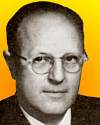
Born 12 Mar 1905; died 14 Aug 1991 at age 86. quotes
Chauncey Guy Suits was an American electrical engineer and research director who joined the General Electric Company in 1930, and subsequently directed the company's research laboratory and was vice-president (1945-65). He helped develop a new process, announced in 1962, to create synthetic diamonds by compressing carbon in a large hydraulic press at pressures up to three million pounds per square inch, while simultaneously heated to 9,000 ºF, without needing the metal catalyst agent previously used. He held 77 U.S. patents, in such varied applications as railway block signal improvements, circuits for sequence-flashing electric signs, radio circuits, beacons, submarine signals, theater light dimmers and photo-electric relays. Upon his retirement from G.E., he consulted on industrial research management.«
Chauncey Guy Suits was an American electrical engineer and research director who joined the General Electric Company in 1930, and subsequently directed the company's research laboratory and was vice-president (1945-65). He helped develop a new process, announced in 1962, to create synthetic diamonds by compressing carbon in a large hydraulic press at pressures up to three million pounds per square inch, while simultaneously heated to 9,000 ºF, without needing the metal catalyst agent previously used. He held 77 U.S. patents, in such varied applications as railway block signal improvements, circuits for sequence-flashing electric signs, radio circuits, beacons, submarine signals, theater light dimmers and photo-electric relays. Upon his retirement from G.E., he consulted on industrial research management.«
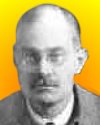
Born 12 Mar 1864; died 4 Jun 1922 at age 58. quotes
William Halse Rivers Rivers was an English medical psychologist and anthropologist who originally trained as a doctor, then did work as a pioneering psychologist in the First World War. This background enabled Rivers to bring a scientific approach to anthropology and to set the trend for anthropologists to go and visit the cultures they are studying rather than stay at home and theorize. Rivers did his major field work with Torres Strait Australian aborigines and with a hill tribe in Southern India, the Todas. He is known principally for The Todas (1906), a model of precise documentation of a people, and the important History of Melanesian Society, 2 vol. (1914).
William Halse Rivers Rivers was an English medical psychologist and anthropologist who originally trained as a doctor, then did work as a pioneering psychologist in the First World War. This background enabled Rivers to bring a scientific approach to anthropology and to set the trend for anthropologists to go and visit the cultures they are studying rather than stay at home and theorize. Rivers did his major field work with Torres Strait Australian aborigines and with a hill tribe in Southern India, the Todas. He is known principally for The Todas (1906), a model of precise documentation of a people, and the important History of Melanesian Society, 2 vol. (1914).
Medicine, Magic and Religion, by W.H.R. Rivers. - book suggestion.
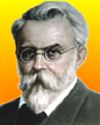
Born 12 Mar 1863; died 6 Jan 1945 at age 81. quotes
Russian geochemist and mineralogist who was a founder of the specialist sciences of geochemistry and biogeochemistry. He was the first to popularize the concept of the noosphere - the biosphere controlled by the mind of man. Within the last 200 years, humanity has been a powerful geologic force, moving more mass upon the earth than the biosphere. Two of the laws detailed by Vernadsky are that the number and kinds of chemical elements and compounds entering the cycling organization of living matter increase with time, and that as we move toward the present the pace of cycling increases.
Russian geochemist and mineralogist who was a founder of the specialist sciences of geochemistry and biogeochemistry. He was the first to popularize the concept of the noosphere - the biosphere controlled by the mind of man. Within the last 200 years, humanity has been a powerful geologic force, moving more mass upon the earth than the biosphere. Two of the laws detailed by Vernadsky are that the number and kinds of chemical elements and compounds entering the cycling organization of living matter increase with time, and that as we move toward the present the pace of cycling increases.
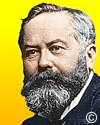
Born 12 Mar 1851; died 2 May 1908 at age 57.
Charles Edouard Chamberland was a French bacteriologist who developed the first pressure steam sterilizer, called Chamberland’s autoclave. When Henry Bastian (who believed in spontaneous generation) disputed Louis Pasteur’s claim that boiling killed all bacteria, Pasteur asked Chamberland, then his assistant, to study sterilization. Chamberland found there were some heat-resistant spores and killing them required maintaining 115ºC for twenty minutes. This work led to new methods for sterilization and the autoclave that became an indispensable tool in hospitals. He also devised a filtration process to purify liquids with porous unglazed porcelain, used in city water works. In 1888, he became the director supervising the department of the Pasteur Institute which prepared vaccines (from 1888). With Jouan, he studied Pasurella microorganisms.«
Charles Edouard Chamberland was a French bacteriologist who developed the first pressure steam sterilizer, called Chamberland’s autoclave. When Henry Bastian (who believed in spontaneous generation) disputed Louis Pasteur’s claim that boiling killed all bacteria, Pasteur asked Chamberland, then his assistant, to study sterilization. Chamberland found there were some heat-resistant spores and killing them required maintaining 115ºC for twenty minutes. This work led to new methods for sterilization and the autoclave that became an indispensable tool in hospitals. He also devised a filtration process to purify liquids with porous unglazed porcelain, used in city water works. In 1888, he became the director supervising the department of the Pasteur Institute which prepared vaccines (from 1888). With Jouan, he studied Pasurella microorganisms.«
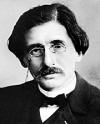
1899 (EB)
Born 12 Mar 1843; died 13 May 1904 at age 61.
French sociologist and criminologist who was one of the most versatile social scientists of his time. His theory of social interaction (“intermental activity”) emphasized the individual in an aggregate of persons and brought Tarde into conflict with Émile Durkheim, who conceived of society as a collective unity.
French sociologist and criminologist who was one of the most versatile social scientists of his time. His theory of social interaction (“intermental activity”) emphasized the individual in an aggregate of persons and brought Tarde into conflict with Émile Durkheim, who conceived of society as a collective unity.
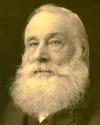
Born 12 Mar 1838; died 14 Jul 1907 at age 69. quotes
Sir William Henry Perkin was an English chemist and inventor who, in his youth, was enthused about chemistry by attending public lectures by Michael Faraday. While experimenting to synthesize quinine from a coal tar chemical, Perkins mixed aniline and sodium dichromate and unexpectedly found a dense colour - he named as aniline purple - which he extracted with alcohol. He had discovered the first artificial dye. Textiles of his era were coloured from natural sources; his was a valuable alternative. At the age of 18, he patented the dye. His father invested in his efforts to manufacture the dye. It went on sale in 1857, and it became popular in France. By age 23 he was fathering a new synthetic organic chemical industry. He continued synthesis research. He was knighted in 1906.
Sir William Henry Perkin was an English chemist and inventor who, in his youth, was enthused about chemistry by attending public lectures by Michael Faraday. While experimenting to synthesize quinine from a coal tar chemical, Perkins mixed aniline and sodium dichromate and unexpectedly found a dense colour - he named as aniline purple - which he extracted with alcohol. He had discovered the first artificial dye. Textiles of his era were coloured from natural sources; his was a valuable alternative. At the age of 18, he patented the dye. His father invested in his efforts to manufacture the dye. It went on sale in 1857, and it became popular in France. By age 23 he was fathering a new synthetic organic chemical industry. He continued synthesis research. He was knighted in 1906.
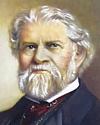
Born 12 Mar 1835; died 11 Jul 1909 at age 74. quotes
Canadian-American astronomer and and mathematician who prepared ephemerides (tables of computed places of celestial bodies over a period of time) and tables of astronomical constants. He was an astronomer (1861-77) before becoming Superintendent of the U.S. Nautical Almanac Office (1877-97). During this time he undertook numerous studies in celestial mechanics. His central goal was to place planetary and satellite motions on a completely uniform system, thereby raising solar system studies and the theory of gravitation to a new level. He largely accomplished this goal with the adoption of his new system of astronomical constants at the end of the century.
Canadian-American astronomer and and mathematician who prepared ephemerides (tables of computed places of celestial bodies over a period of time) and tables of astronomical constants. He was an astronomer (1861-77) before becoming Superintendent of the U.S. Nautical Almanac Office (1877-97). During this time he undertook numerous studies in celestial mechanics. His central goal was to place planetary and satellite motions on a completely uniform system, thereby raising solar system studies and the theory of gravitation to a new level. He largely accomplished this goal with the adoption of his new system of astronomical constants at the end of the century.
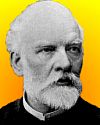
Born 12 Mar 1832; died 20 Apr 1899 at age 67.
French organic chemist and mineralogist who, with the American chemist James Mason Crafts, discovered in 1877 the chemical process known as the Friedel-Crafts reaction. In 1856, after studying in Strasburg, Friedel was appointed conservator of the mineralogical collections at the Superior National School of Mines. In 1871 he began to lecture at the École Normale and in 1876 became professor of mineralogy at the Sorbonne, but on the death of Wurtz in 1884 he exchanged that position for the chair of organic chemistry. He collaborated in efforts to form diamonds artificially, studied the pyroelectric properties of crystals, determined crystallographic constants, and did research on ketone and aldehyde compounds.
French organic chemist and mineralogist who, with the American chemist James Mason Crafts, discovered in 1877 the chemical process known as the Friedel-Crafts reaction. In 1856, after studying in Strasburg, Friedel was appointed conservator of the mineralogical collections at the Superior National School of Mines. In 1871 he began to lecture at the École Normale and in 1876 became professor of mineralogy at the Sorbonne, but on the death of Wurtz in 1884 he exchanged that position for the chair of organic chemistry. He collaborated in efforts to form diamonds artificially, studied the pyroelectric properties of crystals, determined crystallographic constants, and did research on ketone and aldehyde compounds.
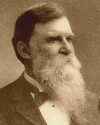
Born 12 Mar 1831; died 27 Nov 1901 at age 70.
American manufacturer who founded a family firm that became the world's largest producer of horse-drawn vehicles and a leader in automobile manufacturing. In 1852 Henry and Clement Studebaker opened a blacksmith shop in South Bend, Indiana. By the Civil War the shop as supplying wagons to the U.S. Army. In 1868 four of the brothers established the Studebaker Brothers Manufacturing Company. Despite setbacks, the company grew to be the largest wagon factory in the world, delivering on its motto, "Always give more than you promise." As the 20th Century dawned, after Clement Studebaker's death, the company began building both electric and gasoline powered automobiles.
American manufacturer who founded a family firm that became the world's largest producer of horse-drawn vehicles and a leader in automobile manufacturing. In 1852 Henry and Clement Studebaker opened a blacksmith shop in South Bend, Indiana. By the Civil War the shop as supplying wagons to the U.S. Army. In 1868 four of the brothers established the Studebaker Brothers Manufacturing Company. Despite setbacks, the company grew to be the largest wagon factory in the world, delivering on its motto, "Always give more than you promise." As the 20th Century dawned, after Clement Studebaker's death, the company began building both electric and gasoline powered automobiles.
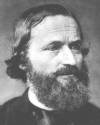
Born 12 Mar 1824; died 17 Oct 1887 at age 63. quotes
German physicist who, with Robert Bunsen, established the theory of spectrum analysis (a technique for chemical analysis by analyzing the light emitted by a heated material), which Kirchhoff applied to determine the composition of the Sun. He found that when light passes through a gas, the gas absorbs those wavelengths that it would emit if heated, which explained the numerous dark lines (Fraunhofer lines) in the Sun's spectrum. In his Kirchhoff's laws (1845) he generalized the equations describing current flow to the case of electrical conductors in three dimensions, extending Ohm's law to calculation of the currents, voltages, and resistances of electrical networks. He demonstrated that current flows in a zero-resistance conductor at the speed of light. more
German physicist who, with Robert Bunsen, established the theory of spectrum analysis (a technique for chemical analysis by analyzing the light emitted by a heated material), which Kirchhoff applied to determine the composition of the Sun. He found that when light passes through a gas, the gas absorbs those wavelengths that it would emit if heated, which explained the numerous dark lines (Fraunhofer lines) in the Sun's spectrum. In his Kirchhoff's laws (1845) he generalized the equations describing current flow to the case of electrical conductors in three dimensions, extending Ohm's law to calculation of the currents, voltages, and resistances of electrical networks. He demonstrated that current flows in a zero-resistance conductor at the speed of light. more
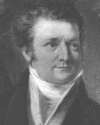
Born 12 Mar 1790; died 13 Mar 1845 at age 55.
British chemist and meteorologist who invented the Daniell cell, which was a great improvement over the voltaic cell used in the early days of battery development. His research in1820 led to the invention of a dew-point hygrometer that measured relative humidity which afterwards became a standard instrument. Daniell began experiments in 1835 in an attempt to improve the Voltaic battery with its problem of being unsteady and as a weak source of electrical current. In 1836, he invented a primary cell in which hydrogen was eliminated in the generation of the electricity. Daniell had solved the problem of polarization due to the was a thin film of hydrogen bubbles that formed over the positive electrode that reduced current.
British chemist and meteorologist who invented the Daniell cell, which was a great improvement over the voltaic cell used in the early days of battery development. His research in1820 led to the invention of a dew-point hygrometer that measured relative humidity which afterwards became a standard instrument. Daniell began experiments in 1835 in an attempt to improve the Voltaic battery with its problem of being unsteady and as a weak source of electrical current. In 1836, he invented a primary cell in which hydrogen was eliminated in the generation of the electricity. Daniell had solved the problem of polarization due to the was a thin film of hydrogen bubbles that formed over the positive electrode that reduced current.
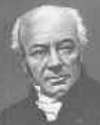
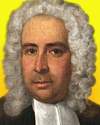
Born 12 Mar 1683; died 29 Feb 1744 at age 60. quotes
French-English chaplain and physicist who studied at Oxford, became experimental assistant to Sir Isaac Newton. As curator at the Royal Society, his experimental lectures in mechanical philosophy and electricity (advocating, substantiating and popularizing the work of Isaac Newton) attracted a wide audience. In electricity, he coined the terms conductor and insulator. He repeated and extended the work of Stephen Gray in electricity. He proposed a scheme for heating vessels such as salt-boilers by steam instead of fire. He made inventions of his own, such as a planetarium, and improvements to machines, such as Thomas Savery's steam engine (by adding a safety valve, and using an internal water jet to condense the steam in the displacement chambers) and a ventilator at the House of Commons. He was a prolific author and translator.
French-English chaplain and physicist who studied at Oxford, became experimental assistant to Sir Isaac Newton. As curator at the Royal Society, his experimental lectures in mechanical philosophy and electricity (advocating, substantiating and popularizing the work of Isaac Newton) attracted a wide audience. In electricity, he coined the terms conductor and insulator. He repeated and extended the work of Stephen Gray in electricity. He proposed a scheme for heating vessels such as salt-boilers by steam instead of fire. He made inventions of his own, such as a planetarium, and improvements to machines, such as Thomas Savery's steam engine (by adding a safety valve, and using an internal water jet to condense the steam in the displacement chambers) and a ventilator at the House of Commons. He was a prolific author and translator.
John Theophilus Desaguliers: A Natural Philosopher, Engineer and Freemason in Newtonian England, by Audrey T. Carpenter. - book suggestion.
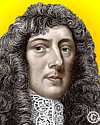
Born 12 Mar 1626; died 7 Jun 1697 at age 71. quotes
English natural philosopher, author and biographer who is noted for rediscovering a prehistoric monument at Avebury (1649). He also drew attention to a handful of previously overlooked shallow depressions outside the perimeter of the Stonehenge stones (1663). For this the Aubrey Holes were named after him, but the later uncovering of a full circle of holes was not his work. However, he did make an accurate survey mapping the stones, and had the intuition to recognize they were of a much more ancient origin than was the common belief at the time, making him one of the founders of English archaeology. He was a founding member of the Royal Society, where he presented a “Natural History of Wiltshire” in 1675. There, he was a contemporary of Isaac Newton., Robert Hooke and Christopher Wren.. He researched a book of short biographies of eminent men.«
English natural philosopher, author and biographer who is noted for rediscovering a prehistoric monument at Avebury (1649). He also drew attention to a handful of previously overlooked shallow depressions outside the perimeter of the Stonehenge stones (1663). For this the Aubrey Holes were named after him, but the later uncovering of a full circle of holes was not his work. However, he did make an accurate survey mapping the stones, and had the intuition to recognize they were of a much more ancient origin than was the common belief at the time, making him one of the founders of English archaeology. He was a founding member of the Royal Society, where he presented a “Natural History of Wiltshire” in 1675. There, he was a contemporary of Isaac Newton., Robert Hooke and Christopher Wren.. He researched a book of short biographies of eminent men.«
John Aubrey and the Advancement of Learning, by William Poole. - book suggestion.

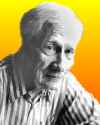
Died 12 Mar 1996 at age 92 (born 8 Aug 1903).
Danish explorer, archaeologist, sculptor and author whose extensive research in Greenland unearthed traces of previously unknown ancient North American Eskimo or Inuit cultures, dating back more than 5,000 years. He made the first of more than thirty expeditions in 1932 to take part in the Danish National Museum's excavations of 1,000-year-old Viking settlement ruins in west Greenland. The climax of Knuth's career was the discovery in three four-man summer treks from 1987 to 1989 of the ruins of 520 crude circular dwellings along the coast of the Ile de France off northeast Greenland, which cast new light on primitive Arctic civilisation. Active throughout his life, he made his only expedition only a year before his death.
Danish explorer, archaeologist, sculptor and author whose extensive research in Greenland unearthed traces of previously unknown ancient North American Eskimo or Inuit cultures, dating back more than 5,000 years. He made the first of more than thirty expeditions in 1932 to take part in the Danish National Museum's excavations of 1,000-year-old Viking settlement ruins in west Greenland. The climax of Knuth's career was the discovery in three four-man summer treks from 1987 to 1989 of the ruins of 520 crude circular dwellings along the coast of the Ile de France off northeast Greenland, which cast new light on primitive Arctic civilisation. Active throughout his life, he made his only expedition only a year before his death.
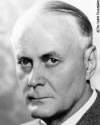
Died 12 Mar 1991 at age 90 (born 30 Oct 1900).
Finnish-Swedish physiologist who shared (with George Wald and Haldan Hartline) the 1967 Nobel Prize for Physiology or Medicine for his analysis of the internal electrical changes that take place when the eye is exposed to light. He worked on individual nerve cells of the retina and was the first to show that single nerve fibres could distinguish between different wavelengths of light. His bioelectric studies of vision were possible using the electric measurement method of professor Edgar D. Adrian of Oxford University, who had made the first measurement of the electric impulse in a single nerve fiber. Granit also conducted studies also on the function of muscle spindle, motoneuron, spinal cord and brain.
Finnish-Swedish physiologist who shared (with George Wald and Haldan Hartline) the 1967 Nobel Prize for Physiology or Medicine for his analysis of the internal electrical changes that take place when the eye is exposed to light. He worked on individual nerve cells of the retina and was the first to show that single nerve fibres could distinguish between different wavelengths of light. His bioelectric studies of vision were possible using the electric measurement method of professor Edgar D. Adrian of Oxford University, who had made the first measurement of the electric impulse in a single nerve fiber. Granit also conducted studies also on the function of muscle spindle, motoneuron, spinal cord and brain.
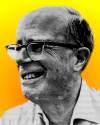

British robin
British ornithologist and author of books popularizing natural science, such as The Life of the Robin (1943). From the 1930s, he engaged in fieldwork investigating bird habitat and behaviour. A year spent studing the birds of the Galapagos (1938-9) yielded material he published in Darwin's Finches (1947), describing the14 specialized species of finch that have evolved from an original invading flock of ordinary seed-eating finches. During WW II, his involvement in the early work on radar later enabled him to employ radar to study bird migration. From 1945, for the rest of his life, he was director of the Edward Grey Institute of Field Ornithology, Oxford. He was one of the leading figures in British ornithology. His scientific research was on various aspects of speciation, population control, group selection, and ecological isolation.«
The Life of the Robin, by David Lambert Lack. - book suggestion.
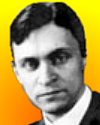
Died 12 Mar 1971 at age 97 (born 5 Jul 1873).
American pathologist who conducted important research on the causes, transmission, and diagnosis of tuberculosis and on immunization against the disease. Opie published on malaria research and the causes of diabetes. He demonstrated that the islets of Langerhans were involved in the development of diabetes in humans and identified two forms of parasite (hyaline and granular) in crow malaria. Later, he embarked on research in immunology and carcinogenesis, the development of obstruction of the pancreatic duct, and tuberculosis. He remained active in research well into his nineties.
American pathologist who conducted important research on the causes, transmission, and diagnosis of tuberculosis and on immunization against the disease. Opie published on malaria research and the causes of diabetes. He demonstrated that the islets of Langerhans were involved in the development of diabetes in humans and identified two forms of parasite (hyaline and granular) in crow malaria. Later, he embarked on research in immunology and carcinogenesis, the development of obstruction of the pancreatic duct, and tuberculosis. He remained active in research well into his nineties.
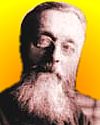
Died 12 Mar 1948 at age 85 (born 4 Feb 1863).
French mineralogist and geologist whose Minéraux des roches (1888; "The Minerals of Rocks"), written with the geologist Albert Michel-Lévy, was a pioneer study of the optical properties of rock-forming minerals. He gave particular attention to minerals connected with volcanic phenomena and igneous rocks, to the effects of metamorphism, and to mineral veins. He pursued his interests in various parts of the world, but notably in the Pyrenees. In his numerous contributions to scientific journals he dealt with the mineralogy and petrology of Madagascar, and published an elaborate and exhaustive volume on the eruptions in Martinique, La Montagna Pelée et ses Éruptions (1904).
French mineralogist and geologist whose Minéraux des roches (1888; "The Minerals of Rocks"), written with the geologist Albert Michel-Lévy, was a pioneer study of the optical properties of rock-forming minerals. He gave particular attention to minerals connected with volcanic phenomena and igneous rocks, to the effects of metamorphism, and to mineral veins. He pursued his interests in various parts of the world, but notably in the Pyrenees. In his numerous contributions to scientific journals he dealt with the mineralogy and petrology of Madagascar, and published an elaborate and exhaustive volume on the eruptions in Martinique, La Montagna Pelée et ses Éruptions (1904).
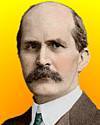
Died 12 Mar 1942 at age 79 (born 2 Jul 1862). quotes
Sir William Henry Bragg was a pioneer British scientist in solid-state physics who was a joint winner (with his son Sir Lawrence Bragg) of the Nobel Prize for Physics in 1915 for research on the determination of crystal structures. During the WW I, Bragg was put in charge of research on the detection and measurement of underwater sounds in connection with the location of submarines. He also constructed an X-ray spectrometer for measuring the wavelengths of X-rays. In the 1920s, while director of the Royal Institution in London, he initiated X-ray diffraction studies of organic molecules. Bragg was knighted in 1920.
Sir William Henry Bragg was a pioneer British scientist in solid-state physics who was a joint winner (with his son Sir Lawrence Bragg) of the Nobel Prize for Physics in 1915 for research on the determination of crystal structures. During the WW I, Bragg was put in charge of research on the detection and measurement of underwater sounds in connection with the location of submarines. He also constructed an X-ray spectrometer for measuring the wavelengths of X-rays. In the 1920s, while director of the Royal Institution in London, he initiated X-ray diffraction studies of organic molecules. Bragg was knighted in 1920.
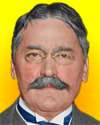
Died 12 Mar 1935 at age 76 (born 4 Oct 1858). quotes
Mihajlo (Michael) Idvorsky Pupin was a Serbian-American physicist was born of illiterate parents who ensured he had a good education. He migrated (1874) to America, worked jobs to support himself, and by 1883, he graduated from Columbia University, New York. After Ph.D. study in Germany under Helmholtz and Kirchoff, Pupin became an instructor in mathematical physics (1890) back at Columbia. His various inventions included a fluoroscope for short-exposure X-ray photographs. In 1901, Bell Telephone Co. bought his long-distance telephony patent for sending signals over greater distances without distortion, boosted using wire inductance coils at suitable intervals along the line. Pupin’s autobiography, From Immigrant to Inventor (1923), won a Pulitzer Prize (1924).«[With a discrepancy in records, his birth date is perhaps in 1854.]
Mihajlo (Michael) Idvorsky Pupin was a Serbian-American physicist was born of illiterate parents who ensured he had a good education. He migrated (1874) to America, worked jobs to support himself, and by 1883, he graduated from Columbia University, New York. After Ph.D. study in Germany under Helmholtz and Kirchoff, Pupin became an instructor in mathematical physics (1890) back at Columbia. His various inventions included a fluoroscope for short-exposure X-ray photographs. In 1901, Bell Telephone Co. bought his long-distance telephony patent for sending signals over greater distances without distortion, boosted using wire inductance coils at suitable intervals along the line. Pupin’s autobiography, From Immigrant to Inventor (1923), won a Pulitzer Prize (1924).«[With a discrepancy in records, his birth date is perhaps in 1854.]
From Immigrant to Inventor, by Michael Pupin. - book suggestion.
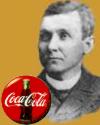
Died 12 Mar 1929 at age 77 (born 30 Dec 1851).
American manufacturer who expanded the marketing of the Coca-Cola soft drink created (1886) by pharmacist John "Doc" Pemberton who made the syrup for use in his drugstore fountain drinks. After Pemberton died, Candler bought the formula (still a very well kept secret). Showing a marketing genius, Candler devoted $50,000 a year to advertising, an unheard-of amount at the turn of the century. His goal was to make the drink a national product. He did this partially by bottling the product and not relying totally on fountain sales. There were constant legal battles to keep copy-cat products off the market, a fight eventually won with the patenting of a uniquely-shaped bottle. Coca-Cola advertising even influenced our view of Santa Claus. He was the Coca-Cola Company president 1887-1916, then mayor of Atlanta (1917-18).«
American manufacturer who expanded the marketing of the Coca-Cola soft drink created (1886) by pharmacist John "Doc" Pemberton who made the syrup for use in his drugstore fountain drinks. After Pemberton died, Candler bought the formula (still a very well kept secret). Showing a marketing genius, Candler devoted $50,000 a year to advertising, an unheard-of amount at the turn of the century. His goal was to make the drink a national product. He did this partially by bottling the product and not relying totally on fountain sales. There were constant legal battles to keep copy-cat products off the market, a fight eventually won with the patenting of a uniquely-shaped bottle. Coca-Cola advertising even influenced our view of Santa Claus. He was the Coca-Cola Company president 1887-1916, then mayor of Atlanta (1917-18).«
For God, Country, and Coca-Cola: The Definitive History of the Great American Soft Drink and the Company That Makes It, by Mark Pendergrast. - book suggestion.
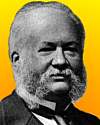
Died 12 Mar 1924 at age 84 (born 1 May 1839).
Count (Louis-Marie-) Hilaire Bernigaud Chardonnet was a French chemist and industrialist who first developed rayon, the first commonly used artificial fibre. When it was first displayed at the Paris Exposition of 1891 it was called Chardonnet silk, and caused a sensation. Although trained as a civil engineer, he went to work under Louis Pasteur. Chardonnet was prompted by Pasteur's study of diseases in silkworms to seek an artificial replacement for silk. His starting point was mulberry leaves, the food of silkworms. He turned them into a cellulose pulp with nitric and sulphuric acids and stretched it into fibres. The original fibre was highly flammable, but by 1889 he had eliminated this and developed rayon. He opened factories for its manufacture.
Count (Louis-Marie-) Hilaire Bernigaud Chardonnet was a French chemist and industrialist who first developed rayon, the first commonly used artificial fibre. When it was first displayed at the Paris Exposition of 1891 it was called Chardonnet silk, and caused a sensation. Although trained as a civil engineer, he went to work under Louis Pasteur. Chardonnet was prompted by Pasteur's study of diseases in silkworms to seek an artificial replacement for silk. His starting point was mulberry leaves, the food of silkworms. He turned them into a cellulose pulp with nitric and sulphuric acids and stretched it into fibres. The original fibre was highly flammable, but by 1889 he had eliminated this and developed rayon. He opened factories for its manufacture.
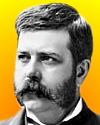
1884
Died 12 Mar 1914 at age 67 (born 6 Oct 1846). quotes
American engineer, inventor and industrialist who founded his own company to manufacturer his invention, the air brake. The son of a New York agricultural machinery maker, he began at age 21 to work on a new tool he invented to guide derailed train cars back onto the track. Before he died 46 years later, he produced safer rail transportation, steam turbines, gas lighting and heating, and electricity. He founded not only namesakes Westinghouse Air Brake and Westinghouse Electric, but also Union Switch & Signal and the forerunners to Duquesne Light, Equitable Gas and Rockwell International. He was also chiefly responsible for the adoption of alternating current for electric power transmission in the United States, and held 400 patents. more
American engineer, inventor and industrialist who founded his own company to manufacturer his invention, the air brake. The son of a New York agricultural machinery maker, he began at age 21 to work on a new tool he invented to guide derailed train cars back onto the track. Before he died 46 years later, he produced safer rail transportation, steam turbines, gas lighting and heating, and electricity. He founded not only namesakes Westinghouse Air Brake and Westinghouse Electric, but also Union Switch & Signal and the forerunners to Duquesne Light, Equitable Gas and Rockwell International. He was also chiefly responsible for the adoption of alternating current for electric power transmission in the United States, and held 400 patents. more
A Life of George Westinghouse, by Henry G. Prout. - book suggestion.
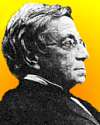
Died 12 Mar 1898 at age 72 (born 1 May 1825).
Swiss mathematician and physicist who discovered a formula basic to the development of atomic theory. Although a mathematics lecturer all his life, Balmer's most important work was on spectral series by giving a formula relating the wavelengths of the spectral lines of the hydrogen atom (1885) at age 60. Balmer's famous formula is λ= hm2/(m2-n2). Wavelengths are accurately given using h = 3.6456 x10⁻⁷m, n = 2, and m = 3, 4, 5, 6, 7. He suggested that giving n other small integer values would give other series of wavelengths for hydrogen. Why this prediction agreed with observation was not understood until after his death when the theoretical work of Niels Bohr was published in 1913.
Swiss mathematician and physicist who discovered a formula basic to the development of atomic theory. Although a mathematics lecturer all his life, Balmer's most important work was on spectral series by giving a formula relating the wavelengths of the spectral lines of the hydrogen atom (1885) at age 60. Balmer's famous formula is λ= hm2/(m2-n2). Wavelengths are accurately given using h = 3.6456 x10⁻⁷m, n = 2, and m = 3, 4, 5, 6, 7. He suggested that giving n other small integer values would give other series of wavelengths for hydrogen. Why this prediction agreed with observation was not understood until after his death when the theoretical work of Niels Bohr was published in 1913.
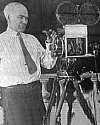
In 1923, the Phonofilm, the first motion picture with a sound-on-film track was demonstrated at a press conference. It was developed (1920) by Dr. Lee De Forest, inventor of the radio tube (1907). Dancers and musicians were shown on the film with music, but without voice dialogue. The sound was imaged in a narrow margin alongside the picture frames on the film. (De Forest's process came several years before the 1928 film, the "Jazz Singer," but that film used the Warner Vitaphone system. The Vitaphone system attempted to synchronize its sound from a record player turntable connected to the film projector.) The de Forest process read a series of light and dark areas on the film itself, using a photocell to convert to audio.[Image De Forest with Phonofilm camera, 1920]
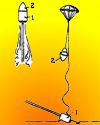
In 1907, a U.S. patent for a camera-carrying rocket parachute landing device was issued to Alfred Maul, an engineer of Dresden, Germany, with the title “Rocket Apparatus” (No. 847,198). He held a prior patent (19 Apr 1904, No, 757,825) for a rocket-launched capsule carrying scientific instruments. In the new patent he described an improved method for its safe return. Using time-controlled means (a fuse or clockwork), at the peak of flight, the instrument cap was released, pulling a parachute out of a chamber in the main casing of the rocket, which remained attached by a line and hung during the fall some distance below the cap. They descended together until the casing hit the ground, when the full effect of the parachute was given to slow the capsule giving a gentler landing for the delicate instruments inside.«
more
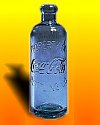
In 1894, the first bottles of Coca-Cola were sold. Coca-Cola was invented by Dr. John Pemberton, an Atlanta pharmacist who created the formula in a three legged brass kettle in his backyard on 8 May 1886. He mixed a combination of lime, cinnamon, coca leaves, and the seeds of a Brazilian shrub to make the famous beverage. Carbonated water was introduced later to make the beverage as now familiar. Coca-Cola was originally used as a nerve and brain tonic and a medical elixir. Asa Candler owned the company, after Pemberton's death. On 31 Jan 1893, the famous Coca-Cola formula was patented. He also opened the first syrup manufacturing plant in 1884. He began large scale bottling of Coca-Cola in 1899.[Image: replica 1894 "Hutchinson" bottle]
For God, Country, and Coca-Cola: The Definitive History of the Great American Soft Drink and the Company That Makes It, by Mark Pendergrast. - book suggestion.
In 1889, Almon B. Strowger of Kansas City patented the first automatic telephone exchange. Tradition gives that his inspiration came because a local telephone operator was his his principal competitor's wife, and she would divert Strowger's clients to her husband. The original prototype was devised using a collar box and a number of used matches. The first Strowger telephone exchange opened on 3 Nov 1892 in LaPorte, Ind. This early system did not use a dial to enter the desired number. Instead, using three keys, one for each digit of a three-digit number, a subscriber pressed each key the appropriate number of times for each digit. The first dial phones (with projecting vanes instead of holes) was used in Milwaukee's City Hall (1896).*
In 1841, the first U.S. patent for starch processing was granted to Orlando Jones of City Road, Middlesex, England (No. 2000). Previously, corn would be steeped in water for several weeks to separate the starch by fermentation, though with limited yield. The patent described a process to extract starch from rice which shortened the production time, increased the yield, and left by-products in a condition suitable for further uses. About 50 gal. of a caustic alkali solution containing "about 200 grains of real soda or potash to the gallon", was used per 100 pounds of rice to macerate the rice for 20 - 24 hours. The rice was then washed, drained, milled, sieved, further macerated and settled, yielding a deposit of starch which was drained, washed and dried. This process was later applied to corn. Corn starch is now used in deodorants, to heal diaper rash, and to thicken gravy.
In 1755, a steam engine was first reported used in America, at a copper mine in New Barbados Neck (now North Arlington), NJ. It was imported from England by Josiah Hornblower and put to use pumping water from the mine of Colonel John Schuyler.




