Born 17 Feb 1899; died 5 Feb 1983 at age 83.
American physician who, on 18 May 1935, was appointed Chief of the Physiological Research Laboratory, Wright Field, Ohio, and during a distinguished career there made great contributions to aviation medicine giving last benefits to flying safety and mission effectiveness of pilots.
American physician who, on 18 May 1935, was appointed Chief of the Physiological Research Laboratory, Wright Field, Ohio, and during a distinguished career there made great contributions to aviation medicine giving last benefits to flying safety and mission effectiveness of pilots.
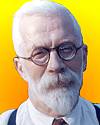
Born 17 Feb 1890; died 29 Jul 1962 at age 72. quotes
British statistician, geneticist and evolutionary biologist whose contributions to statistical theory have become mainstays of modern statistical practice. In genetics, he established biometric genetics and studied dominance through breeding experiments with various animals). He developed methods of multivariate analysis to track the linkage of genes for different traits. To avoid introducing bias in the design of experiments that could produce inaccurate or misleading data, he applied his principle of randomization. While continuing his interest in statistics during his university coursework, he began his career as a high school teacher of mathematics (1914-19). During this time he published a paper (1918) applying statistics to yield a fundamental theorem of natural selection. He furthered his study of genetics at Rothamsted Experimental Station as a statistician in 1919.«
British statistician, geneticist and evolutionary biologist whose contributions to statistical theory have become mainstays of modern statistical practice. In genetics, he established biometric genetics and studied dominance through breeding experiments with various animals). He developed methods of multivariate analysis to track the linkage of genes for different traits. To avoid introducing bias in the design of experiments that could produce inaccurate or misleading data, he applied his principle of randomization. While continuing his interest in statistics during his university coursework, he began his career as a high school teacher of mathematics (1914-19). During this time he published a paper (1918) applying statistics to yield a fundamental theorem of natural selection. He furthered his study of genetics at Rothamsted Experimental Station as a statistician in 1919.«
Statistical Methods, Experimental Design, and Scientific Inference, by Ronald A. Fisher. - book suggestion.
Born 17 Feb 1888; died 17 Aug 1969 at age 81.
German-American scientist and winner of the Nobel Prize for Physics in 1943 for his development of the molecular beam as a tool for studying the characteristics of molecules and for his measurement of the magnetic moment of the proton.
German-American scientist and winner of the Nobel Prize for Physics in 1943 for his development of the molecular beam as a tool for studying the characteristics of molecules and for his measurement of the magnetic moment of the proton.
Born 17 Feb 1858; died 12 Dec 1923 at age 65.
American biologist, educator, and writer, author of many works for children on nature and biology. and attended public schools in Brooklyn, New York. After postgraduate studies in biology, she taught at several schools. Teaching and working with children led her into an interest in nature and biology, and in developing methods by which it might be better taught. Since there were not good textbooks on the subject, she began to write her own, beginning her true avocation as an author. Her books were considered authoritative though entertaining and became. Many were used as school texts at a time when nature study was beginning to be incorporated into a rapidly growing number of schools' curricula.
American biologist, educator, and writer, author of many works for children on nature and biology. and attended public schools in Brooklyn, New York. After postgraduate studies in biology, she taught at several schools. Teaching and working with children led her into an interest in nature and biology, and in developing methods by which it might be better taught. Since there were not good textbooks on the subject, she began to write her own, beginning her true avocation as an author. Her books were considered authoritative though entertaining and became. Many were used as school texts at a time when nature study was beginning to be incorporated into a rapidly growing number of schools' curricula.
The Insect Folk, by Margaret Warner Morley. - book suggestion.
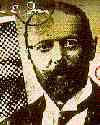
Born 17 Feb 1856; died 27 May 1937 at age 81.
American photographer and inventor of the halftone process, a method of reproducing photographs on a printing press. Prior to this process, photos and illustrations were reproduced from hand-engraved plates. In this way printers could reproduce line drawings, but not the shades of gray in a photograph because printing presses cannot print gray - only black and white. Ives invented a screen that would convert a photograph into a pattern of tiny dots. Large dots form where the image is dark, and tiny dots where the image is light, thus giving the illusion of shades of gray. In 1881, he was the first to make a three-colour print from halftone blocks. Further inventions in photography and colour printing yielded 70 patents.(Image: 1996 U.S. postage stamp.)
American photographer and inventor of the halftone process, a method of reproducing photographs on a printing press. Prior to this process, photos and illustrations were reproduced from hand-engraved plates. In this way printers could reproduce line drawings, but not the shades of gray in a photograph because printing presses cannot print gray - only black and white. Ives invented a screen that would convert a photograph into a pattern of tiny dots. Large dots form where the image is dark, and tiny dots where the image is light, thus giving the illusion of shades of gray. In 1881, he was the first to make a three-colour print from halftone blocks. Further inventions in photography and colour printing yielded 70 patents.(Image: 1996 U.S. postage stamp.)
Born 17 Feb 1850; died 23 Oct 1918 at age 68.
German bacteriologist.
German bacteriologist.
Born 17 Feb 1846; died 26 Oct 1903 at age 57.
Russian geomorphologist, Vasily Vasilyevich Dokuchayev, pioneered the study of soil creation processes and their classification. Dokuchayev regarded the composition of soil as the product of the combined interaction of climate, bedrock, and organisms. Thus, he showed (1898) that different soils of different areas may result from similar bedrock material when climate is differs. In this way, he was beginning the recognition of biomes. He introduced (1883) the term chernozem for a type of rich black soil, rich in carbonates and humus, that occurs in the temperate latitudes of Russia.
Russian geomorphologist, Vasily Vasilyevich Dokuchayev, pioneered the study of soil creation processes and their classification. Dokuchayev regarded the composition of soil as the product of the combined interaction of climate, bedrock, and organisms. Thus, he showed (1898) that different soils of different areas may result from similar bedrock material when climate is differs. In this way, he was beginning the recognition of biomes. He introduced (1883) the term chernozem for a type of rich black soil, rich in carbonates and humus, that occurs in the temperate latitudes of Russia.
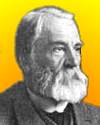
Born 17 Feb 1838; died 18 Oct 1906 at age 68.
Russian chemist whose research in organic chemistry included studying isomeric benezene derivatives. His lasting legacy, though, was starting the systematical description of organic compoounds, which he compliled in the publication of his Handbuch der organischen Chemie, (1880-82; Handbook of Organic Chemistry). He aimed that it should be a complete catalog, and already in its first edition, the two volumes described 15,000 compounds. As organic chemistry continued to grow rapidly, he published expanded second and third editions. After Beilstein's death, because of its great value to organic chemists, work on updating the publication was taken on by the Deutsche Chemische Gesellschanft, which.has continued to publish it.«
Russian chemist whose research in organic chemistry included studying isomeric benezene derivatives. His lasting legacy, though, was starting the systematical description of organic compoounds, which he compliled in the publication of his Handbuch der organischen Chemie, (1880-82; Handbook of Organic Chemistry). He aimed that it should be a complete catalog, and already in its first edition, the two volumes described 15,000 compounds. As organic chemistry continued to grow rapidly, he published expanded second and third editions. After Beilstein's death, because of its great value to organic chemists, work on updating the publication was taken on by the Deutsche Chemische Gesellschanft, which.has continued to publish it.«
Born 17 Feb 1798; died 1 Mar 1854 at age 56.
German philosopher and psychologist who argued that inductive psychology was the foundation for the study of all philosophical disciplines. He rejected the existing idealism for a form of associationism influenced by both Immanuel Kant and Locke. Beneke agreed with Herbart's general idea that mathematics should be introduced into psychology, but he felt that Herbart's attempt to quantify psychological phenomena was insufficiently empirical. Beneke suggested that more precise observations were needed, through psychological experiments. Although he never carried out such experiments himself, Beneke demanded that psychologists should develop their theories, and test them, under controlled conditions and with the systematic variation of variables.
German philosopher and psychologist who argued that inductive psychology was the foundation for the study of all philosophical disciplines. He rejected the existing idealism for a form of associationism influenced by both Immanuel Kant and Locke. Beneke agreed with Herbart's general idea that mathematics should be introduced into psychology, but he felt that Herbart's attempt to quantify psychological phenomena was insufficiently empirical. Beneke suggested that more precise observations were needed, through psychological experiments. Although he never carried out such experiments himself, Beneke demanded that psychologists should develop their theories, and test them, under controlled conditions and with the systematic variation of variables.
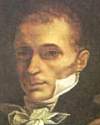

René Theophile Hyacinthe Laënnec was a French physician who invented the stethoscope and is generally considered the father of chest medicine. Using a foot-long wooden cylinder that he placed on the chests of his patients, he was able to hear the various sounds made by the lungs and heart. For three years he studied patients' chest sounds and correlated them with the diseases found in autopsy. He described his methods and findings in the classic De l'auscultation médiate (1819). Laënnec made numerous other contributions to the literature of respiratory and heart disease. more
Doctors: The Illustrated History of Medical Pioneers, by Sherwin B. Nuland. - book suggestion.
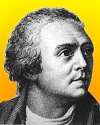
Born 17 Feb 1740; died 22 Jan 1799 at age 58. quotes
Swiss physicist, geologist, and early Alpine explorer. He made an extensive study of the structure of the Alps, described in the four volumes of Voyages dans les Alpes (1779-96). His theory was neptunian, but with uniformitarian overtones. The word geology was introduced into scientific nomenclature by Saussure with the publication of the first volume. Saussure developed what was probably the first electrometer (1766), used to measure electric potential. He also developed an improved hygrometer to measure atmospheric humidity (1783), the first to use human hair for the purpose.
Swiss physicist, geologist, and early Alpine explorer. He made an extensive study of the structure of the Alps, described in the four volumes of Voyages dans les Alpes (1779-96). His theory was neptunian, but with uniformitarian overtones. The word geology was introduced into scientific nomenclature by Saussure with the publication of the first volume. Saussure developed what was probably the first electrometer (1766), used to measure electric potential. He also developed an improved hygrometer to measure atmospheric humidity (1783), the first to use human hair for the purpose.
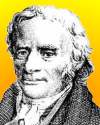
Born 17 Feb 1723; died 20 Feb 1762 at age 39.
German astronomer who developed lunar tables that greatly assisted navigators in determining longitude at sea. Mayer also discovered the libration (or apparent wobbling) of the Moon. Mayer began calculating lunar and solar tables in 1753 and in 1755 he sent them to the British government. These tables were good enough to determine longitude at sea with an accuracy of half a degree. Mayer's method of determining longitude by lunar distances and a formula for correcting errors in longitude due to atmospheric refraction were published in 1770 after his death. The Board of Longitude sent Mayer's widow a payment of 3000 pounds as an award for the tables.
German astronomer who developed lunar tables that greatly assisted navigators in determining longitude at sea. Mayer also discovered the libration (or apparent wobbling) of the Moon. Mayer began calculating lunar and solar tables in 1753 and in 1755 he sent them to the British government. These tables were good enough to determine longitude at sea with an accuracy of half a degree. Mayer's method of determining longitude by lunar distances and a formula for correcting errors in longitude due to atmospheric refraction were published in 1770 after his death. The Board of Longitude sent Mayer's widow a payment of 3000 pounds as an award for the tables.
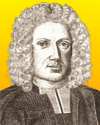
Born 17 Feb 1665; died 11 Sep 1721 at age 56.
German botanist who demonstrated the existence of sexes in plants, which made plants available for studies of genetics and heredity. He demonstrated experimentally the sexuality of plants in Epistolae de Sexu Plantarum (Letter on the Sexuality of Plants, 1694) in which he identified the stamen and pistil as the male and female organs, and the pollen as the fertilizing agent.
German botanist who demonstrated the existence of sexes in plants, which made plants available for studies of genetics and heredity. He demonstrated experimentally the sexuality of plants in Epistolae de Sexu Plantarum (Letter on the Sexuality of Plants, 1694) in which he identified the stamen and pistil as the male and female organs, and the pollen as the fertilizing agent.

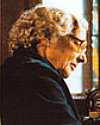
Died 17 Feb 1998 at age 83 (born 4 Jan 1915). quotes
German-Swiss psychologist who was a Jungian analyst (1948-98) in collaboration with Carl Jung for over 30 years. She was also fairy-tale expert whose research showed common themes in tales from many cultures, which she linked with experiences in daily life. She began analysis with Jung at eighteen, and worked with him until his death in 1961. As Jung's primary partner in his research into alchemical texts, her first major publication, Aurora Consurgens, is a companion volume to Jung's last major work, Mysterium Cuniuntionis. Other works include On Dreams and Myths and C.G. Jung: His Myth in Our Time.[EB gives birth date as 16/17 Feb 1998.]
German-Swiss psychologist who was a Jungian analyst (1948-98) in collaboration with Carl Jung for over 30 years. She was also fairy-tale expert whose research showed common themes in tales from many cultures, which she linked with experiences in daily life. She began analysis with Jung at eighteen, and worked with him until his death in 1961. As Jung's primary partner in his research into alchemical texts, her first major publication, Aurora Consurgens, is a companion volume to Jung's last major work, Mysterium Cuniuntionis. Other works include On Dreams and Myths and C.G. Jung: His Myth in Our Time.[EB gives birth date as 16/17 Feb 1998.]

Died 17 Feb 1959 at age 59 (born 30 Nov 1899).
Andrew Jackson Moyer was an American microbiologist who invented a method for mass-producing the antibiotic penicillin. While working for the US Agriculture Department laboratory (1940-57), he discovered a technique for antibiotic fermentation using continuous shaking of a culture broth of corn steep liquor (a by-product of the corn starch manufacturing process) and lactose. His method improved on prior methods producing 2 to 8 Oxford units/ml of broth, to in excess of 200 Oxford units/ml. By making possible the large-scale production of penicillin, the process is credited with saving thousands of lives during World War II. Corn steep liquor was adopted for other commercial fermentation processes making many other antibiotics, and the method is still in use today.«
Andrew Jackson Moyer was an American microbiologist who invented a method for mass-producing the antibiotic penicillin. While working for the US Agriculture Department laboratory (1940-57), he discovered a technique for antibiotic fermentation using continuous shaking of a culture broth of corn steep liquor (a by-product of the corn starch manufacturing process) and lactose. His method improved on prior methods producing 2 to 8 Oxford units/ml of broth, to in excess of 200 Oxford units/ml. By making possible the large-scale production of penicillin, the process is credited with saving thousands of lives during World War II. Corn steep liquor was adopted for other commercial fermentation processes making many other antibiotics, and the method is still in use today.«
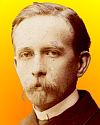
1888
Died 17 Feb 1940 at age 88 (born 10 Nov 1851).
Norwegian mineralogist, petrologist, structural geologist, stratigrapher and palaeontologist. He worked on the correlation of the Lower Palaeozoic and Permian igneous rocks (286 to 245 million years ago). His work revealed much about the mineralogy of the rocks of southern Norway and the Oslo region. in S. Norway. He also made studies of pegmatites, and tectonics of Norway. He greatly advanced petrologic (rock-formation) theory. In his studies of Permian rocks he carried out pioneering work on the theory of magmatic differentiation (the separation into a variety of rock types from an initial single parental molten magma).
Norwegian mineralogist, petrologist, structural geologist, stratigrapher and palaeontologist. He worked on the correlation of the Lower Palaeozoic and Permian igneous rocks (286 to 245 million years ago). His work revealed much about the mineralogy of the rocks of southern Norway and the Oslo region. in S. Norway. He also made studies of pegmatites, and tectonics of Norway. He greatly advanced petrologic (rock-formation) theory. In his studies of Permian rocks he carried out pioneering work on the theory of magmatic differentiation (the separation into a variety of rock types from an initial single parental molten magma).
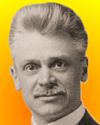
Died 17 Feb 1936 at age 66 (born 2 Sep 1869).
American inventor and manufacturer whose name is remembered with the "Maxim silencer" gun attachment. (The Maxim machine gun was invented by his father, Hiram Stevens Maxim). He was also active in amateur radio, and pioneered in the automobile industry, air conditioning and space research.
American inventor and manufacturer whose name is remembered with the "Maxim silencer" gun attachment. (The Maxim machine gun was invented by his father, Hiram Stevens Maxim). He was also active in amateur radio, and pioneered in the automobile industry, air conditioning and space research.
Hiram Percy Maxim, by Alice Clink Schumacher. - book suggestion.
Click to enlarge
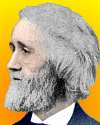
Died 17 Feb 1890 at age 71 (born 14 Feb 1819). quotes
American inventor who developed the typewriter. A printer and newspaper editor by trade, he developed a page numbering machine in the mid-1800s. A friend suggested he modify the machine into a letter-printing device. Sholes patented the typewriter in 1868 and sold the rights to Remington in 1873. more
American inventor who developed the typewriter. A printer and newspaper editor by trade, he developed a page numbering machine in the mid-1800s. A friend suggested he modify the machine into a letter-printing device. Sholes patented the typewriter in 1868 and sold the rights to Remington in 1873. more
The Typewriter: An Illustrated History, by Typewriter Topics. - book suggestion.
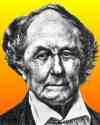
Died 17 Feb 1875 at age 75 (born 22 Mar 1799).
German astronomer who established the study of variable stars as an independent branch of astronomy and is renowned for his great catalog listing the positions and brightness of 324,188 stars of the northern hemisphere above the ninth magnitude. He studied at the University of Königsberg, Prussia, where he was a pupil and later the successor of Friedrich Wilhelm Bessel. In 1837, Argelander published the first major investigation of the Sun's motion through space. In 1844 he began studies of variable stars.
German astronomer who established the study of variable stars as an independent branch of astronomy and is renowned for his great catalog listing the positions and brightness of 324,188 stars of the northern hemisphere above the ninth magnitude. He studied at the University of Königsberg, Prussia, where he was a pupil and later the successor of Friedrich Wilhelm Bessel. In 1837, Argelander published the first major investigation of the Sun's motion through space. In 1844 he began studies of variable stars.
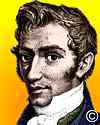
Died 17 Feb 1874 at age 77 (born 22 Feb 1796). quotes
Lambert-Adolphe-Jacques Quetelet was a Belgian astronomer, statistician, mathematician and sociologist whose career began teaching mathematics at the Athenaeum, Brussels (1820), while also pursuing the study of astronomy from 1823. Quetelet was instrumental in setting up, and became the director of, a newly equipped Brussels Royal Observatory (opened 1833). From 1825, he began writing papers on social statistics, and in 1835 gained international recognition for publication of Sur l'homme et le developpement de ses facultés, essai d'une physique sociale. Whereas the normal curve had previously been applied to error correction, Quetelet used it to illustrate a distribution of measured human traits about the central value, giving the concept of the average man at the peak. In this way, for example, he applied a statistical view to the nature of criminal behaviour in society.«Image: from a 1974 Belgian postage stamp.
Lambert-Adolphe-Jacques Quetelet was a Belgian astronomer, statistician, mathematician and sociologist whose career began teaching mathematics at the Athenaeum, Brussels (1820), while also pursuing the study of astronomy from 1823. Quetelet was instrumental in setting up, and became the director of, a newly equipped Brussels Royal Observatory (opened 1833). From 1825, he began writing papers on social statistics, and in 1835 gained international recognition for publication of Sur l'homme et le developpement de ses facultés, essai d'une physique sociale. Whereas the normal curve had previously been applied to error correction, Quetelet used it to illustrate a distribution of measured human traits about the central value, giving the concept of the average man at the peak. In this way, for example, he applied a statistical view to the nature of criminal behaviour in society.«Image: from a 1974 Belgian postage stamp.
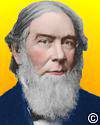
Died 17 Feb 1867 at age 60 (born 19 Jul 1806).
Alexander Dallas Bache was an American physicist who was Ben Franklin's great grandson and trained at West Point. Bache became the second Superintendent of the Coast Survey (1844-65). He made an ingenious estimate of ocean depth (1856) by studying records of a tidal wave that had taken 12 hours to cross the Pacific. Knowing that wave speeds depend on depth, he calculated a 2.2- mile average depth for the Pacific (which is within 15% of the presently accepted value). As President of the National Academy of Sciences, Bache secured greater government involvement in science. Through the Franklin Institute he instituted boiler tests to promote safety for steamboats. more
Alexander Dallas Bache was an American physicist who was Ben Franklin's great grandson and trained at West Point. Bache became the second Superintendent of the Coast Survey (1844-65). He made an ingenious estimate of ocean depth (1856) by studying records of a tidal wave that had taken 12 hours to cross the Pacific. Knowing that wave speeds depend on depth, he calculated a 2.2- mile average depth for the Pacific (which is within 15% of the presently accepted value). As President of the National Academy of Sciences, Bache secured greater government involvement in science. Through the Franklin Institute he instituted boiler tests to promote safety for steamboats. more
Died 17 Feb 1865 at age 39 (born 20 May 1825).
American astronomer who made the first photograph of a double star, discovered a number of comets, and with his father discovered Hyperion, the eighth moon of Saturn.
American astronomer who made the first photograph of a double star, discovered a number of comets, and with his father discovered Hyperion, the eighth moon of Saturn.
Early map of Japan
Died 17 Feb 1850 at age 80 (born 18 Jul 1769).
Japanese scientist and an early advocate of Westernization in Japan. He favoured the development of an authoritarian type of government based on Western science and political institutions. As an agronomist, Satô Nobuhiro wrote in Keizai yôryaku (The Epitome of Economy), "The rationale of economy is to manage the realm, develop goods, make domains affluent, and succor everyone." In short, economy was the know-how to succour people. Sato Nobuhiro, held the European powers to be a threat, and advocated economic reform so that Japan could build up its military to stave off the Western menace. Even this contrary perspective advocated expansionism much like the Imperialism of the European nations. Also prevalent in his writings are the call for urgent and drastic change in the Japanese system. He advocated for the development of transportation and for a government agency to fund such developments in order to encourage the nation's commerce.
Japanese scientist and an early advocate of Westernization in Japan. He favoured the development of an authoritarian type of government based on Western science and political institutions. As an agronomist, Satô Nobuhiro wrote in Keizai yôryaku (The Epitome of Economy), "The rationale of economy is to manage the realm, develop goods, make domains affluent, and succor everyone." In short, economy was the know-how to succour people. Sato Nobuhiro, held the European powers to be a threat, and advocated economic reform so that Japan could build up its military to stave off the Western menace. Even this contrary perspective advocated expansionism much like the Imperialism of the European nations. Also prevalent in his writings are the call for urgent and drastic change in the Japanese system. He advocated for the development of transportation and for a government agency to fund such developments in order to encourage the nation's commerce.
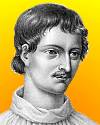
Died 17 Feb 1600 (born 1548). quotes
Italian philosopher, astronomer, mathematician and occultist whose theories anticipated modern science. The most notable of these were his theories of the infinite universe and the multiplicity of worlds, in which he rejected the traditional geocentric (or Earth-centred) astronomy and intuitively went beyond the Copernican heliocentric (sun-centred) theory, which still maintained a finite universe with a sphere of fixed stars. Although one of the most important philosophers of the Italian Renaissance, Bruno's various passionate utterings led to opposition. In 1592, after a trial he was kept imprisoned for eight years and interrogated periodically. When, in the end, he refused to recant, he was burned at the stake in Rome for heresy.
Italian philosopher, astronomer, mathematician and occultist whose theories anticipated modern science. The most notable of these were his theories of the infinite universe and the multiplicity of worlds, in which he rejected the traditional geocentric (or Earth-centred) astronomy and intuitively went beyond the Copernican heliocentric (sun-centred) theory, which still maintained a finite universe with a sphere of fixed stars. Although one of the most important philosophers of the Italian Renaissance, Bruno's various passionate utterings led to opposition. In 1592, after a trial he was kept imprisoned for eight years and interrogated periodically. When, in the end, he refused to recant, he was burned at the stake in Rome for heresy.
Cause, Principle, and Unity: Five Dialogues, by Bruno Giordano. - book suggestion.

In 1996, world chess champion Garry Kasparov defeated Deep Blue, IBM’s chess-playing computer, by winning a six-game match, 4-2. The regulation-style match, held in Philadelphia, was part of the ACM Computer Science Conference. Deep Blue improved on the older Deep Thought, augmented by parallel special-purpose hardware and two powerful databases. Deep Blue applied a selectively deepening search strategy, improving on an alpha-beta search strategy, with powerful evaluation functions. Transposition tables avoided repeat calculations of the same position. In a 1997 rematch, Deep Blue defeated Kasparov, 3½–2½, the first time he ever lost a six-game match in championship play.«
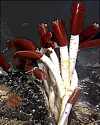
In 1977, the first remote research vessel investigation of deep-ocean hydrothermal vents photographed a diversity of life forms adapted to the high temperature waters issuing from openings in the ocean floor. The site on the tectonically active Galápagos Rift, was about 640 km (400 miles) west of Ecuador and 330 km (250 miles) northeast of the Galápagos Islands. The expedition surface ship had geologists, geochemists, and geophysicists, led by Jack Corliss, hunting for hydrothermal vents, but no biologist was on board, because finding such an astonishing ecological community had not been foreseen. The submersible Alvin photographed tubeworms, white crabs, pink fish, a purple octopus and large clams.«

In 1952, Winston Churchill announced that Britain had developed its own atomic bomb. The test for the first British-made atomic bomb was planned at the Monte Bello Islands off the northwest coast of Australia. The formal postwar decision to manufacture a British atomic bomb had been made by Prime Minister Clement Attlee's government early in Jan 1947 during a meeting of the Defence Subcommittee of the Cabinet. On 25 Feb 1952, at Sellafield on the Irish Sea coast in Cumberland, the Windscale plutonium plant began operation. On 3 Oct 1952, the first British atomic weapons test, called Hurricane, was successfully conducted aboard the frigate HMS Plym. Britain was was the third nuclear power after the U.S. and Russia to include the atomic bomb in its armoury.

In 1945, a Soviet offensive at the end of WW II forced the rocket expert Wernher von Braun and other scientists to evacuate the V2 rocket site at Peenemunde, East Germany.

In 1938, the first public experimental demonstration of Baird colour television was transmitted from Crystal Palace to the Dominion Theatre, London.

In 1911, the first self-starter, based on patented inventions created by General Motors engineers Clyde Coleman and Charles Kettering, was installed in a Cadillac. In the early years of fierce competition with Ford, the self-starter would play a key role in helping GM to keep pace. Using the Ford Model T, crank starter, its kickback occasionally caused broken jaws and ribs. Charles Kettering, the founder of Delco (Dayton Engineering Laboratories Company), led the development of countless improvements for the automobile, including lighting and ignition systems, color lacquer finishes, and the antiknock fuel, leaded gasoline. Prior to his work with cars, Kettering also invented the electric cash register.
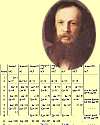
In 1869, Dmitri Mendeleev cancelled a planned visit to a factory and stayed at home working on the problem of how to arrange the chemical elements in a systematic way. To begin, he wrote each element and its chief properties on a separate card and arranged these in various patterns. Eventually he achieved a layout that suited him and copied it down on paper. Later that same day he decided a better arrangement by properties was possible and made a copy of that, which had similar elements grouped in vertical columns, unlike his first table, which grouped them horizontally. These historic documents still exist, and mark the beginning of the form of the Periodic Table as commonly used today. (The date is given by the Julian calendar in use in Russia at the time.)
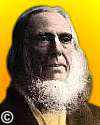
In 1857, the City of New York passed a charter to enable Peter Cooper to found a scientific institution in the city. He established the Cooper Union for the Advancement of Science and Art for the express purpose of improving the working classes by providing free education. Courses included algebra, geometry, calculus, chemistry, physics, mechanics, architectural and mechanical drawing. It also provided a School of Design for Women, a Musical Department, and a Free Library and Reading Room with all the periodicals of the day. By 1868, an article in the New York Times stated there were nearly 1500 students attached to the instiution, and the classes, which included night classes, were universally full.«

In 1818, Baron Karl von Drais de Sauerbrun patented the "draisine", the forerunner of the bicycle.




