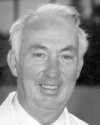
Born 9 Feb 1923; died 10 Feb 2006 at age 83.
American surgeon who was a pioneer in heart transplant surgery. He began (1967) the heart transplantation program at Stanford Medical Center. On 6 Jan 1968, he performed the first heart transplant in the U.S. on Mike Kasperak, 54, who survived for 15 days afterwards. Shumway spent years researching ways to extend life after a transplant. His team found a way to identify rejection early, so powerful immunosuppressants were used only when needed. From late 1980, using the new anti-rejection drug cyclosporine which didn't destroy the body's defenses against infection, heart transplants became a common procedure. In 1981, with Dr. Bruce Reitz, he performed the world's first combined heart and lung transplant.«
American surgeon who was a pioneer in heart transplant surgery. He began (1967) the heart transplantation program at Stanford Medical Center. On 6 Jan 1968, he performed the first heart transplant in the U.S. on Mike Kasperak, 54, who survived for 15 days afterwards. Shumway spent years researching ways to extend life after a transplant. His team found a way to identify rejection early, so powerful immunosuppressants were used only when needed. From late 1980, using the new anti-rejection drug cyclosporine which didn't destroy the body's defenses against infection, heart transplants became a common procedure. In 1981, with Dr. Bruce Reitz, he performed the world's first combined heart and lung transplant.«
Heart Transplantation, by Norman E. Shumway. - book suggestion.
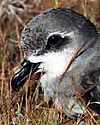
Zino’s Petrel
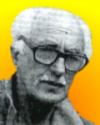
Portuguese ornithologist and conservationist who gave his name to Zino's petrel, Europe's rarest breeding bird. Only perhaps 45 mating pairs of the Zino's petrel (Pterodroma madeira) remain on the island of Madeira, south-west of Portugal, where this small black and white seabird breeds. The abundance population of the bird started to decline with the arrival of settlers (1419). By mid-20th century it was thought extinct. Zino, a successful businessman and native of Madeira, devoted much of the second half of his life to conservation. After searching, he re-discovered a small colony of the bird, in Jun 1969. Therafter, he studied and protected it. Zino's petrel continues to raise young in burrows on remote precipices of the mountains of Madeira.

1976
Born 9 Feb 1910; died 31 May 1976 at age 66. quotes
Jacques Lucien Monod was a French biochemist who, with François Jacob, investigated how genes regulate cell metabolism by directing the biosynthesis of enzymes. The pair shared (with André Lwoff) the 1965 Nobel Prize for Physiology or Medicine. Monod discovered the operon system that controls gene action in bacteria. In 1931, Monod joined the Pasteur Institute, and in 1971, he became its director.
Jacques Lucien Monod was a French biochemist who, with François Jacob, investigated how genes regulate cell metabolism by directing the biosynthesis of enzymes. The pair shared (with André Lwoff) the 1965 Nobel Prize for Physiology or Medicine. Monod discovered the operon system that controls gene action in bacteria. In 1931, Monod joined the Pasteur Institute, and in 1971, he became its director.
Origins of Molecular Biology: A Tribute to Jacques Monod, by Agnes Ullmann (ed.). - book suggestion.
Born 9 Feb 1898; died 3 Oct 1964 at age 66.
Guy Stewart Callendar was an English engineer and meteorologist who wrote a landmark paper in climate science, “The Artificial Production of Carbon Dioxide and its Influence on Temperature” (1938). He was the first, even as a hobby meteorologist, to collate decades of temperature measurements on a worldwide basis, and to carefully correlate the distinct warming trend with a continuing build-up of man-made carbon dioxide in the atmosphere. Callendar’s paper boosted the significance of earlier work begun by 19th-century scientists Svante Arrhenius, John Tyndall, and Joseph Fourier, who understood the greenhouse effect of carbon dioxide in the atmosphere, but had not so thoroughly documented the connection to increasing industrial-scale and domestic fuel combustion.«
Guy Stewart Callendar was an English engineer and meteorologist who wrote a landmark paper in climate science, “The Artificial Production of Carbon Dioxide and its Influence on Temperature” (1938). He was the first, even as a hobby meteorologist, to collate decades of temperature measurements on a worldwide basis, and to carefully correlate the distinct warming trend with a continuing build-up of man-made carbon dioxide in the atmosphere. Callendar’s paper boosted the significance of earlier work begun by 19th-century scientists Svante Arrhenius, John Tyndall, and Joseph Fourier, who understood the greenhouse effect of carbon dioxide in the atmosphere, but had not so thoroughly documented the connection to increasing industrial-scale and domestic fuel combustion.«
Born 9 Feb 1883; died 21 Jul 1954 at age 71.
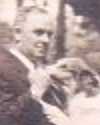
American inventor of miniature golf. In 1926, Garnet Carter opened the first miniature golf course at the Fairyland Club on Lookout Mountain. To his surprise the course was taken over by adults, who liked the fantasy setting and enjoyed the challenge of putting a ball through the miniaturized fairways. Carter soon began manufacturing courses for national distribution under the patented name Tom Thumb Golf to continue with the fairyland theme of elves and gnomes. By 1930 there were over 25,000 miniature golf courses in the U.S. In 1932, he sold the rights, and with his wife used the profits to open Frieda's Rock City Gardens. By 1940, Rock City was a roadside institution. "See Rock City," was painted on barns and birdhouses throughout the Southeast.
American inventor of miniature golf. In 1926, Garnet Carter opened the first miniature golf course at the Fairyland Club on Lookout Mountain. To his surprise the course was taken over by adults, who liked the fantasy setting and enjoyed the challenge of putting a ball through the miniaturized fairways. Carter soon began manufacturing courses for national distribution under the patented name Tom Thumb Golf to continue with the fairyland theme of elves and gnomes. By 1930 there were over 25,000 miniature golf courses in the U.S. In 1932, he sold the rights, and with his wife used the profits to open Frieda's Rock City Gardens. By 1940, Rock City was a roadside institution. "See Rock City," was painted on barns and birdhouses throughout the Southeast.
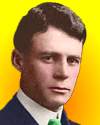
Born 9 Feb 1871; died 3 May 1910 at age 39. quotes
Howard Taylor Ricketts was an American pathologist who discovered the causative organisms and mode of transmission of Rocky Mountain spotted fever and epidemic typhus. In 1906, Ricketts, a Univeristy of Chicago pathologist, demonstrated that Rocky Mountain spotted fever is spread by cattle ticks and caused by a blood-borne "bipolar bacillus." In 1910 he showed that typhus is caused by a similar organism carried by lice. Ricketts was in Mexico City investigating the disease (known in Mexico, as tabardillo) that year when he was stricken by typhus and died at age 39. The two organisms Ricketts discovered were the first of what were later shown to be an unusual genus of virus-like bacteria - now named the Rickettsiae. more
Howard Taylor Ricketts was an American pathologist who discovered the causative organisms and mode of transmission of Rocky Mountain spotted fever and epidemic typhus. In 1906, Ricketts, a Univeristy of Chicago pathologist, demonstrated that Rocky Mountain spotted fever is spread by cattle ticks and caused by a blood-borne "bipolar bacillus." In 1910 he showed that typhus is caused by a similar organism carried by lice. Ricketts was in Mexico City investigating the disease (known in Mexico, as tabardillo) that year when he was stricken by typhus and died at age 39. The two organisms Ricketts discovered were the first of what were later shown to be an unusual genus of virus-like bacteria - now named the Rickettsiae. more
The Rocky Mountain Spotted Fever: History of a Twentieth-Century Disease, by Victoria Harden. - book suggestion.
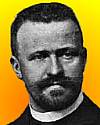
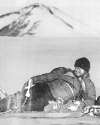
German geographer and glaciologist who discovered a volcano, free of ice, on the Antarctic continent. He named it Gaussberg, after the name of his research ship Gauss in which he led the German South Polar Expedition (1901-03). The ship became trapped in frozen seas and the team spent almost a year (21 Feb 1902 to 8 Feb 1903) making sledge expeditions from the immobile ship, including geological and magnetic surveys. The volcano was 50 miles west of this location. He also ascended to an altitude of 1600-ft in a balloon that was part of the equipment carried on the voyage. There were 32 men in all—5 scientists, 5 naval officers and 22 regular crew. Upon his return, he published scientific reports in a series of 20 volumes. In 1910, he took part in Count Zeppelin's expedition to Spitsbergen.«[Image right: Drygalski with the volcano Gaussberg in the background.] more
The German South Polar Expedition, 1901-3, by Erich Von Drygalski. - book suggestion.
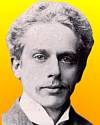
Born 9 Feb 1859; died 13 Sep 1914 at age 55.
British-American organ builder whose innovations created the theatre organ and its orchestral sounds. In his early career, in England, as chief electrician with the Lancashire and Cheshire Telephone Company he gained experience with low voltage electrical circuits which led him to their application to the church organ. As an organ-builder, his many inventions included the Diaphone, (GB patent 21,414 in 1894, improved as GB patent 21,558 in 1895). In 1897, he patented a foghorn (No. 21,389) for use in lighthouses and still used today. He emigrated to the U.S. in 1903, where he eventually sold his patents to the Wurlitzer company, N. Tonawanda, NY. Despite his productive years contributing to organ devices and pipes, he died prematurely by suicide.«
British-American organ builder whose innovations created the theatre organ and its orchestral sounds. In his early career, in England, as chief electrician with the Lancashire and Cheshire Telephone Company he gained experience with low voltage electrical circuits which led him to their application to the church organ. As an organ-builder, his many inventions included the Diaphone, (GB patent 21,414 in 1894, improved as GB patent 21,558 in 1895). In 1897, he patented a foghorn (No. 21,389) for use in lighthouses and still used today. He emigrated to the U.S. in 1903, where he eventually sold his patents to the Wurlitzer company, N. Tonawanda, NY. Despite his productive years contributing to organ devices and pipes, he died prematurely by suicide.«
Robert Hope-Jones, by David H. Fox. - book suggestion.
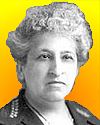
Born 9 Feb 1854; died 10 Aug 1929 at age 75.
Dutch physician who pioneered family planning with the world's first birth control clinic. As the first woman to attend university in the Netherlands, she studied medicine, and became the country's first woman doctor. She took over her father's medical practice in Amsterdam. Soon she limited her practice to women and children, also holding a free clinic for the poor twice a week. In 1881, Jacobs undertook the first systematic study of contraception. Many of her patients were worn down from too many pregnancies, and in 1882 she began prescribing diaphragms as birth control, effectively opening the first birth control clinic in the world. She taught hygiene and child care, and strongly campaigned on women's health and safety issue, leading to new laws.
Dutch physician who pioneered family planning with the world's first birth control clinic. As the first woman to attend university in the Netherlands, she studied medicine, and became the country's first woman doctor. She took over her father's medical practice in Amsterdam. Soon she limited her practice to women and children, also holding a free clinic for the poor twice a week. In 1881, Jacobs undertook the first systematic study of contraception. Many of her patients were worn down from too many pregnancies, and in 1882 she began prescribing diaphragms as birth control, effectively opening the first birth control clinic in the world. She taught hygiene and child care, and strongly campaigned on women's health and safety issue, leading to new laws.
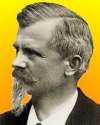
Born 9 Feb 1846; died 29 Dec 1929 at age 83.
German engineer and engine designer, who invented the spray carburettor and was the chief designer of the first Mercedes automobiles (1900-01). At age 26, he began designing cars with Gottlieb Daimler and Nikolaus Otto, with whom he developed the four-stroke engine cycle. In Apr 1882, Maybach joined Gottlieb Daimler in a partnership to produce a light-weight, high-speed petrol engine suitable for vehicles. Maybach invented the float-feed carburettor (1893) in which fuel was vaporized by passing it through a jet as a fine spray and mixed with air to produce a combustible mixture for the engine. Maybach designed the first Mercedes car for Daimler in 1901, but retired in 1907 to design and manufacture engines for Zeppelin airships. His son, Karl Maybach, followed him in producing luxury automobiles.«
German engineer and engine designer, who invented the spray carburettor and was the chief designer of the first Mercedes automobiles (1900-01). At age 26, he began designing cars with Gottlieb Daimler and Nikolaus Otto, with whom he developed the four-stroke engine cycle. In Apr 1882, Maybach joined Gottlieb Daimler in a partnership to produce a light-weight, high-speed petrol engine suitable for vehicles. Maybach invented the float-feed carburettor (1893) in which fuel was vaporized by passing it through a jet as a fine spray and mixed with air to produce a combustible mixture for the engine. Maybach designed the first Mercedes car for Daimler in 1901, but retired in 1907 to design and manufacture engines for Zeppelin airships. His son, Karl Maybach, followed him in producing luxury automobiles.«
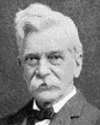
Born 9 Feb 1839; died 10 Dec 1926 at age 87.
American zoologist and naturalist who, as curator of zoology at the Peabody Museum of Natural History at Yale University, developed one of the largest, most valuable zoological collections in the U.S. He trained under Louis Agassiz at Harvard University. At age 25, Verrill, became Yale University's first professor of Zoology. His lifelong devotion to taxonomic research resulted in the initial development of extensive collections at Yale in a wide variety of taxa. From 1871-87, while he was in charge of scientific explorations by the U.S. Commission of Fish and Fisheries, Verrill found and described hundreds of new marine specimens. He specialized in invertebrates, especially worms, mollusks, corals, sponges, and starfishes, and made important technical improvements in the equipment used for collecting specimens. His expeditions took him to the Atlantic and Pacific coasts of North America and to Hawaii and Central America. He published more than 350 papers and monographs, including descriptions of more than a thousand species of animals in virtually every major taxon. His breadth of interests included parasitology, mineralogy and botany.
American zoologist and naturalist who, as curator of zoology at the Peabody Museum of Natural History at Yale University, developed one of the largest, most valuable zoological collections in the U.S. He trained under Louis Agassiz at Harvard University. At age 25, Verrill, became Yale University's first professor of Zoology. His lifelong devotion to taxonomic research resulted in the initial development of extensive collections at Yale in a wide variety of taxa. From 1871-87, while he was in charge of scientific explorations by the U.S. Commission of Fish and Fisheries, Verrill found and described hundreds of new marine specimens. He specialized in invertebrates, especially worms, mollusks, corals, sponges, and starfishes, and made important technical improvements in the equipment used for collecting specimens. His expeditions took him to the Atlantic and Pacific coasts of North America and to Hawaii and Central America. He published more than 350 papers and monographs, including descriptions of more than a thousand species of animals in virtually every major taxon. His breadth of interests included parasitology, mineralogy and botany.
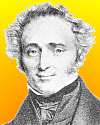
Born 9 Feb 1791; died 10 Mar 1874 at age 83.
French pathologist, anatomist, and physician who wrote several important works on pathological anatomy. He was essentially a researcher and experimenter. He was not known for his abilities as a clinician or teacher, but gained notoriety from the illustrations contained in his chief work Anatomie pathologique du corps humain (1828-1842) and the Traité d'anatomie pathologique générale (1849-1864). He was the first to describe multiple sclerosis, and gave an account of progressive muscular atrophy (sometimes called Cruveilhier's atrophy or paralysis). His injections of mercury into blood vessels and bronchial systems made possible the concepts of embolism and infarction developed by Virchow.
French pathologist, anatomist, and physician who wrote several important works on pathological anatomy. He was essentially a researcher and experimenter. He was not known for his abilities as a clinician or teacher, but gained notoriety from the illustrations contained in his chief work Anatomie pathologique du corps humain (1828-1842) and the Traité d'anatomie pathologique générale (1849-1864). He was the first to describe multiple sclerosis, and gave an account of progressive muscular atrophy (sometimes called Cruveilhier's atrophy or paralysis). His injections of mercury into blood vessels and bronchial systems made possible the concepts of embolism and infarction developed by Virchow.
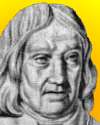
Born 9 Feb 1775; died 20 Nov 1856 at age 81. quotes
Farkas (Wolfgang) Bolyai was a Hungarian mathematician, poet and dramatist who spent a lifetime trying to prove Euclid's (fifth) postulate that parallel lines do not meet. While studying at the University of Göttingen, he met as a fellow student, the noted German mathematician Carl F. Gauss, with whom he corresponded as a life-long friend. Bolyai taught mathematics, physics and chemistry at Marosvásárhely all his life. He discouraged his son, János Bolyai, from studying the parallel axiom as he had, writing in a letter to him: “For God's sake, please give it up. Fear it no less than the sensual passion, because it, too, may take up all your time and deprive you of your health, peace of mind and happiness in life.”Wolfgang is the German form for the Hungarian name Farkas.
Farkas (Wolfgang) Bolyai was a Hungarian mathematician, poet and dramatist who spent a lifetime trying to prove Euclid's (fifth) postulate that parallel lines do not meet. While studying at the University of Göttingen, he met as a fellow student, the noted German mathematician Carl F. Gauss, with whom he corresponded as a life-long friend. Bolyai taught mathematics, physics and chemistry at Marosvásárhely all his life. He discouraged his son, János Bolyai, from studying the parallel axiom as he had, writing in a letter to him: “For God's sake, please give it up. Fear it no less than the sensual passion, because it, too, may take up all your time and deprive you of your health, peace of mind and happiness in life.”Wolfgang is the German form for the Hungarian name Farkas.

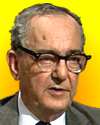
Died 9 Feb 2001 at age 84 (born 15 Jun 1916). quotes
Herbert Alexander Simon was an American social scientist who was a pioneer of the development of computer artificial intelligence. In 1956, with his long-time colleague Allen Newell, Simon produced the computer program, The Logic Theorist, a computer program that could discover proofs of geometric theorems. It was the first computer program capable of thinking, and marked the beginning of what would become known as artificial intelligence. It proved many of the theorems of symbolic logic in Whitehead and Russell's Principia Mathematica. He is further known for his contributions in fields including psychology, mathematics, statistics, and operations research, all of which he synthesized in a key theory for which he won the 1978 Nobel Prize for economics.
Herbert Alexander Simon was an American social scientist who was a pioneer of the development of computer artificial intelligence. In 1956, with his long-time colleague Allen Newell, Simon produced the computer program, The Logic Theorist, a computer program that could discover proofs of geometric theorems. It was the first computer program capable of thinking, and marked the beginning of what would become known as artificial intelligence. It proved many of the theorems of symbolic logic in Whitehead and Russell's Principia Mathematica. He is further known for his contributions in fields including psychology, mathematics, statistics, and operations research, all of which he synthesized in a key theory for which he won the 1978 Nobel Prize for economics.
The Sciences of the Artificial, by Herbert Alexander Simon. - book suggestion.
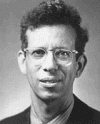
Died 9 Feb 1994 at age 59 (born 10 Dec 1934). quotes
American oncologist and virologist who shared the 1975 Nobel Prize for Physiology or Medicine (with his former professor Renato Dulbecco and another of Dulbecco's students, David Baltimore), for his codiscovery of the enzyme reverse transcriptase. In 1961, Temin formed a provirus hypothesis that cancer cells affect genetic material. The protein coat of certain viruses contains an enzyme that facilitates the copying of viral genes into the deoxyribonucleic acid (DNA) of the host cell. In 1970 he and Baltimore both independently isolated the enzyme, now called reverse transcriptase. The viruses that contain the enzyme are known as retroviruses. Temin also investigated how genetic information in the provirus transforms a normal animal cell into a tumor cell.
American oncologist and virologist who shared the 1975 Nobel Prize for Physiology or Medicine (with his former professor Renato Dulbecco and another of Dulbecco's students, David Baltimore), for his codiscovery of the enzyme reverse transcriptase. In 1961, Temin formed a provirus hypothesis that cancer cells affect genetic material. The protein coat of certain viruses contains an enzyme that facilitates the copying of viral genes into the deoxyribonucleic acid (DNA) of the host cell. In 1970 he and Baltimore both independently isolated the enzyme, now called reverse transcriptase. The viruses that contain the enzyme are known as retroviruses. Temin also investigated how genetic information in the provirus transforms a normal animal cell into a tumor cell.
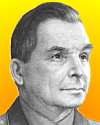
Died 9 Feb 1977 at age 82 (born 30 Mar 1894).
Soviet aircraft designer who created the famous Il-2 Stormovik armoured attack aircraft, the most used and the most produced plane during WWII by the Soviet Union Air Force. After the war he worked for a short time on jet bombers and designed one of the most successful planes of that time, Il-28. In 1950's he stopped working on warplanes and concentrated his studies on turboprop and turbojet powered passenger and transport planes. The civil aircraft he designed include: the Il-12 twin-engined passenger aircraft (1946), the Il-18 Moskva four-engined turboprop transport (1957), the Il-62 turbojet passenger carrier (1962), and the Il-86 airbus, which made its first flight in 1976.
Soviet aircraft designer who created the famous Il-2 Stormovik armoured attack aircraft, the most used and the most produced plane during WWII by the Soviet Union Air Force. After the war he worked for a short time on jet bombers and designed one of the most successful planes of that time, Il-28. In 1950's he stopped working on warplanes and concentrated his studies on turboprop and turbojet powered passenger and transport planes. The civil aircraft he designed include: the Il-12 twin-engined passenger aircraft (1946), the Il-18 Moskva four-engined turboprop transport (1957), the Il-62 turbojet passenger carrier (1962), and the Il-86 airbus, which made its first flight in 1976.
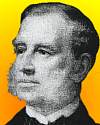
Died 9 Feb 1883 at age 77 (born 4 Sep 1805).
American industrialist, cofounder of Phelps, Dodge & Company, which was one of the largest mining companies in the US for more than a century. His marriage (1828) to Melissa Phelps connected him with a wealthy New York family; his father-in-law was a successful metals trader. In 1833 Dodge joined the firm of Phelps, Dodge & Company, which for two generations held a foremost place as dealers in copper and other metals. The firm had an important part in the development of Lake Superior copper and of Pennsylvania iron. Dodge also made extensive investments in timber lands and in railroad enterprises - the Erie, Lackawanna, Jersey Central, and Texas Central.
American industrialist, cofounder of Phelps, Dodge & Company, which was one of the largest mining companies in the US for more than a century. His marriage (1828) to Melissa Phelps connected him with a wealthy New York family; his father-in-law was a successful metals trader. In 1833 Dodge joined the firm of Phelps, Dodge & Company, which for two generations held a foremost place as dealers in copper and other metals. The firm had an important part in the development of Lake Superior copper and of Pennsylvania iron. Dodge also made extensive investments in timber lands and in railroad enterprises - the Erie, Lackawanna, Jersey Central, and Texas Central.
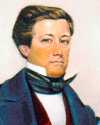
Died 9 Feb 1865 at age 53 (born 6 Sep 1811).
U.S. naval officer and astronomer who founded the Naval Observatory in Washington, D.C., the first U.S. observatory devoted entirely to research. Gilliss joined the Navy as a midshipman at the age of 15. He taught himself astronomy, at a time when there was no fixed astronomical observatory in the U.S., and very little formal instruction. In 1838, when Charles Wilkes left on the famous South Seas Exploring Expedition, Gilliss became officer-in-charge of the Depot of Charts and Instruments, forerunner of the U. S. Naval Observatory. Gilliss's astronomical observations made during this time in connection with determining longitude differences with the Wilkes Expedition, resulted in the first star catalogue published in the United States. more
U.S. naval officer and astronomer who founded the Naval Observatory in Washington, D.C., the first U.S. observatory devoted entirely to research. Gilliss joined the Navy as a midshipman at the age of 15. He taught himself astronomy, at a time when there was no fixed astronomical observatory in the U.S., and very little formal instruction. In 1838, when Charles Wilkes left on the famous South Seas Exploring Expedition, Gilliss became officer-in-charge of the Depot of Charts and Instruments, forerunner of the U. S. Naval Observatory. Gilliss's astronomical observations made during this time in connection with determining longitude differences with the Wilkes Expedition, resulted in the first star catalogue published in the United States. more
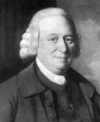
Died 9 Feb 1811 at age 78 (born 6 Oct 1732).
English astronomer noted for his contribution to the science of navigation. In 1761 the Royal Society sent Maskelyne to the island of St Helena to make accurate measurements of a transit of Venus. This in turn gives the distance from the Earth to the Sun, and the scale of the solar system. During the voyage he also experimented with the lunar position method of determining longitude. In 1764 he went on a voyage to Barbados to carry out trials of Harrison's timepiece, followed by appointment as Astronomer Royal (1765). In 1774, he carried out an experiment on a Scottish mountain with the use of a plumb line to determine the Earth's density. He found it was approximately 4.5 times that of water.
English astronomer noted for his contribution to the science of navigation. In 1761 the Royal Society sent Maskelyne to the island of St Helena to make accurate measurements of a transit of Venus. This in turn gives the distance from the Earth to the Sun, and the scale of the solar system. During the voyage he also experimented with the lunar position method of determining longitude. In 1764 he went on a voyage to Barbados to carry out trials of Harrison's timepiece, followed by appointment as Astronomer Royal (1765). In 1774, he carried out an experiment on a Scottish mountain with the use of a plumb line to determine the Earth's density. He found it was approximately 4.5 times that of water.
Nevil Maskelyne: The Seaman's Astronomer, by Derek Howse. - book suggestion.

In 1996, only a little more than a year after they created element 111, a team of German scientists led by Peter Armbruster at the Gesellschaft für schwerionenforschung (GSI) facility at Darmstadt, Germany, claimed to have created an atom of the element 112. Its nucleus has 112 protons and 166 neutrons, giving it a mass number of 277. As a new element it was named ununbium, symbol Uub, according to an internationally adopted system for naming new elements. This was based on the presence of one atom of the element made by accelerating zinc atoms to high speed and bombarding them into lead. When an atom of each fused to make the new nucleus, it lasted a fraction of a thousandth of a second before decaying, emitting an alpha particle to become a nucleus of element 110.
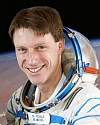
In 1995, the first British-born American to walk in space, Michael Foale (originally from Lincolnshire), and the first black astronaut, Dr. Bernard Harris, tested a modified space suit and astronaut endurance from the open cargo bay of NASA's space shuttle Discovery. They spent 20-mins in the coldest area of the spacecraft's shadow, motionless, to test the efficiency of their space suits' new insulation. The total of over three hours spent in an average temperature of -92ºC was less than the planned five hours, cut short by instructions from the NASA control centre when the astronauts reported feeling too cold. Dr. Harris carried with him a flag of the Navajo nation to give attention to native Americans. Foale emigrated to the U.S. in 1982 to join NASA. The first Briton in space was Helen Sharman in 1991.«

In 1991, Japan's worst nuclear accident up to this date happened at Mihama. A pipe in the steam generator burst, leaking 55 tonnes of radioactive primary (reactor) coolant water into the secondary steam-generating circuit. Some radioactivity was released to the atmosphere and the plant's emergency core cooling system was activated. MITI reported later that the accident was caused by human error, some anti-vibration bars being wrongly installed by workers and sawn off short to make them fit. The release of radiation into the atmosphere was kept to a small amount. No deaths resulted. Various measures were taken to prevent the recurrence of the accident, including the replacement of the steam generators.
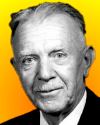
In 1949, the first Department of Space Medicine in the world was established at the United States Air Force School of Aviation Medicine at Randolph Field, Texas, and Dr. Hubertus Strughold subsequently became the first professor of Space Medicine. After WW II the commandant, Col. Harry G. Armstrong, a pioneer in aviation medicine, gathered* together certain leading German scientists in the field of aviation medicine and space science. Dr. Strughold had been director of aeromedical research for the German Air Force, and was then professor of Physiology and director of the Physiological Institute a the University of Heidelberg. He joined the staff of the USAF School of Aviation Medicine in 1947.*The United States used Nazi scientists during the Cold War to beat the Russians in the space race. For that help, some Nazis avoided war crimes trials. During WW II, Strughold was the Nazi director of medical research for aviation, in Germany, and is said to have experimented on, tortured and killed Jews and Gypsies at the Dachau concentration camp. Prisoners were frozen to near death and rewarmed to see how quickly they would recover.
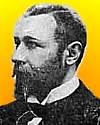
In 1902, Doctor Eugène-Louis Doyen (1859-1916) of Paris, performed a successful operation on Siamese twins from the Barnum and Bailey Circus, though one died by the next year. Dr. Doyen was among the first to document medical surgeries on film. Previously he had made a five-minute movie (1898) showing the separation of the Siamese twins Radika and Dodika, who were originally brought to Paris as freaks.
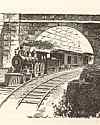
In 1875, the first train passed through the Hoosac Tunnel. On the Boston and Maine Railroad line between Boston and Albany, the Hoosac Tunnel passes through a rugged part of the Berkshires for a length of 25,081-ft (4.75 miles). In Mar 1853, one of the earliest tunnel boring machines ground ten feet into the Hoosac Mountain and died, never to run again. It remained stuck in its hole for many years as a grim symbol of engineering failure. It took several failed attempts, 200 lives and 20 years to complete the tunnel. In 1851, workers used gunpowder making slow progress as each blast produced only a few feet of shattered rock. In 1866, two tunnel blasting tools - nitroglycerin and the compressed air drill - were used in the Hoosac for the first time.
Abbe




