Born 4 Feb 1927; died 27 Apr 1999 at age 72.
German-born American physicist known for his formulation of Landauer's principle concerning the energy used during a computer's operation. Whenever the machine is resetting for another computation, bits are flushed from the computer's memory, and in that electronic operation, a certain amount of energy is lost. Thus, when information is erased, there is an inevitable "thermodynamic cost of forgetting," which governs the development of more energy-efficient computers. While engineers dealt with practical limitations of compacting ever more circuitry onto tiny chips, Landauer considered the theoretical limit, that if technology improved indefinitely, how soon will it run into the insuperable barriers set by nature?«
German-born American physicist known for his formulation of Landauer's principle concerning the energy used during a computer's operation. Whenever the machine is resetting for another computation, bits are flushed from the computer's memory, and in that electronic operation, a certain amount of energy is lost. Thus, when information is erased, there is an inevitable "thermodynamic cost of forgetting," which governs the development of more energy-efficient computers. While engineers dealt with practical limitations of compacting ever more circuitry onto tiny chips, Landauer considered the theoretical limit, that if technology improved indefinitely, how soon will it run into the insuperable barriers set by nature?«

Born 4 Feb 1925; died 13 Feb 2016 at age 91. quotes
Sir Erik Christopher Zeeman was an English mathematician who was born in Japan but grew up in England. His main field of study was topology (a form of geometry handling multi-dimensional shapes). But he is best known for his work advancing catastrophe theory after it was introduced in the 1960s by French mathematician René Thom. Such theory says that the probability that sudden events will occur can be forecast by plotting developments mathematically. One example Zeeman wrote about as a sudden event is for heated water when boiling begins. As other areas of applicability, he gives a range of disciplines as diverse as punctuated equilibria in evolution, meteorology and behavioral psychology. The latter would apply mathematics to analyze hijacking or hostage situations. He was knighted in 1991 for his leadership in promoting mathermatics education for children.«
Sir Erik Christopher Zeeman was an English mathematician who was born in Japan but grew up in England. His main field of study was topology (a form of geometry handling multi-dimensional shapes). But he is best known for his work advancing catastrophe theory after it was introduced in the 1960s by French mathematician René Thom. Such theory says that the probability that sudden events will occur can be forecast by plotting developments mathematically. One example Zeeman wrote about as a sudden event is for heated water when boiling begins. As other areas of applicability, he gives a range of disciplines as diverse as punctuated equilibria in evolution, meteorology and behavioral psychology. The latter would apply mathematics to analyze hijacking or hostage situations. He was knighted in 1991 for his leadership in promoting mathermatics education for children.«
Three-dimensional Theorems for Schools, by Sir Christopher Zeeman. - book suggestion.
Born 4 Feb 1906; died 17 Jan 1997 at age 90.
Clyde William Tombaugh was an American astronomer who discovered Pluto, then known as a planet. He was 24 years old, working at Lowell Observatory, Flagstaff, Arizona, when he located it on 13 Mar 1930. He was comparing a photographic plate taken on 23 Jan 1930, with another made a few days later, and saw a star-like speck that changed position between them. Thus ended a decades-long systematic search instigated by the predictions of other astronomers. Tombaugh also discovered several clusters of stars and galaxies, studied the apparent distribution of extragalactic nebulae, and made observations of the surfaces of Mars, Venus, Jupiter, Saturn, and the Moon. Born of poor farmers, his first telescope was made of parts from worn-out farming equipment. Pluto was the only planet discovered in the 20th century, and the only one found by an American.«
Clyde William Tombaugh was an American astronomer who discovered Pluto, then known as a planet. He was 24 years old, working at Lowell Observatory, Flagstaff, Arizona, when he located it on 13 Mar 1930. He was comparing a photographic plate taken on 23 Jan 1930, with another made a few days later, and saw a star-like speck that changed position between them. Thus ended a decades-long systematic search instigated by the predictions of other astronomers. Tombaugh also discovered several clusters of stars and galaxies, studied the apparent distribution of extragalactic nebulae, and made observations of the surfaces of Mars, Venus, Jupiter, Saturn, and the Moon. Born of poor farmers, his first telescope was made of parts from worn-out farming equipment. Pluto was the only planet discovered in the 20th century, and the only one found by an American.«
Out of the Darkness, the Planet Pluto, by Clyde William Tombaugh. - book suggestion.
1927
Born 4 Feb 1902; died 26 Aug 1974 at age 72. quotes
Charles Augustus Lindbergh was an American aviator who is famous for making the first nonstop solo flight across the Atlantic (1927). He first served as an apprentice to a barnstormer, performing as a wingwalker and parachute jumper. Then, he purchasing a war surplus Jenny trainer, made his first solo flight and barnstormed himself for about a year. Later, he became the first air mail pilot between Chicago, Ill., and St, Louis, Mo. On 20 May 1927, Lindbergh left New York for Paris, carrying sandwiches and water. He decided against carrying a parachute and radio in favor of more gasoline. He fought fog, icing and drowsiness, and landed in Paris on 21 May, after 33½ hours on his 3,600 mile flight.« more
Charles Augustus Lindbergh was an American aviator who is famous for making the first nonstop solo flight across the Atlantic (1927). He first served as an apprentice to a barnstormer, performing as a wingwalker and parachute jumper. Then, he purchasing a war surplus Jenny trainer, made his first solo flight and barnstormed himself for about a year. Later, he became the first air mail pilot between Chicago, Ill., and St, Louis, Mo. On 20 May 1927, Lindbergh left New York for Paris, carrying sandwiches and water. He decided against carrying a parachute and radio in favor of more gasoline. He fought fog, icing and drowsiness, and landed in Paris on 21 May, after 33½ hours on his 3,600 mile flight.« more
The Spirit of St. Louis, by Charles A. Lindbergh. - book suggestion.
Born 4 Feb 1896; died 31 Mar 1997 at age 101. quotes
Friedrich (Hermann) Hund was a German physicist known for his work on the electronic structure of atoms and molecules. He introduced a method of using molecular orbitals to determine the electronic structure of molecules and chemical bond formation. His empirical Hund's Rules (1925) for atomic spectra determine the lowest energy level for two electrons having the same n and l quantum numbers in a many-electron atom. (1) The lowest energy state has the maximum multiplicity consistent with the Pauli exclusion principle. (2) The lowest energy state has the maximum total electron orbital angular momentum quantum number, consistent with rule (1). They are explained by the quantum theory of atoms by calculations involving the repulsion between two electrons.
Friedrich (Hermann) Hund was a German physicist known for his work on the electronic structure of atoms and molecules. He introduced a method of using molecular orbitals to determine the electronic structure of molecules and chemical bond formation. His empirical Hund's Rules (1925) for atomic spectra determine the lowest energy level for two electrons having the same n and l quantum numbers in a many-electron atom. (1) The lowest energy state has the maximum multiplicity consistent with the Pauli exclusion principle. (2) The lowest energy state has the maximum total electron orbital angular momentum quantum number, consistent with rule (1). They are explained by the quantum theory of atoms by calculations involving the repulsion between two electrons.
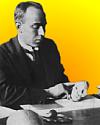
Born 4 Feb 1893; died 22 Nov 1988 at age 95. quotes
Raymond Arthur Dart was an Australian-South African physical anthropologist, palaeontologist and surgeon whose discoveries of fossil hominins led to significant insights into the evolutionary origins of human beings. In 1924, working with students in the Taung limestone works in Bechuanaland, he found what seemed at first to be just another primate skull. Then it caught his attention when Dart noticed how amazingly close to human it looked. He recognized it as a “missing link” in the evolution from ape to man. Dart had found the Taung child, only three years old at the time of death. He named it Australopithecus africanus, "australis" meaning south and “pithecus” meaning ape. Though his theory is now generally accepted, it was initially quite controversial.«
Raymond Arthur Dart was an Australian-South African physical anthropologist, palaeontologist and surgeon whose discoveries of fossil hominins led to significant insights into the evolutionary origins of human beings. In 1924, working with students in the Taung limestone works in Bechuanaland, he found what seemed at first to be just another primate skull. Then it caught his attention when Dart noticed how amazingly close to human it looked. He recognized it as a “missing link” in the evolution from ape to man. Dart had found the Taung child, only three years old at the time of death. He named it Australopithecus africanus, "australis" meaning south and “pithecus” meaning ape. Though his theory is now generally accepted, it was initially quite controversial.«
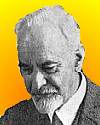
Born 4 Feb 1875; died 15 Aug 1953 at age 78.
German physicist who is remembered for his studies of both aerodynamics and hydrodynamics. He established the existence of the boundary layer adjoining the surface of a solid over which a fluid flows. The design of an efficient shape, weight, and mass for ships and aircraft owes much to his work, for which he is considered to be the father of aerodynamics. His made major studies on the effects of streamlining and the properties of aircraft wings. He made improvements to such constructions as wind tunnels. The Prandtl number is a dimensionless group used in the study of convection. The von Karman-Prandtl equation describes the logarithmic variation of water velocity within a channel from zero flow at the stream bed to a maximum velocity at the water surface.
German physicist who is remembered for his studies of both aerodynamics and hydrodynamics. He established the existence of the boundary layer adjoining the surface of a solid over which a fluid flows. The design of an efficient shape, weight, and mass for ships and aircraft owes much to his work, for which he is considered to be the father of aerodynamics. His made major studies on the effects of streamlining and the properties of aircraft wings. He made improvements to such constructions as wind tunnels. The Prandtl number is a dimensionless group used in the study of convection. The von Karman-Prandtl equation describes the logarithmic variation of water velocity within a channel from zero flow at the stream bed to a maximum velocity at the water surface.
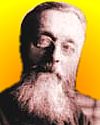
Born 4 Feb 1863; died 12 Mar 1948 at age 85.
French mineralogist and geologist whose Minéraux des roches (1888; "The Minerals of Rocks"), written with the geologist Albert Michel-Lévy, was a pioneer study of the optical properties of rock-forming minerals. He gave particular attention to minerals connected with volcanic phenomena and igneous rocks, to the effects of metamorphism, and to mineral veins. He pursued his interests in various parts of the world, but notably in the Pyrenees. In his numerous contributions to scientific journals he dealt with the mineralogy and petrology of Madagascar, and published an elaborate and exhaustive volume on the eruptions in Martinique, La Montagna Pelée et ses Éruptions (1904).
French mineralogist and geologist whose Minéraux des roches (1888; "The Minerals of Rocks"), written with the geologist Albert Michel-Lévy, was a pioneer study of the optical properties of rock-forming minerals. He gave particular attention to minerals connected with volcanic phenomena and igneous rocks, to the effects of metamorphism, and to mineral veins. He pursued his interests in various parts of the world, but notably in the Pyrenees. In his numerous contributions to scientific journals he dealt with the mineralogy and petrology of Madagascar, and published an elaborate and exhaustive volume on the eruptions in Martinique, La Montagna Pelée et ses Éruptions (1904).
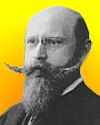
Born 4 Feb 1862; died 28 Aug 1942 at age 80.
German physician and bacteriologist who discovered the tetanus bacterium in 1884. Though he was unable to obtain it as a pure culture, it was isolated within a few years by Shibasaburo Kitsato. He discovered it lived in soil, with which he innoculated mice. Because of its presence in earth, it is responsible for infection from dirty wounds, which was particularly significant in the cases of wounded soldiers during WW I. The toxin secreted by this bacterium, Clostridium tetani, causing fatal muscle spasms. It was later found to travel along nerves to the spinal chord, causing increasingly severe spasms of the head and neck and jaw, from which came the common name of lockjaw. Fortunately for the injured soldiers, every soldier received an anti-toxin, used from 1915. Nicolaier died, aged 80, in 1942, pending wartime internment as a Jew, likely by suicide.«
German physician and bacteriologist who discovered the tetanus bacterium in 1884. Though he was unable to obtain it as a pure culture, it was isolated within a few years by Shibasaburo Kitsato. He discovered it lived in soil, with which he innoculated mice. Because of its presence in earth, it is responsible for infection from dirty wounds, which was particularly significant in the cases of wounded soldiers during WW I. The toxin secreted by this bacterium, Clostridium tetani, causing fatal muscle spasms. It was later found to travel along nerves to the spinal chord, causing increasingly severe spasms of the head and neck and jaw, from which came the common name of lockjaw. Fortunately for the injured soldiers, every soldier received an anti-toxin, used from 1915. Nicolaier died, aged 80, in 1942, pending wartime internment as a Jew, likely by suicide.«
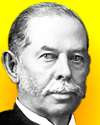
Born 4 Feb 1846; died 26 Aug 1926 at age 80. quotes
American civil engineer who invented California’s Tehachapi Loop, an elegant 0.73-mile railroad spiral. Called one of the seven wonders of the railroad world, it is a National Historic Civil Engineering Landmark. It is part of 28 miles of railroad snaking through the Tehachapi Pass between San Francisco and Los Angeles. Hood designed a remarkable series of horseshoe and S-curves to traverse the lofty peaks and ridges along the way. The spiral ascends at a 2-percent grade for an elevation of 77 feet. A train longer than 4,000 feet (about 85 cars) passes over itself as it travels around the loop. He retired as chief engineer of the Southern Pacific Company. His career spanned 54 years (3 May 1867- 3 May 1921), in which time some 11,000 miles of track were laid.«
American civil engineer who invented California’s Tehachapi Loop, an elegant 0.73-mile railroad spiral. Called one of the seven wonders of the railroad world, it is a National Historic Civil Engineering Landmark. It is part of 28 miles of railroad snaking through the Tehachapi Pass between San Francisco and Los Angeles. Hood designed a remarkable series of horseshoe and S-curves to traverse the lofty peaks and ridges along the way. The spiral ascends at a 2-percent grade for an elevation of 77 feet. A train longer than 4,000 feet (about 85 cars) passes over itself as it travels around the loop. He retired as chief engineer of the Southern Pacific Company. His career spanned 54 years (3 May 1867- 3 May 1921), in which time some 11,000 miles of track were laid.«
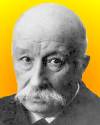
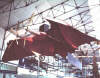
French engineer and inventor best known as a self-taught pioneer of flight before the brothers Orville and Wilbur Wright. In 1890 he constructed a steam-powered aircraft with bat-shaped wings. His craft, the Eole, which could not be steered, made the first heavier-than-air flight (of 50 m). His first patent, on 15 Apr 1866, related to railways. From the late 1870s, he registered many telephone patents. In 1881, Ader relayed music from the Paris Opera via phone lines to listeners with headphones at the Paris International Exhibition of Electricity, and demonstrated "Stereo", in a sense, by use of two carbon microphones picking up signals from two points close to each other. Ader also made inventions and improvements for bicycles (1868) and automobiles (1898). more
Clement Ader: His Flight-Claims and His Place in History, by Charles Harvard Gibbs-Smith. - book suggestion.
Born 4 Feb 1790; died 24 Feb 1874 at age 84.
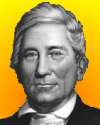
American naturalist and clergyman, a Lutheran minister who published studies of southern animals and works on botany and agriculture. He met John James Audubon in 1831 and helped him write the text of The Birds of America (1840-44). After visiting the German naturalist and explorer Alexander von Humboldt at the University of Berlin in 1838, Bachman did much of the writing and edited all of Audubon's Viviparous Quadrupeds of North America, 3 vol. (1845-49). He also published The Unity of the Human Race (1850), in which he theorized that all humans are of one species. Audubon named the Bachman's Sparrow in honor of his friend. Bachman discovered and named the Bachman's Warbler (a bird probably extinct today).
American naturalist and clergyman, a Lutheran minister who published studies of southern animals and works on botany and agriculture. He met John James Audubon in 1831 and helped him write the text of The Birds of America (1840-44). After visiting the German naturalist and explorer Alexander von Humboldt at the University of Berlin in 1838, Bachman did much of the writing and edited all of Audubon's Viviparous Quadrupeds of North America, 3 vol. (1845-49). He also published The Unity of the Human Race (1850), in which he theorized that all humans are of one species. Audubon named the Bachman's Sparrow in honor of his friend. Bachman discovered and named the Bachman's Warbler (a bird probably extinct today).
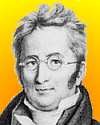
(EB)
Born 4 Feb 1778; died 9 Sep 1841 at age 63.
Swiss botanist whose prolific writings in taxonomy and botany were highly influential, particularly his belief that taxonomy should be based on morphological characters, and his scheme of classification, for which he coined the term taxonomy, prevailed for many years. Candolle achieved extensive subdivision of flowering plants, describing 161 families of dicotyledons, and demonstrated decisively the inadequacy of Linnaean classification, which his system supplanted. Candolle also contributed to agronomy and the linking of soil type with vegetation. He also pioneered the study of phytogeography, the biogeography of plants, by carrying out investigations in Brazil (1827), East India (1829), and North China (1834).
Swiss botanist whose prolific writings in taxonomy and botany were highly influential, particularly his belief that taxonomy should be based on morphological characters, and his scheme of classification, for which he coined the term taxonomy, prevailed for many years. Candolle achieved extensive subdivision of flowering plants, describing 161 families of dicotyledons, and demonstrated decisively the inadequacy of Linnaean classification, which his system supplanted. Candolle also contributed to agronomy and the linking of soil type with vegetation. He also pioneered the study of phytogeography, the biogeography of plants, by carrying out investigations in Brazil (1827), East India (1829), and North China (1834).

Born 4 Feb 1776; died 16 Feb 1837 at age 61. quotes
German naturalist who made histological and anatomical studies on invertebrates. Preceding Darwin, he believed in the “descent by modification,” of species. He began his studies in medicine and mathematics, and became a professor in those subjects at the age of 21. While still a student, he contributed an article on neurology to Reil's Archive for Physiology (1796, pt. 1, sec. ii). He produced six volumes of his Biologie; oder die Philosophie der lebenden Natur between 1802 and 1822. Therein, he held that simple forms (Protists), which he termed zoophytes, were “the primitive types from which all the organisms of the higher classes had arisen by gradual development.” He was among the first to regard the cell as the structural unit of life forms. His younger brother, Ludolph Christian Treviranus (1779–1864) was a botanist.«
German naturalist who made histological and anatomical studies on invertebrates. Preceding Darwin, he believed in the “descent by modification,” of species. He began his studies in medicine and mathematics, and became a professor in those subjects at the age of 21. While still a student, he contributed an article on neurology to Reil's Archive for Physiology (1796, pt. 1, sec. ii). He produced six volumes of his Biologie; oder die Philosophie der lebenden Natur between 1802 and 1822. Therein, he held that simple forms (Protists), which he termed zoophytes, were “the primitive types from which all the organisms of the higher classes had arisen by gradual development.” He was among the first to regard the cell as the structural unit of life forms. His younger brother, Ludolph Christian Treviranus (1779–1864) was a botanist.«
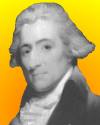
Born 4 Feb 1749; died 1 Mar 1829 at age 80.
English watchmaker, the first to simplify and economize in producing chronometers so as to make them available to the general public. In 1782, he devised the spring detent chronometer escapement. He did much to develop the chronometer, and was awarded £3,000 by Board of Longitude. His chronometers were described in a publication by the Commissioners of Longitude in 1806. Forty years after his death, the novelist Jules Verne described Phileas Fogg as, "He gave the idea of being perfectly well-balanced, as exactly regulated as a Leroy or Earnshaw chronometer."
English watchmaker, the first to simplify and economize in producing chronometers so as to make them available to the general public. In 1782, he devised the spring detent chronometer escapement. He did much to develop the chronometer, and was awarded £3,000 by Board of Longitude. His chronometers were described in a publication by the Commissioners of Longitude in 1806. Forty years after his death, the novelist Jules Verne described Phileas Fogg as, "He gave the idea of being perfectly well-balanced, as exactly regulated as a Leroy or Earnshaw chronometer."

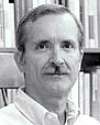
Died 4 Feb 1995 at age 60 (born 14 Oct 1934).
U.S. anthropologist who established cultural ecology as a scientific discipline. Netting earned international recognition in the field of cultural ecology for documenting the strategies used by residents of challenging habitats to survive. He covered this area extensively. Netting was involved with and studied human-environment interactions, focusing on subsistence and development issues. He was as loyal to geography as he was to anthropology. Netting filled the gap between geography and anthropology better than anyone else, especially from the anthropological side.
U.S. anthropologist who established cultural ecology as a scientific discipline. Netting earned international recognition in the field of cultural ecology for documenting the strategies used by residents of challenging habitats to survive. He covered this area extensively. Netting was involved with and studied human-environment interactions, focusing on subsistence and development issues. He was as loyal to geography as he was to anthropology. Netting filled the gap between geography and anthropology better than anyone else, especially from the anthropological side.
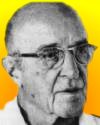
Died 4 Feb 1987 at age 85 (born 8 Jan 1902). quotes
American psychologist who founded humanistic psychology. The non-directive or client-centered, approach to psychotherapy that he originated stresses the importance of a personal relationship between therapist and client. He further pioneered encounter group technique. In Client-Centered Therapy (1951), he suggested that by neutrally reflecting clients' feelings, the therapist can create an empathetic environment, in which patients regulate the direction, speed of their own growth and duration of treatment. His methods greatly influenced the course of psychotherapy.
American psychologist who founded humanistic psychology. The non-directive or client-centered, approach to psychotherapy that he originated stresses the importance of a personal relationship between therapist and client. He further pioneered encounter group technique. In Client-Centered Therapy (1951), he suggested that by neutrally reflecting clients' feelings, the therapist can create an empathetic environment, in which patients regulate the direction, speed of their own growth and duration of treatment. His methods greatly influenced the course of psychotherapy.
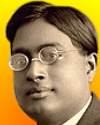
Died 4 Feb 1974 at age 80 (born 1 Jan 1894). quotes
Indian physicist and mathematician who collaborated with Albert Einstein to develop a theory of statistical quantum mechanics, now called Bose-Einstein statistics. In his early work in quantum theory (1924), Bose wrote about the Planck black-body radiation law using a quantum statistics of photons, Plank's Law and the Light Quantum Hypothesis. Bose sent his ideas to Einstein, who extended this technique to integral spin particles. Dirac coined the name boson for particles obeying these statistics. Among other things, Bose-Einstein statistics explain how an electric current can flow in superconductors forever, with no loss. Bose also worked on X-ray diffraction, electrical properties of the ionosphere and thermoluminescence.
Indian physicist and mathematician who collaborated with Albert Einstein to develop a theory of statistical quantum mechanics, now called Bose-Einstein statistics. In his early work in quantum theory (1924), Bose wrote about the Planck black-body radiation law using a quantum statistics of photons, Plank's Law and the Light Quantum Hypothesis. Bose sent his ideas to Einstein, who extended this technique to integral spin particles. Dirac coined the name boson for particles obeying these statistics. Among other things, Bose-Einstein statistics explain how an electric current can flow in superconductors forever, with no loss. Bose also worked on X-ray diffraction, electrical properties of the ionosphere and thermoluminescence.
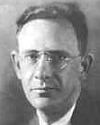
Died 4 Feb 1939 at age 55 (born 26 Jan 1884). quotes
American linguist and anthropologist, one of the foremost of his time, who is most widely known for his contributions to the study of North American Indian languages. A founder of ethnolinguistics, which considers the relationship of culture to language, he was also a principal developer of the American (descriptive) school of structural linquistics. Even more than the facts of the fields he studied, Sapir was interested in the more abstract connections between personality, verbal expression and socially determined behaviour.
American linguist and anthropologist, one of the foremost of his time, who is most widely known for his contributions to the study of North American Indian languages. A founder of ethnolinguistics, which considers the relationship of culture to language, he was also a principal developer of the American (descriptive) school of structural linquistics. Even more than the facts of the fields he studied, Sapir was interested in the more abstract connections between personality, verbal expression and socially determined behaviour.
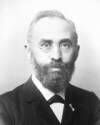
Died 4 Feb 1928 at age 74 (born 18 Jul 1853).
Dutch physicist who shared (with Pieter Zeeman) the Nobel Prize for Physics in 1902 for his theory of the influence of magnetism upon electromagnetic radiation phenomena. The theory was confirmed by findings of Zeeman and gave rise to Albert Einstein's special theory of relativity. From the start, Lorentz made it his task to extend James Clerk Maxwell's theory of electricity and of light. Already in his doctor's thesis, he treated the reflection and refraction phenomena of light from this new standpoint. His fundamental work in the fields of optics and electricity revolutionized conceptions of the nature of matter. In 1878, he published an essay relating the velocity of light in a medium, to its density and composition.
Dutch physicist who shared (with Pieter Zeeman) the Nobel Prize for Physics in 1902 for his theory of the influence of magnetism upon electromagnetic radiation phenomena. The theory was confirmed by findings of Zeeman and gave rise to Albert Einstein's special theory of relativity. From the start, Lorentz made it his task to extend James Clerk Maxwell's theory of electricity and of light. Already in his doctor's thesis, he treated the reflection and refraction phenomena of light from this new standpoint. His fundamental work in the fields of optics and electricity revolutionized conceptions of the nature of matter. In 1878, he published an essay relating the velocity of light in a medium, to its density and composition.
The Einstein Theory of Relativity: A Concise Statement, by Hendrik Antoon Lorentz. - book suggestion.
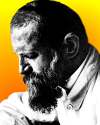
Died 4 Feb 1925 at age 69 (born 10 Sep 1855).
German archaeologist who discovered the Hanging Gardens of Babylon (ca. 580 BC) in modern day Iraq, thus confirming its historical existence and it was not just a legend. His excavations (26 Mar 1899-1917) at Babylon unearthed many of its features including the outer walls, inner walls, foundations of the ziggurat Marduk, Nebuchadnezzar's palaces, the wide processional roadway which passed through the heart of the city and the Ishtar Gate. He developed several modern archaeological techniques including a method to identify and excavate mud brick architecture (made necessary at Babylon because the Gardens were built using mainly unfired mudbricks.) In his life, he led many excavations in Asia Minor, Greece, and Italy.«
German archaeologist who discovered the Hanging Gardens of Babylon (ca. 580 BC) in modern day Iraq, thus confirming its historical existence and it was not just a legend. His excavations (26 Mar 1899-1917) at Babylon unearthed many of its features including the outer walls, inner walls, foundations of the ziggurat Marduk, Nebuchadnezzar's palaces, the wide processional roadway which passed through the heart of the city and the Ishtar Gate. He developed several modern archaeological techniques including a method to identify and excavate mud brick architecture (made necessary at Babylon because the Gardens were built using mainly unfired mudbricks.) In his life, he led many excavations in Asia Minor, Greece, and Italy.«
The Excavations at Babylon, by Robert Koldewey. - book suggestion.
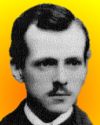
Died 4 Feb 1895 at age 46 (born 31 Oct 1848).
American ethnologist who is known principally for his linguistic and ethnographic studies of the Siouan Indians. As an ordained Episcopal deacon (1871), while a missionary to the Ponca tribe of the Dakota Territory, he used his knowledge of classical languages to learn the Ponca language. Subsequently, he joined the newly formed Bureau of American Ethnology (1879), as one of its first members, and was asssigned to Nebraska to study the Omaha tribe. From thereon, Dorsey was able to make extensive linguistic studies among several tribes there and others in Oregon. He published works of his own and edited other works that have remained substantial resources.
American ethnologist who is known principally for his linguistic and ethnographic studies of the Siouan Indians. As an ordained Episcopal deacon (1871), while a missionary to the Ponca tribe of the Dakota Territory, he used his knowledge of classical languages to learn the Ponca language. Subsequently, he joined the newly formed Bureau of American Ethnology (1879), as one of its first members, and was asssigned to Nebraska to study the Omaha tribe. From thereon, Dorsey was able to make extensive linguistic studies among several tribes there and others in Oregon. He published works of his own and edited other works that have remained substantial resources.
Dakota Grammar: With Texts and Ethnography, by Stephen R. Riggs, James Owen Dorsey, John D. Nichols. - book suggestion.
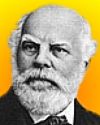
Died 4 Feb 1884 at age 75 (born 2 Feb 1809).
German-American botanist and physician, who varied his career in medical practice with botanical travels. After obtaining his medical degree in Europe, he travelled to the U.S. and eventually settled in St. Louis, Missouri. Among his 100 papers documenting western North American flora, his monograph on the cactus, Monography of North American Cuscutinae (1842), is particularly noteworthy. Engelmann collaborated to incorporate a major botanical collection in the public Shaw's Gardens established by businessman Henry Shaw (1800-89) in St. Louis, which is now the Missouri Botanical Garden. The Engelmann spruce of the Rocky Mountains is named for him.«
German-American botanist and physician, who varied his career in medical practice with botanical travels. After obtaining his medical degree in Europe, he travelled to the U.S. and eventually settled in St. Louis, Missouri. Among his 100 papers documenting western North American flora, his monograph on the cactus, Monography of North American Cuscutinae (1842), is particularly noteworthy. Engelmann collaborated to incorporate a major botanical collection in the public Shaw's Gardens established by businessman Henry Shaw (1800-89) in St. Louis, which is now the Missouri Botanical Garden. The Engelmann spruce of the Rocky Mountains is named for him.«
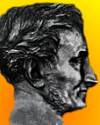
Died 4 Feb 1847 at age 70 (born 14 Nov 1776).
Rene-Joachim-Henri Dutrochet was a French physiologist who discovered and coined the name for (1863) osmosis, the process in which a solvent passes through a semipermeable membrane into a region of greater solute concentration, thus equalizing concentrations on either side of the membrane. He also studied development of eggs of birds. He was the first to recognize that the take-up of carbon dioxide by plant cells depends on their green pigment. The light sensitivity, and geotropism of plants also drew his interest. He was one of the most successful champions, in animal as well as vegetable physiology, of the modern ideas which displaced the old vitalistic school of thought after 1820.«
Rene-Joachim-Henri Dutrochet was a French physiologist who discovered and coined the name for (1863) osmosis, the process in which a solvent passes through a semipermeable membrane into a region of greater solute concentration, thus equalizing concentrations on either side of the membrane. He also studied development of eggs of birds. He was the first to recognize that the take-up of carbon dioxide by plant cells depends on their green pigment. The light sensitivity, and geotropism of plants also drew his interest. He was one of the most successful champions, in animal as well as vegetable physiology, of the modern ideas which displaced the old vitalistic school of thought after 1820.«
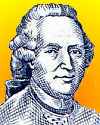
Died 4 Feb 1774 at age 73 (born 27 Jan 1701). quotes
French naturalist and mathematician who became particularly interested in geodesy (earth measurement). He was put in charge by the King of France of an expedition to Equador to measure a meridional arc at the equator (1735-43). It was wished to determine whether the Earth was either flattened or elongated at its poles. He then accomplished the first scientific exploration of the Amazon River (1743) on a raft, studying the region, and brought the drug curare to Europe. He also worked on establishment of a universal unit of length, and is credited with developing the idea of vaccination against smallpox, later perfected by Edward Jenner. However, he was almost constantly ill and died in 1773, deaf and completely paralyzed.Date of birth: DSB gives 27 Jan 1701; Enc. Brit. gives 28 Jan 1701.
French naturalist and mathematician who became particularly interested in geodesy (earth measurement). He was put in charge by the King of France of an expedition to Equador to measure a meridional arc at the equator (1735-43). It was wished to determine whether the Earth was either flattened or elongated at its poles. He then accomplished the first scientific exploration of the Amazon River (1743) on a raft, studying the region, and brought the drug curare to Europe. He also worked on establishment of a universal unit of length, and is credited with developing the idea of vaccination against smallpox, later perfected by Edward Jenner. However, he was almost constantly ill and died in 1773, deaf and completely paralyzed.Date of birth: DSB gives 27 Jan 1701; Enc. Brit. gives 28 Jan 1701.
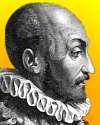
Died 4 Feb 1615 (born Oct 1535).
Italian natural philosopher, experimenter and mathematician, though he also sought the miraculous or magical. He studied optics, including refraction (De refractione, 1593). Porta did not invent the telescope, regardless of his published claim. He was the first to propose adding a convex lens to the camera obscura, and first to recognise the heating effect of light rays. He wrote on cryptography in De furtivis literarum (1563), and his other books included mechanics, squaring the circle, description of a steam engine in De spiritali (1606). He formed the society, Accademia dei Segreti, dedicated to discussing and studying nature, meeting at his home, until closed by the Inquisition (about 1578).«
Italian natural philosopher, experimenter and mathematician, though he also sought the miraculous or magical. He studied optics, including refraction (De refractione, 1593). Porta did not invent the telescope, regardless of his published claim. He was the first to propose adding a convex lens to the camera obscura, and first to recognise the heating effect of light rays. He wrote on cryptography in De furtivis literarum (1563), and his other books included mechanics, squaring the circle, description of a steam engine in De spiritali (1606). He formed the society, Accademia dei Segreti, dedicated to discussing and studying nature, meeting at his home, until closed by the Inquisition (about 1578).«

NASA 2010
In 2010, NASA released the most detailed views to date of the entire surface of the dwarf planet Pluto, as constructed from multiple NASA Hubble Space Telescope photographs taken in 2002-03.They imaged an icy world that shows seasonal changes in its mottled surface coloring and brightness.One view showed a mysterious bright spot, unusually rich in carbon monoxide frost.The raw Hubble images of Pluto are only a few pixels wide. Marc Buie of the Southwest Research Institute in Boulder, Colorado led a science team to develop special algorithms to sharpen that data. Their dithering technique combined multiple, slightly offset pictures through computer-image processing to synthesize a higher-resolution view. That work took four years and used 20 computers in continuous, simultaneous operation.«
The Pluto Files: The Rise and Fall of America's Favorite Planet, by Neil deGrasse. - book suggestion.
In 1951, the longest operation in medical history, taking four days, began in Chicago to remove a huge ovarian cyst from Mrs Gertrude Levandowski, age 58. Over a period of ten years, she had increased in weight to 616-lb and reached 9-ft in circumference. She had developed a huge ovarian cyst, causing a bad heart condition as it pressed against her heart. Dr. M.S. Roberts tapped the cyst, draining fluid slowly, 120 drops a minute, to slowly reduce its pressure on her heart. Some 200-lb of fluid were removed in four days. Then the remaining 100-lb cyst, the size of bushel-basket, was removed. Her weight dropped to only 308-lb after the operation.«

In 1936, the first radioactive substance to be produced in the U.S. synthetically was radium E, by bombarding the element bismuth with neutrons. This was achieved by Dr. John Jacob Livingood at the University of California at Berkeley.
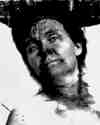
pellegra
In 1915, experiments began to find the cause of the disease, pellagra. In 1915 more than 10,000 people died of pellagra in the United States alone. The work is conducted by Dr. Joseph Goldberger upon a dozen vounteers from the inmates of a Mississippi state prison at Jackson. By adjusting the food in their meals, it is eventually found that pellagra is caused by poor diet. Improving diet remedies the potentially fatal disease. The experiment is a medical classic. Goldberger's studies alerted people to the importance of essential nutrients found in diets and it began the "biological age" in nutrition research during which the connection was made between disease and lack of essential nutrients in the diet which we call vitamins.
In 1913, a patent for a "demountable tire-carrying rim", No. 1,052,270, was issued to Louis Henry Perlman of New York City. This was the first automobile tire rim that was designed to be removed and remounted..
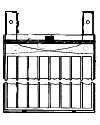
In 1902, Thomas A. Edison was issued a U.S. patent for a "Reversible Galvanic Battery" (No. 692,507), a design for a permanent battery with a large capacity per unit of weight. Finely divided cadmium is used as the oxidizable element. An oxide of nickel or cobalt is used as the depolarizer, mixed with a flake-like conducting substance such as graphite. According the patent, "the oxid of nickel or cobalt is raised to a superperoxid condition when charged. In discharging the nickel or cobalt oxid will be reduced to a lower state of oxidation, while the metallic cadmium will be oxidized." The active materials are packed under pressure in perforations of a conducting plate. The nickel oxide is preferred as less costly and less soluble in the alkaline electrolyte.
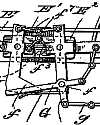
In 1896, black American inventor, Willie H. Johnson, of Navasota, Texas, was issued a U.S. patent for "A Mechanism for Overcoming Dead Centers" which occur in machines when a shaft is driven by a crank (No. 554,223). The essential part of his invention consisted of a two-part or compound crank-rod of such construction that the members automatically locked together at the proper point in the stroke, so as to act as a single rod, and at other intervals of its travel would automatically unlocked, so that each member would act independently of the other. Either could act to carry the stroke past the top dead center of the other. Johnson secured a second patent in Oct 1898 for an improvement to his design (No. 612,345).
The Inventive Spirit of African Americans: Patented Ingenuity, by Patricia Carter Sluby. - book suggestion.

In 1895, the first rolling lift bridge opened over the Chicago River at Van Buren Street, Chicago. This type was popular around 1900, designed and patented by William Scherzer of Chicago. Steel trusses or girders across the navigable channel are supported by, and rigidly connected to, large steel rollers as curved steel bases, like rocking chair rockers, weighted in the rear to counterbalance the span. To open, these bridges roll back on their rockers until upright, like a jackknife. One such bridge now remains in Chicago, the Cermak Road Bridge (1906), reopened in 1998 after two years of repair.Image: Scherzer Rolling Lift Bridge (1914) for the Canadian Northern Railway crosses the Rideau Canal, Canada, now a National Historic Site.
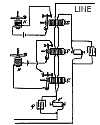
In 1890, Thomas A. Edison was issued a U.S. patent for a "Quadruplex Telegraph" (No. 420,594). This invention was designed to transmit and receive four independent messages over a single wire, without interference with each other, two in one direction and two in the opposite direction. The separate transmitting keys will transmit a signal with a high or low current strength which are received with sounders that respond only to either the high or low strength signal.
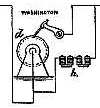
In 1873, Thomas A. Edison was issued a U.S. patent for an "Improvement to Circuits for Chemical Telegraphs" (No. 135,531). It concerned a method to reduce the problem of marks running together on the chemical paper from the electric action of one pulsation from the telegraph wire not clearing before the next followed. Edison utilized electromagnets in local or branch circuits to sharpen the pulses.
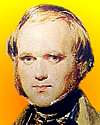
In 1868, Charles Darwin began writing his book The Descent of Man and Selection in Relation to Sex. He was now 69 years old, working in his home in Downe, England.
From So Simple a Beginning: Darwin's Four Great Books, by Charles Darwin, Edward O. Wilson. - book suggestion.
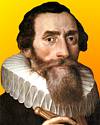
Kepler
In 1600, Johannes Kepler arrived in Prague to collaborate with Tycho Brahe. (Kepler had left Graz the previous month, on 1 Jan 1600.) Kepler provided mathematical calculation skills to make sense of the wealth of data that Brahe had accumulated as a enthusiastic and accomplished astronomical observer. Longomontanus had already arrived at Benárky Castle. Brahe gave Kepler the task of determining a way to reliably compute the orbit of Mars. Longomontanus was assigned to revise lunar theory until he departed on 4 Aug 1600. Meanwhile, what Kepler initially thought would take eight weeks, actually extended to eight years work. Brahe died 24 Oct 1601, having bequeathed his data, records and instruments to Kepler who ultimately derived his famous laws of planetary motion.«
Tycho & Kepler: the Unlikely Partnership..., by Kitty Ferguson. - book suggestion.




