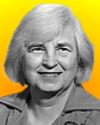
Born 2 Dec 1921.
(née Lugoski) American chemist who notable achievements include the development of her "Symbolic Addition Procedure", which has become the method of choice for structure determination from X-ray diffraction data on crystalline materials, even in computerized programs. It dramatically increased the speed and accuracy of chemical and biomedical analysis. Her work has had a significant impact on the fields of molecular biology, chemistry, physics, metallurgy, geology, genetics, and pharmacology, contributing to the discoveries of new drugs to combat many diseases. In 1969 she determined the crystal structure of toxins found in the venom of frogs in South America, which are used in the study of nerve transmission.
(née Lugoski) American chemist who notable achievements include the development of her "Symbolic Addition Procedure", which has become the method of choice for structure determination from X-ray diffraction data on crystalline materials, even in computerized programs. It dramatically increased the speed and accuracy of chemical and biomedical analysis. Her work has had a significant impact on the fields of molecular biology, chemistry, physics, metallurgy, geology, genetics, and pharmacology, contributing to the discoveries of new drugs to combat many diseases. In 1969 she determined the crystal structure of toxins found in the venom of frogs in South America, which are used in the study of nerve transmission.
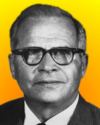
Born 2 Dec 1906; died 7 Dec 1977 at age 71.
American engineer (naturalized 1937). While working for Columbia Broadcasting System (CBS), he developed the first commercial color television system (1936), which used a rotating three-color disk. Although initially approved by the Federal Communications Commission, it was later superseded by an all-electronic color system that was compatible with black-and-white sets. Goldmark also developed the 33-1/3 LP phonograph that greatly increased the playing time of records, which revolutionized the recording industry. He also pioneered in video cassette recording, and developed a scanning system used by the Lunar Orbiter spacecraft in 1966 to transmit photographs to the earth from the moon.
American engineer (naturalized 1937). While working for Columbia Broadcasting System (CBS), he developed the first commercial color television system (1936), which used a rotating three-color disk. Although initially approved by the Federal Communications Commission, it was later superseded by an all-electronic color system that was compatible with black-and-white sets. Goldmark also developed the 33-1/3 LP phonograph that greatly increased the playing time of records, which revolutionized the recording industry. He also pioneered in video cassette recording, and developed a scanning system used by the Lunar Orbiter spacecraft in 1966 to transmit photographs to the earth from the moon.
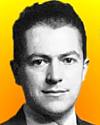
Born 2 Dec 1905; died 5 Jan 1995 at age 89.
Semi Joseph Begun was a German-American inventor who built the first tape recorder for broadcasting (1934), which was later used in the 1936 Olympics. After WW II, he continued to work on magnetic recording media based on coating paper and plastic tape with ferromagnetic powder suspensions. Begun developed the first consumer tape recorder in the U.S. under the trade name Sound Mirror. He also negotiated the first sourcing agreement for magnetic tape with 3M - which became a major product line. He also invented the Mail-A-Voice, which magnetically recorded on one side of a paper disk for letter correspondence.
Semi Joseph Begun was a German-American inventor who built the first tape recorder for broadcasting (1934), which was later used in the 1936 Olympics. After WW II, he continued to work on magnetic recording media based on coating paper and plastic tape with ferromagnetic powder suspensions. Begun developed the first consumer tape recorder in the U.S. under the trade name Sound Mirror. He also negotiated the first sourcing agreement for magnetic tape with 3M - which became a major product line. He also invented the Mail-A-Voice, which magnetically recorded on one side of a paper disk for letter correspondence.
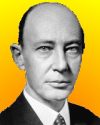
Born 2 Dec 1885; died 25 Feb 1950 at age 64. quotes
American physician who received (with George Whipple and William Murphy) the Nobel Prize for Physiology or Medicine in 1934 for the introduction of a raw-liver diet to regenerate blood hemoglobin in the treatment of pernicious anemia, which was previously an invariably fatal disease. Later, he helped develop liver extract for oral use (now replaced by vitamin B12 injections). Earlier, during WW I, at the suggestion of Alice Hamilton, pioneer in industrial medicine at Harvard, Minot had investigated the anemia occurring among New Jersey ammunition workers. From studies of their blood, he found that the trinitrotoluene (TNT) used to fill shells acted as a poison, causing destruction of red cells, often producing anemia.
American physician who received (with George Whipple and William Murphy) the Nobel Prize for Physiology or Medicine in 1934 for the introduction of a raw-liver diet to regenerate blood hemoglobin in the treatment of pernicious anemia, which was previously an invariably fatal disease. Later, he helped develop liver extract for oral use (now replaced by vitamin B12 injections). Earlier, during WW I, at the suggestion of Alice Hamilton, pioneer in industrial medicine at Harvard, Minot had investigated the anemia occurring among New Jersey ammunition workers. From studies of their blood, he found that the trinitrotoluene (TNT) used to fill shells acted as a poison, causing destruction of red cells, often producing anemia.
The Inquisitive Physician: The Life and Times of George Richards Minot, by Francis M. Rackemann. - book suggestion.
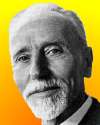
Born 2 Dec 1881; died 20 Feb 1956 at age 74.
Heinrich Georg Barkhausen was a German physicist who discovered the Barkhausen effect (1919), a principle concerning changes in the magnetic properties of metal. His work in acoustics and magnetism led to the discovery that magnetization affects whole domains of a ferromagnetic material, rather than individual atoms alone. He discovered that a slow, smooth increase of a magnetic field applied to a piece of ferromagnetic material, such as iron, causes it to become magnetized, not continuously but in minute steps. With Karl Kurz, he developed the Barkhausen- Kurz oscillator (1920) for ultrahigh frequencies (forerunner of the microwave tube), leading to understanding of the principle of velocity modulation. He is also known for experiments on shortwave radio transmissions.
Heinrich Georg Barkhausen was a German physicist who discovered the Barkhausen effect (1919), a principle concerning changes in the magnetic properties of metal. His work in acoustics and magnetism led to the discovery that magnetization affects whole domains of a ferromagnetic material, rather than individual atoms alone. He discovered that a slow, smooth increase of a magnetic field applied to a piece of ferromagnetic material, such as iron, causes it to become magnetized, not continuously but in minute steps. With Karl Kurz, he developed the Barkhausen- Kurz oscillator (1920) for ultrahigh frequencies (forerunner of the microwave tube), leading to understanding of the principle of velocity modulation. He is also known for experiments on shortwave radio transmissions.
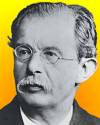
Born 2 Dec 1833; died 26 Aug 1910 at age 76.
German pathologist, known by descriptions of two disorders, each called Recklinghausen's disease: multiple neurofibromatosis (1882), an inheritable disease characterized by café au lait spots combined with multiple peripheral nerve tumours and a variety of others dysplastic abnormalities of the skin, nervous system, bones, endocrine organs and blood vessels; and osteitis fibrosa cystica (1891), a now mostly historical term for a generalized rarefying bone disorder with skeletal deformation, seen in advanced hyperparathyroidism. He was a traditional histopathologist of his time, resistant to changes such as the use of the microtome or the results of the new science of bacteriology. He taught and remained active as a researcher until shortly before his death.
German pathologist, known by descriptions of two disorders, each called Recklinghausen's disease: multiple neurofibromatosis (1882), an inheritable disease characterized by café au lait spots combined with multiple peripheral nerve tumours and a variety of others dysplastic abnormalities of the skin, nervous system, bones, endocrine organs and blood vessels; and osteitis fibrosa cystica (1891), a now mostly historical term for a generalized rarefying bone disorder with skeletal deformation, seen in advanced hyperparathyroidism. He was a traditional histopathologist of his time, resistant to changes such as the use of the microtome or the results of the new science of bacteriology. He taught and remained active as a researcher until shortly before his death.
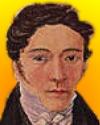
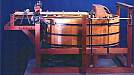
French inventor of the continuous paper-making machine, while working at Essonnes, France, papermill of the Didot family of printers and publishers. He made his first model for the process in 1797, a prototype by 1798, and secured a patent on 18 Jan 1799. Paper was formed and carried on a moving belt of wire gauze. Didot was at first sceptical, then encouraged Robert to improve the as yet imperfect invention. After Robert became dissatisfied with the financial arrangements for his efforts, he left and tried to set up his own paper mill. When this venture failed for lack of capital, he sold the patent rights to Didot. Eventually his idea was more successfully developed in England by the Fourdrinier brothers assisted by mechanic Bryan Donkin.[Image right: model of Robert's machine showing vat containing pulp, and delivery belt at top left.]
The Paper-making Machine: Its Invention, Evolution, and Development, by R. H. Clapperton. - book suggestion.
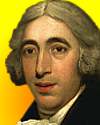
Born 2 Dec 1759; died 17 Mar 1828 at age 68.
English botanist who, in 1788, founded the Linnean Society (as it was spelled in its Charter), and was its president until his death. He studied at Edinburgh in medicine and was taught the Linnaean system of botany by Dr John Hope, founder of the Royal Botanic Garden there. Although qualified as a physician, Smith instead followed his passion for natural history. In 1874, he purchased Linnaeus’ vast herbarium, other collections and library (with money lent by his father), which Smith continued to extend, gathering further specimens. There were 36 volumes in the set of English Botany that he published in 267 monthly parts over 23 years (1790-1814), along with various other botanical works.«
English botanist who, in 1788, founded the Linnean Society (as it was spelled in its Charter), and was its president until his death. He studied at Edinburgh in medicine and was taught the Linnaean system of botany by Dr John Hope, founder of the Royal Botanic Garden there. Although qualified as a physician, Smith instead followed his passion for natural history. In 1874, he purchased Linnaeus’ vast herbarium, other collections and library (with money lent by his father), which Smith continued to extend, gathering further specimens. There were 36 volumes in the set of English Botany that he published in 267 monthly parts over 23 years (1790-1814), along with various other botanical works.«
A Grammar of Botany, Illustrative of Artificial, as Well as Natural, Classification With an Explanation of Jussieu’s System, by Sir James Edward Smith. - book suggestion.

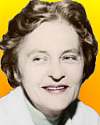
Died 2 Dec 1995 at age 94 (born 12 Dec 1900).
Hungarian-American physical chemist who pioneered in the application of solar energy to water distillation and home heating. She immigrated to the U.S. in 1925, worked as a biophysicist (1926-37), and naturalized in 1937. As a civilian adviser to the U.S. Office of Scientific Research and Development during WW II, she worked out a solar heated water distillation system to make sea water potable. In the late 1940's, she designed a system of chemical storage of solar energy for the first solar-heated house, a project of MIT constructed t in Dover, Massachusetts. She developed a solar-powered stove, and in the 1970s, experimented with an air-conditioning system that stored cool night air for use during the heat of the next day.
Hungarian-American physical chemist who pioneered in the application of solar energy to water distillation and home heating. She immigrated to the U.S. in 1925, worked as a biophysicist (1926-37), and naturalized in 1937. As a civilian adviser to the U.S. Office of Scientific Research and Development during WW II, she worked out a solar heated water distillation system to make sea water potable. In the late 1940's, she designed a system of chemical storage of solar energy for the first solar-heated house, a project of MIT constructed t in Dover, Massachusetts. She developed a solar-powered stove, and in the 1970s, experimented with an air-conditioning system that stored cool night air for use during the heat of the next day.
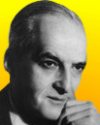
Died 2 Dec 1987 at age 81 (born 6 Sep 1906). quotes
Argentine biochemist who won the Nobel Prize for Chemistry in 1970 for "his discovery of sugar nucleotides and their role in the biosynthesis of carbohydrates" (investigations of the processes by which carbohydrates are converted into energy in the body). Leloir, working in simple circumstances, isolated uridine diphosphate glucose and showed that it was incorporated into glycogen in the presence of a liver enzyme. He also worked out the mechanism of synthesis of starch. Leloir's discoveries - that the sugar nucleotides are principal actors in interconversion of sugars and polysaccharide formation - led to additional research in carbohydrate metabolism and on the medical implications of the discoveries.
Argentine biochemist who won the Nobel Prize for Chemistry in 1970 for "his discovery of sugar nucleotides and their role in the biosynthesis of carbohydrates" (investigations of the processes by which carbohydrates are converted into energy in the body). Leloir, working in simple circumstances, isolated uridine diphosphate glucose and showed that it was incorporated into glycogen in the presence of a liver enzyme. He also worked out the mechanism of synthesis of starch. Leloir's discoveries - that the sugar nucleotides are principal actors in interconversion of sugars and polysaccharide formation - led to additional research in carbohydrate metabolism and on the medical implications of the discoveries.
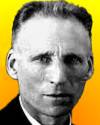
Died 2 Dec 1966 at age 85 (born 27 Feb 1881).
Luitzen Egbertus Jan Brouwer was a Dutch mathematician who founded mathematical Intuitionism (a doctrine that views the nature of mathematics as mental constructions governed by self-evident laws). He founded modern topology by establishing, for example, the topological invariance of dimension and the fixpoint theorem. (Topology is the study of the most basic properties of geometric surfaces and configurations.) The Brouwer fixed point theorem is named in his honor. He proved the simplicial approximation theorem in the foundations of algebraic topology, which justifies the reduction to combinatorial terms, after sufficient subdivision of simplicial complexes, the treatment of general continuous mappings.
Luitzen Egbertus Jan Brouwer was a Dutch mathematician who founded mathematical Intuitionism (a doctrine that views the nature of mathematics as mental constructions governed by self-evident laws). He founded modern topology by establishing, for example, the topological invariance of dimension and the fixpoint theorem. (Topology is the study of the most basic properties of geometric surfaces and configurations.) The Brouwer fixed point theorem is named in his honor. He proved the simplicial approximation theorem in the foundations of algebraic topology, which justifies the reduction to combinatorial terms, after sufficient subdivision of simplicial complexes, the treatment of general continuous mappings.
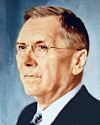
1976
Died 2 Dec 1965 at age 67 (born 2 Jul 1898). quotes
Hugh Latimer Dryden was an American physicist and deputy administrator of the National Aeronautics and Space Administration (NASA, 1958) for 7 years. He made pioneering studies in the aerodynamics of high speed and some of the earliest studies of air flow around wing surfaces at the speed of sound. During WW II he headed the Washington Project of the National Defense Research Committee, which developed the Bat radar-homing missile, the first successful U.S. guided missile, which was used by the navy against the Japanese during WW II. In 1962, he led negotiations for joint U.S.-Soviet space projects. He was instrumental in achieving the exchange of weather-satellite data and operation of cooperative communications satellite tests.
Hugh Latimer Dryden was an American physicist and deputy administrator of the National Aeronautics and Space Administration (NASA, 1958) for 7 years. He made pioneering studies in the aerodynamics of high speed and some of the earliest studies of air flow around wing surfaces at the speed of sound. During WW II he headed the Washington Project of the National Defense Research Committee, which developed the Bat radar-homing missile, the first successful U.S. guided missile, which was used by the navy against the Japanese during WW II. In 1962, he led negotiations for joint U.S.-Soviet space projects. He was instrumental in achieving the exchange of weather-satellite data and operation of cooperative communications satellite tests.
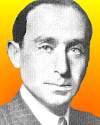
Died 2 Dec 1957 at age 57 (born 6 Jun 1900).
Manfred Joshua Sakel was a Polish neurophysiologist and psychiatrist who introduced insulin-shock therapy for schizophrenics and other mental patients in 1927, while a young doctor in Vienna. Insulin-induced coma and convulsions, due to the low level of glucose attained in the blood (hypoglicemic crisis) improved the mental state of drug addicts and psychotics, sometimes dramatically. His findings indicated that up to 88% of his patients improved with insulin shock therapy. His method became widely applied for many years in mental institutions worldwide. He immigrated to the U.S. ahead of WW II. in 1936. "Sakel's Therapy" is still used in Europe, but in the U.S. it has been superceded by electroconvulsive therapy and other means of treatment.
Manfred Joshua Sakel was a Polish neurophysiologist and psychiatrist who introduced insulin-shock therapy for schizophrenics and other mental patients in 1927, while a young doctor in Vienna. Insulin-induced coma and convulsions, due to the low level of glucose attained in the blood (hypoglicemic crisis) improved the mental state of drug addicts and psychotics, sometimes dramatically. His findings indicated that up to 88% of his patients improved with insulin shock therapy. His method became widely applied for many years in mental institutions worldwide. He immigrated to the U.S. ahead of WW II. in 1936. "Sakel's Therapy" is still used in Europe, but in the U.S. it has been superceded by electroconvulsive therapy and other means of treatment.
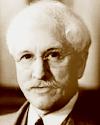
Died 2 Dec 1935 at age 70 (born 27 Aug 1865).
American Egyptologist, archaeologist and historian who promoted research on ancient Egypt and the ancient civilizations of western Asia. He was the first scholar in America to hold a professorship in Egyptology when he was appointed at at the University of Chicago in 1905. From 1919 to 1920 he headed the University's first archaeological survey of Egypt and western Asia. He also led several other later expeditions. The institute, under his leadership, became one of America's leading centers of archaeological study and Middle Eastern scholarship. Breasted wrote numerous books that include A History of Egypt (1905) and Ancient Times: A History of the Early World (1916, revised in 1944).
American Egyptologist, archaeologist and historian who promoted research on ancient Egypt and the ancient civilizations of western Asia. He was the first scholar in America to hold a professorship in Egyptology when he was appointed at at the University of Chicago in 1905. From 1919 to 1920 he headed the University's first archaeological survey of Egypt and western Asia. He also led several other later expeditions. The institute, under his leadership, became one of America's leading centers of archaeological study and Middle Eastern scholarship. Breasted wrote numerous books that include A History of Egypt (1905) and Ancient Times: A History of the Early World (1916, revised in 1944).
A Brief History of Ancient Times, by James Henry Breasted. - book suggestion.
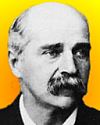
Died 2 Dec 1920 at age 77 (born 24 Jul 1843).
English astronomer and chemist who investigated colour photography and colour vision. He pioneered a method to measure the relative proportions of the primaries in a sample colour. Having developed a suitable photographic emulsion, he was the first to take infra-red photographs, and study the solar infra-red spectrum. In 1877, he was first to suggest a relationship between a star’s rapid rotation and broadened lines in its spectrum. He introduced hydroquinone (1880) as an effective photograph developing chemical. He co-authored a paper (1885) on infra-red spectra of organic compounds, studied how sunlight is altered in passing through the atmosphere and invented the abney level.«[DSB gives date of death 2 Dec 1920. EB gives 3 Dec 1920.]
English astronomer and chemist who investigated colour photography and colour vision. He pioneered a method to measure the relative proportions of the primaries in a sample colour. Having developed a suitable photographic emulsion, he was the first to take infra-red photographs, and study the solar infra-red spectrum. In 1877, he was first to suggest a relationship between a star’s rapid rotation and broadened lines in its spectrum. He introduced hydroquinone (1880) as an effective photograph developing chemical. He co-authored a paper (1885) on infra-red spectra of organic compounds, studied how sunlight is altered in passing through the atmosphere and invented the abney level.«[DSB gives date of death 2 Dec 1920. EB gives 3 Dec 1920.]
Photography with Emulsions: A Treatise on the Theory and Practical Working of the Collodion and Gelatine Emulsion Processes, by William de Wiveleslie Abney. - book suggestion.
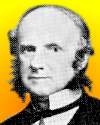
Died 2 Dec 1907 (born 1829). quotes
Charles Robert Drysdale was a British physician and public health scientist who spent much of his career with the Metropolitan Free Hospital, London. He wrote on issues of public health and published books on syphilis (1872)and Tobacco and the Diseases it Produces (1875). He also wrote a book on the evils of prostitution, and his investigations resulted in becoming outspoken on the principles of Thomas Malthus on over-population. Drysdale became the first President of the Malthusian League, established in 1877. The league began by disseminating information on the economic aspects of Thomas Malthus's writings, linking over-population and poverty. Drysdale also was active in educating the public on the dangers of tobacco whether smoked or chewed, or merely breathed in smoke-filled rooms. He wrote on the problem, in a letter published in The Times on 25 Sep 1878.« more
Charles Robert Drysdale was a British physician and public health scientist who spent much of his career with the Metropolitan Free Hospital, London. He wrote on issues of public health and published books on syphilis (1872)and Tobacco and the Diseases it Produces (1875). He also wrote a book on the evils of prostitution, and his investigations resulted in becoming outspoken on the principles of Thomas Malthus on over-population. Drysdale became the first President of the Malthusian League, established in 1877. The league began by disseminating information on the economic aspects of Thomas Malthus's writings, linking over-population and poverty. Drysdale also was active in educating the public on the dangers of tobacco whether smoked or chewed, or merely breathed in smoke-filled rooms. He wrote on the problem, in a letter published in The Times on 25 Sep 1878.« more
Tobacco: A Cultural History of How an Exotic Plant Seduced Civilization, by Iain Gately. - book suggestion.
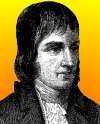
Died 2 Dec 1804 at age 37 (born 29 May 1767).
French engineer and chemist, inventor of illuminating gas. He was born in the charcoal-burning town of Bruchay, France. In 1797 he began work that led to his invention of the first gas lighting. Heating sawdust in a glass tube over a flame produced a flammable gas. It smelled badly, and was smoky. He used the gas distilled from wood in his Thermolampe ("heat lamp") which he patented and exhibited in 1799. For several months he exhibited in 1801 a large version of the lamp in a Paris hotel. On the day of the ceremony for Napoleon's coronation in 1804, Lebon was robbed and fatally stabbed. William Murdoch, working independently in Scotland at the same time, produced, purified and stored gas; and more successfully introduced gas lighting.
French engineer and chemist, inventor of illuminating gas. He was born in the charcoal-burning town of Bruchay, France. In 1797 he began work that led to his invention of the first gas lighting. Heating sawdust in a glass tube over a flame produced a flammable gas. It smelled badly, and was smoky. He used the gas distilled from wood in his Thermolampe ("heat lamp") which he patented and exhibited in 1799. For several months he exhibited in 1801 a large version of the lamp in a Paris hotel. On the day of the ceremony for Napoleon's coronation in 1804, Lebon was robbed and fatally stabbed. William Murdoch, working independently in Scotland at the same time, produced, purified and stored gas; and more successfully introduced gas lighting.
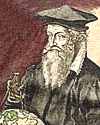
Died 2 Dec 1594 at age 82 (born 5 Mar 1512).
Flemish cartographer whose most important innovation was a map, embodying what was later known as the Mercator projection, on which parallels and meridians are rendered as straight lines spaced so as to produce at any point an accurate ratio of latitude to longitude. He also introduced the term atlas for a collection of maps.
Flemish cartographer whose most important innovation was a map, embodying what was later known as the Mercator projection, on which parallels and meridians are rendered as straight lines spaced so as to produce at any point an accurate ratio of latitude to longitude. He also introduced the term atlas for a collection of maps.

In 2013, China launched the Chang'e-3 lunar probe, carrying the Jade Rabbit rover. The spacecraft headed into orbit and then on to the Moon. This was hoped to become the country's first extraterrestrial landing craft, and a showcase for China's rising technological abilities. The lift-off of the Long March-3B carrier rocket from the Xichang Satellite Launch Center in China's southwestern Sichuan province was broacast live on the nation's state television. The robot rover's mission was to conduct geological surveys and investigate the Moon's natural resources. Previously, China's had put their Chang'e-1 into moon orbit (launched 24 Oct 2007) taking images and spectral analyses, and sent three astronauts on a 15 day mission orbitting the Earth (Jun 2013), during which their craft docked with an experimental space lab.«[The local launch time in China was 01:30 am, on 2 Dec 2013, corresponding to 17:30 GMT on 1 Dec in Britain.]
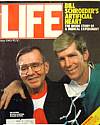
In 1982, Dr. William C. DeVries replaced the diseased heart of Barney Clark with the Jarvik-7, the first permanent artificial heart ever used for a human patient. This was the first of a series of five implants of the Jarvik total artificial heart during the next three years. The first patient, 61-year-old Barney Clark, survived for 112 days. Only four others received the Jarvik as a permanent replacement heart. The second, William Schroeder, lived 620 days, dying in Aug 1986 at age 54. Further patients received the artificial heart designed by Robert K. Jarvik only as a temporary device while awaiting heart transplants.[Image: May 1985 LIFE magazine cover showing Bill Schroeder with Dr/ William DeVries.]
After Barney Clark: Reflections on the Utah Artificial Heart Program, by Margery W. Shaw. - book suggestion.
In 1970, the U.S. Environmental Protection Agency was established during the administration of President Nixon. Working with strong bipartisan support from Congress, earlier in the year, on 2 Jan 1970, he had been able to sign the National Environmental Policy Act, and significant environmental action was set in motion. Once the EPA was created, the federal government could set the lead to constrain the excessive pollution caused by industries unwilling to clean up their wastes and emissions. All residents of America, whether in towns, suburbs or wilderness areas, would benefit in the decades that followed. Sadly, Republican Presidents after Nixon failed to fully embrace the same vision, and in various ways their support fell short of the greatest possible benefits from EPA's mission.«
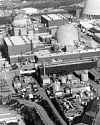
In 1957, the first full-scale atomic electric generating station in the U.S. began operation in Shippingport, Pennsylvania -15 years to the day after Fermi's experiment at the University of Chicago. The plant reached full power 21 days later, generating 60 megawatts of power for Pittsburgh. The Duquesne Light Co. of Pittsburgh built and operated the Shippingport plant on a site it owned on the Ohio River 25 miles away from Pittsburgh. The reactor plant was designed by the Westinghouse Electric Corporation in cooperation with the Division of Naval Reactors of the Atomic Energy Commission. President Dwight D. Eisenhower opened it on 26 May 1958, as part of his "Atoms for Peace" program. The Shippingport nuclear powerplant was retired in 1982.
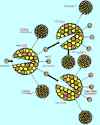
In 1942, the first self-sustained nuclear chain reaction was demonstrated in Chicago, Illinois. At the University of Chicago, Enrico Fermi and his team achieved the world's first artificial nuclear chain reaction, in a makeshift lab underneath the University's football stands at Stagg Field. Work on the experimental pile had begun on 16 Nov 1942. It was a prodigious effort. Physicists and staffers, working around the clock, built a lattice of 57 layers of uranium metal and uranium oxide embedded in graphite blocks. A wooden structure supported the graphite pile. The chain reaction was part of the Manhattan Project, a secret wartime project to develop nuclear weapons, which initiated the modern nuclear age. This was a discovery that changed the world.
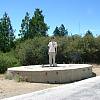
In 1934, the molten glass was poured in the Corning, N.Y. for the first 200-inch diameter telescope mirror. Pyrex glass at 2,700 degrees Fahrenheit was poured into a ceramic mold. The mold had been constructed over a period of several months. The temperature of the glass was lowered during 11 months, a degree or two a day. It was then allowed to cool to room temperature. The 20-ton disk was shipped 26 Mar 1936 for grinding and polishing at the California Institute of Technology, which spanned 11 years, completed on 3 Oct 1947. It was installed in a telescope at the Mount Palomar Observatory on Palomar Mountain, San Diego County, California, which was named the Hale telescope in honour of Dr George Hale who had conceived and promoted it.Image: With the same size and weight as the 200 inch mirror, this cement disk was used while the telescope was built to test the mount.
The Perfect Machine: Building the Palomar Telescope, by Ronald Florence. - book suggestion.
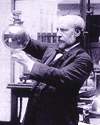
In 1895, James Dewar exhibited his new apparatus for the production of liquid air at the Royal Institution.
more
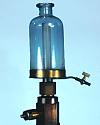
In 1877, Louis-Paul Cailletet (1832-1913) became the first to liquefy oxygen. Shortly after, he also was first to liquefy nitrogen, hydrogen, nitrogen dioxide, carbon monoxide, and acetylene. Cailletet realized that the failure of others to liquefy the permanent gases, even under enormous pressures, was explained by Thomas Andrews's concept of critical temperature. He succeeded in producing liquid oxygen by allowing the cold, compressed gas to expand, depending on the effect discovered by Joule and Thomson, that cooled the gas to below its critical temperature. In later experiments he liquefied nitrogen and air. Raoul Pictet, working independently, used a similar technique. He also invented the altimeter and the high-pressure manometer.Image: Cailletet's Liquefier.




