Born 20 Oct 1942. quotes
German developmental geneticist who shared the 1995 Nobel Prize for Physiology or Medicine (with Eric Wieschaud and Edward Lewis) “for their discoveries concerning the genetic control of early embryonic development.” The paper in Nature “Mutations Affecting Segment Number and Polarity in Drosophila” (1980), which she co-authored with Eric Wieschaus, revolutionised the field of developmental genetics. In a systematic search for mutant genes affecting the formation of segments in the eggs of a small fruit fly, they identified all of the genes of this type, elucidating the processes of development in the fruit fly embryo. They categorised the mutants as three different types of genes, which they believed controlled an increasingly complex organisation of the organism.
German developmental geneticist who shared the 1995 Nobel Prize for Physiology or Medicine (with Eric Wieschaud and Edward Lewis) “for their discoveries concerning the genetic control of early embryonic development.” The paper in Nature “Mutations Affecting Segment Number and Polarity in Drosophila” (1980), which she co-authored with Eric Wieschaus, revolutionised the field of developmental genetics. In a systematic search for mutant genes affecting the formation of segments in the eggs of a small fruit fly, they identified all of the genes of this type, elucidating the processes of development in the fruit fly embryo. They categorised the mutants as three different types of genes, which they believed controlled an increasingly complex organisation of the organism.
Coming to Life: How Genes Drive Development, by Christiane Nusslein-Volhard. - book suggestion.
Born 20 Oct 1891; died 24 Jul 1974 at age 82. quotes
English physicist who received the Nobel Prize for Physics (1935) for his discovery of the neutron. He studied at Cambridge, and in Berlin under Geiger, then worked at the Cavendish Laboratory with Rutherford, where he investigated the structure of the atom. He worked on the scattering of alpha particles and on nuclear disintegration. By bombarding beryllium with alpha particles, Chadwick discovered the neutron - a neutral particle in the atom's nucleus - for which he received the Nobel Prize for Physics in 1935. In 1932, Chadwick coined the name “neutron,” which he described in an article in the journal Nature. He led the UK's work on the atomic bomb in WW II, and was knighted in 1945.«
English physicist who received the Nobel Prize for Physics (1935) for his discovery of the neutron. He studied at Cambridge, and in Berlin under Geiger, then worked at the Cavendish Laboratory with Rutherford, where he investigated the structure of the atom. He worked on the scattering of alpha particles and on nuclear disintegration. By bombarding beryllium with alpha particles, Chadwick discovered the neutron - a neutral particle in the atom's nucleus - for which he received the Nobel Prize for Physics in 1935. In 1932, Chadwick coined the name “neutron,” which he described in an article in the journal Nature. He led the UK's work on the atomic bomb in WW II, and was knighted in 1945.«
The Neutron and the Bomb: A Biography of Sir James Chadwick, by Andrew P. Brown. - book suggestion.
Born 20 Oct 1886; died 30 Sep 1969 at age 82. quotes
Sir Frederic Charles Bartlett was an English psychologist who was Britain’s most outstanding cognitive psychologist between the World Wars. He wrote on practical (ergonomic) problems in applied psychology. In his pioneering cognitive approach to understanding human memory, Bartlett observed that in remembering stories or events, distortions tend to occur. In his most famous experiment, Bartlett had subjects read a folk tale, and tested their recall several times, analyzing changes. He concluded that people tend to remember what they regard as most important and recall what would have been expected rather than what actually occurred. He was knighted for work on such topics as fatigue and visual perception with the RAF during WWII.«
Sir Frederic Charles Bartlett was an English psychologist who was Britain’s most outstanding cognitive psychologist between the World Wars. He wrote on practical (ergonomic) problems in applied psychology. In his pioneering cognitive approach to understanding human memory, Bartlett observed that in remembering stories or events, distortions tend to occur. In his most famous experiment, Bartlett had subjects read a folk tale, and tested their recall several times, analyzing changes. He concluded that people tend to remember what they regard as most important and recall what would have been expected rather than what actually occurred. He was knighted for work on such topics as fatigue and visual perception with the RAF during WWII.«
Thinking, by Sir Frederic Bartlett. - book suggestion.
Born 20 Oct 1819; died 26 Oct 1905 at age 86.
English railroad engineer who contributed to the pioneering work of his uncle George Stephenson and his cousin Robert Stephenson. He began his career in 1837, assisting his uncle on the construction of a railway from Manchester to Leeds. He helped his cousin build the Victoria tubular bridge across the St. Lawrence River in Canada. Later, he functioned independently as a consultant and designer on railway projects, bridges and tunnels in England, New Zealand and Denmark. Upon Robert's death in 1859, George Robert became director of the Newcastle locomotive works.«
English railroad engineer who contributed to the pioneering work of his uncle George Stephenson and his cousin Robert Stephenson. He began his career in 1837, assisting his uncle on the construction of a railway from Manchester to Leeds. He helped his cousin build the Victoria tubular bridge across the St. Lawrence River in Canada. Later, he functioned independently as a consultant and designer on railway projects, bridges and tunnels in England, New Zealand and Denmark. Upon Robert's death in 1859, George Robert became director of the Newcastle locomotive works.«
George and Robert Stephenson: The Railway Revolution, by L.T.C. Rolt. . - book suggestion.
Born 20 Oct 1812; died 13 Mar 1886 at age 73.
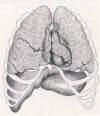
American physician who was an eminent doctor and pioneer of heart research in the United States during the nineteenth century. In 1847, he founded Buffalo Medical College and taught at several medical schools. Flint was an authority on pulmonary and respiratory diseases, and popularized the use of the binaural stethoscope. The Austin Flint murmur is a heart disorder he described in 1862 in which blood from the aorta is regurgitated into the heart before contraction of the ventricles. An authority on pulmonary and respiratory diseases, he popularized the use of the binaural stethoscope. The best known of his numerous textbooks is Treatise on the Principles and Practice of Medicine (1866).Image: Austin Flint's diagram of the relations of the heart to the lungs, liver, and stomach (1859).
American physician who was an eminent doctor and pioneer of heart research in the United States during the nineteenth century. In 1847, he founded Buffalo Medical College and taught at several medical schools. Flint was an authority on pulmonary and respiratory diseases, and popularized the use of the binaural stethoscope. The Austin Flint murmur is a heart disorder he described in 1862 in which blood from the aorta is regurgitated into the heart before contraction of the ventricles. An authority on pulmonary and respiratory diseases, he popularized the use of the binaural stethoscope. The best known of his numerous textbooks is Treatise on the Principles and Practice of Medicine (1866).Image: Austin Flint's diagram of the relations of the heart to the lungs, liver, and stomach (1859).
The Physiology Of Man,... The Existing State Of Physiological Science..., by Austin Flint. - book suggestion.
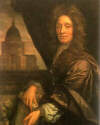
Born 20 Oct 1632; died 25 Feb 1723 at age 90. quotes
English architect, mathematician and astronomer who was the greatest among the country's architects of his time. While at Wadham College, Oxford (1649), he joined a group of brilliant scholars, who later founded the Royal Society (president 1680-82). Wren learned scientific skills as an assistant to an eminent anatomist. Through astronomy, he developed skills in working models, diagrams and charting that proved useful when he entered architecture. After London's Great Fire of 1666, Wren presented a scheme to rebuild the city, though only partially realized. He designed many buildings including St. Paul's Cathedral and 53 churches. He invented a “weather clock” similar to a modern barometer, new engraving methods, and helped develop a blood transfusion technique. His scientific work was highly regarded by Sir Isaac Newton as stated in the Principia.
English architect, mathematician and astronomer who was the greatest among the country's architects of his time. While at Wadham College, Oxford (1649), he joined a group of brilliant scholars, who later founded the Royal Society (president 1680-82). Wren learned scientific skills as an assistant to an eminent anatomist. Through astronomy, he developed skills in working models, diagrams and charting that proved useful when he entered architecture. After London's Great Fire of 1666, Wren presented a scheme to rebuild the city, though only partially realized. He designed many buildings including St. Paul's Cathedral and 53 churches. He invented a “weather clock” similar to a modern barometer, new engraving methods, and helped develop a blood transfusion technique. His scientific work was highly regarded by Sir Isaac Newton as stated in the Principia.
Sir Christopher Wren; Renaissance architect, philosopher, and scientist, by Heywood Gould. - book suggestion.
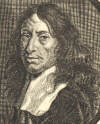
Born 20 Oct 1616; died 4 Dec 1680 at age 64.
Danish anatomist and mathematician who was first to describe fully the entire human lymphatic system (1652) and an early defender of Harvey's discovery of the circulation of blood. He joined the mathematical faculty (1647-49), then was anatomy professor (1649-61) at the University of Copenhagen. He published many works on anatomy, physiology and medicine, (1645-74) and a general work on pharmacology (1658). In 1654, Bartholin and his university's medical faculty published advice on how people could care for themselves during the plague. After an estate Bartholin bought (1663) was destroyed by fire in 1670, King Christian V paid him an annual salary as his personal physician, although his services were rarely needed.
Danish anatomist and mathematician who was first to describe fully the entire human lymphatic system (1652) and an early defender of Harvey's discovery of the circulation of blood. He joined the mathematical faculty (1647-49), then was anatomy professor (1649-61) at the University of Copenhagen. He published many works on anatomy, physiology and medicine, (1645-74) and a general work on pharmacology (1658). In 1654, Bartholin and his university's medical faculty published advice on how people could care for themselves during the plague. After an estate Bartholin bought (1663) was destroyed by fire in 1670, King Christian V paid him an annual salary as his personal physician, although his services were rarely needed.
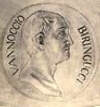
Born 20 Oct 1480; died c. 1539. quotes
Italian metallurgist and manufacturer of armaments. As head of the Papal foundry (for Pope Paul III) and a contemporary of Leonardo da Vinci, he wrote detailed observations of foundry practice. His De la pirotechnia (Concerning Pyrotechnics, 1540) was the first significant 16th-century reference book on metallurgy—the “pyrotechnical arts.” With lavish woodcut illustrations, published postumously, it was a practical guide for distilling liquids, refining metals and mixing gun powder. It dealt with gold, silver, iron, copper, tin, steel and brass; the preparation of ores for smelting, refining, alloying; casting, cutting and making moulds. He also described the preparation and use of rockets in warfare and festivals.«
Italian metallurgist and manufacturer of armaments. As head of the Papal foundry (for Pope Paul III) and a contemporary of Leonardo da Vinci, he wrote detailed observations of foundry practice. His De la pirotechnia (Concerning Pyrotechnics, 1540) was the first significant 16th-century reference book on metallurgy—the “pyrotechnical arts.” With lavish woodcut illustrations, published postumously, it was a practical guide for distilling liquids, refining metals and mixing gun powder. It dealt with gold, silver, iron, copper, tin, steel and brass; the preparation of ores for smelting, refining, alloying; casting, cutting and making moulds. He also described the preparation and use of rockets in warfare and festivals.«

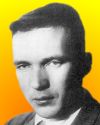
Died 20 Oct 1987 at age 84 (born 25 Apr 1903).
Russian mathematician whose basic postulates for probability theory that have continued to be an integral part of analysis. This work had diverse applications such as his study of the motion of planets (1954), or the turbulent air flow from a jet engine (1941). In topology, he investigated cohomology groups. He made a major contribution to answering the probability part of Hilbert's Sixth Problem, and completely resolved (1957) Hilbert's Thirteenth Problem. Kolmogorov was active in a project to provide special education for gifted children, not only by writing textbooks and in teaching them, but in expanding their interests to be not necessarily in mathematics, but with literature, music, and healthy activity such as on hikes and expeditions.«
Russian mathematician whose basic postulates for probability theory that have continued to be an integral part of analysis. This work had diverse applications such as his study of the motion of planets (1954), or the turbulent air flow from a jet engine (1941). In topology, he investigated cohomology groups. He made a major contribution to answering the probability part of Hilbert's Sixth Problem, and completely resolved (1957) Hilbert's Thirteenth Problem. Kolmogorov was active in a project to provide special education for gifted children, not only by writing textbooks and in teaching them, but in expanding their interests to be not necessarily in mathematics, but with literature, music, and healthy activity such as on hikes and expeditions.«
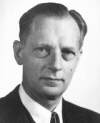
Died 20 Oct 1984 at age 87 (born 5 Dec 1896).
Carl Ferdinand Cori was an American biochemist who, teamed with his wife Gerty Cori, discovered a phosphate-containing form of the simple sugar glucose, and its universal importance to carbohydrate metabolism, led to an understanding of hormonal influence on the interconversion of sugars and starches in the animal organism. Their discoveries earned them (with Bernardo Houssay) the Nobel Prize for Medicine or Physiology in 1947.
Carl Ferdinand Cori was an American biochemist who, teamed with his wife Gerty Cori, discovered a phosphate-containing form of the simple sugar glucose, and its universal importance to carbohydrate metabolism, led to an understanding of hormonal influence on the interconversion of sugars and starches in the animal organism. Their discoveries earned them (with Bernardo Houssay) the Nobel Prize for Medicine or Physiology in 1947.
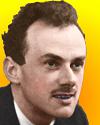
Died 20 Oct 1984 at age 82 (born 8 Aug 1902). quotes
Paul Adrien Maurice Dirac was an English theoretical physicist known for his work in quantum mechanics and for his theory of the spinning electron. In 1933 he shared the Nobel Prize for Physics with the Austrian physicist Erwin Schrödinger.
Paul Adrien Maurice Dirac was an English theoretical physicist known for his work in quantum mechanics and for his theory of the spinning electron. In 1933 he shared the Nobel Prize for Physics with the Austrian physicist Erwin Schrödinger.
The Strangest Man: The Hidden Life of Paul Dirac, Mystic of the Atom, by Graham Farmelo. - book suggestion.
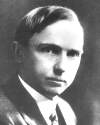
Died 20 Oct 1972 at age 86 (born 2 Nov 1885). quotes
American astronomer known as “The Modern Copernicus,” who discovered the Sun's position in the galaxy. From 1914 to 1921 he was at Mt. Wilson Observatory, where he calibrated Henrietta S. Leavitt's period vs. luminosity relation for Cepheid variable stars and used it to determine the distances of globular clusters. He boldly and correctly proclaimed that the globulars outline the Galaxy, and that the Galaxy is far larger than was generally believed and centered thousands of light years away in the direction of Sagittarius. In the early 1920s, Shapley entered a “Great Debate” with Heber D. Curtis. They truly argued over the “Scale of the Universe.”
American astronomer known as “The Modern Copernicus,” who discovered the Sun's position in the galaxy. From 1914 to 1921 he was at Mt. Wilson Observatory, where he calibrated Henrietta S. Leavitt's period vs. luminosity relation for Cepheid variable stars and used it to determine the distances of globular clusters. He boldly and correctly proclaimed that the globulars outline the Galaxy, and that the Galaxy is far larger than was generally believed and centered thousands of light years away in the direction of Sagittarius. In the early 1920s, Shapley entered a “Great Debate” with Heber D. Curtis. They truly argued over the “Scale of the Universe.”
Harlow Shapley: Biography of an Astronomer: The Man Who Measured the Universe, by Doug West. - book suggestion.
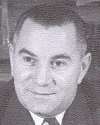
Died 20 Oct 1956 at age 62 (born 5 Apr 1894).
American aircraft designer and aircraft manufacturer, founder of Bell Aircraft Co., whose experimental X-1 rocket-propelled airplane in 1947 was the first to break the sound barrier in level flight. This firm also produced such significant aviation contributions as the nation's first jet propelled airplane, the world's first commercial helicopter, the world's fastest and highest flying airplane, the Bell X-1A, and the first jet vertical take-off and landing plane.
American aircraft designer and aircraft manufacturer, founder of Bell Aircraft Co., whose experimental X-1 rocket-propelled airplane in 1947 was the first to break the sound barrier in level flight. This firm also produced such significant aviation contributions as the nation's first jet propelled airplane, the world's first commercial helicopter, the world's fastest and highest flying airplane, the Bell X-1A, and the first jet vertical take-off and landing plane.
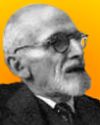
Died 20 Oct 1955 at age 74 (born 19 Oct 1881).
French geologist who investigated the stratigraphy of the late Pliocene and Quaternary deposits of the Mediterranean (about 5 million years ago to the present) and studied the structure of the Alps. He experimented with fold models to support his work. His interest in useful applications for his science was shown in his geological research concerning the effect on large alpine valleys used for hydroelectricity, especially the Génissiat Dam on the Rhone. His publications include Stratigraphic Geology (1936), which by the fourth edition was translated into English, Polish and Russian; and Géologie des barrages (Geology of Dams, 1955).«
French geologist who investigated the stratigraphy of the late Pliocene and Quaternary deposits of the Mediterranean (about 5 million years ago to the present) and studied the structure of the Alps. He experimented with fold models to support his work. His interest in useful applications for his science was shown in his geological research concerning the effect on large alpine valleys used for hydroelectricity, especially the Génissiat Dam on the Rhone. His publications include Stratigraphic Geology (1936), which by the fourth edition was translated into English, Polish and Russian; and Géologie des barrages (Geology of Dams, 1955).«
Stratigraphic Geology, by Maurice Gignoux. - book suggestion.
Died 20 Oct 1952 at age 81 (born 10 Nov 1870).
Russian-American archaeologist and one of the 20th century's most influential authorities on ancient Greek and Roman history, particularly their economic and social aspects. In the period roughly between the two world wars Rostovtzeff came to be widely recognized as one of the leading and most original ancient historians of his time, perhaps the most outstanding. It is difficult to attempt to sum up his work because of its range. He directed the excavation of a Hellenistic city in Syria (1928-37); also wrote on art and archaeology of southern Russia.
Russian-American archaeologist and one of the 20th century's most influential authorities on ancient Greek and Roman history, particularly their economic and social aspects. In the period roughly between the two world wars Rostovtzeff came to be widely recognized as one of the leading and most original ancient historians of his time, perhaps the most outstanding. It is difficult to attempt to sum up his work because of its range. He directed the excavation of a Hellenistic city in Syria (1928-37); also wrote on art and archaeology of southern Russia.
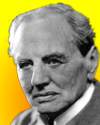
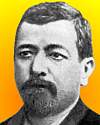
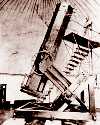
François-Félix Tisserand was a French astronomer whose 4-volume textbook Traité de mécanique céleste (1889-96; "Treatise on Celestial Mechanics") updated Pierre-Simon Laplace's work. At age 28, he was named Director at Toulouse Observatory (1873-78). He went to Japan to observe the 1874 transit of Venus. The 83-cm telescope he installed at the Toulouse Observatory in 1875 had a wooden base insufficiently stable for photographic work, but he was able to use it for observation of the satellites of Jupiter and of Saturn. From 1892 until his death he was director of the Paris Observatory, where he completed the major work, Catalogue photographique de la carte du ciel, and arranged for its publication.«[Image right: Tisserands's 83-cm telescope.]
Died 20 Oct 1888 at age 49 (born 31 Mar 1839).
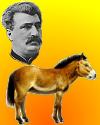
Russian explorer who discovered a wild camel and a primitive horse (named Przhevalsky's horse), during expeditions in the mountain regions between Tibet and Mongolia, collecting both plants and animals. In 1881, Przewalski made an official statement describing the horse: its appearance, characteristics and remote habitat. They lived in herds of 5 to 15 animals led by a stallion. He noted that they were alert and very shy, with acute hearing, very good eyesight and a highly developed sense of smell. They seemed to prefer saline soils and could survive for a long time without water. On his fifth expedition, while investigating Lake Issyk Kul's shores, he died after drinking typhoid-infected water. By 1969, the species was thought extinct in the wild. By breeding the few surviving in zoos, some have been reintroduced to the wild.«
Russian explorer who discovered a wild camel and a primitive horse (named Przhevalsky's horse), during expeditions in the mountain regions between Tibet and Mongolia, collecting both plants and animals. In 1881, Przewalski made an official statement describing the horse: its appearance, characteristics and remote habitat. They lived in herds of 5 to 15 animals led by a stallion. He noted that they were alert and very shy, with acute hearing, very good eyesight and a highly developed sense of smell. They seemed to prefer saline soils and could survive for a long time without water. On his fifth expedition, while investigating Lake Issyk Kul's shores, he died after drinking typhoid-infected water. By 1969, the species was thought extinct in the wild. By breeding the few surviving in zoos, some have been reintroduced to the wild.«
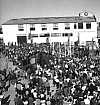
In 1984, the Monterey Bay Aquarium opened, the largest artificial environment for marine life, built on Cannery Row on the site of the old Hovden sardine cannery, with a $40 million grant from David Packard of Hewlett-Packard, and housing 6500 marine animals from at least 525 species displayed on a grand scale. The idea for an aquarium devoted to showcasing Monterey Bay habitats came in 1977 from a group of four marine biologists at Stanford's Hopkins Marine Station. Currently, the aquarium has an active research program, with groups working on sea otter conservation and tuna conservation biology and a sister institution, the Monterey Bay Aquarium Research Institute, which conducts deep-sea research in the vast Monterey submarine canyon.
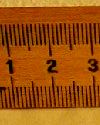
In 1983, the fifth legal definition of the metre was the the distance that light travels in a vacuum in 1/299,792,458 of a second. length of the meter was redefined at the 17th meeting of the international body Conférence Générale des Poids et Mesures (GCPM) by a method to give greater accuracy. It superceded the fourth legal definition adopted on 14 Oct 1960 based on a spectral line of kryton. Earlier definitions included the distance between marks on the international prototype metre bar made of platinum-iridium alloy (28 Sep 1889). Before that, the metre was decided that it should be one ten-millionth of the distance from the North Pole to the equator (1 Aug 1793), and the earliest concept was the length of a pendulum with a half-period of one second (8 May 1790).«
The Measure of All Things: The Seven-Year Odyssey and Hidden Error That Transformed the World, by Ken Alder. - book suggestion.
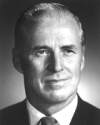
In 1970, American agricultural pioneer Norman Borlaug received the Nobel Peace Prize for his contribution to the “green revolution” that increased grain production throughout the Third World by perfecting and introducing new strains of wheat and rice crops. Subsequently, he conceived the World Food Prize, awarded each fall for improving the world's food supply or access to it. In this way he made possible the wide recognition of others in the field.
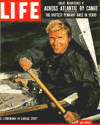
07/22/57
In 1956, Dr. Hannes Lindemann began his voyage across the Atlantic Ocean in a small boat (17 feet). Lindemann, a German physician on a U.S. Air Force base in Morocco. He wrote a book Alone at Sea, about his two journeys across the Atlantic Ocean. Battling thirst, hunger, mental disorientation, hallucinations, lack of sleep, and shark encounters, Lindemann succesfully sailed alone across the Atlantic in 1956 in 76 days in a Klepper foldboat double seat Aerius to which he added an outrigger and mizzensail. Leaving Las Palmas in the Canary Islands, he reached St. Thomas in the US Virgin Islands just after Christmas. His prior crossing was in a 23-foot African dugout canoe in 1955. Alfred Johnson made the first solo Atlantic crossing in 1876.«
Alone at sea, by Hannes Lindemann. - book suggestion.
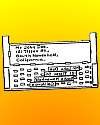
In 1925, the compotype was patented by its inventor, Clifton Chisholm of Cleveland, Ohio, as an "Embossing Machine" (U.S. No. 1,557,754). The keyboard-controlled machine embossed one line of characters on an aluminum strip with flanged edges. These could be arranged in a holder for several strips in parallel from which several lines of printed material could be produced. Blanks came from a ribbon of metal on a roll, automatically flanged to give a mounting channel shape, and fed between embossing dies. Each character was also printed on a record card, visible during operation. The machine was designed to provide an efficient mechanism for the rapid production of the embossed strips. The patent was assigned to the Multigraph Sales Co. of the same city.
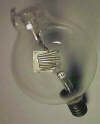
In 1906, Dr. Lee DeForest (26 Aug 1873 - 30 Jun 1961), one of the “fathers of radio,'' announced his three-element electrical vacuum tube (now known as a triode) to a meeting of the American Institute of Electrical Engineers He had discovered that when a mesh, or grid, of wire was placed between the filament and collector “plate” in a diode tube (first made by J. Ambrose Fleming, 1904), a large voltage-amplifying effect could be produced. DeForest patented this vacuum tube on 15 Jan 1907. The ability of this tube to amplifiy weak signals was an invention as great as radio itself, because it made long-distance communication possible.[Image: early DeForest Audion]
In 1832, Edward Turner wrote a Preface to the 4th edition of his textbook, Elements of Chemistry (published 1833), in which he explained his use of symbols to represent reactants and products in a chemical reaction of Cyanogen, because he found they solved the difficulty of giving a “clear and concise description of. the phenomena in ordinary language.” His was the first use of chemical symbols in a British chemistry textbook. Turner used some algebra-type notation as suggested by William Whewell with parts of Jöns Jacob Berzelius's system, in which iron was represented by Fe (from Ferrum) and oxygen by O. Thus Fe + O represented one oxide of iron, and 2Fe + 3O represented another. Dots over the symbol indicated degree of oxidation, and an underline stood for two equivalents of a substance.«
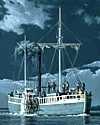
In 1811, the New Orleans, the first steamboat to sail down the Mississippi, set off from Pittsburgh, Pa. The 138-ft ship had a 30-ft beam and cost about $40,000, including the engines to power the paddlewheel, assisted at times by sails. It was a joint venture with Robert Fulton and Robert Livingston. Owner Nicholas J. Roosevelt and his wife were the only passengers with a crew of sailors, domestics and a dog. Travelling at about 10 mph, it reached Louisville, Ky. after four days. It could not cross the shallow Ohio River Falls there, so it spent 3 weeks making several trips between Louisville and upriver to Cincinnati. In November, with deeper water, it crossed the rapids. In mid Dec, it saw effects of the distant New Madrid earthquake. It arrived at New Orleans in the evening of 10 Jan 1812.«




