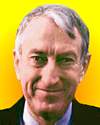
Born 15 Oct 1940.
Australian immunologist and pathologist who, with Swiss-born Rolf Zinkernagel, shared the Nobel Prize for Physiology or Medicine in 1996 for their project at the John Curtin School of Medical Research in Canberra, Australia (1973-5). Using mice, they studied how the immune system's T-lymphocytes, recognize virus-infected cells from healthy cells. The "killer T-cells," in a test tube killed cells infected by a virus, and worked only against a specific virus in a specific mouse and could not be transferred to a different animal. Such discoveries have a wide impact on the study of diseases such as rheumatic conditions, multiple sclerosis and diabetes. He was the seventh Australian Nobelist, and the first who was a veterinarian.
Australian immunologist and pathologist who, with Swiss-born Rolf Zinkernagel, shared the Nobel Prize for Physiology or Medicine in 1996 for their project at the John Curtin School of Medical Research in Canberra, Australia (1973-5). Using mice, they studied how the immune system's T-lymphocytes, recognize virus-infected cells from healthy cells. The "killer T-cells," in a test tube killed cells infected by a virus, and worked only against a specific virus in a specific mouse and could not be transferred to a different animal. Such discoveries have a wide impact on the study of diseases such as rheumatic conditions, multiple sclerosis and diabetes. He was the seventh Australian Nobelist, and the first who was a veterinarian.
Born 15 Oct 1931; died 27 Jul 2015 at age 83. quotes
Indian aerospace engineer and president.
Indian aerospace engineer and president.
Wings of Fire: An Autobiography of A.P.J. Abdul Kalam, by Abdul Kalam and Arun Tiwari. - book suggestion.
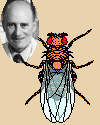
Born 15 Oct 1921; died 30 Nov 2007 at age 86. quotes
American molecular biologist who developed (1955) a method for determining the detailed structure of viral genes. He coined the term cistron (1957) to denote functional subunits of genes. He also did much to elucidate the nature of genetic anomalies, called nonsense mutations, in terms of the nucleotide sequence of DNA, deoxyribonucleic acid. In the 1 Nov 1997 issue of Current Biology, Benzer and Kyung-Tai Min described two mutant types of fruitfly with signs of brain degeneration that might be useful for studying Creutzfeld-Jacob (CJ) disease or other human brain degenerative disorders. The “spongecake” mutant has holes that appear in the brain as degeneration sets in, holes similar to spongiform encephalopathies, like CJ or mad cow disease.
American molecular biologist who developed (1955) a method for determining the detailed structure of viral genes. He coined the term cistron (1957) to denote functional subunits of genes. He also did much to elucidate the nature of genetic anomalies, called nonsense mutations, in terms of the nucleotide sequence of DNA, deoxyribonucleic acid. In the 1 Nov 1997 issue of Current Biology, Benzer and Kyung-Tai Min described two mutant types of fruitfly with signs of brain degeneration that might be useful for studying Creutzfeld-Jacob (CJ) disease or other human brain degenerative disorders. The “spongecake” mutant has holes that appear in the brain as degeneration sets in, holes similar to spongiform encephalopathies, like CJ or mad cow disease.
Time, Love, Memory: A Great Biologist and His Quest for the Origins of Behavior, by Jonathan Weiner. - book suggestion.
Born 15 Oct 1910.
Swedish cytologist and geneticist who initiated use of the ultraviolet microscope to determine the nucleic acid content of cellular structures such as the nucleus and nucleolus. Caspersson researched fundamental aspects of cytogenetics, with a special emphasis on precise spectroscopic measurements. Long before the race for the double helix had begun, Caspersson promoted the genetic significance of nucleic acids (late 1930's-40's). Combining his knowledge of cell biology and biochemistry with accurate spectroscopic observations of nucleic acids in living cells, Caspersson concluded that nucleic acids were somehow involved in protein synthesis, an unorthodox view at a time when protein chemistry dominated the chemical approach to heredity.
Swedish cytologist and geneticist who initiated use of the ultraviolet microscope to determine the nucleic acid content of cellular structures such as the nucleus and nucleolus. Caspersson researched fundamental aspects of cytogenetics, with a special emphasis on precise spectroscopic measurements. Long before the race for the double helix had begun, Caspersson promoted the genetic significance of nucleic acids (late 1930's-40's). Combining his knowledge of cell biology and biochemistry with accurate spectroscopic observations of nucleic acids in living cells, Caspersson concluded that nucleic acids were somehow involved in protein synthesis, an unorthodox view at a time when protein chemistry dominated the chemical approach to heredity.
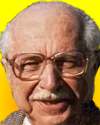
Born 15 Oct 1909; died 21 Oct 2002 at age 93. quotes
Jesse Leonard Greenstein was an American astronomer who co-discovered quasars. His interest in astronomy began at age 8 when his grandfather gave him a brass telescope. By age 16, he was a student at Harvard University. After earning his Ph.D.(1937), he joined the Yerkes Observatory under Otto Struve. Thereafter, he spent most of his career at the California Institute of Technology. He measured the composition of stars, through which he found less heavy elements in the stars of globular clusters, thus proving they are younger than our Sun. In 1963, he and Maarten Schmidt were the first to interpret the red shift of quasars and correctly describe their nature as compact, very distant and thus very old objects. With Louis Henyey he designed and constructed a new spectrograph and wide-view camera to improve astronomical observations.«
Jesse Leonard Greenstein was an American astronomer who co-discovered quasars. His interest in astronomy began at age 8 when his grandfather gave him a brass telescope. By age 16, he was a student at Harvard University. After earning his Ph.D.(1937), he joined the Yerkes Observatory under Otto Struve. Thereafter, he spent most of his career at the California Institute of Technology. He measured the composition of stars, through which he found less heavy elements in the stars of globular clusters, thus proving they are younger than our Sun. In 1963, he and Maarten Schmidt were the first to interpret the red shift of quasars and correctly describe their nature as compact, very distant and thus very old objects. With Louis Henyey he designed and constructed a new spectrograph and wide-view camera to improve astronomical observations.«
(EB)
Born 15 Oct 1905; died 1 Jul 1980 at age 74. quotes
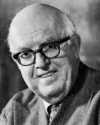
Baron Charles Percy Snow was an English physicist, novelist and government administrator who had an active, varied career. In his controversial 1959 Rede Lecture called The Two Cultures and the Scientific Revolution, he claimed there were two cultures—the literary intellectuals and the scientists—who didn't understand each other and didn't trust each other. The split was not new; Snow noted that in the 1930s, literary theorists had begun to use the word “intellectual” to refer only to themselves. He illustrated this gap by asking a group of literary intellectuals to tell him about the Second Law of Thermodynamics, which he called the scientific equivalent of “Have you read a work of Shakespeare?” Since then, debate about this polarization has continued.
Baron Charles Percy Snow was an English physicist, novelist and government administrator who had an active, varied career. In his controversial 1959 Rede Lecture called The Two Cultures and the Scientific Revolution, he claimed there were two cultures—the literary intellectuals and the scientists—who didn't understand each other and didn't trust each other. The split was not new; Snow noted that in the 1930s, literary theorists had begun to use the word “intellectual” to refer only to themselves. He illustrated this gap by asking a group of literary intellectuals to tell him about the Second Law of Thermodynamics, which he called the scientific equivalent of “Have you read a work of Shakespeare?” Since then, debate about this polarization has continued.
Born 15 Oct 1887; died 15 Dec 1975 at age 88. quotes
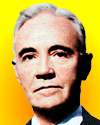
Chester R(ay) Longwell was an American geologist, whose field work made him an authority on the geology of southern Nevada. He conducted a geological survey of the entire Boulder reservoir flood area now covered by Lake Mead, in 1934, to record the formations and structures, which would be covered by the lake. Later, he mapped the floor of the Davis Dam reservoir. His structural and mapping surveys in the western states included Arizona and the Black Hills. In the east, he studied the Triassic zone of Connecticut and Massachusetts. Longwell held an interest in geotectonics - the worldwide patterns of development - and periodically contributed to the debate of Wegener's continental drift.«
Chester R(ay) Longwell was an American geologist, whose field work made him an authority on the geology of southern Nevada. He conducted a geological survey of the entire Boulder reservoir flood area now covered by Lake Mead, in 1934, to record the formations and structures, which would be covered by the lake. Later, he mapped the floor of the Davis Dam reservoir. His structural and mapping surveys in the western states included Arizona and the Black Hills. In the east, he studied the Triassic zone of Connecticut and Massachusetts. Longwell held an interest in geotectonics - the worldwide patterns of development - and periodically contributed to the debate of Wegener's continental drift.«
Born 15 Oct 1880; died 2 Oct 1958 at age 77.
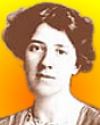
Scottish scientist, educator and birth control advocate. She was awarded a doctorate at Munich, Germany, for her work on fossilised plants (1902). As a young girl she said she would spend the first 20 years of her life in science, the second 20 in social projects, and the final 20 years writing poetry - and she did just that. She made her name through her writing and campaigning on family planning services. Her work resulted in the UK's first family planning clinic in Holloway, north London, without publicity on 17 Mar 1921, offering a free service to married women. Its aim was two-fold, first to reach the poor and give them access to birth control, secondly to gather scientific data about contraception.
Scottish scientist, educator and birth control advocate. She was awarded a doctorate at Munich, Germany, for her work on fossilised plants (1902). As a young girl she said she would spend the first 20 years of her life in science, the second 20 in social projects, and the final 20 years writing poetry - and she did just that. She made her name through her writing and campaigning on family planning services. Her work resulted in the UK's first family planning clinic in Holloway, north London, without publicity on 17 Mar 1921, offering a free service to married women. Its aim was two-fold, first to reach the poor and give them access to birth control, secondly to gather scientific data about contraception.
Married Love, by Marie Stopes. - book suggestion.
Phobos
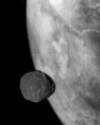
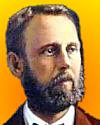
American astronomer, discovered and named the two moons of Mars, Phobos and Deimos, and calculated their orbits.Born in Goshen, Conn. and apprenticed as a carpenter at age 16, he had a passion for geometry and algebra. Hall obtained a position at the Harvard Observatory in Cambridge, Mass. in 1857 and became an expert computer of orbits. In August 1862, he joined the staff of the Naval Observatory in Washington, D.C. where he made his discoveries, in mid- Aug 1877, using the Observatory's 26-inch "Great Equatorial" refracting telescope, then the largest of its kind in the world. He stayed there 30 years until 1891. His son, Asaph Hall, Jr., followed him and worked at the Observatory at various times between 1882-1929.[Image right: Phobos]
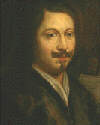
Born 15 Oct 1608; died 25 Oct 1647 at age 39. quotes
Born in Faenza, Italy, Torricelli was an Italian physicist and mathematician who invented the barometer and whose work in geometry aided in the eventual development of integral calculus. Inspired by Galileo's writings, he wrote a treatise on mechanics, De Motu ("Concerning Movement"), which impressed Galileo. He also developed techniques for producing telescope lenses. The barometer experiment using "quicksilver" filling a tube then inverted into a dish of mercury, carried out in Spring 1644, made Torricelli's name famous. The Italian scientists merit was, above all, to admit that the effective cause of the resistance presented by nature to the creation of a vacuum (in the inverted tube above the mercury) was probably due to the weight of air.
Born in Faenza, Italy, Torricelli was an Italian physicist and mathematician who invented the barometer and whose work in geometry aided in the eventual development of integral calculus. Inspired by Galileo's writings, he wrote a treatise on mechanics, De Motu ("Concerning Movement"), which impressed Galileo. He also developed techniques for producing telescope lenses. The barometer experiment using "quicksilver" filling a tube then inverted into a dish of mercury, carried out in Spring 1644, made Torricelli's name famous. The Italian scientists merit was, above all, to admit that the effective cause of the resistance presented by nature to the creation of a vacuum (in the inverted tube above the mercury) was probably due to the weight of air.

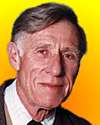
Died 15 Oct 2000 at age 88 (born 21 Jan 1912).
Konrad Emil Bloch was a German-American biochemist who shared who shared the 1964 Nobel Prize for Physiology or Medicine with Feodor Lynen for their discoveries concerning the natural synthesis of cholesterol and of fatty acids. Bloch identified the chemical process by which the body turns acetic acid into cholesterol. He discovered the point at which it is possible to regulate the amount of cholesterol the body produces. He discovered that high levels of cholesterol in the bloodstream cause fatty deposits on the inner walls of arteries, which may lead to constricted blood flow and increase the chances of blood clotting and heart attack.
Konrad Emil Bloch was a German-American biochemist who shared who shared the 1964 Nobel Prize for Physiology or Medicine with Feodor Lynen for their discoveries concerning the natural synthesis of cholesterol and of fatty acids. Bloch identified the chemical process by which the body turns acetic acid into cholesterol. He discovered the point at which it is possible to regulate the amount of cholesterol the body produces. He discovered that high levels of cholesterol in the bloodstream cause fatty deposits on the inner walls of arteries, which may lead to constricted blood flow and increase the chances of blood clotting and heart attack.
Died 15 Oct 1968 at age 66 (born 21 May 1902).
Herbert Faulkner Copeland was an American biologist who delineated four biological kingdoms, instead of just two for plants and animals. A decade after Darwin's Origin of Species, Ernst Haekel had proposed (1866) adding a kingdom, Protista, for microorganisms, but it wasn't accepted. Copeland further discriminated among the microorganisms in a paper in 1938, splitting them into two kingdoms: Monera and Protista. Copeland identified Monera as organisms without nuclei, and Protista as being largely unicellular, with nuclei. By 1956, he published a book, The Classification of Lower Organisms, still trying “to pursuade the community of biologists” to adopt these four kingdoms. Change came slowly, and continues beyond Copeland's ideas to now five or six. He was the son of botanist Edwin B. Copeland, from whom he learned the principles of classification.«
Herbert Faulkner Copeland was an American biologist who delineated four biological kingdoms, instead of just two for plants and animals. A decade after Darwin's Origin of Species, Ernst Haekel had proposed (1866) adding a kingdom, Protista, for microorganisms, but it wasn't accepted. Copeland further discriminated among the microorganisms in a paper in 1938, splitting them into two kingdoms: Monera and Protista. Copeland identified Monera as organisms without nuclei, and Protista as being largely unicellular, with nuclei. By 1956, he published a book, The Classification of Lower Organisms, still trying “to pursuade the community of biologists” to adopt these four kingdoms. Change came slowly, and continues beyond Copeland's ideas to now five or six. He was the son of botanist Edwin B. Copeland, from whom he learned the principles of classification.«
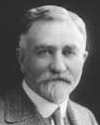
Died 15 Oct 1930 at age 64 (born 26 Feb 1866). quotes
[mp] who was a pioneer in the American chemical industry and founded the Dow Chemical Company (1896). Dow developed and patented an entirely new electrolytic method for extracting bromine from the prehistoric brine trapped underground at Midland, Mich. and in 1890 organized the Midland Chemical Company. The Dow process was remarkable in that it did not result in a salt by-product, that it operated on comparatively little fuel and it was the first commercially successful use of the direct-current generator in the American chemical industry. He next developed the electrolysis of sodium chloride in order to yield sodium hydroxide (caustic soda) and chlorine for bleaching powder. In 1916, Dow extracted magnesium, a very lightweight metal from brine, and quickly saw its importance as a structural metal. His first patent was issued in 1889. By 1933 he had over 90 patents. His diverse inventions included electric light carbons, steam and internal combustion engines, automatic furnace controls, and water seals, though most of his inventions were chemical in nature.
[mp] who was a pioneer in the American chemical industry and founded the Dow Chemical Company (1896). Dow developed and patented an entirely new electrolytic method for extracting bromine from the prehistoric brine trapped underground at Midland, Mich. and in 1890 organized the Midland Chemical Company. The Dow process was remarkable in that it did not result in a salt by-product, that it operated on comparatively little fuel and it was the first commercially successful use of the direct-current generator in the American chemical industry. He next developed the electrolysis of sodium chloride in order to yield sodium hydroxide (caustic soda) and chlorine for bleaching powder. In 1916, Dow extracted magnesium, a very lightweight metal from brine, and quickly saw its importance as a structural metal. His first patent was issued in 1889. By 1933 he had over 90 patents. His diverse inventions included electric light carbons, steam and internal combustion engines, automatic furnace controls, and water seals, though most of his inventions were chemical in nature.
Herbert H. Dow: Pioneer in Creative Chemistry, by Murray Campbell. - book suggestion.
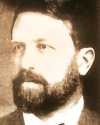
Died 15 Oct 1915 at age 53 (born 12 Oct 1862). quotes
German cytologist whose work with roundworm eggs proved that chromosomes are separate, continuous, organized structures within the nucleus of a cell. Boveri's discoveries revealed that certain chromosomes were responsible for certain characteristics. Around 1887, Boveri discovered a small structure that connects the chromosomes during cell division, which he named the centrosome, and demonstrated it provided the division centres for the dividing egg cell and all its offspring. Boveri was prone to bouts of depression and suffered numerous physical breakdowns. His health declined from the onset of WW I, and he died at the age of 53.
German cytologist whose work with roundworm eggs proved that chromosomes are separate, continuous, organized structures within the nucleus of a cell. Boveri's discoveries revealed that certain chromosomes were responsible for certain characteristics. Around 1887, Boveri discovered a small structure that connects the chromosomes during cell division, which he named the centrosome, and demonstrated it provided the division centres for the dividing egg cell and all its offspring. Boveri was prone to bouts of depression and suffered numerous physical breakdowns. His health declined from the onset of WW I, and he died at the age of 53.
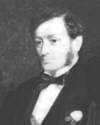
Died 15 Oct 1889 at age 73 (born 24 Aug 1816).
English, laid the first successful transatlantic cables. Sir Daniel Gooch was an English railway pioneer and inventor who was trained in George Stephenson & Edward Pease's works at Newcastle upon Tyne. He was locomotive superintendent of Great Western Railway for 27 years, where as Brunel's right-hand man, he designed the best broad-gauge engines and invented “the suspended link motion with the shifting radius link” (1843). Gooch also experimented with a dynamometer carriage. In 1864 he resigned to concentrate on developing telegraphic communication. Sir Daniel Gooch and his son Charles, were the engineers who laid the first Atlantic Cable from the steamship The Great Eastern. Daniel became member of Parliment.
English, laid the first successful transatlantic cables. Sir Daniel Gooch was an English railway pioneer and inventor who was trained in George Stephenson & Edward Pease's works at Newcastle upon Tyne. He was locomotive superintendent of Great Western Railway for 27 years, where as Brunel's right-hand man, he designed the best broad-gauge engines and invented “the suspended link motion with the shifting radius link” (1843). Gooch also experimented with a dynamometer carriage. In 1864 he resigned to concentrate on developing telegraphic communication. Sir Daniel Gooch and his son Charles, were the engineers who laid the first Atlantic Cable from the steamship The Great Eastern. Daniel became member of Parliment.
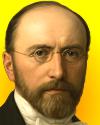
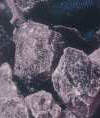
Lanthanum
Swedish chemist and mineralogist whose work revealed the existence of numerous rare-earth elements with closely similar chemical properties. In 1839 he discovered lanthanum (La) which is used as a component of misch metal (used for making lighter flints). Rare-earth compounds containing lanthanum have been extensively used in carbon lighting applications, especially by the motion picture industry for studio lighting and projection. He discovered other rare earth metals: erbium (Er) in 1842 and terbium (Tb) in 1843. Erbium oxide is rose-pink, and it is used to make pink glass and pink potter's glaze. Terbium oxide is widely used for green phosphors in fluorescent lamps, LEDs, and former color TV tubes.
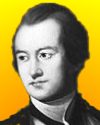
Died 15 Oct 1789 at age 54 (born 10 Jun 1735). quotes
American pioneer of U.S. medical education, surgeon general of the Continental armies during the U.S. War of Independence, and founder of the United States' first medical school - the College of Philadelphia (University of Pennsylvania) in 1765. He joined the faculty and wrote his influential Discourse upon the Institution of Medical Schools in America (1765). In 1775, after the American Revolution had started, Congress appointed him medical director of the hospitals and chief physician of the colonial army. Morgan insisted upon such high standards and reforms in the medical department that his subordinates rebelled and forced him from office. He was later exonerated by George Washington, but never completely recovered, dying in poverty ten years later.
American pioneer of U.S. medical education, surgeon general of the Continental armies during the U.S. War of Independence, and founder of the United States' first medical school - the College of Philadelphia (University of Pennsylvania) in 1765. He joined the faculty and wrote his influential Discourse upon the Institution of Medical Schools in America (1765). In 1775, after the American Revolution had started, Congress appointed him medical director of the hospitals and chief physician of the colonial army. Morgan insisted upon such high standards and reforms in the medical department that his subordinates rebelled and forced him from office. He was later exonerated by George Washington, but never completely recovered, dying in poverty ten years later.
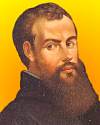
Died 15 Oct 1564 at age 49 (born 31 Dec 1514). quotes
Flemish anatomist who, as a university teacher insisted on personally conducting detailed dissections on human cadavers. His De humani corporis fabrica (On the Structure of the Human Body, 1543) marked a major advance from the work of the 2nd-century anatomist Galen. Vesalius provided detailed and accessible information against which future anatomists could compare their observations. Vesalius was the teacher of Gabriel Fallopius, who was in turn tutor to Hieronymous Fabricius, who then taught William Harvey. This lineage supervised the most dramatic reassessment of the anatomy and function of the human body that had occurred for centuries—and can be said to have started the modern science of medicine. more
Flemish anatomist who, as a university teacher insisted on personally conducting detailed dissections on human cadavers. His De humani corporis fabrica (On the Structure of the Human Body, 1543) marked a major advance from the work of the 2nd-century anatomist Galen. Vesalius provided detailed and accessible information against which future anatomists could compare their observations. Vesalius was the teacher of Gabriel Fallopius, who was in turn tutor to Hieronymous Fabricius, who then taught William Harvey. This lineage supervised the most dramatic reassessment of the anatomy and function of the human body that had occurred for centuries—and can be said to have started the modern science of medicine. more
The Illustrations from the Works of Andreas Vesalius of Brussels, by J.B.deC.M. Saunders and Charles D. O’Malley. - book suggestion.

In 2009, New York State banned open-burning of waste and debris throughout the state (with limited exceptions for camp-fires, cooking fires, on-site burning of agricultural waste, flag disposal and celebratory or ceremonial bonfires). This ended the exemption of about 850 small rural small communities which were not included when in 1972, legislation against open fires was applied only to cities with population over 20,000. A side benefit would be to help prevent forest fires caused by burning of yard waste. New York City had a ban in place within the city limits from 1 Jan 1962 (with a two-year exemption for builders and building wreckers). This timeline illustrates the increasing attention tion being given by cities and states, around the United States, to air quality, and reducing the health problems caused by air pollution.«
The Age of Smoke: Environmental Policy in Germany and the United States, 1880-1970, by Frank Uekoetter and Thomas Dunlap. - book suggestion.

Penglai
In 2003, China became the third nation to send a man into space. Lieutenant Colonel Yang Liwei, 38, was launched on a Long March CZ-2F rocket in the Shenzhou-5 spacecraft at 9 am local time (1 am GMT). He completed 14 Earth orbits during a 21-hour flight which ended with a parachute-assisted landing in the on the grasslands of Inner Mongolia in northern China. The Shenzhou spacecraft was based on the three-seat Russian Soyuz capsule, but with extensive modifications. The country began planning manned spaceflight in 1992. Russia began providing advice on technology and astronaut training in 1995. The first of four unmanned test flights of a Shenzhou craft took place in Nov 1999. The name Shenzhou translates as “divine vessel.”

In 1997, the Cassini spacecraft (carrying the Huygens probe) was launched from Cape Canaveral. Its mission objective was to orbit Saturn, collecting data on the giant planet itself, its magnetosphere, rings and moons. After a four year journey, on 30 Jun 2004 (US Eastern time), Cassini entered orbit around Saturn. On its way, it made fly-bys of Venus (26 Apr 1998, 24 Jun 1999), Earth (18 Aug 1999) and Jupiter (30 Dec 2000). Shortly after arrival, it released the Huygens probe (24 Dec 2004), which landed on the moon Titan (14 Jan 2005). After two productive extensions, the Cassini mission was terminated on 15 Sep 2017, with a planned dive to burn up in Saturn's atmosphere.«

In 1990, invasion of the U.S. by killer bees began when they spread up from Mexico into the first state to be affected, Texas. Killer bees arrived at the southern tip of Texas, in the city of Hidalgo. Because of their more intense defensive swarming behavior, these non-native bees earned the name “killer bee” in the media. Arizona was the second state to be invaded, less than three years after the invasion began in Texas. Since the 1950s, the bees had extended their range northward through Central America. Their original source was from cross-breeding with tropical African bees imported into Brazil for experimental work.
more
In 1950, the first American radio paging service, Aircall of New York City, sent the first page to a doctor who was on a golf course 25 miles away. Subscribers carried a six-ounce pocket radio receiver and could hear their call numbers repeated in numerical sequence on the air at least once per minute within a 30-mile radius.
In 1939, it was said in a memorandum that it would be possible to build a computer with vacuum tubes that would process “10,000 operations per second.” The prediction by Helmut Schreyer came at the time when computers were being built with relays to function electromechanically. He assisted Konrad Zuse in the bulding of the Z2 automatic calculator completed in the same year. The Z2 had 800 relays in the arithmetic and control units, and it also had a mechanical memory.«
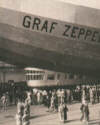
In 1928, the airship LZ127 Graf Zeppelin, christened on the 8 Jul 1928, landed in New Jersey after its first transatlantic crossing from Germany. It was 775 feet long and 100 feet high and had a crusing speed of 73 mph. The Naval Air Station Lakehurst, located in Lakehurst, New Jersey, was the western terminus for the commercial transatlantic flights of the German dirigibles Graf Zeppelin and also the Hindenburg. The Graf Zeppelin was a very successful airship whose success was eclipsed by the Hindenburg disaster in 1937.
Golden Age of the Great Passenger Airships: Graf Zeppelin and Hindenburg (Smithsonian Books), by Harold G. Dick. - book suggestion.
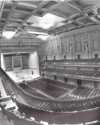
In 1900, the Boston Symphony Hall was opened with an inaugural gala led by music director Wilhelm Gericke. The architects engaged Wallace Clement Sabine, a young assistant professor of physics at Harvard, to help them achieve the best sound quality for the hall, making it the first auditorium designed according to scientific acoustical principles. The sparse use of sound-muffling textiles provides for better resonance throughout the hall. It is 61 feet high, 75 feet wide and 124 feet long from the lower back wall to the front of the stage. With the exception of the wooden floors, the hall is built of brick, steel, and plaster. Still regarded as one of the world's finest concert halls, it is the home of the Boston Symphony Orchestra and the Boston Pops.
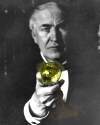
1912
In 1878, Thomas Edison established the Edison Electric Light Company in N.Y. City with a syndicate of leading financiers, including J.P. Morgan and the Vanderbilts, who advanced him $30,000 for research and development. Edison proposed to connect his lights in a parallel circuit by subdividing the current, so that, unlike arc lights, which were connected in a series circuit, the failure of one light bulb would not cause a whole circuit to fail. He patented his electricity distribution system in 1880. The first investor-owned electric utility, Pearl Street Station, New York City, (1882) provided service for the 400 lamps of 85 customers. This company and its technological heritage became a part of General Electric in 1892.
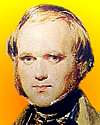
In 1827, Charles Darwin was accepted into Christ's College at Cambridge, but did not start until winter term because he needed to catch up on some of his studies. A grandson of Erasmus Darwin of Lichfield, and of Josiah Wedgwood, he had entered the University of Edinburgh in 1825 to study medicine, intending to follow his father Robert's career as a doctor. However, Darwin found himself unenthusiastic about his studies, including that of geology. Disappointing his family that he gave up on a medical career, he left Edinburgh without graduating in April 1827. His scholastic achievements at Cambridge were unremarkable, but after graduation, Darwin was recommended by his botany professor to be a naturalist to sail on HM Sloop Beagle.
From So Simple a Beginning: Darwin's Four Great Books, by Charles Darwin, Edward O. Wilson. - book suggestion.
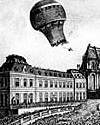
In 1783, Frenchman Jean Pilâtre de Rozier (1754-1785) made a tethered balloon ascent, in the gardens of La Muette. The Montgolfier-made balloon, Aerostat Reveillon, carrying Pilâtre, first man to leave the earth, rose to the end of its 250- ft tether. It stayed aloft for15 minutes, then landed safely nearby. On 21 Nov 1783, untethered, Pilâtre and Marquis d'Arlande made the first manned free flight, across Paris. On 15 Jun 1785, Pilâtre attempt the first east-to-west crossing of the English Channel with a hybrid balloon combining lift from both hydrogen and hot air. Within minutes of launch, the craft exploded, and plunged to the rocks on the coast of Wimereux. Neither Pilâtre nor his co-pilot, Romain, survived the crash.
In 1582, this was the first day of the Gregorian calendar under the decree of Pope Gregory XIII in the Catholic countries of Italy, Spain, Portugal and Poland, which realigned the calendar with the equinoxes. The rest of the world was still using the Julian calendar, and recognized the day as 5 Oct 1582.«

Nicotiana tabacum
In 1492, Christopher Columbus noted in his Journal the use of tobacco among Indians—the first recorded reference to tobacco. The translation of this Journal of the First Voyage by John Boyd Thatcher (1903) reads: “I found a man alone in a canoe who was going from the island of Santa Maria to Fernandina, and was carrying a little of his bread ... water, ... and some dry leaves which must be a thing very much appreciated among them, because they had already brought me some of them as a present at San Salvador.” The use of the leaves is made more clear in a journal entry on 5 Nov 1492 which records on the island of Cuba, “men and women with ... herbs to smoke, which they are in the habit of doing.” The translator adds in his footnote that Columbus thus “refers to a practice he had already observed among the inhabitants of Guanahani or Watling Island.”«[This is the corrected date. It was previously an entry on this site for 15 Nov 1492.]
Tobacco: A Cultural History of How an Exotic Plant Seduced Civilization, by Iain Gately. - book suggestion.




