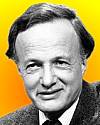
Born 23 Jan 1929. quotes
German-Canadian chemist and educator who shared the Nobel Prize for Chemistry in 1986 (with Dudley R. Herschbach and Yuan T. Lee) for contributions to the “development of a new field of research in chemistry - reaction dynamics.” Polanyi was recognised his study of infrared chemiluminescence. In experiments on the reaction of atomic hydrogen and molecular chlorine he discovered the emission of a faint infrared light (chemiluminescence), which provided quantitative information on the vibrational and rotational energy released in chemical reactions. In 1960, he published a paper suggesting that the products of the hydrogen-chlorine reaction (and similar reactions) would act as a suitable medium for a chemical laser.«
German-Canadian chemist and educator who shared the Nobel Prize for Chemistry in 1986 (with Dudley R. Herschbach and Yuan T. Lee) for contributions to the “development of a new field of research in chemistry - reaction dynamics.” Polanyi was recognised his study of infrared chemiluminescence. In experiments on the reaction of atomic hydrogen and molecular chlorine he discovered the emission of a faint infrared light (chemiluminescence), which provided quantitative information on the vibrational and rotational energy released in chemical reactions. In 1960, he published a paper suggesting that the products of the hydrogen-chlorine reaction (and similar reactions) would act as a suitable medium for a chemical laser.«
The Dangers of Nuclear War: A Pugwash Symposium, by Franklyn Griffith and John C. Polanyi. - book suggestion.
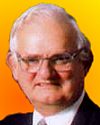
Born 23 Jan 1924; died 17 Jul 1998 at age 74.
Sir Michael James Lighthill was a British mathematician who contributed to supersonic aerofoil theory and, aeroacoustics which became relevant in the design of the Concorde supersonic jet, and reduction of jet engine noise. Lighthill's eighth power law which states that the acoustic power radiated by a jet is proportional to the eighth power of the jet speed. His work in nonlinear acoutics found application in the lithotripsy machine used to break up kidney stones, the study of flood waves in rivers and road traffic flow. Lighthill also introduced the field of mathematical biofluiddynamics. Lighthill followed Paul Dirac as Lucasian professor of Mathematics (1969) and was succeeded by Stephen Hawking (1989).«
Sir Michael James Lighthill was a British mathematician who contributed to supersonic aerofoil theory and, aeroacoustics which became relevant in the design of the Concorde supersonic jet, and reduction of jet engine noise. Lighthill's eighth power law which states that the acoustic power radiated by a jet is proportional to the eighth power of the jet speed. His work in nonlinear acoutics found application in the lithotripsy machine used to break up kidney stones, the study of flood waves in rivers and road traffic flow. Lighthill also introduced the field of mathematical biofluiddynamics. Lighthill followed Paul Dirac as Lucasian professor of Mathematics (1969) and was succeeded by Stephen Hawking (1989).«
Waves in Fluids, by James Lighthill. - book suggestion.
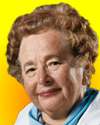
Born 23 Jan 1918; died 21 Feb 1999 at age 81. quotes
Gertrude Belle Elion was an American pharmacologist who shared the Nobel Prize for Physiology or Medicine in 1988 (with George H. Hitchings and Sir James W. Black) for the development of drugs used to treat several major diseases. Research by Elion and Hitchings produced the first drugs specifically designed for cancer therapy, as well as drugs to combat rejection of transplanted organs, gout, malaria and bacterial and viral infections. These medications became well-proven in use over many years, and their drugs appeared on the World Health Organizations's list of so-called "Essential Drugs" as medicines which should be available worldwide to promote "Health for All." Elion held 45 patents.«
Gertrude Belle Elion was an American pharmacologist who shared the Nobel Prize for Physiology or Medicine in 1988 (with George H. Hitchings and Sir James W. Black) for the development of drugs used to treat several major diseases. Research by Elion and Hitchings produced the first drugs specifically designed for cancer therapy, as well as drugs to combat rejection of transplanted organs, gout, malaria and bacterial and viral infections. These medications became well-proven in use over many years, and their drugs appeared on the World Health Organizations's list of so-called "Essential Drugs" as medicines which should be available worldwide to promote "Health for All." Elion held 45 patents.«
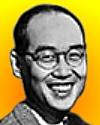
Born 23 Jan 1907; died 8 Sep 1981 at age 74. quotes
Japanese physician and physicist who shared the 1949 Nobel Prize for Physics for “his prediction of the existence of mesons on the basis of theoretical work on nuclear forces.” In his 1935 paper, On the Interaction of Elementary Particles*, he proposed a new field theory of nuclear forces that predicted the existence of the previously unknown meson. Mesons are particles heavier than electrons but lighter than protons. One type of meson was subsequently discovered in cosmic rays in 1937 by American physicists, encouraging him to further develop meson theory. From 1947, he worked mainly on the general theory of elementary particles in connection with the concept of the “non-local” field. He was the first Japanese Nobel Prize winner.«*Proc.Phys.-Math. Soc.Japan, 17, p. 48.
Japanese physician and physicist who shared the 1949 Nobel Prize for Physics for “his prediction of the existence of mesons on the basis of theoretical work on nuclear forces.” In his 1935 paper, On the Interaction of Elementary Particles*, he proposed a new field theory of nuclear forces that predicted the existence of the previously unknown meson. Mesons are particles heavier than electrons but lighter than protons. One type of meson was subsequently discovered in cosmic rays in 1937 by American physicists, encouraging him to further develop meson theory. From 1947, he worked mainly on the general theory of elementary particles in connection with the concept of the “non-local” field. He was the first Japanese Nobel Prize winner.«*Proc.Phys.-Math. Soc.Japan, 17, p. 48.
Tabibito (The Traveler), by Hideki Yukawa. - book suggestion.
Born 23 Jan 1891; died 2 Nov 1970 at age 79. quotes
Abram Samoilovitch Besicovitch was a Russian-British mathematician whose academic career began in St. Petersburg. Due to the complications of being of Jewish heritage during the Russian Revolution, he left the Soviet Union in 1925 and settled in Cambridge, England, the next year. In his body of work, he contributed to the theories of measure, sets of points, real analysis, surface area, and the additive theory of numbers. Besicovitch solved Kekeya’s famous problem (to determine the least area swept out by a straight line which is reversed in direction by a continuous motion in the plane. He demonstrated that result was, surprisingly, no least area. Besicovitch himself also presented deceptively simple problems which were in fact extremely difficult to solve«
Abram Samoilovitch Besicovitch was a Russian-British mathematician whose academic career began in St. Petersburg. Due to the complications of being of Jewish heritage during the Russian Revolution, he left the Soviet Union in 1925 and settled in Cambridge, England, the next year. In his body of work, he contributed to the theories of measure, sets of points, real analysis, surface area, and the additive theory of numbers. Besicovitch solved Kekeya’s famous problem (to determine the least area swept out by a straight line which is reversed in direction by a continuous motion in the plane. He demonstrated that result was, surprisingly, no least area. Besicovitch himself also presented deceptively simple problems which were in fact extremely difficult to solve«
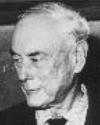
Born 23 Jan 1888; died 22 Aug 1985 at age 97.
German physicist and crystallographer whose theory of X-ray interference by crystals was the first detailed, rigorous theoretical explanation of the diffraction effects first observed in 1912 by his fellow physicist Max von Laue.
German physicist and crystallographer whose theory of X-ray interference by crystals was the first detailed, rigorous theoretical explanation of the diffraction effects first observed in 1912 by his fellow physicist Max von Laue.
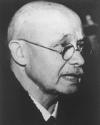
Born 23 Jan 1876; died 7 Mar 1954 at age 78.
Otto Paul Hermann Diels was a German organic chemist who with Kurt Alder was awarded the Nobel Prize for Chemistry in 1950 for their joint work in developing a method of preparing cyclic organic compounds. His most important work concerned the diene synthesis, in which organic compounds with two carbon-to-carbon double bonds were used to effect syntheses of many cyclic organic substances under conditions that threw light on the molecular structure of the products obtained. This method was developed (1928) in collaboration with Kurt Alder, his student, and is known as the Diels-Alder reaction. Their work proved especially important in the production of synthetic rubber and plastics.
Otto Paul Hermann Diels was a German organic chemist who with Kurt Alder was awarded the Nobel Prize for Chemistry in 1950 for their joint work in developing a method of preparing cyclic organic compounds. His most important work concerned the diene synthesis, in which organic compounds with two carbon-to-carbon double bonds were used to effect syntheses of many cyclic organic substances under conditions that threw light on the molecular structure of the products obtained. This method was developed (1928) in collaboration with Kurt Alder, his student, and is known as the Diels-Alder reaction. Their work proved especially important in the production of synthetic rubber and plastics.
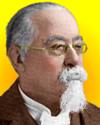
Born 23 Jan 1876; died 2 Mar 1960 at age 84.
Italian sociologist, criminologist and statistician who extended his original career as a criminologist into a study of the criminal from biological and psychology viewpoints. Then to understand the normal man in his social environment, he applied statistics to analysis of social phenomena. He proposed that every person has a “deep ego’' of driven by subconscious primitive instincts for antisocial, egotistical or infantile behaviour. This co-exists with a “superior ego” responsible for social-adjusted attitudes of values, rules and norms. A person’s conduct is the result which of these is dominant. He published this theory in 1902, in La transformation del delito and continued to publish further elaborations upon it for years later.«
Italian sociologist, criminologist and statistician who extended his original career as a criminologist into a study of the criminal from biological and psychology viewpoints. Then to understand the normal man in his social environment, he applied statistics to analysis of social phenomena. He proposed that every person has a “deep ego’' of driven by subconscious primitive instincts for antisocial, egotistical or infantile behaviour. This co-exists with a “superior ego” responsible for social-adjusted attitudes of values, rules and norms. A person’s conduct is the result which of these is dominant. He published this theory in 1902, in La transformation del delito and continued to publish further elaborations upon it for years later.«
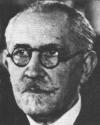
Born 23 Jan 1872; died 19 Dec 1946 at age 74. quotes
French physicist who was the first to explain (1905) the effects of paramagnetism and diamagnetism (the weak attraction or repulsion of substances in a magnetic field) using statistical mechanics. He further theorized how the effects could be explained by how electron charges behaved within the atom. He popularized Einstein's theories for the French public. During WW I, he began developing a source for high intensity ultrasonic waves, which made sonar detection of submarines possible. He created the ultrasound from piezoelectric crystals vibrated by high-frequency radio circuits. In WW II, he spoke out against the Nazis, for which he was arrested and imprisoned, though he managed to escaped and fled to Switzerland.«
French physicist who was the first to explain (1905) the effects of paramagnetism and diamagnetism (the weak attraction or repulsion of substances in a magnetic field) using statistical mechanics. He further theorized how the effects could be explained by how electron charges behaved within the atom. He popularized Einstein's theories for the French public. During WW I, he began developing a source for high intensity ultrasonic waves, which made sonar detection of submarines possible. He created the ultrasound from piezoelectric crystals vibrated by high-frequency radio circuits. In WW II, he spoke out against the Nazis, for which he was arrested and imprisoned, though he managed to escaped and fled to Switzerland.«
An Introduction to Stochastic Processes in Physics: Containing "On the Theory of Brownian Motion: by Paul Langevin", by Don S. Lemons. - book suggestion.
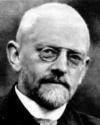
Born 23 Jan 1862; died 14 Feb 1943 at age 81. quotes
German mathematician who reduced geometry to a series of axioms and contributed substantially to the establishment of the formalistic foundations of mathematics. In his book, Foundations of Geometry, he presented the first complete set of axioms since Euclid. His work in 1909 on integral equations led to 20th-century research in functional analysis (in which functions are studied as groups.) Today Hilbert's name is often best remembered through the concept of Hilbert space in quantum physics, a space of infinite dimensions.
German mathematician who reduced geometry to a series of axioms and contributed substantially to the establishment of the formalistic foundations of mathematics. In his book, Foundations of Geometry, he presented the first complete set of axioms since Euclid. His work in 1909 on integral equations led to 20th-century research in functional analysis (in which functions are studied as groups.) Today Hilbert's name is often best remembered through the concept of Hilbert space in quantum physics, a space of infinite dimensions.
The Theory of Algebraic Number Fields, by David Hilbert, I.T. Adamson. - book suggestion.
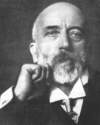
Born 23 Jan 1857; died 18 Dec 1936 at age 79.
Croatian meteorologist and geophysicist who discovered the boundary between the Earth's crust and mantle, a boundary now named the Mohorovicic discontinuity. In 1901 he was appointed head of the complete meteorological service of Croatia and Slavonia, he gradually extended the activities of the observatory to other fields of geophysics: seismology, geomagnetism and gravitation. After the Pokuplje (Kupa Valley) earthquake of 8 Oct 1909, he analyzed the spreading of seismic waves with shallow depths through the Earth. From these, he was the first to establish, on the basis of seismic waves, a surface of velocity discontinuity separating the crust of the Earth from the mantle, now known as the Mohorovicic discontinuity.
Croatian meteorologist and geophysicist who discovered the boundary between the Earth's crust and mantle, a boundary now named the Mohorovicic discontinuity. In 1901 he was appointed head of the complete meteorological service of Croatia and Slavonia, he gradually extended the activities of the observatory to other fields of geophysics: seismology, geomagnetism and gravitation. After the Pokuplje (Kupa Valley) earthquake of 8 Oct 1909, he analyzed the spreading of seismic waves with shallow depths through the Earth. From these, he was the first to establish, on the basis of seismic waves, a surface of velocity discontinuity separating the crust of the Earth from the mantle, now known as the Mohorovicic discontinuity.
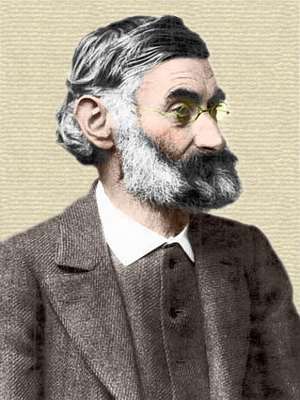
click to enlarge
Born 23 Jan 1840; died 14 Jan 1905 at age 64.
German physicist who established a technical and theoretical foundation for the design of optical instruments. The Abbe sine condition enabled designing lenses without spherical aberation's image distortion. He invented the apochromatic lens system (1868), and added the Abbe condenser lens to improve illumination for the microscope (1870). He used homogenous immersion of specimen and microscope objective in cedar oil with matching refractive index to give higher magnification. He invented the Abbe refractometer to measure a refractive index. From 1866, he collaborated with Carl Zeiss to produce high quality optical instruments. He became sole owner of the Zeiss optical works in 1888. From 1878, he also was director of the University of Jena astronomical and meteorological observatories.«
German physicist who established a technical and theoretical foundation for the design of optical instruments. The Abbe sine condition enabled designing lenses without spherical aberation's image distortion. He invented the apochromatic lens system (1868), and added the Abbe condenser lens to improve illumination for the microscope (1870). He used homogenous immersion of specimen and microscope objective in cedar oil with matching refractive index to give higher magnification. He invented the Abbe refractometer to measure a refractive index. From 1866, he collaborated with Carl Zeiss to produce high quality optical instruments. He became sole owner of the Zeiss optical works in 1888. From 1878, he also was director of the University of Jena astronomical and meteorological observatories.«
Born 23 Jan 1814; died 28 Nov 1893 at age 79.
British army officer and archaeologist who excavated many sites in India, including Sarnath and Sanchi. He retired (1861) as a major general after 30 years of service with the Bengal engineers and then was the first director (1861–65, 1870–85) of the Indian Archaeological Survey. In the 13th century, India's flourishing network of temples and monasteries was wiped out by invading armies, overgrown by forests, buried in humus, and forgotten. When Cunningham made it his mission to locate and dig them up again, in many cases all he had to go on were the accounts written by Fa Hien and Huien Tsiang and the occasional tip of an Ashokan pillar protruding from the earth. He wrote about the tradition of Kangra plastic surgery operations.
British army officer and archaeologist who excavated many sites in India, including Sarnath and Sanchi. He retired (1861) as a major general after 30 years of service with the Bengal engineers and then was the first director (1861–65, 1870–85) of the Indian Archaeological Survey. In the 13th century, India's flourishing network of temples and monasteries was wiped out by invading armies, overgrown by forests, buried in humus, and forgotten. When Cunningham made it his mission to locate and dig them up again, in many cases all he had to go on were the accounts written by Fa Hien and Huien Tsiang and the occasional tip of an Ashokan pillar protruding from the earth. He wrote about the tradition of Kangra plastic surgery operations.
Born 23 Jan 1796; died 24 Mar 1864 at age 68.
Russian chemist and biologist who was born and died in Russia, but was of German origin, so is also known as Carl Ernst Claus. He discovered ruthenium (1844), which was the last dense, inert, platinum-like metal to be found. He earned degrees in chemistry, then a Ph.D. in pharmacy, but Klaus gained an international reputation for his researches on the platinum metals (osmium, palladium, iridium, and rhodium). His discovery of ruthenium resulted from an analysis of the waste residues of the platinum refinery in St. Petersburg. He named the element from Ruthenia, the Latin name for Russia. Klaus also investigated flora and fauna of Volga steppes.
Russian chemist and biologist who was born and died in Russia, but was of German origin, so is also known as Carl Ernst Claus. He discovered ruthenium (1844), which was the last dense, inert, platinum-like metal to be found. He earned degrees in chemistry, then a Ph.D. in pharmacy, but Klaus gained an international reputation for his researches on the platinum metals (osmium, palladium, iridium, and rhodium). His discovery of ruthenium resulted from an analysis of the waste residues of the platinum refinery in St. Petersburg. He named the element from Ruthenia, the Latin name for Russia. Klaus also investigated flora and fauna of Volga steppes.
Born 23 Jan 1785; died 28 Jan 1859 at age 74.
Swedish botanist and mathematician whose Synopsis alagarum Scandinaviae of 1817 presented a new systematic survey of all algae. Working with Schelling, whom he met at Karlsbad mineral springs, he studied the algae found in the hot springs. Algardh revealed the life cycle of these algae. Later, he expanded his field from taxonomy to writing on plant physiology and plant anatomy. He gave up this career when, in 1834, he was appointed the bishop in Karlstad.«
Swedish botanist and mathematician whose Synopsis alagarum Scandinaviae of 1817 presented a new systematic survey of all algae. Working with Schelling, whom he met at Karlsbad mineral springs, he studied the algae found in the hot springs. Algardh revealed the life cycle of these algae. Later, he expanded his field from taxonomy to writing on plant physiology and plant anatomy. He gave up this career when, in 1834, he was appointed the bishop in Karlstad.«
Born 23 Jan 1719; died 15 Jan 1790 at age 70.
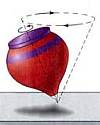
British mathematician who made important contributions on elliptic integrals. As a trained surveyor and land agent (1762-88), Landen's interest in mathematics was for leisure. He sent his results on making the differential calculus into a purely algebraic theory to the Royal Society, and also wrote on dynamics, and summation of series. Landen devised an important transformation, known by his name, giving a relation between elliptic functions which expresses a hyperbolic arc in terms of two elliptic ones. He also solved the problem of the spinning top and explained Newton's error in calculating the precession. Landen was elected a Fellow of the Royal Society in 1766. He corrected Stewart's result on the Sun-Earth distance (1771).
British mathematician who made important contributions on elliptic integrals. As a trained surveyor and land agent (1762-88), Landen's interest in mathematics was for leisure. He sent his results on making the differential calculus into a purely algebraic theory to the Royal Society, and also wrote on dynamics, and summation of series. Landen devised an important transformation, known by his name, giving a relation between elliptic functions which expresses a hyperbolic arc in terms of two elliptic ones. He also solved the problem of the spinning top and explained Newton's error in calculating the precession. Landen was elected a Fellow of the Royal Society in 1766. He corrected Stewart's result on the Sun-Earth distance (1771).
Born 23 Jan 1693; died 18 Feb 1750 at age 57.
German philosopher, mathematician, statesman, and author of treatises in astronomy, physics, botany, and theology. He is best known for his Leibniz-Wolffian philosophy, a term he coined to refer to his own position midway between those of the philosophers Gottfried Wilhelm Leibniz and Christian Wolff.
German philosopher, mathematician, statesman, and author of treatises in astronomy, physics, botany, and theology. He is best known for his Leibniz-Wolffian philosophy, a term he coined to refer to his own position midway between those of the philosophers Gottfried Wilhelm Leibniz and Christian Wolff.

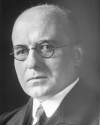
Died 23 Jan 1961 at age 74 (born 8 Feb 1886).
Roman Catholic priest and cultural anthropologist who advocated a comparative, historical approach to understanding cultural phenomena and whose investigations of hunting and food-gathering tribes produced theories on the origin and development of society.
Roman Catholic priest and cultural anthropologist who advocated a comparative, historical approach to understanding cultural phenomena and whose investigations of hunting and food-gathering tribes produced theories on the origin and development of society.
Died 23 Jan 1921 at age 84 (born 6 Oct 1836). quotes
Heinrich Wilhelm Gottfried von Waldeyer-Hartz was a German anatomist who coined the terms neuron (1891) and chromosome (1888), and a number of embryological terms (including those to describe the structure of developing teeth). In 1856, he began university studies in natural science, but his interest turned to medicine and anatomy. After completing his doctoral dissertation (published 1862), he began teaching physiology, and thereafter published several papers on pathology. One of these, on the histological changes in muscles following typhoid fever, led at age 29 to appointment as a professor of pathology. He studied the diagnosis of early cancer, and in 1887 was one of the German doctors that diagnosed a tumor of his vocal cords for Emperor Frederick III. For over 30 years of his later career, until age 80, he was director of the anatomy department at the University of Berlin.«
Heinrich Wilhelm Gottfried von Waldeyer-Hartz was a German anatomist who coined the terms neuron (1891) and chromosome (1888), and a number of embryological terms (including those to describe the structure of developing teeth). In 1856, he began university studies in natural science, but his interest turned to medicine and anatomy. After completing his doctoral dissertation (published 1862), he began teaching physiology, and thereafter published several papers on pathology. One of these, on the histological changes in muscles following typhoid fever, led at age 29 to appointment as a professor of pathology. He studied the diagnosis of early cancer, and in 1887 was one of the German doctors that diagnosed a tumor of his vocal cords for Emperor Frederick III. For over 30 years of his later career, until age 80, he was director of the anatomy department at the University of Berlin.«
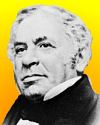
1860
Died 23 Jan 1864 at age 70 (born 30 Nov 1793).
German physician whose attempts to establish medicine as a natural science helped create modern methods for the teaching and practice of clinical medicine. Schönlein was the first to use the microscope in conjunction with urine and blood analyses to diagnose disease. He coined the term hemophilia (1828), was the first to describe purpura rheumatica (1837, hence called Schönlein's disease) and discovered fungus causing favus (1839).
German physician whose attempts to establish medicine as a natural science helped create modern methods for the teaching and practice of clinical medicine. Schönlein was the first to use the microscope in conjunction with urine and blood analyses to diagnose disease. He coined the term hemophilia (1828), was the first to describe purpura rheumatica (1837, hence called Schönlein's disease) and discovered fungus causing favus (1839).
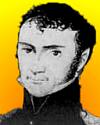
Died 23 Jan 1810 at age 33 (born 16 Dec 1776).
German physicist who discovered the ultraviolet region of the spectrum (1801) and thus helped broaden man's view beyond the narrow region of visible light to encompass the entire electromagnetic spectrum from the shortest gamma rays to the longest radio waves. After studying Herschel's discovery of infrared radiation, he observed the effects of solar radiation on silver salts and deduced the existence of radiation outside the visible spectrum. He also made contributions to spectroscopy and the study of electricity.
German physicist who discovered the ultraviolet region of the spectrum (1801) and thus helped broaden man's view beyond the narrow region of visible light to encompass the entire electromagnetic spectrum from the shortest gamma rays to the longest radio waves. After studying Herschel's discovery of infrared radiation, he observed the effects of solar radiation on silver salts and deduced the existence of radiation outside the visible spectrum. He also made contributions to spectroscopy and the study of electricity.
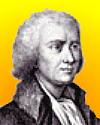

French engineer who invented the semaphore visual telegraph. He began experimenting in 1790, trying various types of telegraph. An early trial used telescopes, synchronised pendulum clocks and a large white board, painted black on the back, with which he succeeded in sending a message a few sentences long across a 16km (10mi) distance. To simplify construction, yet still easily visible to read from far away, he changed to using his semaphore telegraph in 1793. Smaller indicators were pivoted at each end of large horizontal member. The two indicators could each be rotated to stand in any of eight equally spaced positions. By setting them at different orientations, a set of corresponding codes was used to send a message.«
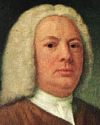
Died 23 Jan 1766 (born 1692).
English typefounder who created (1720-26) the Caslon typeface. After an apprenticeship from age 13 with a London engraver of gunlocks and barrels, he went into business for himself (1716) producing engraving tools. From making the stamps used by bookbinders, and he progessed to cutting type punches, and by 1720, began operating his own type foundry. His new typeface (inspired by earlier Dutch designs) became the most widely used of the 18th century. It was also extremely popular in what were then the American colonies, and was used for the first official printings of the Declaration of Independence and the U.S. Constitution. His work helped to modernize the appearance of a book page replacing the printed imitation of an old hand-produced book.«
English typefounder who created (1720-26) the Caslon typeface. After an apprenticeship from age 13 with a London engraver of gunlocks and barrels, he went into business for himself (1716) producing engraving tools. From making the stamps used by bookbinders, and he progessed to cutting type punches, and by 1720, began operating his own type foundry. His new typeface (inspired by earlier Dutch designs) became the most widely used of the 18th century. It was also extremely popular in what were then the American colonies, and was used for the first official printings of the Declaration of Independence and the U.S. Constitution. His work helped to modernize the appearance of a book page replacing the printed imitation of an old hand-produced book.«
Died 23 Jan 1744 at age 75 (born 23 Jun 1668). quotes
Italian philosopher of cultural history and law, who is recognized today as a forerunner of cultural anthropology, or ethnology. He attempted, especially in his major work, the Scienza nuova (1725; "New Science"), to bring about the convergence of history, from the one side, and the more systematic social sciences, from the other, so that their interpenetration could form a single science of humanity.
Italian philosopher of cultural history and law, who is recognized today as a forerunner of cultural anthropology, or ethnology. He attempted, especially in his major work, the Scienza nuova (1725; "New Science"), to bring about the convergence of history, from the one side, and the more systematic social sciences, from the other, so that their interpenetration could form a single science of humanity.
Died 23 Jan 1622 (born c. 1584).
English explorer who sought the Northwest Passage as a route around the northern coast of North america. In 1615, sailing in the region of Greenland, he explorered what is now known as Baffin Bay. He came within 800 miles of the North Pole, the closest approach made, not improved for two and half centuries afterwards. His voyages were made with scientific care, determining latitudes, and observing tides. With records made of his compass needle, he made the first magnetic chart. He was the first to attempt a determination of longitude by observing the moon. After his Arctic voyages, he was employed by the East India Company, which led to surveying in the regions of the Red Sea and Persian Gulf. It was there that he became involved with a war between the Shah of Persian and the Portuguese, and died in an attack.«
English explorer who sought the Northwest Passage as a route around the northern coast of North america. In 1615, sailing in the region of Greenland, he explorered what is now known as Baffin Bay. He came within 800 miles of the North Pole, the closest approach made, not improved for two and half centuries afterwards. His voyages were made with scientific care, determining latitudes, and observing tides. With records made of his compass needle, he made the first magnetic chart. He was the first to attempt a determination of longitude by observing the moon. After his Arctic voyages, he was employed by the East India Company, which led to surveying in the regions of the Red Sea and Persian Gulf. It was there that he became involved with a war between the Shah of Persian and the Portuguese, and died in an attack.«

Debby
In 2012, the International Polar Bear Conservation Centre (IPBCC) was opened at Assiniboine Park Zoo, Winnipeg, Canada. On 17 Nov 2008, the zoo's longtime resident had died: Debby, the world's oldest polar bear in captivity. Before the zoo could acquire another polar bear, it was necessary to modernize the facility to meet modern standards of animal conservation. With the completion of extensive renovations to the Zoo’s original bear enclosures, the IPBCC is capable of housing and transitioning orphaned polar bear cubs from certain zones in northern Manitoba. The cubs chosen for rescue are those which would normally die without their mother. The IPBCC also supports research efforts that contribute to the survival of polar bears in the wild. For example, the facility monitors the growth, development and health of a polar bear cub in the Zoo, giving insight into the needs of a healthy cub in the wild.«
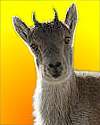
In 2009, the birth and 7-minute life of the first extinct-animal clone was described in the journal Theriogenology. A clone of the Pyranean ibex, or bucardo, was created using DNA from frozen skin samples taken in 1999 from the last individual before it died (6 Jan 2000). The mother was a closely-related subspecies of the Spanish ibex. The surrogate goat was implanted with an egg into which the bucardo's DNA had been inserted to replace the original gentic material. The research effort was the work of a team of scientists at the Center for Agro-Nutrition Research and Technology in Aragon, Spain. The team had implanted 208 embryos in different goats, of which seven became pregnant. Of those, just one resulted in a live birth, a clone that died within 7 minutes of respiratory failure due to lung defects. The bucardo thus went extinct a second time.«
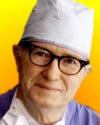
In 1964, the first animal to human heart transplant was made. Dr. James Hardy at the University of Mississippi transplanted the heart of a chimpanzee (named Bino) into the chest of Boyd Rush (age 68) in a last-ditch effort to save the man’s life because no human was heart available. The newly-transplanted heart beat on its own; but it was too small to maintain independent circulation and Rush died after 90 minutes. Hardy had to endure some severe criticism. (This was three years before Christiaan Barnard performed the first successful human heart transplant). Hardy also made the first human lung transplant in 1963 and a double-lung transplant that left the heart in place in 1987.

In 1960, a specially constructed bathyscaphe, the Trieste, descended 35,810 feet in the Pacific Ocean into Challenger Deep. This, the deepest point known to exist on earth, is in the Marianas Trench near the island of Guam. The Trieste cabin was a six-foot diameter steel capsule weighing 14 tons engineered by Swiss scientist Auguste Piccard to withstand the 16,000 lbs/sq.in. water pressure at that depth. Jacques Piccard (Auguste's son) and Navy Lieutenant Don Walsh made the five-hour descent, setting a deep-diving record. Through their window, they saw a foot-long fish, and thus answered the question of biologists who long wondered whether life could exist at such depths of the ocean. The record has stood unchallenged for 40 years since their historic dive.
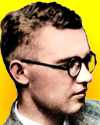
In 1930, Clyde Tombaugh made a photographic plate at Lowell Observatory in Flagstaff, Arizona. Six days later, he made another photographic plate of the same area of sky. However, he did not examine until some weeks later, and did not yet know it contained a discovery in waiting. On 18 Feb 1930, Tombaugh, compared these two images. It was then that he found a starry speck that changed position between them. Thus, he had identified what was called a new planet, shortly afterwards named Pluto. This was the only planet found in the twentieth century, after a systematic search instigated by the predictions of other astronomers. Tombaugh was 24 years old when he found it.«
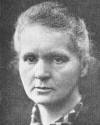
In 1911, Marie Curie's nomination to the French Academy of Sciences, having already won one Nobel Prize, was nevertheless voted down by the Academy's all-male membership. Marie Curie was one of six candidates, of which only one was to be chosen. The result was 30 votes for M. Eduoard Branly, the inventor of the coherer for wireless telegraphy, and 28 for Mme. Curie. (The Branly coherer was such a critical factor in radio communication that Marconi selected him as the man to whom he sent the first message by wireless from England to France.) After the vote, an announcement was made to state that the vote did not reflect the attitude of the academy toward the admission of women in any sense, and the election was judged on merit for recognition. Curie went on to win a second Nobel Prize.«
Madame Curie: A Biography, by Eve Curie. - book suggestion.
In 1896, Wilhelm Röntgen first made a public lecture-demonstration of his X-ray device, in Würzburg, Germany.
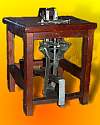
In 1849, the first U.S. patent for an envelope-making machine was issued to Jesse K. Park and Cornelius S. Watson of New York City (No. 6055). It was never used commercially, as it was shortly superceded by patents on improved machines by other inventors. It was treadle-operated and its mechanism included a stamper rod, gumming apparatus and folding apparatus. The patent model still exists in the collection of the National Postal Museum.«
In 1812, the second day of powerful earthquakes struck, with an epicenter in the far southeast corner of Missouri. It was a part of a three-month series in the central Mississippi River valley, known as the New Madrid earthquakes. They began on 16 Dec 1811, with the first two major earthquakes, six hours apart, each with an epicenter in northeastern Arkansas. All were felt hundreds of miles away. All were powerful, about magnitude 7-7.5. There were many aftershocks, and an a final major earthquake on 7 Feb 1812. Contemporary accounts tell of houses damaged, chimneys toppled, remarkable geological phenomena and landscapes changed. They remain among the most powerful earthquakes in the United States. The New Madrid fault remains a concern.«
When the Mississippi Ran Backwards: Empire, Intrigue, Murder, and the New Madrid Earthquakes, by Jay Feldman. - book suggestion.




