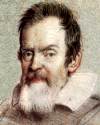
Born 20 Jan 1931.
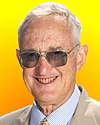
David Morris Lee is an American physicist who, with Robert C. Richardson and Douglas D. Osheroff, was awarded the 1996 Nobel Prize for Physics in 1996 for their joint discovery in 1972 of superfluidity in the rare isotope helium-3. Working at the low-temperature laboratory at Cornell University, they built their own apparatus to reduce temperature to about 0.002K. This was substantially lower than about 2K at which the common isotope helium-4 becomes a superfluid, as observed by Pjotr Kapitsa in the late 1930s. But He-3 had to be reduced in temperature to almost absolute zero before becoming superfluid, and able to flow without resistance, even to climb the walls of containers and flow down the outside. The atoms had until that point had moved with random speeds and directions. But as a superfluid, the atoms then move in a co-ordinated manner.«
David Morris Lee is an American physicist who, with Robert C. Richardson and Douglas D. Osheroff, was awarded the 1996 Nobel Prize for Physics in 1996 for their joint discovery in 1972 of superfluidity in the rare isotope helium-3. Working at the low-temperature laboratory at Cornell University, they built their own apparatus to reduce temperature to about 0.002K. This was substantially lower than about 2K at which the common isotope helium-4 becomes a superfluid, as observed by Pjotr Kapitsa in the late 1930s. But He-3 had to be reduced in temperature to almost absolute zero before becoming superfluid, and able to flow without resistance, even to climb the walls of containers and flow down the outside. The atoms had until that point had moved with random speeds and directions. But as a superfluid, the atoms then move in a co-ordinated manner.«
Born 20 Jan 1930. quotes
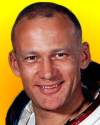
Edwin Eugene “Buzz” Aldrin is an American astronaut who set a record for extravehicular activity and was the second man to set foot on the Moon. As a former U.S. Airforce pilot in Korea, he was one of the third group of astronauts named by NASA in Oct 1963. On 11 Nov 1966, he launched in Gemini 12 with command pilot James Lovell on a 4-day flight, during which Aldrin established a new record for extravehicular activity (5½ hours) outside the spacecraft. Aldrin was the lunar module pilot for Apollo 11, launched 16 Jul 1969. This was the first manned lunar landing mission, and Aldrin was the second man to set foot on the moon, (following Neil Armstrong) on 20 Jul 1969, and spent 2-hr 15-min on the lunar surface.«
Edwin Eugene “Buzz” Aldrin is an American astronaut who set a record for extravehicular activity and was the second man to set foot on the Moon. As a former U.S. Airforce pilot in Korea, he was one of the third group of astronauts named by NASA in Oct 1963. On 11 Nov 1966, he launched in Gemini 12 with command pilot James Lovell on a 4-day flight, during which Aldrin established a new record for extravehicular activity (5½ hours) outside the spacecraft. Aldrin was the lunar module pilot for Apollo 11, launched 16 Jul 1969. This was the first manned lunar landing mission, and Aldrin was the second man to set foot on the moon, (following Neil Armstrong) on 20 Jul 1969, and spent 2-hr 15-min on the lunar surface.«
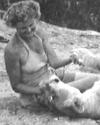
Adamson with Elsa
Born 20 Jan 1910; died 3 Jan 1980 at age 69.
Austrian naturalist known as the author of the best-selling book Born Free. As well as a legacy of water-colour paintings of indigenous plants painted by Adamson during her early years in Kenya, she collected many botanical specimens. Her records include information concerning local uses of plant parts in ritual and medicinal practices, and for insecticides, dyes, fibres and food. On 1 Feb 1956, a completely new period in her life began with the arrival of an orphan lioness cub. With this cub, named Elsa, and later with a cheetah and a leopard, she proved that by skilful and considered action wild animals raised up by man can be taught to manage in nature independently. She was killed in Northern Kenya by a servant in a wage dispute.
Austrian naturalist known as the author of the best-selling book Born Free. As well as a legacy of water-colour paintings of indigenous plants painted by Adamson during her early years in Kenya, she collected many botanical specimens. Her records include information concerning local uses of plant parts in ritual and medicinal practices, and for insecticides, dyes, fibres and food. On 1 Feb 1956, a completely new period in her life began with the arrival of an orphan lioness cub. With this cub, named Elsa, and later with a cheetah and a leopard, she proved that by skilful and considered action wild animals raised up by man can be taught to manage in nature independently. She was killed in Northern Kenya by a servant in a wage dispute.
Born Free: A Lioness of Two Worlds, by Joy Adamson and George Page. - book suggestion.
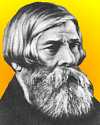
Born 20 Jan 1857; died 24 Dec 1927 at age 70.
Vladimir Mikhailovich Bekhterev was a Russian neurophysiologist and psychiatrist who studied the anatomy and physiology of the nervous system. He made contributed knowledge of the brain formations, investigated reflexes, mental disorders and identified the localization of brain functions. His name is associated with Bekhterev's disease, various reflexive actions, and some anatomical structures. In 1895, he established at Kazan the first laboratory for research on the anatomy and physiology of the nervous system. In 1896, he founded the Nevrologichesky Vestnik, the first Russian journal on nervous diseases. Funding it himself, in 1907, he opened a psycho neurological institute, which later became a state academy. He died suddenly while in good health, and is believed to have been murdered by Stalin after giving him a consultation and a diagnosis of “grave paranoia.”[Date of birth is 20 Feb 1857 on the old calendar.]
Vladimir Mikhailovich Bekhterev was a Russian neurophysiologist and psychiatrist who studied the anatomy and physiology of the nervous system. He made contributed knowledge of the brain formations, investigated reflexes, mental disorders and identified the localization of brain functions. His name is associated with Bekhterev's disease, various reflexive actions, and some anatomical structures. In 1895, he established at Kazan the first laboratory for research on the anatomy and physiology of the nervous system. In 1896, he founded the Nevrologichesky Vestnik, the first Russian journal on nervous diseases. Funding it himself, in 1907, he opened a psycho neurological institute, which later became a state academy. He died suddenly while in good health, and is believed to have been murdered by Stalin after giving him a consultation and a diagnosis of “grave paranoia.”[Date of birth is 20 Feb 1857 on the old calendar.]
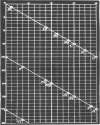
Born 20 Jan 1820; died 14 Nov 1886 at age 66.
French geologist who was the first to arrange the chemical elements in order of atomic weights (1862). De Chancourtois plotted the atomic weights on the surface of a cylinder with a circumference of 16 units, the approximate atomic weight of oxygen. The resulting helical curve which he called the telluric helix brought closely related elements onto corresponding points above or below one another on the cylinder. Thus, he suggested that "the properties of the elements are the properties of numbers." Although his publication was significant, it was ignored by chemists as it was written in the language of geology, and the editors omitted a crucial explanatory table. It was Dmitry Mendeleyev's table published in 1869 that became most recognized.
French geologist who was the first to arrange the chemical elements in order of atomic weights (1862). De Chancourtois plotted the atomic weights on the surface of a cylinder with a circumference of 16 units, the approximate atomic weight of oxygen. The resulting helical curve which he called the telluric helix brought closely related elements onto corresponding points above or below one another on the cylinder. Thus, he suggested that "the properties of the elements are the properties of numbers." Although his publication was significant, it was ignored by chemists as it was written in the language of geology, and the editors omitted a crucial explanatory table. It was Dmitry Mendeleyev's table published in 1869 that became most recognized.
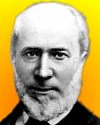
Born 20 Jan 1812; died 28 Oct 1880 at age 68. quotes
French-born American psychiatrist who opened the world's first school for the severely mentally retarded (1839). He was a student of Jean Gaspard Itard, who suggested this speciality. Seguin developed a sensory training method. In 1850, Seguin moved to the U.S. where he set up more teaching centres for the retarded. In his book, Idiocy: and its Treatment by the Physiological Method (1866), he described the approach he used at the Seguin Physiological School in New York City. When the Association of Medical Officers of American Institutions for Idiotic and Feebleminded Persons was formed, Seguin became its first president. This later changed its name to the American Association on Mental Retardation.«
French-born American psychiatrist who opened the world's first school for the severely mentally retarded (1839). He was a student of Jean Gaspard Itard, who suggested this speciality. Seguin developed a sensory training method. In 1850, Seguin moved to the U.S. where he set up more teaching centres for the retarded. In his book, Idiocy: and its Treatment by the Physiological Method (1866), he described the approach he used at the Seguin Physiological School in New York City. When the Association of Medical Officers of American Institutions for Idiotic and Feebleminded Persons was formed, Seguin became its first president. This later changed its name to the American Association on Mental Retardation.«
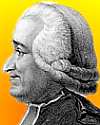
Born 20 Jan 1716; died 30 Apr 1795 at age 79.
French archaeologist and author. During three years spent in Italy from 1755, he gained a background assisting in archaeological research. Later in his life he wrote Voyage du jeune Anacharsis en Grèce dans le milieu du IVe siècle (Voyage of Young Anacharsis in Greece in the mid-14th century; 1789). The central character in this four-volume novel was a young Scythian in the age of Plato travelling through ancient Greece, meeting famous people, with descriptions of its cities, buildings, institutions, and manners. It was one of the most widely read books in 19th-century France. As an author, his intention was to convey some knowledge of Greek civilization in an interesting form, rather than a work of strict scholarship.«
French archaeologist and author. During three years spent in Italy from 1755, he gained a background assisting in archaeological research. Later in his life he wrote Voyage du jeune Anacharsis en Grèce dans le milieu du IVe siècle (Voyage of Young Anacharsis in Greece in the mid-14th century; 1789). The central character in this four-volume novel was a young Scythian in the age of Plato travelling through ancient Greece, meeting famous people, with descriptions of its cities, buildings, institutions, and manners. It was one of the most widely read books in 19th-century France. As an author, his intention was to convey some knowledge of Greek civilization in an interesting form, rather than a work of strict scholarship.«
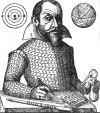
Born 20 Jan 1573; died 26 Dec 1624 at age 51.
(Also known as Simon Mayr) German astronomer, pupil of Tycho Brahe, one of the earliest users of the telescope and the first in print to make mention the Andromeda nebula (1612). He studied and named the four largest moons of Jupiter as then known: Io, Europa, Ganymede and Callisto (1609) after mythological figures closely involved in love with Jupiter. Although he may have made his discovery independently of Galileo, when Marius claimed to have discovered these satellites of Jupiter (1609), in a dispute over priority, it was Galileo who was credited by other astronomers. However, Marius was the first to prepare tables of the mean periodic motions of these moons. He also observed sunspots in 1611.«[DSB gives date of birth 20 Jan 1573. EB gives 10 Jan 1573.]
(Also known as Simon Mayr) German astronomer, pupil of Tycho Brahe, one of the earliest users of the telescope and the first in print to make mention the Andromeda nebula (1612). He studied and named the four largest moons of Jupiter as then known: Io, Europa, Ganymede and Callisto (1609) after mythological figures closely involved in love with Jupiter. Although he may have made his discovery independently of Galileo, when Marius claimed to have discovered these satellites of Jupiter (1609), in a dispute over priority, it was Galileo who was credited by other astronomers. However, Marius was the first to prepare tables of the mean periodic motions of these moons. He also observed sunspots in 1611.«[DSB gives date of birth 20 Jan 1573. EB gives 10 Jan 1573.]

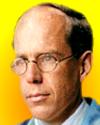
Died 20 Jan 1944 at age 83 (born 25 May 1860). quotes
American psychologist who had a talent in mathematics from a young age, and accordingly applied objective, quantitative methods with his career in experimental psychology. As a university professor, he was the first in America to teach a course in statistical analysis. From 1890, he termed his investigations “mental testing,” with such goals as measuring the amount of pressure required to produce pain, or reaction time to sounds. He developed the order of merit ranking method. Fields in which he applied psychology were broad, including education, business, industry, and advertising. The ideas in Galton's eugenics theory also interested him, and he did support such concepts as sterilization of persons of lower intelligence. He originated professional directories, published scientific periodicals and founded the Science Press (1923).«
American psychologist who had a talent in mathematics from a young age, and accordingly applied objective, quantitative methods with his career in experimental psychology. As a university professor, he was the first in America to teach a course in statistical analysis. From 1890, he termed his investigations “mental testing,” with such goals as measuring the amount of pressure required to produce pain, or reaction time to sounds. He developed the order of merit ranking method. Fields in which he applied psychology were broad, including education, business, industry, and advertising. The ideas in Galton's eugenics theory also interested him, and he did support such concepts as sterilization of persons of lower intelligence. He originated professional directories, published scientific periodicals and founded the Science Press (1923).«
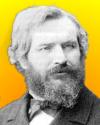
Died 20 Jan 1922 at age 84 (born 5 Jan 1838). quotes
French mathematician and engineer who prepared a foundation for group theory and built on the prior work of Évariste Galois. As a mathematician, Jordan's interests were diverse, covering topics throughout the aspects of mathematics being studied in his era. The topics in his published works include finite groups, linear and multilinear algebra, the theory of numbers, topology of polyhedra, differential equations, and mechanics.
French mathematician and engineer who prepared a foundation for group theory and built on the prior work of Évariste Galois. As a mathematician, Jordan's interests were diverse, covering topics throughout the aspects of mathematics being studied in his era. The topics in his published works include finite groups, linear and multilinear algebra, the theory of numbers, topology of polyhedra, differential equations, and mechanics.
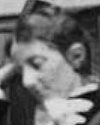
c.1889
Died 20 Jan 1921 at age 73 (born 11 Sep 1847). quotes
American astronomer who trained with Maria Mitchell and succeeded her as professor and director of the Vassar College Observatory. As Mitchell had before her, Whitney championed science education the advancement of professional opportunities for women. She developed the astronomy department. Four years before her 1910 retirement, there were 160 students and eight different astronomy courses, including some of the first courses anywhere on astrophysics and on variable stars. During her tenure as director, the Observatory staff published 102 papers in major astronomical journals reporting their work on comets, asteroids, and variable stars. From 1896, photographic plates were used to study and measure star clusters.«[Image: Whitney leaning on ladder under the equatorial telescope in the Observatory dome of Vassar College, circa 1889]
American astronomer who trained with Maria Mitchell and succeeded her as professor and director of the Vassar College Observatory. As Mitchell had before her, Whitney championed science education the advancement of professional opportunities for women. She developed the astronomy department. Four years before her 1910 retirement, there were 160 students and eight different astronomy courses, including some of the first courses anywhere on astrophysics and on variable stars. During her tenure as director, the Observatory staff published 102 papers in major astronomical journals reporting their work on comets, asteroids, and variable stars. From 1896, photographic plates were used to study and measure star clusters.«[Image: Whitney leaning on ladder under the equatorial telescope in the Observatory dome of Vassar College, circa 1889]
Died 20 Jan 1914 at age 77 (born 24 Jun 1836).
German geologist who laid the foundations of the science of microscopic petrography (the study of rocks in thin section, based on the optical properties of constituent mineral grains). He was appointed professor (extraordinary) of petrography at Strasbourg in 1873 and ordinary professor of mineralogy at Heidelberg in 1878.
German geologist who laid the foundations of the science of microscopic petrography (the study of rocks in thin section, based on the optical properties of constituent mineral grains). He was appointed professor (extraordinary) of petrography at Strasbourg in 1873 and ordinary professor of mineralogy at Heidelberg in 1878.
Died 20 Jan 1907 at age 64 (born 10 Feb 1842). quotes
Irish astronomical writer who was a diligent compiler of facts rather than a practicing scientist. Nevertheless, by 1885, her exhaustive treatise, A Popular History of Astronomy in the Nineteenth Century gained international recognition as an authoritative work. In 1903, with Lady Huggins, she was elected an honorary member of the Royal Astronomical Society, a rank previously held only by two other women, Caroline Herschel and Mary Somerville. Her publications included several books and 55 pieces in the Edinburgh Review. She contributed some astronomer biographies to the Dictionary of National Biography and some astronomical entries in the Encyclopaedia Britannica.«
Irish astronomical writer who was a diligent compiler of facts rather than a practicing scientist. Nevertheless, by 1885, her exhaustive treatise, A Popular History of Astronomy in the Nineteenth Century gained international recognition as an authoritative work. In 1903, with Lady Huggins, she was elected an honorary member of the Royal Astronomical Society, a rank previously held only by two other women, Caroline Herschel and Mary Somerville. Her publications included several books and 55 pieces in the Edinburgh Review. She contributed some astronomer biographies to the Dictionary of National Biography and some astronomical entries in the Encyclopaedia Britannica.«
Agnes Mary Clerke and the Rise of Astrophysics, by Mary Brück. - book suggestion.
Died 20 Jan 1901 at age 74 (born 4 Apr 1826).
Belgian-born French electrical engineer and inventor (1869) of the Gramme dynamo, a continuous-current electrical generator that gave principal impetus to the development of electric power. In 1870 he invented a continuous-current dynamo with a ring armature (a ring of soft iron around which were placed insulated copper coils). This produced much higher voltages than other dynamos of the time and was the first high-voltage direct-current generator practical for mass production and distribution. Driven by steam-engines, they were immediately successful and were used for a variety of purposes, including factory lighting, electroplating, and lighthouses. With these dynamos, the era of large-scale electrical engineering began.
Belgian-born French electrical engineer and inventor (1869) of the Gramme dynamo, a continuous-current electrical generator that gave principal impetus to the development of electric power. In 1870 he invented a continuous-current dynamo with a ring armature (a ring of soft iron around which were placed insulated copper coils). This produced much higher voltages than other dynamos of the time and was the first high-voltage direct-current generator practical for mass production and distribution. Driven by steam-engines, they were immediately successful and were used for a variety of purposes, including factory lighting, electroplating, and lighthouses. With these dynamos, the era of large-scale electrical engineering began.
Died 20 Jan 1720 at age 65 (born 26 Oct 1654).
Italian clinician and anatomist, personal physician to three popes, who is considered the first modern hygienist. He obtained his M.D. in 1672, a month before age 18 years. Having examined the causes of sudden deaths, in 1706 he published De motu cordis mortibus, on the problems of cardiac pathology, and De motu cordis et aneuysmatibus (1728). He carried out extensive anatomical and physiological studies, also epidemiology studies on malaria, influenza and cattle plague. In 1717, contrary to the old conception of "mal' aria " - literally, "bad air" - Lancisi observed that the lethal fever, malaria, disappeared when the swamps near to the city were cleared. He concluded that injurious substances transmitted from flies and mosquitos were the origin of the disease.
Italian clinician and anatomist, personal physician to three popes, who is considered the first modern hygienist. He obtained his M.D. in 1672, a month before age 18 years. Having examined the causes of sudden deaths, in 1706 he published De motu cordis mortibus, on the problems of cardiac pathology, and De motu cordis et aneuysmatibus (1728). He carried out extensive anatomical and physiological studies, also epidemiology studies on malaria, influenza and cattle plague. In 1717, contrary to the old conception of "mal' aria " - literally, "bad air" - Lancisi observed that the lethal fever, malaria, disappeared when the swamps near to the city were cleared. He concluded that injurious substances transmitted from flies and mosquitos were the origin of the disease.
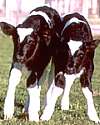
In 1998, American researchers announced they have cloned calves that may produce medicinal milk. Dr James Robl at the University of Massachusetts and Dr Steven Stice of Advanced Cell Technology were the first to clone cows from fetal cells in which human genes were spliced into cattle DNA. Creating two identical, genetically engineered calves is a step towards the mass production of human drugs in animals. Their goal was to turn cows into drug factories, mass producing milk that contains human proteins important for treating human diseases. The scientists used a variation on the techniques previously used in Edinburgh, Scotland, to create the cloned sheep Dolly. Cows would be better producers of the proteins than sheep because they make more milk.Image: Clones George (left) and Charlie.
In 1994, a gene test was reported in Nature which could predict at an early age the likelihood of osteoporosis in later life. This is a disease which weakens bones, but according to the Austrlian researchers, preventative measures could be taken long before the onset of the disease if the genetic defect is diagnosed early. The disease leads to broken bones that have lost strength from the loss of excessive amount of bone tissue.
In 1986, Britain and France announced plans to build rail tunnels underneath the English Channel, the Chunnel.
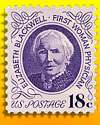
In 1974, Elizabeth Blackwell, America's first female M.D., was featured on a U.S. postage stamp. An engraved image was printed in violet. It was issued in an 18 cent denomination. The postage rate for a first class surface letter at the time was 8 cents per ounce (airmail 11 cents per ounce).«
Elizabeth Blackwell: First Woman Physician, by Tristan Boyer Binns. - book suggestion.
In 1969, the New York Times made public the news of the discovery a few days earlier of the first optical pulsar by astronomers at the University of Arizona on 16 Jan 1969. It was the result of a year's search using a stroboscopic technique. Flashes of light in the optical range were found coming from the same location in the Crab Nebula as a previously known pulsar emitting radio bursts. The rate of pulsation of the two signals was found to be the same, and thus presumed to be from a single star. Other observatories were immediately notified and the flashing was confirmed by the McDonald Observatory and by the powerful 84-inch reflector telescope at the Kitt Peak National Observatory in Arizona. The star was flashing at a rate of about 30 times per second, with intermediate flashes of lesser intensity.
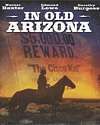
In 1929, the first full-length motion picture in the U.S. filmed outdoors was released by Fox Film Corporation. Re-titled as In Old Arizona, it was adapted from a short story by O. Henry, “The Caballero's Way.”The black and white Western was a box-office hit, starring Oscar-winning Warren Baxter as “The Cisco Kid,” a carefree Mexican bandit who outwits the sheriff trying to capture him. A review in the New York Times refererred to “the novelty of the Movietone,” listed various incidental sounds and particularly noted the welcome new consideration that the sound of galloping grew fainter and fainter into the distance. Film locations included Zion National Park, Bryce Canyon, the Mojave Desert in California and San Juan Capistrano mission.«
In 1896, X-rays were reported by Henri Poincaré reading a letter from Wilhelm Röntgen to the weekly meeting of the Academie des Sciences in Paris, and members viewed some of his X-ray photographs. Henri Becquerel was present, and took note that X-rays seemed to come from the phosphorescent patch on the glass tube where the cathode rays struck it. This inspired him to study if the phosphorescence of minerals was related to X-rays. (Instead, a few weeks later, he discovered the radioactivity of a uranium mineral.)
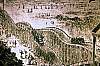
In 1885, the first U.S. patent for a roller coasting structure was issued to La Marcus Thompson of Coney Island, NY. (No. 332,762). Coney Island, at the terminus of New York City's extensive trolley line, was already a popular amusement park in 1884, when Thompson opened a new attraction - the Gravity Pleasure Switchback Railway. For a five-cent ticket, passengers sat sideways in cars that by gravity descended the gentle waves of the 600-foot wooden mini-railway, reaching a top speed of six miles per hour. The enormously popular ride earned back Thompson's original $1,600 investment within three weeks. Within four years, he had built about 50 more across the nation and in Europe. On 22 Dec 1885, he patented the gravity switch-back railway.
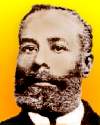
In 1874, a U.S. patent for a "Steam Lubricator" was issued to the prolific Black American inventor, Elijah J. McCoy (No. 146,697).
The Real McCoy, by Portia P. James. - book suggestion.
In 1838, the first Travelling Post Office in Britain, a converted horsebox on the Grand Junction Railway in which the mail could be sorted, left London for Birmingham. Its success led to a rapidly expanded system with specially-designed railway wagons added to passenger trains. In the late 19th century the TPOs were specially timed to coincide with the ships which carried foreign mail. In 1855, trains solely devoted to the carriage and sorting of mail were introduced. During the 1990s, railway service became less reliable than by road or inland air network. The last TPO trains ran on 9/10 Jan 2004.
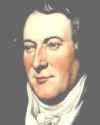
William Maclure
In 1809, the first significant U.S. geology book was read by William Maclure before the American Philosophical Society at Philadelphia, Pa. His Observations on the Geology of the United States, contained the first chart of United States territory that divided the land into rock types. Though crude, it was the first colored true geological map of the country and one of the world's earliest geological maps. It was published with revisions in 1817 that accepted basalt and granite to be rocks of volcanic origin (thus shrinking the concept of “Neptunian” rocks). Maclure was a wealthy businessman and amateur geologist who emigrated from Scotland and became a citizen in 1796. He is considered the first notable and influential American geologist.