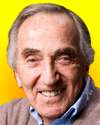
Born 12 Jan 1927; died 27 Oct 2007 at age 80. quotes
Leslie Eleazer Orgel was an English-American evolutionary biologist and chemist whose studies of the early development of life helped form the theory of the development of DNA, and its precursor RNA. Orgel thought the idea of panspermia to be credible for investigation—that the seeds of life may have reached Earth from elsewhere in space. In 2006, he wrote in Nature that comprehending the billions of years of life on Earth was “chaotic intellectual territory”. He is known for a pair of axioms known as Orgel’s Rules. The first asserts that a primitive process is aided by the evolution of proteins that will improve its efficiency—such as enzymes. The second is that “Evolution is cleverer than you”, to mean it can take more imagination by scientists to keep up with believing what evolution can have accomplished.«
Leslie Eleazer Orgel was an English-American evolutionary biologist and chemist whose studies of the early development of life helped form the theory of the development of DNA, and its precursor RNA. Orgel thought the idea of panspermia to be credible for investigation—that the seeds of life may have reached Earth from elsewhere in space. In 2006, he wrote in Nature that comprehending the billions of years of life on Earth was “chaotic intellectual territory”. He is known for a pair of axioms known as Orgel’s Rules. The first asserts that a primitive process is aided by the evolution of proteins that will improve its efficiency—such as enzymes. The second is that “Evolution is cleverer than you”, to mean it can take more imagination by scientists to keep up with believing what evolution can have accomplished.«
The Origins of Life: Molecules and Natural Selection, by Leslie Orgel. - book suggestion.
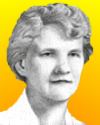
Born 12 Jan 1916; died 5 Oct 2013 at age 97.
Ruth Rogan Benerito was an American chemist who was a pioneer in the development of wash-and-wear fabrics. Earlier, she investigated fat emulsions and transport of fat in animals. For the Office of the Surgeon General, she developed an intravenous fat emulsion for intravenous feeding to help supply necessary calories for long term patients. Benerito also investigated the reaction epoxies. Her findings have been used not only in the textile industry but also to paper, film, and epoxy plastic manufacturers, and they have been applied in the use of epoxy compounds to preserve wood. Benerito has been granted over 50 patents. Her research has resulted in the development of cotton fabrics that are comfortable, wrinkle-free, stain resistant, “drip-dry” and better able to retard flames.
Ruth Rogan Benerito was an American chemist who was a pioneer in the development of wash-and-wear fabrics. Earlier, she investigated fat emulsions and transport of fat in animals. For the Office of the Surgeon General, she developed an intravenous fat emulsion for intravenous feeding to help supply necessary calories for long term patients. Benerito also investigated the reaction epoxies. Her findings have been used not only in the textile industry but also to paper, film, and epoxy plastic manufacturers, and they have been applied in the use of epoxy compounds to preserve wood. Benerito has been granted over 50 patents. Her research has resulted in the development of cotton fabrics that are comfortable, wrinkle-free, stain resistant, “drip-dry” and better able to retard flames.
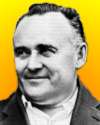
Born 12 Jan 1907; died 14 Jan 1966 at age 59.
Soviet rocket engineer who designed guided missiles, rockets, and spacecraft. He was one of the founders of Moscow Group for the Study of Reactive Motion. In 1933, he participated in the Soviet Union's first launch of a liquid-propellant rocket. Because he was not a member of the Communist Party, he spent much of his life under house arrest. After demonstrating his expertise in the modification of captured V2 rockets, Korolev directed the design, testing, construction, and launching of the Vostok spacecraft, and most of the U.S.S.R.'s other projects. Around 1958, Korolev argued for the pursuit of manned space flight instead of military reconnaissance satellites. After much debate, the Vostok project was approved provided the launch vehicle could also be useful to the military.
Soviet rocket engineer who designed guided missiles, rockets, and spacecraft. He was one of the founders of Moscow Group for the Study of Reactive Motion. In 1933, he participated in the Soviet Union's first launch of a liquid-propellant rocket. Because he was not a member of the Communist Party, he spent much of his life under house arrest. After demonstrating his expertise in the modification of captured V2 rockets, Korolev directed the design, testing, construction, and launching of the Vostok spacecraft, and most of the U.S.S.R.'s other projects. Around 1958, Korolev argued for the pursuit of manned space flight instead of military reconnaissance satellites. After much debate, the Vostok project was approved provided the launch vehicle could also be useful to the military.
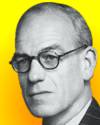
Born 12 Jan 1906; died 14 Sep 1996 at age 90. quotes
Edred John Henry Corner was an English botanist, mycologist and author who was one of the greatest exponents of tropical botany. In 1929, the year after he graduated, Corner was appointed Assistant Director of the Singapore Botanic Garden, tasked to study the diversity of fungi in the then Malayan Straits Settlements, where he remained for 16 years. During wartime Japanese occupation, though under a form of house arrest, he was still able to continue his research, and protect the herbarium and plant collections. In subsequent years, from his time spent in the tropical forest, he gained expertise on tropical plants. He published several books, many papers, gaining international recognition. He collected plant samples on excursions worldwide.«
Edred John Henry Corner was an English botanist, mycologist and author who was one of the greatest exponents of tropical botany. In 1929, the year after he graduated, Corner was appointed Assistant Director of the Singapore Botanic Garden, tasked to study the diversity of fungi in the then Malayan Straits Settlements, where he remained for 16 years. During wartime Japanese occupation, though under a form of house arrest, he was still able to continue his research, and protect the herbarium and plant collections. In subsequent years, from his time spent in the tropical forest, he gained expertise on tropical plants. He published several books, many papers, gaining international recognition. He collected plant samples on excursions worldwide.«
The Life of Plants, by E.J.H. Corner. - book suggestion.

Born 12 Jan 1903; died 7 Feb 1960 at age 57.
Soviet nuclear physicist who from 1932 conducted nuclear science research in the Soviet Union, during which time his team built a cyclotron, a proton accelerator and studied artificial radioactivity and neutron-proton interactions. During WW II, he was chosen as director for the development of his country's first atomic bomb, detonated 29 Aug 1949. Meanwhile, in Dec 1946, Kurchatov demonstrated a working prototype reactor, though limited to producing only a few watts and by Jun 1948, a plutonium production reactor. Within a few years, he produced the world's first practical thermonuclear bomb (1952). Before 1978, the Soviet name for element-104 was kurchatovium (Ku), though subsequently rutherfordium (Rf) became the accepted name.«
Soviet nuclear physicist who from 1932 conducted nuclear science research in the Soviet Union, during which time his team built a cyclotron, a proton accelerator and studied artificial radioactivity and neutron-proton interactions. During WW II, he was chosen as director for the development of his country's first atomic bomb, detonated 29 Aug 1949. Meanwhile, in Dec 1946, Kurchatov demonstrated a working prototype reactor, though limited to producing only a few watts and by Jun 1948, a plutonium production reactor. Within a few years, he produced the world's first practical thermonuclear bomb (1952). Before 1978, the Soviet name for element-104 was kurchatovium (Ku), though subsequently rutherfordium (Rf) became the accepted name.«
I.V. Kurchatov:: A Socialist-Realist Biography of the Soviet Nuclear Scientist, by I. N. Golovin. - book suggestion.

Born 12 Jan 1899; died 12 Oct 1965 at age 66.
Swiss chemist who received the Nobel Prize for Physiology or Medicine in 1948 for discovering the potent toxic effects on insects of DDT. With its chemical derivatives, DDT became the most widely used insecticide for more than 20 years and was a major factor in increased world food production.
Swiss chemist who received the Nobel Prize for Physiology or Medicine in 1948 for discovering the potent toxic effects on insects of DDT. With its chemical derivatives, DDT became the most widely used insecticide for more than 20 years and was a major factor in increased world food production.
Born 12 Jan 1896; died 2 May 1981 at age 85.
U.S. psychologist and inventor of several widely used intelligence tests for adults and children. During WW I, while assisting Edwin Garrigues Boring (1886-1968) in testing army recruits, Wechsler realized the inadequacies of the Army Alpha Tests (designed to measure abilities of conscripts and match them to suitable military jobs). He concluded that academically defined "intelligence" did not apply to "real life" situations. After leaving the military and more years of research, he developed the Wechsler Adult Intelligence Scale, and introduced deviation scores in intelligence tests. He developed the Wechsler Memory Scale in 1945, Wechsler Intelligence Scale for Children (1949), and Wechsler Preschool and Primary Scale of Intelligence (1967).
U.S. psychologist and inventor of several widely used intelligence tests for adults and children. During WW I, while assisting Edwin Garrigues Boring (1886-1968) in testing army recruits, Wechsler realized the inadequacies of the Army Alpha Tests (designed to measure abilities of conscripts and match them to suitable military jobs). He concluded that academically defined "intelligence" did not apply to "real life" situations. After leaving the military and more years of research, he developed the Wechsler Adult Intelligence Scale, and introduced deviation scores in intelligence tests. He developed the Wechsler Memory Scale in 1945, Wechsler Intelligence Scale for Children (1949), and Wechsler Preschool and Primary Scale of Intelligence (1967).
Born 12 Jan 1861; died 8 Nov 1934 at age 73. quotes
American philosopher and theoretical psychologist who influenced the formative period of psychology in 1890s America. He considered the relevance of Darwinian evolution to psychology. He regarded individual differences as a focus for study and held that theory held an important place psychology, while being critical of the value of narrow experimentalism.
American philosopher and theoretical psychologist who influenced the formative period of psychology in 1890s America. He considered the relevance of Darwinian evolution to psychology. He regarded individual differences as a focus for study and held that theory held an important place psychology, while being critical of the value of narrow experimentalism.
Born 12 Jan 1857; died 4 Mar 1910 at age 53.
Swedish physicist, son of Anders Ångström, who invented an electric compensation pyrheliometer and other devices for infra-red photography. With these, he studied the sun's heat radiation.«
Swedish physicist, son of Anders Ångström, who invented an electric compensation pyrheliometer and other devices for infra-red photography. With these, he studied the sun's heat radiation.«
Born 12 Jan 1853; died 6 Aug 1925 at age 72.
Italian mathematician instrumental in the development of the absolute differential calculus (also called the Ricci calculus), now known as tensor analysis. Ricci-Curbastro's early work was in mathematical physics, particularly on the laws of electric circuits and differential equations. He changed area somewhat to undertake research in differential geometry and was the inventor of the absolute differential calculus between 1884 and 1894. Ricci-Curbastro's absolute differential calculus became the foundation of tensor analysis and was used by Einstein in his theory of general relativity. As a councillor for his home town of Lugo, he was involved in many projects relating to the supply of water and to swamp drainage.
Italian mathematician instrumental in the development of the absolute differential calculus (also called the Ricci calculus), now known as tensor analysis. Ricci-Curbastro's early work was in mathematical physics, particularly on the laws of electric circuits and differential equations. He changed area somewhat to undertake research in differential geometry and was the inventor of the absolute differential calculus between 1884 and 1894. Ricci-Curbastro's absolute differential calculus became the foundation of tensor analysis and was used by Einstein in his theory of general relativity. As a councillor for his home town of Lugo, he was involved in many projects relating to the supply of water and to swamp drainage.
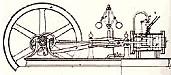
Jean-Joseph-Étienne Lenoir was a Belgian-French inventor who devised the world's first commercially successful internal-combustion engine. He moved to Paris where his work with electro-plating led him to other electrical inventions, among them a railway telegraph. Lenoir patented his first engine in 1860. Looking much like a double-acting steam engine, it fired an uncompressed charge of air and illuminating gas with an ignition system of his own design. One of these engines powered a road vehicle in 1863; another ran a boat. Because of improved designs by Nikolaus Otto and other inventors, the Lenoir engine became obsolete and only about 500 Lenoir engines were built. The Lenoir engine wasn't efficient enough, and the inventor died poor.Image right: patent diagram 24 Jan 1860 (source)
Born 12 Jan 1792; died 28 Oct 1841 at age 49.
Swedish chemist, (a pupil of Jöns Berzelius) who discovered lithium (reported 1818) in a compound obtained from petalite. This mineral was found in the iron mine of Uto, in Sweden. The alkaline component, named lithia, was lithium oxide. Arfwedson was unable isolate lithium as metal because that required electrolysis with stronger batteries than he had available. (The separation was eventually done by Humphry Davy.) Petalite is now known to be lithium aluminium silicate. He afterwards also discovered lithium in two other minerals, spodumene and lepidolite. Arfwedson abandoned scientific endeavour to spend his time running his family's manufactories and mines that he inherited.«
Swedish chemist, (a pupil of Jöns Berzelius) who discovered lithium (reported 1818) in a compound obtained from petalite. This mineral was found in the iron mine of Uto, in Sweden. The alkaline component, named lithia, was lithium oxide. Arfwedson was unable isolate lithium as metal because that required electrolysis with stronger batteries than he had available. (The separation was eventually done by Humphry Davy.) Petalite is now known to be lithium aluminium silicate. He afterwards also discovered lithium in two other minerals, spodumene and lepidolite. Arfwedson abandoned scientific endeavour to spend his time running his family's manufactories and mines that he inherited.«


Italian physiologist who made important contributions to the experimental study of bodily functions and animal reproduction. Spallanzani demonstrated that microorganisms arose not by spontaneous generation but from spores in the air. He also studied regeneration and spermatozoa. He showed that contact by semen was necessary for development of the egg and he achieved the first successful artificial insemination of a dog (1785). He explained the circulation of the blood and the digestive system of animals. Spallanzani also worked on various problems in the physical and earth sciences. His investigations into the development of microscopic life in nutrient culture solutions paved the way for the research of Louis Pasteur.
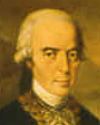
Born 12 Jan 1716; died 5 Jul 1795 at age 79.
Spanish scientist and naval officer who discovered the element platinum (atomic number 78). In 1735, the French and Spanish governments sent an scientific expedition to Peru and Ecuador to measure a degree of meridian at Quinto, close to the equator. Ulloa was one of the officers appointed to take charge of the expedition. In 1744, the ship on which he returned was captured by the British, and he was taken prisoner, though treated respectfully by the English naval officers for they “were not at war with the arts and sciences.” The log of his voyage to Peru published in 1748 contains a description of platinum. He established the first museum of natural history and the first metallurgical laboratory in Spain, as well as the Cadiz observatory.
Spanish scientist and naval officer who discovered the element platinum (atomic number 78). In 1735, the French and Spanish governments sent an scientific expedition to Peru and Ecuador to measure a degree of meridian at Quinto, close to the equator. Ulloa was one of the officers appointed to take charge of the expedition. In 1744, the ship on which he returned was captured by the British, and he was taken prisoner, though treated respectfully by the English naval officers for they “were not at war with the arts and sciences.” The log of his voyage to Peru published in 1748 contains a description of platinum. He established the first museum of natural history and the first metallurgical laboratory in Spain, as well as the Cadiz observatory.
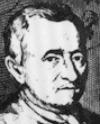
Born 12 Jan 1579; died 30 Dec 1644 at age 65. quotes
Belgian natural philosopher, chemist, physician and physiologist who coined the word “gas” (via Greek khaos, empty space), of which he found several examples, most natably carbon dioxide. As a man of his age, he was part medievalalchemistand part scientist. Helmont was the first to recognize gases distinct from atmospheric air. He determined that the gas given off by burning charcoal is the same as that given off by fermenting grape juice. This he named spiritus silvestre("wild spirit"); we call it carbon dioxide. He also identified hydrogen sulphide from humans, and made hydrochloric acis gas. As a physician andphysiologist, Helmont was one of the first to apply chemical principles in human health and disease. Some call him the “father ofbiochemistry.” He was interrogated by the Inquisition, and spent some time under house arrest.«Birth date: DSB gives 12 Jan 1579; EB gives "12 Jan 1580,[1579, Old Style]."
Belgian natural philosopher, chemist, physician and physiologist who coined the word “gas” (via Greek khaos, empty space), of which he found several examples, most natably carbon dioxide. As a man of his age, he was part medievalalchemistand part scientist. Helmont was the first to recognize gases distinct from atmospheric air. He determined that the gas given off by burning charcoal is the same as that given off by fermenting grape juice. This he named spiritus silvestre("wild spirit"); we call it carbon dioxide. He also identified hydrogen sulphide from humans, and made hydrochloric acis gas. As a physician andphysiologist, Helmont was one of the first to apply chemical principles in human health and disease. Some call him the “father ofbiochemistry.” He was interrogated by the Inquisition, and spent some time under house arrest.«Birth date: DSB gives 12 Jan 1579; EB gives "12 Jan 1580,[1579, Old Style]."


Died 12 Jan 2004 at age 77 (born 26 Jan 1926).
American geologist whose studies on the origins of volcanic rocks contributed to the understanding of the formation of the Earth. In Yellowstone National Park, he discovered that the volcanic eruptions that formed Yellowstone Plateau produced rocks of an unusual type, called welded tuff. In the 1960s, he helped develop the Boyd-English device, a piston-cylinder laboratory apparatus to simulate the pressure exerted on minerals deep within the Earth. Able to create a synthetic diamond, it also helps scientists determine the nature of minerals in the various rock layers of the Earth. He was a leading authority on the mantle root of the 3.5-billion-year-old Kaapvaal craton (the kernel on which a continent grows) rock in southern Africa.
American geologist whose studies on the origins of volcanic rocks contributed to the understanding of the formation of the Earth. In Yellowstone National Park, he discovered that the volcanic eruptions that formed Yellowstone Plateau produced rocks of an unusual type, called welded tuff. In the 1960s, he helped develop the Boyd-English device, a piston-cylinder laboratory apparatus to simulate the pressure exerted on minerals deep within the Earth. Able to create a synthetic diamond, it also helps scientists determine the nature of minerals in the various rock layers of the Earth. He was a leading authority on the mantle root of the 3.5-billion-year-old Kaapvaal craton (the kernel on which a continent grows) rock in southern Africa.
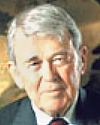
Died 12 Jan 2001 at age 87 (born 20 May 1913).
William Redington Hewlett was an American electrical engineer who co-founded the Hewlett-Packard Company, a leading manufacturer computers, computer printers, and analytic and measuring equipment. In 1939, he formed a partnership known as Hewlett-Packard Company with David Packard, a friend and Stanford classmate. (The order of their names was determined by a coin toss.) HP's first product was an audio oscillator based on a design developed by Hewlett when he was in graduate school. Eight were sold to Walt Disney for Fantasia. Lesser-known early products were: bowling alley foul-line indicator, automatic urinal flusher, weight-loss shock machine. The company began with $538 intial capital, and its first production facility was a small garage in Palo Alto.
William Redington Hewlett was an American electrical engineer who co-founded the Hewlett-Packard Company, a leading manufacturer computers, computer printers, and analytic and measuring equipment. In 1939, he formed a partnership known as Hewlett-Packard Company with David Packard, a friend and Stanford classmate. (The order of their names was determined by a coin toss.) HP's first product was an audio oscillator based on a design developed by Hewlett when he was in graduate school. Eight were sold to Walt Disney for Fantasia. Lesser-known early products were: bowling alley foul-line indicator, automatic urinal flusher, weight-loss shock machine. The company began with $538 intial capital, and its first production facility was a small garage in Palo Alto.
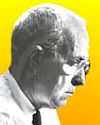
Died 12 Jan 1997 at age 95 (born 22 Sep 1901).
Charles Brenton Huggins was a Canadian-born American surgeon and urologist whose investigations demonstrated the relationship between hormones and certain types of cancer. In 1939, Huggins made a very simple inference that led to the development of new forms of cancer therapy. Noting that the prostate gland was under the control of androgens (male sex hormones) he concluded that cancer of the prostate might be treated by preventing the production of androgens. In 1941, he began to inject with female sex hormones to neutralize the effect of androgens produced by the testicles. For his discoveries Huggins received (with Peyton Rous) the Nobel Prize for Physiology or Medicine in 1966.
Charles Brenton Huggins was a Canadian-born American surgeon and urologist whose investigations demonstrated the relationship between hormones and certain types of cancer. In 1939, Huggins made a very simple inference that led to the development of new forms of cancer therapy. Noting that the prostate gland was under the control of androgens (male sex hormones) he concluded that cancer of the prostate might be treated by preventing the production of androgens. In 1941, he began to inject with female sex hormones to neutralize the effect of androgens produced by the testicles. For his discoveries Huggins received (with Peyton Rous) the Nobel Prize for Physiology or Medicine in 1966.
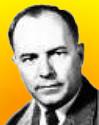
Died 12 Jan 1967 at age 59 (born 6 May 1907).
U.S. psychologist who attempted to construct a comprehensive theory of behaviour to encompass conditioning and other simple forms of learning and behaviour modification. He is known for both theoretical and experimental research on learning. Spence was particularly interested in learning and conditioning. He extended the research and theories of Hull, in an attempt to establish a precise, mathematical formulation to describe the acquisition of learned behavior. He tried to measure simple learned behaviors such as salivating in anticipation of eating. Much of his research focused on classically conditioned, easily measured, eye-blinking behavior in relation to anxiety and other factors.
U.S. psychologist who attempted to construct a comprehensive theory of behaviour to encompass conditioning and other simple forms of learning and behaviour modification. He is known for both theoretical and experimental research on learning. Spence was particularly interested in learning and conditioning. He extended the research and theories of Hull, in an attempt to establish a precise, mathematical formulation to describe the acquisition of learned behavior. He tried to measure simple learned behaviors such as salivating in anticipation of eating. Much of his research focused on classically conditioned, easily measured, eye-blinking behavior in relation to anxiety and other factors.
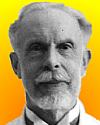
Died 12 Jan 1943 at age 75 (born 2 Aug 1867).
American engineer and inventor who later became a pioneer field volcanologist. Using his prior experience at Thomas Edison's labs, at age 20, Perret co-founded the Elektron Mfg Co. in Brooklyn, NY developing the motors, dynamos and electric controls that the company manufactured (and later, elevators). The first American electric elevator (1887) was probably powered by an Elektron motor. He began a second career in 1904 as a volcanologist, using his electrical knowledge to the measure their seismic activity. He became well known for his studies at Vesuvius (1906), Etna (1910), Stromboli and Kilauea (1911). From 1929, he lived at the foot of Mont Pelée, Martinique, where he founded a memorial volcanological museum.«
American engineer and inventor who later became a pioneer field volcanologist. Using his prior experience at Thomas Edison's labs, at age 20, Perret co-founded the Elektron Mfg Co. in Brooklyn, NY developing the motors, dynamos and electric controls that the company manufactured (and later, elevators). The first American electric elevator (1887) was probably powered by an Elektron motor. He began a second career in 1904 as a volcanologist, using his electrical knowledge to the measure their seismic activity. He became well known for his studies at Vesuvius (1906), Etna (1910), Stromboli and Kilauea (1911). From 1929, he lived at the foot of Mont Pelée, Martinique, where he founded a memorial volcanological museum.«
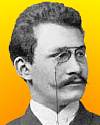
Died 12 Jan 1909 at age 44 (born 22 Jun 1864). quotes
German mathematician who developed the geometrical theory of numbers and who used geometrical methods to solve difficult problems in number theory, mathematical physics, and the theory of relativity. By 1907, Minkowski realised that the work of Lorentz and Einstein could be best understood in a non-euclidean space. He considered space and time, which were formerly thought to be independent, to be coupled together in a four-dimensional "space-time continuum". Minkowski worked out a four-dimensional treatment of electrodynamics. His idea of a four-dimensional space (since known as "Minkowski space"), combining the three dimensions of physical space with that of time, laid the mathematical foundation of Albert Einstein's general theory of relativity.
German mathematician who developed the geometrical theory of numbers and who used geometrical methods to solve difficult problems in number theory, mathematical physics, and the theory of relativity. By 1907, Minkowski realised that the work of Lorentz and Einstein could be best understood in a non-euclidean space. He considered space and time, which were formerly thought to be independent, to be coupled together in a four-dimensional "space-time continuum". Minkowski worked out a four-dimensional treatment of electrodynamics. His idea of a four-dimensional space (since known as "Minkowski space"), combining the three dimensions of physical space with that of time, laid the mathematical foundation of Albert Einstein's general theory of relativity.
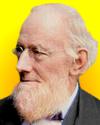
Died 12 Jan 1897 at age 84 (born 4 Jan 1813).
English inventor of the Phonetic Shorthand System was a philanthropic headmaster whose shorthand system was initially taught free of charge, and has since been adapted for such diverse languages as Arabic, Hebrew, Hindi, Japanese, Latin, Persian, Welsh, and Tamil. In 1829, he learned Samuel Taylor's system of shorthand, and offered a manual of that system to a publisher who suggested that Pitman should invent a new system of his own. In Stenographic Soundhand (1837) he set forth a shorthand system based on phonetic rather than orthographic principles. He published books about shorthand using his own publishing house. His brother, Benn Pitman (1822-1910) emigrated to the U.S. in 1852 where he introduced the Pitman system.
English inventor of the Phonetic Shorthand System was a philanthropic headmaster whose shorthand system was initially taught free of charge, and has since been adapted for such diverse languages as Arabic, Hebrew, Hindi, Japanese, Latin, Persian, Welsh, and Tamil. In 1829, he learned Samuel Taylor's system of shorthand, and offered a manual of that system to a publisher who suggested that Pitman should invent a new system of his own. In Stenographic Soundhand (1837) he set forth a shorthand system based on phonetic rather than orthographic principles. He published books about shorthand using his own publishing house. His brother, Benn Pitman (1822-1910) emigrated to the U.S. in 1852 where he introduced the Pitman system.
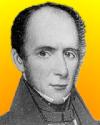
Died 12 Jan 1885 at age 89 (born 14 Dec 1795). quotes
John Bloomfield Jervis was an American civil engineer who made outstanding contributions in construction of canals, railroads, and water-supply systems for the expanding United States. Jervis began his career in Rome as an Axeman for an Erie Canal survey party in 1817. By 1823 he was superintendent of a 50-mile section of the Erie Canal. After appointment in 1827 as its Chief Engineer, he won approval of his idea that a railroad be incorporated into the Delaware and Hudson Canal project, at a time there were no railroads in America. Jervis even designed its locomotive, the Stourbridge Lion, the first locomotive to run in America. He designed and built the 41-mile Croton Aqueduct (New York City's water supply for fifty years: 1842-91), and the Boston Aqueduct. more
John Bloomfield Jervis was an American civil engineer who made outstanding contributions in construction of canals, railroads, and water-supply systems for the expanding United States. Jervis began his career in Rome as an Axeman for an Erie Canal survey party in 1817. By 1823 he was superintendent of a 50-mile section of the Erie Canal. After appointment in 1827 as its Chief Engineer, he won approval of his idea that a railroad be incorporated into the Delaware and Hudson Canal project, at a time there were no railroads in America. Jervis even designed its locomotive, the Stourbridge Lion, the first locomotive to run in America. He designed and built the 41-mile Croton Aqueduct (New York City's water supply for fifty years: 1842-91), and the Boston Aqueduct. more
John B. Jervis: An American Engineering Pioneer, by F. Daniel Larkin. - book suggestion.
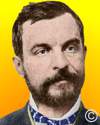
Died 12 Jan 1877 at age 52 (born 18 May 1824). quotes
Wilhelm Friedrich Benedikt Hofmeister was a German botanist who began as a music-seller, completely self-taught in botany, yet a pioneer in comparative plant morphology, though eclipsed by his contemporaries. Perhaps he was too far ahead in his time: out of step with the majority. He studied the most extensive array of plants then assembled, gleaning their basic common features to form a unifying perspective with a genius that has been compared to Darwin and Mendel. Despite very severe short-sightness, he described specimens with remarkably extensive detail using the microscope. Hofmeister did ground-breaking work in plant embryology, plant life histories, and principles of plant growth and development. He revealed the “alternation of generations” (1862), the life cycle pattern between sporophyte and gametophyte in the lower plants.« more
Wilhelm Friedrich Benedikt Hofmeister was a German botanist who began as a music-seller, completely self-taught in botany, yet a pioneer in comparative plant morphology, though eclipsed by his contemporaries. Perhaps he was too far ahead in his time: out of step with the majority. He studied the most extensive array of plants then assembled, gleaning their basic common features to form a unifying perspective with a genius that has been compared to Darwin and Mendel. Despite very severe short-sightness, he described specimens with remarkably extensive detail using the microscope. Hofmeister did ground-breaking work in plant embryology, plant life histories, and principles of plant growth and development. He revealed the “alternation of generations” (1862), the life cycle pattern between sporophyte and gametophyte in the lower plants.« more
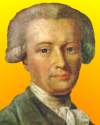
Died 12 Jan 1794 at age 39 (born 26 Nov 1754).
German explorer and scientist who helped to establish the literary travel book as a favoured genre in German literature. Forster sailed to the Pacific as a botanical collector with James Cook's second expedition to the Pacific 1772-75 on board the "Resolution". He then worked as an anthropologist, essayist, art critic, and travel writer in Germany, and finally participated in the French Revolution before dying in his Paris exile in 1794. He died before he was 40.
German explorer and scientist who helped to establish the literary travel book as a favoured genre in German literature. Forster sailed to the Pacific as a botanical collector with James Cook's second expedition to the Pacific 1772-75 on board the "Resolution". He then worked as an anthropologist, essayist, art critic, and travel writer in Germany, and finally participated in the French Revolution before dying in his Paris exile in 1794. He died before he was 40.
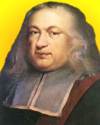
Died 12 Jan 1665 at age 63 (born 17 Aug 1601). quotes
French mathematician who has been called the founder of the modern theory of numbers. Together with Rene Descartes, Fermat was one of the two leading mathematicians of the first half of the 17th century. He anticipated differential calculus with his method of finding the greatest and least ordinates of curved lines. He proposed the famous Fermat's Last Theorem while studying the work of the ancient Greek mathematician Diophantus. He wrote in pencil in the margin, “I have discovered a truly remarkable proof which this margin is too small to contain,” that when the Pythagorean theorem is altered to read an + bn = cn, the new equation cannot be solved in integers for any value of n greater than 2.
French mathematician who has been called the founder of the modern theory of numbers. Together with Rene Descartes, Fermat was one of the two leading mathematicians of the first half of the 17th century. He anticipated differential calculus with his method of finding the greatest and least ordinates of curved lines. He proposed the famous Fermat's Last Theorem while studying the work of the ancient Greek mathematician Diophantus. He wrote in pencil in the margin, “I have discovered a truly remarkable proof which this margin is too small to contain,” that when the Pythagorean theorem is altered to read an + bn = cn, the new equation cannot be solved in integers for any value of n greater than 2.
Fermat's Enigma: The Epic Quest to Solve the World's Greatest Mathematical Problem, by Simon Singh. - book suggestion.

In 1986, the shuttle "Columbia 7" blasted off with a crew that included the first Hispanic American in space, Dr. Franklin R. Chang-Diaz and U.S. Rep. Bill Nelson, D-Fla. It was the 24th space shuttle mission.
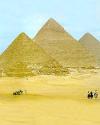
In 1984, restorers stopped using mortar and adopted the original system of interlocking blocks practiced by the ancient Egyptian pyramid builders. An international panel overseeing the restoration of the Great Pyramids in Egypt abandoned modern construction techniques which were found to be destructive when water in modern cement caused adjacent limestone stones to split. Located at Giza outside Cairo, some of the oldest manmade structures on earth were showing severe signs of decay by the early 1980s. Successful repair work began on the 4,600-year-old Sphinx in 1981, but restoration of the pyramids had been frustrated by the problems of modern cement. Upon returning to the ancient methods, the project ran smoothly.
In 1965, at 10:58 a.m. PST, scientists conducted what they called a "controlled excursion", burning up a nuclear rocket in Nevada. It produced a radioactive cloud over Los Angeles.
In 1937, the first U.S. patent for a submarine cable plow was issued. It was designed to feed a cable at the same time that it would dig a trench in the ocean bed. The device could be used at depths up to a half mile. The first transatlantic cable of high-speed permalloy was buried on 14 Jun 1938. The inventors were Chester S. Lawton of Ridgewood, N.J. and Capt. Melville H. Bloomer of Halifax, Nova Scotia, Canada. They assigned the patent to the Western Union Telegraph Co. (No. 2,607,717).
In 1919, a U.S. patent for a "Method and Means for Improving the Rendition of Musical Compositions" was issued to Thomas A. Edison. His patent application was dated three years earlier, on 12 Jan 1916 (No. 1,323,218).
In 1909, a U.S. patent for "Waterproofing Paint for Portland Cement Buildings" was issued to Thomas A. Edison (No. 909,167) and another for "Waterproofing Paint for Portland Cement Structure" (No. 909,169). He also received a patent for "Waterproofing Fibers and Fabrics" (No. 909,806).
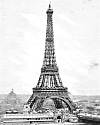
In 1908, a wireless message was sent long-distance for the first time from the Eiffel Tower in Paris.
In 1897, one of the various patents for a "Phonograph" was issued to Thomas Alva Edison (No.575151). It was one of several patents relating to his invention received by the patent office on 3 Dec 1890 that were issued on various dates between 27 Jun 1893 and 30 Sep 1898.
In 1897, a U.S. patent for "Extension Steps for Cars" was issued to Black American inventor D.L. White (No. 574,969)
The Inventive Spirit of African Americans: Patented Ingenuity, by Patricia Carter Sluby. - book suggestion.
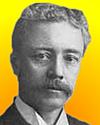
In 1896, the first x-ray photograph in the U.S. may have been taken by Dr. Henry Louis Smith, a professor of physics and astronomy at Davidson College, Davidson, N.C. It showed the location of a bullet in the hand of a corpse, using a 15 minute exposure. Immediately after he first heard of Wilhelm Röntgen's discovery in Germany, Smith obtained the hand of the cadaver, and fired a bullet into it, for this experiment. The X-ray photograph was published on 27 Feb 1896 in the Charlotte Observer. He was subsequently elected president of Davidson College in 1901. Smith established the first electric light plant in the town of Davidson.«[Date as given in Kane's Famous First Facts. However, the exact date is uncertain, and other sources suggest 13 Jan, “as implied in a letter,” or a “more widely accepted date” is 22 Feb 1896. The original photo has been lost. Also, another experimenter may have taken an X-ray photo earlier (e.g. Tesla) but without publicity or recognition.]
In 1886, a patent for an “Electrode for Telephone-Transmitters” was issued to Thomas Alva Edison (No. 348114). The patent application was dated one year earlier on 12 Jan 1885.
(USPTO)
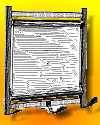
In 1886, a U.S. patent was issued for an “Apparatus for Cooling and Disinfecting” to African-American Lewis H. Latimer. (No. 334,078). It consisted of a suitable fabric stretched between a water reservoir and a drip-pan to saturate it and present “a large evaporating surface to cool air about passing over it.” It could be placed in a window frame so that air passing through it would be cooled by evaporation of the water. In neighborhoods with unpleasant odors, deodorizing or disinfecting liquids could be added to or substitute the water, using “chemical agents - such as carbolic acid, bromochloralum, &c.,” to destroy such odors or germs. His first patented invention was for a water-closet for railroad cars (10 Feb 1874, No. 147,363).«
Great Discoveries and Inventions by African-Americans, by David M. Foy. - book suggestion.
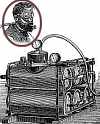
In 1875, the aerophore, an apparatus to enable a person to enter a noxious, inflammable atmosphere, was successfully tested at Chatham, 12-14 Jan 1875. Invented by Louis Denayrouze, a naval lieutenant, it comprised an air-pump, lamp, and flexible tubing*. Air in cylinders at a pressure of 300-350 lb/in2, reduced through a valve to atmospheric pressure, supported respiration. The apparatus was heavy and unmanageable for more than an hour's supply. He and Benoit Rouquayrol, a French mining engineer, had patented an underwater aerophore (1865), a steel tank filled with compressed air carried on a diver's back, connected through valves to a mouthpiece. It was the predecessor of contemporary scuba equipment.«[Image: Air cylinders, with inset of face mask. Not shown is the equipment on the miner's back and the hand-lamp. Ref * p.17.] more




