Born 7 Jan 1941.
John Ernest Walker is a British chemist who shared the Nobel Prize for Chemistry in 1997 for his pioneering work on how the enzyme ATP synthase catalyses the formation of the “high-energy” compound adenosine triphosphate (ATP). These molecules of ATP function as a carrier of energy in all living organisms, whether simple bacteria, fungus or plant life, or higher animals and humans. ATP takes in the chemical energy released when nutrients are metabolized, and carries that energy to the various reactions that require energy. Such reactions include cell-building, the contraction of muscle fibers, or nerve signals. (Corecipients of the Noble Prize were Paul D. Boyer for related work with ATP, and Jens C. Skou who researched separately.)
John Ernest Walker is a British chemist who shared the Nobel Prize for Chemistry in 1997 for his pioneering work on how the enzyme ATP synthase catalyses the formation of the “high-energy” compound adenosine triphosphate (ATP). These molecules of ATP function as a carrier of energy in all living organisms, whether simple bacteria, fungus or plant life, or higher animals and humans. ATP takes in the chemical energy released when nutrients are metabolized, and carries that energy to the various reactions that require energy. Such reactions include cell-building, the contraction of muscle fibers, or nerve signals. (Corecipients of the Noble Prize were Paul D. Boyer for related work with ATP, and Jens C. Skou who researched separately.)
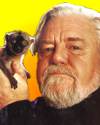
Born 7 Jan 1925; died 30 Jan 1995 at age 70. quotes
British conservationist whose life work was the preservation of endangered animal species. The five years of his youth spent on the sub-tropical Greek island of Corfu yielded much material for his book My Family And Other Animals. After WW II, he joined Whipsnade Zoo in England as a keeper. In 1958, he established a wildlife preserve on the Channel Island of Jersey where he conducted scientific research, implementing new ways of raising and breeding rare animals. From his captive-breeding programs for endangered creatures he wished to return these animals back into the wild. He was a prolific author.«
British conservationist whose life work was the preservation of endangered animal species. The five years of his youth spent on the sub-tropical Greek island of Corfu yielded much material for his book My Family And Other Animals. After WW II, he joined Whipsnade Zoo in England as a keeper. In 1958, he established a wildlife preserve on the Channel Island of Jersey where he conducted scientific research, implementing new ways of raising and breeding rare animals. From his captive-breeding programs for endangered creatures he wished to return these animals back into the wild. He was a prolific author.«
My Family and Other Animals, by Gerald Durrell. - book suggestion.
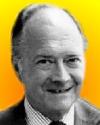
Born 7 Jan 1920; died 5 May 1995 at age 75. quotes
Sir Lionel Alexander Bethune Pilkington was a British industrialist and inventor who invented the float glass process, practical for industry, which replaced the former method for making plate glass. He developed his idea from the mid-1950s and announced it to the public in 1959. It took three years longer to reach consistent, profitable production In 1962, the process was licenced for use in the USA, followed shortly by the rest of the world. Flat glass with brilliant, parallel surfaces was manufactured from a continuous ribbon of molten glass moving out of the furnace and floating on a long bed of molten tin. While on this bed, the glass remained hot for a long enough time for irregularities to smooth out, eliminating the need for later polishing. He was knighted in 1970.«
Sir Lionel Alexander Bethune Pilkington was a British industrialist and inventor who invented the float glass process, practical for industry, which replaced the former method for making plate glass. He developed his idea from the mid-1950s and announced it to the public in 1959. It took three years longer to reach consistent, profitable production In 1962, the process was licenced for use in the USA, followed shortly by the rest of the world. Flat glass with brilliant, parallel surfaces was manufactured from a continuous ribbon of molten glass moving out of the furnace and floating on a long bed of molten tin. While on this bed, the glass remained hot for a long enough time for irregularities to smooth out, eliminating the need for later polishing. He was knighted in 1970.«
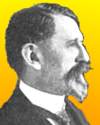
Born 7 Jan 1871; died 3 Feb 1956 at age 85. quotes
Félix-Édouard-Justin-Émile Borel was a French mathematician who (with René Baire and Henri Lebesgue), was among the pioneers of measure theory and its application to probability theory. In one of his books on probability, he proposed the thought experiment that a monkey hitting keys at random on a typewriter keyboard will - with absolute certainty - eventually type every book in France's Bibliothèque nationale de France (National Library). This is now popularly known as the infinite monkey theorem. He was first to develop (1899) a systematic theory for a divergent series. He also published (1921-27) a number of research papers on game theory and became the first to define games of strategy.
Félix-Édouard-Justin-Émile Borel was a French mathematician who (with René Baire and Henri Lebesgue), was among the pioneers of measure theory and its application to probability theory. In one of his books on probability, he proposed the thought experiment that a monkey hitting keys at random on a typewriter keyboard will - with absolute certainty - eventually type every book in France's Bibliothèque nationale de France (National Library). This is now popularly known as the infinite monkey theorem. He was first to develop (1899) a systematic theory for a divergent series. He also published (1921-27) a number of research papers on game theory and became the first to define games of strategy.
Space and Time, by Emile Borel. - book suggestion.
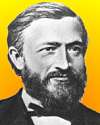

German physicist who invented an early telephone before Bell. After years of experimentation, by age 27, he made a fragile, clumsy, rudimentary transmitter with an animal ear membrane in front of an electrical contact. A galvanic inductor oscillated in the receiver in sync with the transmitted signal. Reis’ instrument could not reproduce intelligible speech. Certain sounds were conveyed, poorly. Reis coined the word “telephone.” On 26 Oct 1861, Reis showed “Telephony Using Galvanic Current” to Frankfurt's Physics Association. This was the first public demonstration of successful conversion of electrical into auditory waves. Verses of a song were transmitted from the lecture room to a hospital room over a 300-ft away, but did notdid not impress the professors. It gained no financial support, was not patented and never had public use.«
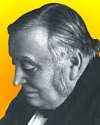
Born 7 Jan 1833; died 18 Dec 1915 at age 82. quotes
English chemist who founded the Manchester school of chemistry after he became chair of chemistry at Owens College (1857), four years after earning his Ph.D. He greatly improved science education there, implementing some teaching methods he learned while studying at Heidelberg under Wilhelm Bunsen. In his 30 years at Owens, he brought the college from the brink of extinction to an institution where original research by students and demonstrators produced 120 published papers. Roscoe joined in research with Bunsen, from 1855 to 1862, on the laws of photochemical action. In 1865, Roscoe learnt of the presence of vanadium in a Cheshire copper mine, and began his most important original research on the rare element, and prepared pure vanadium and its oxides. He was knighted for services to education (1884).«
English chemist who founded the Manchester school of chemistry after he became chair of chemistry at Owens College (1857), four years after earning his Ph.D. He greatly improved science education there, implementing some teaching methods he learned while studying at Heidelberg under Wilhelm Bunsen. In his 30 years at Owens, he brought the college from the brink of extinction to an institution where original research by students and demonstrators produced 120 published papers. Roscoe joined in research with Bunsen, from 1855 to 1862, on the laws of photochemical action. In 1865, Roscoe learnt of the presence of vanadium in a Cheshire copper mine, and began his most important original research on the rare element, and prepared pure vanadium and its oxides. He was knighted for services to education (1884).«
The Life & Experiences of Sir Henry Enfield Roscoe, by Henry Enfield Roscoe. - book suggestion.
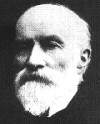
Born 7 Jan 1827; died 22 Jul 1915 at age 88.
Scottish surveyor and leading railway engineer who divided the world into time zones. He emigrated at age 17 years to Quebec, Canada, on 24 Apr 1845, as a surveyor. Later he became one of the foremost railway engineers of his time. While in charge of the initial survey for the Canadian Pacific Railway, the first Canadian railway to span the continent, he realized the problems of coordinating such a long railway. This lead him to the idea of time zones, which contribution to the adoption of the present system of time zones earned him the title of "Father of Standard Time." Fleming also designed the first Canadian postage stamp. Issued in 1851, it cost three pennies and depicted the beaver, now the national animal of Canada.
Scottish surveyor and leading railway engineer who divided the world into time zones. He emigrated at age 17 years to Quebec, Canada, on 24 Apr 1845, as a surveyor. Later he became one of the foremost railway engineers of his time. While in charge of the initial survey for the Canadian Pacific Railway, the first Canadian railway to span the continent, he realized the problems of coordinating such a long railway. This lead him to the idea of time zones, which contribution to the adoption of the present system of time zones earned him the title of "Father of Standard Time." Fleming also designed the first Canadian postage stamp. Issued in 1851, it cost three pennies and depicted the beaver, now the national animal of Canada.
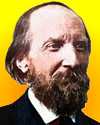
Born 7 Jan 1818; died 21 Nov 1891 at age 73. quotes
American clergyman, mathematician and natural scientist who from an early age had an interest in botany, and also mathematics, a subject he enjoyed during his batchelor's degree courses at Harvard. He changed direction when he next obtained a divinity degree and spent 14 years in the ministry. During this time, in 1849, he published a book, Geometry and Faith. Hill also wrote several papers in mathematics and astronomy. In 1857, he patented a calculating machine (U.S. patent No. 18692), marketed as the improved arithmometer, which is regarded as the first popular key-driven device of its kind in the U.S. For six years, 1862-1868, Hill served as President of Harvard University. In 1873 he returned to the ministry, but still pursued lecturing, scientific and educational experiments.«
American clergyman, mathematician and natural scientist who from an early age had an interest in botany, and also mathematics, a subject he enjoyed during his batchelor's degree courses at Harvard. He changed direction when he next obtained a divinity degree and spent 14 years in the ministry. During this time, in 1849, he published a book, Geometry and Faith. Hill also wrote several papers in mathematics and astronomy. In 1857, he patented a calculating machine (U.S. patent No. 18692), marketed as the improved arithmometer, which is regarded as the first popular key-driven device of its kind in the U.S. For six years, 1862-1868, Hill served as President of Harvard University. In 1873 he returned to the ministry, but still pursued lecturing, scientific and educational experiments.«
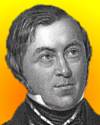
Born 7 Jan 1794; died 28 Feb 1863 at age 69. quotes
German chemist who spread the principle of isomorphism, after early in his career (about 1820) he discovered the importance of similarity of crystalline form between chemical compounds. He began his education by studying medicine, but his interest shifted to chemistry, and crystallography in particular. He worked in Berzelius’ laboratory (1820-22). Mitscherlich further developed his theory of isomorphism. In 1834, he dry distilled the calcium salt of benzoic acid to obtain benzene, among other notable research on benzene derivatives. Following an interest in geology to mineralogy, he produced artificial minerals. The German cellulose industry grew from the Mitscherlich process to extract cellulose from wood.«[DSB gives dates as 7 Jan 1794 - 28 Feb 1863. EB gives 17 Jan 1794 - 28 Aug 1863.]
German chemist who spread the principle of isomorphism, after early in his career (about 1820) he discovered the importance of similarity of crystalline form between chemical compounds. He began his education by studying medicine, but his interest shifted to chemistry, and crystallography in particular. He worked in Berzelius’ laboratory (1820-22). Mitscherlich further developed his theory of isomorphism. In 1834, he dry distilled the calcium salt of benzoic acid to obtain benzene, among other notable research on benzene derivatives. Following an interest in geology to mineralogy, he produced artificial minerals. The German cellulose industry grew from the Mitscherlich process to extract cellulose from wood.«[DSB gives dates as 7 Jan 1794 - 28 Feb 1863. EB gives 17 Jan 1794 - 28 Aug 1863.]
Born 7 Jan 1755; died 30 Mar 1832 at age 77.
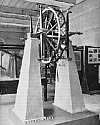
English astronomer and merchant, who compiled the Catalogue of Circumpolar Stars (corrected edition published 1838), often known as the Groombridge Catalog. For ten years, from 1806, he made observations using a transit circle, followed by another 10 years adjusting the data to correct for refraction, instrument error and clock error. He retired from the West Indian trade in 1815 to devote full time to the project. He was a founder of the Astronomical Society (1820). His work was continued by others when he was struck (1827) with a "severe attack of paralysis" from which he never fully recovered. The catalog eventually listed 4,243 stars situated within 50° of the North Pole and having apparent magnitudes greater than 9. Editions of the catalog were published posthumously. The 1833 edition was withdrawn due to errors, and corrected in 1838 by A Catalog of Circumpolar Stars, Reduced to January 1, 1810, edited by G. Biddell Airy.[Image: GroombridgeTransit Circle, London, 1806]
English astronomer and merchant, who compiled the Catalogue of Circumpolar Stars (corrected edition published 1838), often known as the Groombridge Catalog. For ten years, from 1806, he made observations using a transit circle, followed by another 10 years adjusting the data to correct for refraction, instrument error and clock error. He retired from the West Indian trade in 1815 to devote full time to the project. He was a founder of the Astronomical Society (1820). His work was continued by others when he was struck (1827) with a "severe attack of paralysis" from which he never fully recovered. The catalog eventually listed 4,243 stars situated within 50° of the North Pole and having apparent magnitudes greater than 9. Editions of the catalog were published posthumously. The 1833 edition was withdrawn due to errors, and corrected in 1838 by A Catalog of Circumpolar Stars, Reduced to January 1, 1810, edited by G. Biddell Airy.[Image: GroombridgeTransit Circle, London, 1806]
Born 7 Jan 1745; died 3 Mar 1808 at age 63.
Danish entomologist who was one of the great entomologists of the 18th century. After studying with Swedish naturalist Linnaeus, Fabricius travelled widely in Europe to see insect collections and produced many publications describing all the new species that he saw. He named and classified some 10,000 species of insects. The system of classification of insects he developed was based on mouth structure (instead of wing). He offered theories, progressive for his time, suggesting that hybridization could produce produce new species or varieties, and that environmental adaptation could influence changes in anatomical structure or function.
Danish entomologist who was one of the great entomologists of the 18th century. After studying with Swedish naturalist Linnaeus, Fabricius travelled widely in Europe to see insect collections and produced many publications describing all the new species that he saw. He named and classified some 10,000 species of insects. The system of classification of insects he developed was based on mouth structure (instead of wing). He offered theories, progressive for his time, suggesting that hybridization could produce produce new species or varieties, and that environmental adaptation could influence changes in anatomical structure or function.

Died 7 Jan 2004 at age 87 (born 17 Sep 1916).
American electronics engineer who developed over-the-horizon radar (a way to detect objects out of direct sight by bouncing radar off the ionosphere, an electrically charged layer in the upper atmosphere) so radar could peer around the Earth's curvature to detect aircraft and missiles thousands of miles away. His interest in electricity began with a copy of Harper's Electricity Book for Boys. At age 12, he put together a radio from a kit. During WW II, he researched countermeasures to protect Allied forces against enemy radio and radar devices. He made pioneering studies of radar jamming. In 1947, he designed a simplified voice transmitter permitting two-way communication on a single radio channel, such as a telephone conversation.
American electronics engineer who developed over-the-horizon radar (a way to detect objects out of direct sight by bouncing radar off the ionosphere, an electrically charged layer in the upper atmosphere) so radar could peer around the Earth's curvature to detect aircraft and missiles thousands of miles away. His interest in electricity began with a copy of Harper's Electricity Book for Boys. At age 12, he put together a radio from a kit. During WW II, he researched countermeasures to protect Allied forces against enemy radio and radar devices. He made pioneering studies of radar jamming. In 1947, he designed a simplified voice transmitter permitting two-way communication on a single radio channel, such as a telephone conversation.
Died 7 Jan 1998 at age 91 (born 23 Jul 1906).
Yugoslavian-Swiss chemist who shared the 1975 Nobel Prize for Chemistry with John W. Cornforth for his work on the stereochemistry of organic molecules and reactions. Stereochemistry is the study of the three-dimensional arrangements of atoms within molecules. He authored systematic naming rules for molecules and their mirror-image version, that is, which configuration will be referred to as “dextra” and which will be the “levo” (right or left). Also, by X-ray diffraction, he elucidated the structure of several antibiotics.
Yugoslavian-Swiss chemist who shared the 1975 Nobel Prize for Chemistry with John W. Cornforth for his work on the stereochemistry of organic molecules and reactions. Stereochemistry is the study of the three-dimensional arrangements of atoms within molecules. He authored systematic naming rules for molecules and their mirror-image version, that is, which configuration will be referred to as “dextra” and which will be the “levo” (right or left). Also, by X-ray diffraction, he elucidated the structure of several antibiotics.
Vladimir Prelog: My 132 Semesters of Studies of Chemistry, by Vladimir Prelog. - book suggestion.

Died 7 Jan 1998 at age 82 (born 11 Feb 1915). quotes
Richard Wesley Hamming was an American computer scientist and mathematician who devised computer Hamming codes - error-detecting and correcting codes (1947). These add one or more bits to the transmission of blocks of data, used for a parity check, so that errors can be corrected automatically. By making a resend of bad data unnecessary, efficiency improved for modems, compact disks and satellite communications. He also worked on programming languages, numerical analysis and the Hamming spectral window (used to smooth data before Fourier analysis is carried out). He taught at University of Louisville, then during WW II worked (1945) on computers with the Manhattan Project creating the atomic bomb. From 1946, he spent 30 years with Bell Telephone Labs, eventually becoming head of computing science research.«
Richard Wesley Hamming was an American computer scientist and mathematician who devised computer Hamming codes - error-detecting and correcting codes (1947). These add one or more bits to the transmission of blocks of data, used for a parity check, so that errors can be corrected automatically. By making a resend of bad data unnecessary, efficiency improved for modems, compact disks and satellite communications. He also worked on programming languages, numerical analysis and the Hamming spectral window (used to smooth data before Fourier analysis is carried out). He taught at University of Louisville, then during WW II worked (1945) on computers with the Manhattan Project creating the atomic bomb. From 1946, he spent 30 years with Bell Telephone Labs, eventually becoming head of computing science research.«

Died 7 Jan 1998 at age 85 (born 20 Aug 1912).
American inventor of the peristaltic pump that made open-heart surgery possible. It met the need to pump blood without damaging the cells through a method of expansion and contraction that imitates the way that peristalsis moves the contents of the digestive tract. In addition, the pump was adapted for kidney dialysis and for food processing (to pump soup into cans without crushing the peas or the celery). He decided to invent the airplane boarding ramp when on a day in 1951 at the Miami International Airport he saw passengers having to walk in the rain to the terminal. In all, he held 75 patents including a television antenna rotator, electric carving knife, high-speed dentist drill, power car seat and an audible pressure cooker.[Image: Peristaltic pump showing tubing and rotor that moves blood.]
American inventor of the peristaltic pump that made open-heart surgery possible. It met the need to pump blood without damaging the cells through a method of expansion and contraction that imitates the way that peristalsis moves the contents of the digestive tract. In addition, the pump was adapted for kidney dialysis and for food processing (to pump soup into cans without crushing the peas or the celery). He decided to invent the airplane boarding ramp when on a day in 1951 at the Miami International Airport he saw passengers having to walk in the rain to the terminal. In all, he held 75 patents including a television antenna rotator, electric carving knife, high-speed dentist drill, power car seat and an audible pressure cooker.[Image: Peristaltic pump showing tubing and rotor that moves blood.]
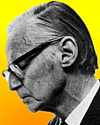
Died 7 Jan 1996 at age 93 (born 30 May 1902).
Seton Howard Frederick Lloyd was an English archaeologist who is noted for his rediscovery, in the mid 1950s, of the ancient empire of Arzawa in Turkey. This civilization was conquered by the Hittites in about 1200 B.C. Although he was trained as an architect, in 1928 he accepted an invitation to join an excavation team on a project in Egypt. From this start, he progressed to leading a number of digs in Iraq and Turkey, which he wrote about in a number of books. These include Sennacherib's Aqueduct at Jerwan, a report of its discovery he made in Iraq with Thorkild Jaconsen. It was built about 700 B.C. by the Assyrian King Sennacherib. Other books include Mesopotamia: Excavations on Sumerian Sites (1935) and Ruined Cities of Iraq, (1980). His best known work Foundations in the Dust: A Story of Mesopotamian Exploration (1947) was reissued in 1976 and 1980. He served as the first director of the British Institute of Archaeology at Ankara, Turkey (1949-1961).«
Seton Howard Frederick Lloyd was an English archaeologist who is noted for his rediscovery, in the mid 1950s, of the ancient empire of Arzawa in Turkey. This civilization was conquered by the Hittites in about 1200 B.C. Although he was trained as an architect, in 1928 he accepted an invitation to join an excavation team on a project in Egypt. From this start, he progressed to leading a number of digs in Iraq and Turkey, which he wrote about in a number of books. These include Sennacherib's Aqueduct at Jerwan, a report of its discovery he made in Iraq with Thorkild Jaconsen. It was built about 700 B.C. by the Assyrian King Sennacherib. Other books include Mesopotamia: Excavations on Sumerian Sites (1935) and Ruined Cities of Iraq, (1980). His best known work Foundations in the Dust: A Story of Mesopotamian Exploration (1947) was reissued in 1976 and 1980. He served as the first director of the British Institute of Archaeology at Ankara, Turkey (1949-1961).«
Foundations in the Dust: A Story of Mesopotamian Exploration, by Lloyd Seton. - book suggestion.
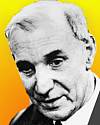
Died 7 Jan 1984 at age 81 (born 3 May 1902).
French physicist who won the Nobel Prize for Physics in 1966 for his discovery and development of methods for observing Hertzian resonances within atoms. This research facilitated the greater understanding of the structure of the atom by studying the radiations that atoms emit when excited by light and radio waves. He developed a method called "optical pumping" which caused atoms in a sample substance to enter higher energy states. This idea was an important predecessor to the development of masers and the lasers which utilized the light energy that was re-emitted when excited atoms released the extra energy obtained from optical pumping.
French physicist who won the Nobel Prize for Physics in 1966 for his discovery and development of methods for observing Hertzian resonances within atoms. This research facilitated the greater understanding of the structure of the atom by studying the radiations that atoms emit when excited by light and radio waves. He developed a method called "optical pumping" which caused atoms in a sample substance to enter higher energy states. This idea was an important predecessor to the development of masers and the lasers which utilized the light energy that was re-emitted when excited atoms released the extra energy obtained from optical pumping.
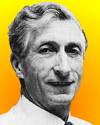
Died 7 Jan 1974 at age 63 (born 13 Dec 1910). quotes
British theoretical chemist known for the application of molecular orbital theory to chemical bonding, the electronic structures of molecules and the concept of partial valency. He developed many mathematical techniques for solving chemical and physical problems. His molecular orbital theory treats a molecule as a whole, and extends atomic quantum theory with “allowed” states of electrons associated with two or more atomic nuclei. With this approach, he explained the structure of benzene and other conjugated systems, and using what he called partial valency, he described the bonding in such compounds as diborane. After writing on Waves (1941) and Electricity (1941), his book Valence (1952) was highly influential. He also wrote on reconciling scientific and religious views, believing religious faith was an essential in the pursuit of science.«
British theoretical chemist known for the application of molecular orbital theory to chemical bonding, the electronic structures of molecules and the concept of partial valency. He developed many mathematical techniques for solving chemical and physical problems. His molecular orbital theory treats a molecule as a whole, and extends atomic quantum theory with “allowed” states of electrons associated with two or more atomic nuclei. With this approach, he explained the structure of benzene and other conjugated systems, and using what he called partial valency, he described the bonding in such compounds as diborane. After writing on Waves (1941) and Electricity (1941), his book Valence (1952) was highly influential. He also wrote on reconciling scientific and religious views, believing religious faith was an essential in the pursuit of science.«
Coulson's Valence, by C.A. Coulson and Roy McWeeny (ed.). - book suggestion.
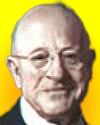
Died 7 Jan 1965 at age 94 (born 3 Nov 1870).
American chemist who was involved with commercial production of calcium carbide (discovered accidentally with his father on 2 May 1892). Calcium carbide is used to generate acetylene gas, important for welding, and is the basis for the syntheses of many organic chemicals and polymers. In 1897, he became a construction engineer for building calcium carbide manufacturing plants in the U.S. and abroad. He cofounded (1900), and was a major stockholder of, the Union Carbide Corporation. During 1899, he designed a gas analysis apparatus which became standard equipment in industrial laboratories. He published Analysis of Industrial Gases.(1900). He donated the Morehead Planetarium, the first at a U.S. university, which opened 10 May 1949 at the University of Chapel Hill, North Carolina.«.
American chemist who was involved with commercial production of calcium carbide (discovered accidentally with his father on 2 May 1892). Calcium carbide is used to generate acetylene gas, important for welding, and is the basis for the syntheses of many organic chemicals and polymers. In 1897, he became a construction engineer for building calcium carbide manufacturing plants in the U.S. and abroad. He cofounded (1900), and was a major stockholder of, the Union Carbide Corporation. During 1899, he designed a gas analysis apparatus which became standard equipment in industrial laboratories. He published Analysis of Industrial Gases.(1900). He donated the Morehead Planetarium, the first at a U.S. university, which opened 10 May 1949 at the University of Chapel Hill, North Carolina.«.
History of Industrial Gases, by Ebbe Almqvist. - book suggestion.
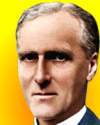
Died 7 Jan 1955 at age 88 (born 5 Feb 1866). quotes
Scottish anatomist and physical anthropologist who specialized in the study of fossil humans and who reconstructed early hominid forms, notably fossils from Europe and North Africa. After graduating from university (1888), he travelled as a physician on a gold mining trip to Siam. There, he dissected monkeys and became interested in racial types. In 1892, he returned to Britain and studied anatomy. In 1915, he published The Antiquity of Man, an anatomical survey of all important human fossil remains, at which time he believed that moderns humans are as old as extinct forms of humans. In 1931, New Discoveries was published in which he admitted that modern humans probably arose from types already separate in the early Pleistocene.
Scottish anatomist and physical anthropologist who specialized in the study of fossil humans and who reconstructed early hominid forms, notably fossils from Europe and North Africa. After graduating from university (1888), he travelled as a physician on a gold mining trip to Siam. There, he dissected monkeys and became interested in racial types. In 1892, he returned to Britain and studied anatomy. In 1915, he published The Antiquity of Man, an anatomical survey of all important human fossil remains, at which time he believed that moderns humans are as old as extinct forms of humans. In 1931, New Discoveries was published in which he admitted that modern humans probably arose from types already separate in the early Pleistocene.
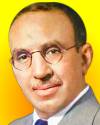
Died 7 Jan 1955 at age 76 (born 2 Apr 1878). quotes
American mathematician who popularized the word googol, invented upon his request by his 9-yr-old nephew, Milton Sirotta, for a very large number 10100 (which is a 1 followed by 100 zeroes), Also, a googolplex is 10 raised to the power of a googol. Kasner used the terms to illustrate very large numbers, in a non-technical book he co-wrote with James R. Newman, Mathematics and the Imagination (1940). Kasner made substantial contributions to the theory of complex variables. His academic work was also deeply rooted in the development of differential geometry, concerned with curves, surfaces, and shapes. Such foundational work, was later applied in the areas of general relativity and space-time concepts.«
American mathematician who popularized the word googol, invented upon his request by his 9-yr-old nephew, Milton Sirotta, for a very large number 10100 (which is a 1 followed by 100 zeroes), Also, a googolplex is 10 raised to the power of a googol. Kasner used the terms to illustrate very large numbers, in a non-technical book he co-wrote with James R. Newman, Mathematics and the Imagination (1940). Kasner made substantial contributions to the theory of complex variables. His academic work was also deeply rooted in the development of differential geometry, concerned with curves, surfaces, and shapes. Such foundational work, was later applied in the areas of general relativity and space-time concepts.«
Mathematics and the Imagination, by Edward Kasner and James Newman. - book suggestion.
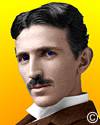
Died 7 Jan 1943 at age 86 (born 10 Jul 1856). quotes
Serbian-American inventor and researcher who designed and built the first alternating current induction motor in 1883. He emigrated to the United States in 1884. Having discovered the benefits of a rotating magnetic field, the basis of most alternating-current machinery, he expanded its use in dynamos, transformers, and motors. Because alternating current could be transmitted over much greater distances than direct current, George Westinghouse bought patents from Tesla the system when he built the power station at Niagara Falls to provide electricity power the city of Buffalo, NY.«[Born in Croatia of Serbian parents. Some sources give birthdate as 9 Jul; he is said to have been born on the stroke of midnight. He celebrated his birthday as the 10th.]
Serbian-American inventor and researcher who designed and built the first alternating current induction motor in 1883. He emigrated to the United States in 1884. Having discovered the benefits of a rotating magnetic field, the basis of most alternating-current machinery, he expanded its use in dynamos, transformers, and motors. Because alternating current could be transmitted over much greater distances than direct current, George Westinghouse bought patents from Tesla the system when he built the power station at Niagara Falls to provide electricity power the city of Buffalo, NY.«[Born in Croatia of Serbian parents. Some sources give birthdate as 9 Jul; he is said to have been born on the stroke of midnight. He celebrated his birthday as the 10th.]
Wizard: The Life and Times of Nikola Tesla: Biography of a Genius, by Marc Seifer. - book suggestion.
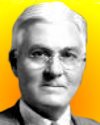
Died 7 Jan 1943 at age 78 (born 11 Nov 1864).
American surgeon who was one of the first to study the significance of surgical shock. His interest began when a close friend was injured in a streetcar accident and died in profound shock after the amputation of both legs. Crile conducted research experiments on animals and noted the relationship between shock, blood pressure, and the onset of death. He saw that striving to prevent shock was of great importance. He recognized the importance of monitoring blood pressure in surgical patients and helped popularize the use of the sphygmomanometer. In 1906 he performed the first successful human to human blood transfusion at St. Alexis Hospital in Cleveland. He was the principal founder of the Cleveland Clinic Foundation.«
American surgeon who was one of the first to study the significance of surgical shock. His interest began when a close friend was injured in a streetcar accident and died in profound shock after the amputation of both legs. Crile conducted research experiments on animals and noted the relationship between shock, blood pressure, and the onset of death. He saw that striving to prevent shock was of great importance. He recognized the importance of monitoring blood pressure in surgical patients and helped popularize the use of the sphygmomanometer. In 1906 he performed the first successful human to human blood transfusion at St. Alexis Hospital in Cleveland. He was the principal founder of the Cleveland Clinic Foundation.«
George Crile, an Autobiography, by George Washington Crile. - book suggestion.
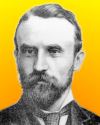
Died 7 Jan 1935 at age 79 (born 27 Mar 1855).
Sir James Alfred Ewing was a Scottish physicist who discovered and named hysteresis (1881), the resistance of magnetic materials to change in magnetic force. Ewing was born and educated in Dundee and studied engineering on a scholarship at Edinburgh University. He helped Sir William Thomson, later Lord Kelvin in a cable laying project. In 1878 he became professor of Mechanical Engineering and Physics at Tokyo University, where he devised instruments for measuring earthquakes. In 1903 he moved to the Admiralty as head of education and training, where during WW I, he and his staff took on the task of deciphering coded messages.
Sir James Alfred Ewing was a Scottish physicist who discovered and named hysteresis (1881), the resistance of magnetic materials to change in magnetic force. Ewing was born and educated in Dundee and studied engineering on a scholarship at Edinburgh University. He helped Sir William Thomson, later Lord Kelvin in a cable laying project. In 1878 he became professor of Mechanical Engineering and Physics at Tokyo University, where he devised instruments for measuring earthquakes. In 1903 he moved to the Admiralty as head of education and training, where during WW I, he and his staff took on the task of deciphering coded messages.
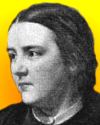
Died 7 Jan 1912 at age 71 (born 21 Jan 1840).
Sophia Louisa Jex-Blake was a British physician though whose determined efforts Parliament passed legislation to give women the right to have access to a medical education. She had spent years in her own attempt to enrol in a Scottish medical school. Eventually, she held a license at age 37 and opened a private practice in Scotland the following year. She was the country's first female doctor. She succeeded in having a medical school for women opened in London (1874) and a few years later, she established one in Edinburgh (1886). She made it possible for women to enter the medical profession to practice medicine and surgery.«
Sophia Louisa Jex-Blake was a British physician though whose determined efforts Parliament passed legislation to give women the right to have access to a medical education. She had spent years in her own attempt to enrol in a Scottish medical school. Eventually, she held a license at age 37 and opened a private practice in Scotland the following year. She was the country's first female doctor. She succeeded in having a medical school for women opened in London (1874) and a few years later, she established one in Edinburgh (1886). She made it possible for women to enter the medical profession to practice medicine and surgery.«
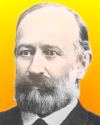
Died 7 Jan 1893 at age 57 (born 24 Mar 1835).
Austrian physicist who proposed a law of radiation (1879) stating that the amount of energy radiated per second from a black body is proportional to the fourth power of its absolute temperature. (A black body is a theoretical object that absorbs all radiation that falls on it.) This law is known as Stefan's law or the Stefan-Bolzmann law. He also studied electricity, the kinetic theory of gases and hydrodynamics.
Austrian physicist who proposed a law of radiation (1879) stating that the amount of energy radiated per second from a black body is proportional to the fourth power of its absolute temperature. (A black body is a theoretical object that absorbs all radiation that falls on it.) This law is known as Stefan's law or the Stefan-Bolzmann law. He also studied electricity, the kinetic theory of gases and hydrodynamics.
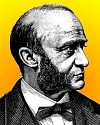
Died 7 Jan 1892 at age 72 (born 6 Jun 1819). quotes
German physiologist who helped to introduce physical and chemical methods into medical research. He taught in Vienna (1849-90) where his school for physiologists gained an international reputation. The range of his physiological interests was vast, as shown in his Lectures in Physiology (1873-4). He discovered the ciliary muscle named for him, and his Anatomical Description of the Human Eye (1847) has become the standard histological work for contemporary oculists. He also did work on luminescence, blood coagulation, microscopy and cells. As a student, Sigmund Freud began research work on the central nervous system, guided by Brücke (1876), and qualified as doctor of medicine in 1881.
German physiologist who helped to introduce physical and chemical methods into medical research. He taught in Vienna (1849-90) where his school for physiologists gained an international reputation. The range of his physiological interests was vast, as shown in his Lectures in Physiology (1873-4). He discovered the ciliary muscle named for him, and his Anatomical Description of the Human Eye (1847) has become the standard histological work for contemporary oculists. He also did work on luminescence, blood coagulation, microscopy and cells. As a student, Sigmund Freud began research work on the central nervous system, guided by Brücke (1876), and qualified as doctor of medicine in 1881.
Died 7 Jan 1878 at age 83 (born 29 Jan 1794). quotes
French natural philosopher who originated the aphorism, omnis cellula e cellula (every cell from a cell), which Rudolf Virchow popularized. Raspail was one of the early biologists who set cell theory in motion. As an expert microscopist, and made precise obserations to make an early description of the general characteristics of the plant cell. Raspail was also a founder of cytochemistry. He used the iodine-starch color reaction to the cell and its products, and discovered histochemical reactions specific to protides and glucides. These were precursors to later biochemistry that could better recognize their importance. He was also a founder of modern parasitology, and provided new data on the causes of diseases, including the itch mite agent of scabies.«
French natural philosopher who originated the aphorism, omnis cellula e cellula (every cell from a cell), which Rudolf Virchow popularized. Raspail was one of the early biologists who set cell theory in motion. As an expert microscopist, and made precise obserations to make an early description of the general characteristics of the plant cell. Raspail was also a founder of cytochemistry. He used the iodine-starch color reaction to the cell and its products, and discovered histochemical reactions specific to protides and glucides. These were precursors to later biochemistry that could better recognize their importance. He was also a founder of modern parasitology, and provided new data on the causes of diseases, including the itch mite agent of scabies.«
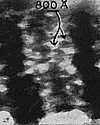
In 1949, the first electron microscope images of chromosomes and genes appeared in Science journal. Daniel Chapin Pease and Richard Freligh Baker of the School of Medicine, Univ. of Southern California, described their preliminary investigations. Tissue sections as thin as 0.1 μm from the salivary glands of Drosphila melanogaster (fruit fly) showed a highly specialized structure. Each primordial chromosome reduplicated many times yielded a giant multiple chromosome made up of 100s or 1,000s of identical units. Moderate magnification by the electron microscope, showed chromomere granules arranged in bands. Scientists didn’t know the structure of DNA, until published by Crick and Watson (25 Apr 1953).«[Micrograph ×49,000 detail from paper Science (7 Jan 1949), N.S. 109, No. 2819, 8-10 & 22.]
Perey
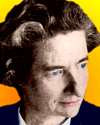
In 1939, the element Fr (francium) was discovered, the last naturally occurring element to be found. It is the heaviest alkali metal atom, with atomic number 87. Marguerite Perey joined (Oct 1929) the Institut du Radium in Paris in Oct 1929 as a technician for Marie Curie. Perey worked for years on actinium, which was anticipated to produce the new element by alpha decay. Finally, she was able to make the first entry about francium in her lab notebook on 7 Jan 1939, recording its half-life as about 20 minutes. A note in the Comptes Rendus was presented at the Académie des Sciences by Jean Perrin (9 Jan 1939). In his periodic table, Mendeleev anticipated its discovery, and provisionally named it eka-cesium. Perey gave it the name “francium.” She first used the symbol Fa, but changed it to Fr.«[Previously on this site as discovered Jan 1930.]
Out of the Shadows: Contributions of Twentieth-Century Women to Physics, by Nina Byers and Gary Williams. - book suggestion.
In 1927, commercial telephone service (using radio) began between New York and London.
(USPTO)
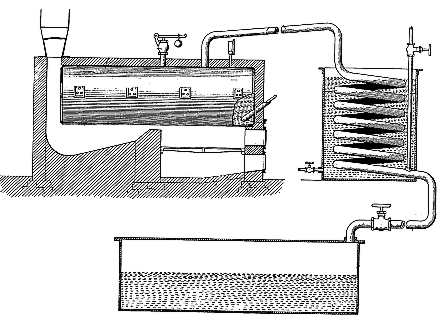
In 1913, a U.S. patent for the thermal cracking of crude oil was issued to William Merriam Burton (No.1,049,667). A crude petroleum mixture of various hydrocarbons can be separated into several groups of constituents by physical means, commonly distillation. His thermal cracking process used high heat and high pressure to chemically break longer molecules of less volatile components into smaller molecules, more than doubling the yield of gasoline which was much needed to fuel the motor industry. In its first 15 years of use the process saved more than 1 billion barrels of crude oil. In 1937 the invention of catalytic cracking superceded the Burton process, but it remains in wide use.«
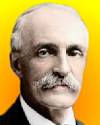
In 1910, Gifford Pinchot, the first chief of the United States Forest Service was fired by President Taft. Pinchot had opposed Taft’s newly appointed Secretary of the Interior, Richard Ballinger, who favored commercial exploitation of federal reserve lands. During President Theodore Roosevelt’s term, Pinchot had help enable policies for the conservation of natural resources. Roosevelt had designated millions of acres to protect as National Forests. That legacy was threatened, so Pinchot pressured Taft to remove Ballinger from office. On 13 Nov 1909,Collier’s Magazine created a scandal accusing Ballinger of shady dealings in coal lands in Alaska. When Pinchot criticized both Ballinger and Taft, the president reacted by firing him.«
Breaking New Ground (autobiography), by Gifford Pinchot. - book suggestion.
In 1839, Louis Daguerre made the first announcement of his photographic system at the Académie des Sciences in Paris, though details were not presented until 19 Aug 1839 when the process was announced publicly. By that time, the French government had bought the rights to the process from him, and then made them freely available to the world. However, this process had also been patented in England and Wales on 14 Aug 1839 - only five days previously.«
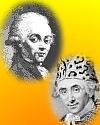
In 1785, Frenchman Jean Pierre Blanchard and American scientist and physician John Jeffries made the first air crossing of the English Channel from England to France in a hot-air balloon - the first international flight. This was the second of two balloon flights Jeffries financed. To accompany him, Jeffries chose Blanchard for his prior experience in balloon flight. The voyage across the Channel was successful, though not without difficulty, because to maintain height they were forced to jettison everything in the basket, including rope and most of their clothes. Their previous flight took place on 30 Nov 1784, in London, for the purpose of taking scientific and meteorological measurements.[Image: Blanchard (L) and Jeffries (R).]
In 1714, the world's first patent for a “Machine for Transcribing Letters” was granted in England by Queen Anne to Henry Mill (1683?-1771), a waterworks engineer with the New River Company. The patent (No. 395) described the invention as “an artificial machine or method for impressing or transcribing of letters, one after another, as in writing, whereby all writing whatsoever may be engrossed in paper or parchment so neat and exact as not to be distinguished from print; that the said machine... may be of great use in settlements and publick recors, the impression being deeper and more lasting than any other writing, and not to be erased or counterfeited without manifest discovery.” There is no remaining record that he actually built the machine.«
more
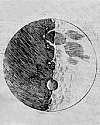
In 1610,Galileodated his firstletteron telescopic observations, made with a twenty-power spyglass, reporting the Moon’s crateredsurface. He wrote, “…it is seen that the Moon is most evidently not at all of an even, smooth, and regular surface, as a great many people believe of it and of the other heavenly bodies, but on the contrary it is rough and unequal. In short it is shown to be such that sane reasoning cannot conclude otherwise than that it is full of prominences and cavities similar, but much larger, to the mountains and valleys spread over the Earth's surface.” He described these features in considerable detail, rehearsing, the observations and reasoning he would publish inSidereus Nuncius.[Image: picture of the ragged moon from Sidereus Nuncius.]
Galileo: A Life, by James Reston. - book suggestion.




