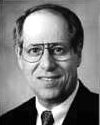
Born 2 Jan 1941.
American research physicist, who with his colleagues at Corning Glass, Dr. Robert Maurer and Dr. Peter Schultz, invented fused silica optical waveguide - optical fiber. This was a breakthrough creating a revolution in telecommunications, capable of carrying 65,000 times more information than conventional copper wire. In 1970, Maurer, Keck, and Schultz solved a problem that had previously stumped scientists around the world. They designed and produced the first optical fiber with optical losses low enough for wide use in telecommunications. The light loss was limited to 20 decibels per kilometer (at least one percent of the light entering a fiber remains after traveling one kilometer).
American research physicist, who with his colleagues at Corning Glass, Dr. Robert Maurer and Dr. Peter Schultz, invented fused silica optical waveguide - optical fiber. This was a breakthrough creating a revolution in telecommunications, capable of carrying 65,000 times more information than conventional copper wire. In 1970, Maurer, Keck, and Schultz solved a problem that had previously stumped scientists around the world. They designed and produced the first optical fiber with optical losses low enough for wide use in telecommunications. The light loss was limited to 20 decibels per kilometer (at least one percent of the light entering a fiber remains after traveling one kilometer).
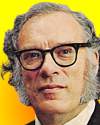
Born 2 Jan 1920; died 6 Apr 1992 at age 72. quotes
American author and biochemist, who was a prolific writer of science fiction and of science books for the layperson. Born in Petrovichi, Russia, he emigrated with his family to New York City at age three. He entered Columbia University at the age of 15 and at 18 sold his first story to Amazing Stories. After earning a Ph.D., he taught biochemistry at Boston University School of Medicine after 1949. By 18 Mar 1941, Asimov had already written 31 stories, sold 17, and 14 had been published. As an author, lecturer, and broadcaster of astonishing range, he is most admired as a popularizer of science (The Collapsing Universe; 1977) and a science fiction writer (I, Robot; 1950). He coined the term “robotics.” He published about 500 volumes.
American author and biochemist, who was a prolific writer of science fiction and of science books for the layperson. Born in Petrovichi, Russia, he emigrated with his family to New York City at age three. He entered Columbia University at the age of 15 and at 18 sold his first story to Amazing Stories. After earning a Ph.D., he taught biochemistry at Boston University School of Medicine after 1949. By 18 Mar 1941, Asimov had already written 31 stories, sold 17, and 14 had been published. As an author, lecturer, and broadcaster of astonishing range, he is most admired as a popularizer of science (The Collapsing Universe; 1977) and a science fiction writer (I, Robot; 1950). He coined the term “robotics.” He published about 500 volumes.
Asimov's Chronology of Science and Discovery, by Isaac Asimov. - book suggestion.
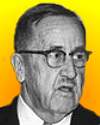
Born 2 Jan 1889; died 6 Jul 1971 at age 82. quotes
American organic chemist who joined the faculty at the University of Illinois at Urbana in 1916, which he converted into the leading centre of organic chemistry in the U.S. and forged links with industry, notably with Du Pont. Adams worked out the chemical composition of various natural substances, including chaulmoogra oil (which is used in treating leprosy), gossypol (a toxic cottonseed pigment), marijuana, and many alkaloids. He also worked in stereochemistry and with platinum catalysts and the synthesis of medicinal compounds. His name is associated with chemical warfare agent Adamsite (diphenylamine chloroarsine) and the Adams catalyst (platinum oxide or palladium oxide, used for the hydrogenation of carbon-carbon double bonds).
American organic chemist who joined the faculty at the University of Illinois at Urbana in 1916, which he converted into the leading centre of organic chemistry in the U.S. and forged links with industry, notably with Du Pont. Adams worked out the chemical composition of various natural substances, including chaulmoogra oil (which is used in treating leprosy), gossypol (a toxic cottonseed pigment), marijuana, and many alkaloids. He also worked in stereochemistry and with platinum catalysts and the synthesis of medicinal compounds. His name is associated with chemical warfare agent Adamsite (diphenylamine chloroarsine) and the Adams catalyst (platinum oxide or palladium oxide, used for the hydrogenation of carbon-carbon double bonds).
Roger Adams: Scientist and Statesman, by D. Stanley Tarbell, Ann Tracy Tarbell. - book suggestion.
Born 2 Jan 1884; died 15 Jul 1970 at age 86. quotes
British industrial chemist who was chief chemist to the firm of Brunner, Mond and Co. from 1908. At the outbreak of World War I, he served as an army captain (called up 4 Aug 1914) and was sent to the trenches in France. But by Feb 1915, he was ordered to return from France to the chemical company (1915-18) to devote his prior skills to large-scale production of ammonium nitrate for explosives, a vital wartime need. His solution was controlling the conditions of the double-replacement reaction between ammonium sulphate and Chile saltpetre. Subsequently, he spent much of his career as research manager, including with I.C.I., when it was formed by the merger (1926) of several companies including Brunner Mond.
British industrial chemist who was chief chemist to the firm of Brunner, Mond and Co. from 1908. At the outbreak of World War I, he served as an army captain (called up 4 Aug 1914) and was sent to the trenches in France. But by Feb 1915, he was ordered to return from France to the chemical company (1915-18) to devote his prior skills to large-scale production of ammonium nitrate for explosives, a vital wartime need. His solution was controlling the conditions of the double-replacement reaction between ammonium sulphate and Chile saltpetre. Subsequently, he spent much of his career as research manager, including with I.C.I., when it was formed by the merger (1926) of several companies including Brunner Mond.
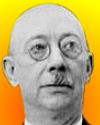
Born 2 Jan 1882; died 12 Apr 1975 at age 93. quotes
Henry Allan Gleason was an American botanist who was was active with the New York Botanical Garden for 32 years (1918-1950). By age 13, he already was a botany enthusiast. While still in high school, he contributed to The American Naturalist. Early in his career, he travelled to the Philippines, Java and Ceylon to studying tropical vegetation. In 1918, he gave a lecture on his findings, which led to the offer of a permanent position at NYBG, where he developed its South American collection.He was one of the first to consider community ecology. His paper on “The Individualistic Concept of the Plant Association” (1926) concluded that species tended to distribute themselves independently of one another. Eventually, his idea was embraced for the study of vegetation on an ecological and geographical basis. After retirement, he became emeritus head curator.«
Henry Allan Gleason was an American botanist who was was active with the New York Botanical Garden for 32 years (1918-1950). By age 13, he already was a botany enthusiast. While still in high school, he contributed to The American Naturalist. Early in his career, he travelled to the Philippines, Java and Ceylon to studying tropical vegetation. In 1918, he gave a lecture on his findings, which led to the offer of a permanent position at NYBG, where he developed its South American collection.He was one of the first to consider community ecology. His paper on “The Individualistic Concept of the Plant Association” (1926) concluded that species tended to distribute themselves independently of one another. Eventually, his idea was embraced for the study of vegetation on an ecological and geographical basis. After retirement, he became emeritus head curator.«
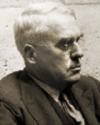
Born 2 Jan 1872; died 24 Jul 1951 at age 79.
Albert Coombs Barnes was an American chemist who invented the antiseptic Argyrol (1902). This is a silver-protein compound used in aqueous solution as a topical antiseptic. Believing in the social theories of philosophers such as John Dewey, Barnes felt he could better the lives of his fellow citizens. He applied his own ideas in his own factories. He scheduled his workers on 8-hour shifts 6 hours on the production line, followed by 2 hours of lectures on esthetics and art. He became a noted art collector, whose collection is now in the Barnes Foundation galleries in Merion, outside Philadelphia. Barnes' theories of art appreciation continue to be taught at the Barnes Foundation today. Dr. Barnes died in a car crash in 1951.
Albert Coombs Barnes was an American chemist who invented the antiseptic Argyrol (1902). This is a silver-protein compound used in aqueous solution as a topical antiseptic. Believing in the social theories of philosophers such as John Dewey, Barnes felt he could better the lives of his fellow citizens. He applied his own ideas in his own factories. He scheduled his workers on 8-hour shifts 6 hours on the production line, followed by 2 hours of lectures on esthetics and art. He became a noted art collector, whose collection is now in the Barnes Foundation galleries in Merion, outside Philadelphia. Barnes' theories of art appreciation continue to be taught at the Barnes Foundation today. Dr. Barnes died in a car crash in 1951.
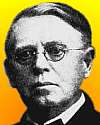
1921
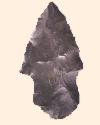
American museum curator who excavated Indian remains in Ohio, especially the Adena Mound (1901), a large earthen Indian burial ground near Chillicothe. Dating from about 50 BC, this site now represents the type site for the study of the North American Adena culture and period. Mills also made the definitive study (publ.1921) of Ohio's Flint Ridge “Great Indian Quarry” for the Ohio Archaeological and Historical Society of which he was curator and librarian 1898-1928.[Image right: point first described and named by Mills in his 1902 book Excavation of the Adena Mound recording points he found at the large mound on the Adena Estate of Governor Worthington in Ross County, Ohio.]
Born 2 Jan 1841; died 16 Feb 1915 at age 74.
Émile Hilaire Amagat was a French physicist who devoted his research career to the behaviour of fluids, including investigating the compressibility of gases at high pressures.
Émile Hilaire Amagat was a French physicist who devoted his research career to the behaviour of fluids, including investigating the compressibility of gases at high pressures.
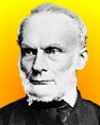
Born 2 Jan 1822; died 24 Aug 1888 at age 66. quotes
who was one of the founders of thermodynamics. In 1850, he stated the second law of thermodynamics. As a theoretical physicist, he also researched in molecular physics and electricity. In his published work in thermodynamics (1865) he gave the First and Second laws of thermodynamics in the following form: (1) The energy of the universe is constant. (2) The entropy of the universe tends to a maximum. In all Clausius wrote eight important papers on the topic. He restated Sadi Carnot's principle of the efficiency of heat engines. The Clausius-Clapeyron equation expresses the relation between the pressure and temperature at which two phases of a substance are in equilibrium.
who was one of the founders of thermodynamics. In 1850, he stated the second law of thermodynamics. As a theoretical physicist, he also researched in molecular physics and electricity. In his published work in thermodynamics (1865) he gave the First and Second laws of thermodynamics in the following form: (1) The energy of the universe is constant. (2) The entropy of the universe tends to a maximum. In all Clausius wrote eight important papers on the topic. He restated Sadi Carnot's principle of the efficiency of heat engines. The Clausius-Clapeyron equation expresses the relation between the pressure and temperature at which two phases of a substance are in equilibrium.
1843
Born 2 Jan 1803; died 7 Nov 1886 at age 83.
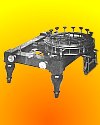
American inventor of an early form of typewriter. He formed Allen & Thurber (Worcester, Mass) with his brother in law, Ethan Allen to manufacture firearms. On “Thurber's Patent Printer,” (U.S. patent No. 3,228 on 26 Aug 1843), the type was mounted on a rotating cylindrical drum. As Scientific American described it, “the paper was secured to the drum, and was brought into the proper place under the type bar guide. The type wheel was revolved until the desired lever came over the guide. The key was then forced down with the finger, and the character was printed.” Thurber also patented a different machine which he called the Chirographer, “for writing or forming any kind of figures or characters on paper, and making copies thereof at the same operation,” but the machine was still far too slow to substitute for hand writing.« more
American inventor of an early form of typewriter. He formed Allen & Thurber (Worcester, Mass) with his brother in law, Ethan Allen to manufacture firearms. On “Thurber's Patent Printer,” (U.S. patent No. 3,228 on 26 Aug 1843), the type was mounted on a rotating cylindrical drum. As Scientific American described it, “the paper was secured to the drum, and was brought into the proper place under the type bar guide. The type wheel was revolved until the desired lever came over the guide. The key was then forced down with the finger, and the character was printed.” Thurber also patented a different machine which he called the Chirographer, “for writing or forming any kind of figures or characters on paper, and making copies thereof at the same operation,” but the machine was still far too slow to substitute for hand writing.« more

Arc-welding rod
English chemist who discovered an element he called columbium in 1801, while analyzing columbite, a complex mineral in the Hans Sloane Collection of the British Museum. (Sloane had received the black rock decades earlier from the grandson of mineral collector, John Winthrop (1606-76), Connecticut’s first governor, who found it in a spring near his home.) Hatchett detected, but did not isolate, the new element. German chemist, Heinrich Rose rediscovered it forty years later, and named it niobium. The metal itself was first separated in 1864, when its chloride was reduced by heating in a hydrogen atmosphere. Niobium is a metal that burns when heated in air and is used in arc-welding rods.«
Born 2 Jan 1729; died 16 Dec 1796 at age 67.
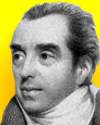
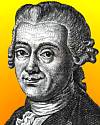
Prussian astronomer, physicist, and biologist whose formula (1766) expressing the distances between the planets and the Sun was confirmed by J.E. Bode in 1772, when it was called Bode's Law. Titius suggested that the mean distances of the planets from the sun very nearly fit a simple relationship of A=4+(3x2n) giving the series 4, 7, 10, 16, 28*, 52, 100, corresponding to the relative distance of the six known planets, up to Saturn, and an unassigned value (*) between Mars and Jupiter. Olbers searched for a planetary object at this empty position, thus discovering the asteroid belt. However, since the discovery of Neptune, which did not fit the pattern, the "law" is regarded as a coincidence with no scientific significance.[DSB gives date of death 16 Dec 1796. EB gives 11 Dec 1796.]
Prussian astronomer, physicist, and biologist whose formula (1766) expressing the distances between the planets and the Sun was confirmed by J.E. Bode in 1772, when it was called Bode's Law. Titius suggested that the mean distances of the planets from the sun very nearly fit a simple relationship of A=4+(3x2n) giving the series 4, 7, 10, 16, 28*, 52, 100, corresponding to the relative distance of the six known planets, up to Saturn, and an unassigned value (*) between Mars and Jupiter. Olbers searched for a planetary object at this empty position, thus discovering the asteroid belt. However, since the discovery of Neptune, which did not fit the pattern, the "law" is regarded as a coincidence with no scientific significance.[DSB gives date of death 16 Dec 1796. EB gives 11 Dec 1796.]
Born 2 Jan 1403; died 18 Nov 1472 at age 69.
Greek scholar.
Greek scholar.

Died 2 Jan 2022 at age 77 (born 19 Dec 1944). quotes
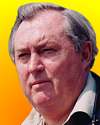
Kenyan paleontologist and physical anthropologist, second of three sons of noted anthropologists Louis Leakey and Mary Leakey. At an early age, he decided he wanted nothing to do with paleoanthropology and started a expedition business. In 1964, he led an expedition to a fossil site which sparked his interest in paleontology. Since then he has been responsible for extensive fossil finds of human ancestral forms in East Africa, including a Homo habilis skull found in 1972, and a Homo erectus skull found in 1975. His discoveries showed that man's ancestors used tools, which shows intelligence, and lived in eastern Africa at least 3 million years ago - almost doubling the previously accepted age of human origins.«
Kenyan paleontologist and physical anthropologist, second of three sons of noted anthropologists Louis Leakey and Mary Leakey. At an early age, he decided he wanted nothing to do with paleoanthropology and started a expedition business. In 1964, he led an expedition to a fossil site which sparked his interest in paleontology. Since then he has been responsible for extensive fossil finds of human ancestral forms in East Africa, including a Homo habilis skull found in 1972, and a Homo erectus skull found in 1975. His discoveries showed that man's ancestors used tools, which shows intelligence, and lived in eastern Africa at least 3 million years ago - almost doubling the previously accepted age of human origins.«
Origins Reconsidered: In Search of What Makes Us Human, by Richard E. Leakey. - book suggestion.

Died 2 Jan 1994 at age 79 (born 3 Sep 1914). quotes
(Margaret Ray) American marine biologist whose interests extended to the environment and the need for greater public understanding of science. A year after appointment to the Atomic Energy Commission, she became its first female chair (1973-75) and championed nuclear power plant construction. On 2 Nov 1976, Ray won election as the first woman to be governor of Washington state. In her single term as governor, Ray generated more controversy than accomplishments, advocating reductions in environmental protections, and supporting nuclear power. She feuded with aides and refused to close the Hanford nuclear dump. She was featured on the cover of Time issue of 12 Dec 1977.
(Margaret Ray) American marine biologist whose interests extended to the environment and the need for greater public understanding of science. A year after appointment to the Atomic Energy Commission, she became its first female chair (1973-75) and championed nuclear power plant construction. On 2 Nov 1976, Ray won election as the first woman to be governor of Washington state. In her single term as governor, Ray generated more controversy than accomplishments, advocating reductions in environmental protections, and supporting nuclear power. She feuded with aides and refused to close the Hanford nuclear dump. She was featured on the cover of Time issue of 12 Dec 1977.
Is it true what they say about Dixy?: A biography of Dixy Lee Ray, by Louis R Guzzo. - book suggestion.
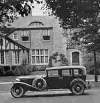
Died 2 Jan 1974 at age 79 (born 20 Jul 1894).
U.S. automobile manufacturer, advocate of front-wheel-drive vehicles. Cord, still in his twenties when he arrived at the Auburn Automobile Company, had a talent for seeking and hiring young, innovative minds, full of drive and ambition. Cord was a brilliant, complex industrialist who helped personal and public transportation come of age. He is best known today for Auburn, Cord and Duesenberg automobiles, Cord's greatest talent may have been his unparalleled ability to construct an automotive empire durable enough to thrive during the darkest years of the Great Depression.Photo: 1929 Cord L-29 Sedan, America's first front-drive production car. Built by the Auburn Automobile Company, Auburn, Indiana.
U.S. automobile manufacturer, advocate of front-wheel-drive vehicles. Cord, still in his twenties when he arrived at the Auburn Automobile Company, had a talent for seeking and hiring young, innovative minds, full of drive and ambition. Cord was a brilliant, complex industrialist who helped personal and public transportation come of age. He is best known today for Auburn, Cord and Duesenberg automobiles, Cord's greatest talent may have been his unparalleled ability to construct an automotive empire durable enough to thrive during the darkest years of the Great Depression.Photo: 1929 Cord L-29 Sedan, America's first front-drive production car. Built by the Auburn Automobile Company, Auburn, Indiana.
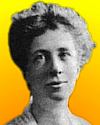
Died 2 Jan 1972 at age 93 (born 24 May 1878).
(née Moller) American efficiency expert, who as wife of Frank Bunker Gilbreth, contracting engineer, together developed the method of time-and-motion study. Upon her marriage, 19 Oct 1904, she became a partner in her husband's fledgling motion study business. As a contractor, he was already applying ideas to improve the speed of building. After a few years, they applied motion study to industry. Each step of work activity was to be studied in detail (employing motion pictures for analysis) to determine the optimal way to execute a given task. By choosing a method of least exertion, the employees would be more healthy, more productive, and economically improve the business. She continued after her husband's death in 1924.
(née Moller) American efficiency expert, who as wife of Frank Bunker Gilbreth, contracting engineer, together developed the method of time-and-motion study. Upon her marriage, 19 Oct 1904, she became a partner in her husband's fledgling motion study business. As a contractor, he was already applying ideas to improve the speed of building. After a few years, they applied motion study to industry. Each step of work activity was to be studied in detail (employing motion pictures for analysis) to determine the optimal way to execute a given task. By choosing a method of least exertion, the employees would be more healthy, more productive, and economically improve the business. She continued after her husband's death in 1924.
Making Time: Lillian Moller Gilbreth..., by Jane Lancaster. - book suggestion.
Died 2 Jan 1948 at age 62 (born 29 Oct 1885).
Rear Admiral Sidney Rupert Dight was an English navy officer and engineer who originated the petroleum smoke screens used to confuse the pilots of German bombers. They were rapidly developed and used for protection of industrial targets from aerial bombardment during WW II. During the war, the majority of high-output boilers designed by the Admiralty were equipped with the circulation augmentor he invented. His navy career began as an Engineer Sub. Lieutenant on 4 Jul 1905, and he served a few years at sea, some in WW I. During the war, he was appointed, though briefly, as Assistant Secretary of the Board of Invention and Research. By the 1930s he was the Commanding Officer of the Admiralty’s Fuel Experimental Station. During WW II, in early 1940, he was appointed Director of Development in the Petroleum Warfare Department (Local Defence Division).«
Rear Admiral Sidney Rupert Dight was an English navy officer and engineer who originated the petroleum smoke screens used to confuse the pilots of German bombers. They were rapidly developed and used for protection of industrial targets from aerial bombardment during WW II. During the war, the majority of high-output boilers designed by the Admiralty were equipped with the circulation augmentor he invented. His navy career began as an Engineer Sub. Lieutenant on 4 Jul 1905, and he served a few years at sea, some in WW I. During the war, he was appointed, though briefly, as Assistant Secretary of the Board of Invention and Research. By the 1930s he was the Commanding Officer of the Admiralty’s Fuel Experimental Station. During WW II, in early 1940, he was appointed Director of Development in the Petroleum Warfare Department (Local Defence Division).«
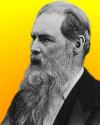
Died 2 Jan 1917 at age 84 (born 2 Oct 1832). quotes
English anthropologist regarded as the founder of cultural anthropology. After travelling in the U.S. (1855-56) he proceeded to Cuba (1856), where he met Henry Christy the ethnologist. Together they visited Mexico, where Christy's influence greatly stimulated Tylor's interest in anthropology. Seeing the rich prehistoric remains in Mexico led Tylor to make a systematic study of the science. In his most important work, Primitive Culture (1871), being influenced by Darwin's theory of biological evolution, he developed the theory of an evolutionary, progressive relationship between primitive and modern cultures. By 1883, he was Keeper of the University Museum at Oxford and Professor of Anthropology there 1896-1909. He was knighted in 1912.
English anthropologist regarded as the founder of cultural anthropology. After travelling in the U.S. (1855-56) he proceeded to Cuba (1856), where he met Henry Christy the ethnologist. Together they visited Mexico, where Christy's influence greatly stimulated Tylor's interest in anthropology. Seeing the rich prehistoric remains in Mexico led Tylor to make a systematic study of the science. In his most important work, Primitive Culture (1871), being influenced by Darwin's theory of biological evolution, he developed the theory of an evolutionary, progressive relationship between primitive and modern cultures. By 1883, he was Keeper of the University Museum at Oxford and Professor of Anthropology there 1896-1909. He was knighted in 1912.
Primitive culture: Researches ..., by Edward Burnett Tylor. - book suggestion.
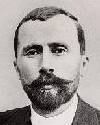
Died 2 Jan 1913 at age 57 (born 5 Nov 1855).
French meteorologist who discovered the stratosphere (1902). He established own observatory at Trappes (1896) and pioneered in the use of unmanned, instrumented balloons to investigate atmosphere. Teisserenc de Bort found that above an altitude of 7 miles (11 km) temperature ceased to fall and sometimes increased slightly. He named this upper part of the atmosphere the stratosphere, because he thought that the different gases would lie in distinct strata as, without temperature differentials, there would be no mechanism to disturb them. The lower part of the atmosphere he named the troposphere (Greek: "sphere of change") as here, with abundant temperature differentials, constant change and mingling of atmospheric gases occurred.
French meteorologist who discovered the stratosphere (1902). He established own observatory at Trappes (1896) and pioneered in the use of unmanned, instrumented balloons to investigate atmosphere. Teisserenc de Bort found that above an altitude of 7 miles (11 km) temperature ceased to fall and sometimes increased slightly. He named this upper part of the atmosphere the stratosphere, because he thought that the different gases would lie in distinct strata as, without temperature differentials, there would be no mechanism to disturb them. The lower part of the atmosphere he named the troposphere (Greek: "sphere of change") as here, with abundant temperature differentials, constant change and mingling of atmospheric gases occurred.
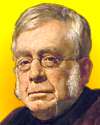
Died 2 Jan 1892 at age 90 (born 27 Jul 1801). quotes
English astronomer and mathematician who became the seventh Astronomer Royal (1836-92). In his life he studied interference fringes in optics, made a mathematical study of the rainbow and computed the density of the Earth by swinging a pendulum at the top and bottom of a deep mine, determined the mass of the planet Jupiter and its period rotation, calculated the orbits of comets and cataloged stars. He designed corrective lenses for astigmatism (1825), the first that worked. His motivation was his own astigmatism. Airy had a long-standing battle with Babbage. In 1854, the conflict continued between the two during the battle of the incompatible railway gauges in England. Airy championed the railway narrow gauge and Babbage for the wide gauge. more
English astronomer and mathematician who became the seventh Astronomer Royal (1836-92). In his life he studied interference fringes in optics, made a mathematical study of the rainbow and computed the density of the Earth by swinging a pendulum at the top and bottom of a deep mine, determined the mass of the planet Jupiter and its period rotation, calculated the orbits of comets and cataloged stars. He designed corrective lenses for astigmatism (1825), the first that worked. His motivation was his own astigmatism. Airy had a long-standing battle with Babbage. In 1854, the conflict continued between the two during the battle of the incompatible railway gauges in England. Airy championed the railway narrow gauge and Babbage for the wide gauge. more
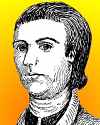
Died 2 Jan 1817 at age 73 (born 23 Apr 1743).
American natural philosopher and clergyman who organized the first expedition of its kind in the U.S. (departing on 9 Oct 1780) to observe a total solar eclipse in Penobscot Bay, Maine, although it was held by the British enemy. The eclipse was very slightly less than being total, and he is believed to be the first to observe the “ Baily's Beads” phenomenon seen along the sun's last sliver. Previously, with John Winthrop (under whom he studied) he travelled to St. John's, Newfoundland (1761) to observer the Transit of Venus. When Wintrop died, Williams succeeded him (1779) as the Hollis Professor of Mathematics and Natural Philosophy at Harvard University. He researched and taught astronomy, meteorology, and magnetism. He resigned in June 1788. He also engaged in state boundary surveys: NY and Mass. (1785-88), and Vermont and Canada (1795).«[Image drawn from a miniature.] more
American natural philosopher and clergyman who organized the first expedition of its kind in the U.S. (departing on 9 Oct 1780) to observe a total solar eclipse in Penobscot Bay, Maine, although it was held by the British enemy. The eclipse was very slightly less than being total, and he is believed to be the first to observe the “ Baily's Beads” phenomenon seen along the sun's last sliver. Previously, with John Winthrop (under whom he studied) he travelled to St. John's, Newfoundland (1761) to observer the Transit of Venus. When Wintrop died, Williams succeeded him (1779) as the Hollis Professor of Mathematics and Natural Philosophy at Harvard University. He researched and taught astronomy, meteorology, and magnetism. He resigned in June 1788. He also engaged in state boundary surveys: NY and Mass. (1785-88), and Vermont and Canada (1795).«[Image drawn from a miniature.] more
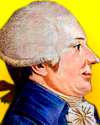
Died 2 Jan 1816 at age 78 (born 4 Jan 1737). quotes
French chemist who collaborated with Antoine Lavoisier and others to establish a systematic chemical nomenclature, helping to distinguish elements from compounds. He published studies on phlogiston and crystallization, and also liquified ammonia gas. He wrote the chemical section of the Encyclopédie méthodique (Vol. I, 1786). In 1761, Guyton proposed that the name "alumine" (hence aluminium) be used for the base in alum (potassium aluminium sulphate; Latin alumen = alum). Guyton was one of the first to conclude that iron and steel differ solely in their carbon content, improved the manufacture of gunpowder, was the first to use chlorine and hydrochloric acid gas as disinfectants, and one of the first balloonists (1784).
French chemist who collaborated with Antoine Lavoisier and others to establish a systematic chemical nomenclature, helping to distinguish elements from compounds. He published studies on phlogiston and crystallization, and also liquified ammonia gas. He wrote the chemical section of the Encyclopédie méthodique (Vol. I, 1786). In 1761, Guyton proposed that the name "alumine" (hence aluminium) be used for the base in alum (potassium aluminium sulphate; Latin alumen = alum). Guyton was one of the first to conclude that iron and steel differ solely in their carbon content, improved the manufacture of gunpowder, was the first to use chlorine and hydrochloric acid gas as disinfectants, and one of the first balloonists (1784).

In 1975, Kenneth C. Brugger discovered the long-unknown winter destination of the monarch butterfly in the mountains of Mexico. From 1937, for 38 years, Canadian zoologist Freud Urquhart patiently investigated to establish the route and destination of the insects. Using tags on the wings of some butterflies, he followed their migration trails to Mexican territory. Brugger, one of Urquhart's helpers, after a long period of traveling in the center of Mexico, found the first butterfly refuge. Within the territory of only 200 square meters, there are around 20 million butterflies. The area was cold and covered with oyamel trees and pine trees, a few kilometers from rural towns.
In 1960, John Reynolds set the age of solar system at 4,950,000,000 years.
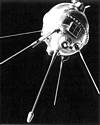
In 1959, the first lunar space shot to escape the Earth's gravitational pull was launched by the Soviet Union. Originally named “Cosmic Rocket”, the unmanned mission was retroactively named Luna 1. Just over 8 hours later, instead of impacting the Moon as intended, due to a guidance system error, it passed to within about 4,000 miles (6,400 km). Instead, it became the first spacecraft to enter orbit around the Sun. The spacecraft was equipped with instruments to measure cosmic radiation and also the magnetic fields of the Earth and the Moon. It released a cloud of sodium gas, which glowed due to the Sun's radiation like an artificial comet, and made it visible from Earth. Contact lasted 62 hours after the launch until the batteries were drained. Luna 2 was launched 12 Sep 1959.«
Deep Space Chronicle: A Chronology of Deep Space and Planetary Probes 1958-2000. Monograph in Aerospace History, No. 24, by Asif A. Siddiqi. - book suggestion.
In 1936, the first electron tube to enable night vision was described, in St Louis, Mo.
In 1900, the Chicago Canal opened.
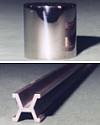
In 1890, the seals were broken on prototype meter No. 27 and prototype kilogram No. 20 in the Cabinet room of the Executive Mansion by U.S. President Benjamin Harrison, observed by the Secretary of State, the Secretary of the Treasury, and invited guests. Following the Metric Convention (20 May 1875), which the U.S. had signed, prototype measures had been prepared of platinum-iridium alloy from the international prototypes in France, and were ready for distribution on 26 Sep 1889. Two of each were furnished to the U.S.: kilograms Nos. 21 and 27, and meters Nos. 4 and 20. Those on which the seals were broken were thereby adopted as the U.S. national prototypes, which would thereafter be used to define all measurements of length and weight in the U.S.«
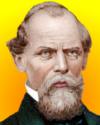
John Roebling
In 1870, construction began on the Brooklyn Bridge to cross the East River, New York City, USA, with a single span, a breadth of 1,600 feet navigable water. The 13 year project was started by John Roebling, and after his death, completed by his son Washington Roebling. It was opened on 24 May 1883. What was then regarded as the greatest engineering feat still stands in service today, and remains the world's only stone-towered, steel cabled bridge. Twice the size of the Niagara Suspension Bridge and four times the longest non-extension spans then attempted, the total length of this colossal structure is 6,927 ft. The road bed is 80 feet wide, at an elevation of 186 feet above high water.«
The Great Bridge: The Epic Story of the Building of the Brooklyn Bridge, by David McCullough. - book suggestion.
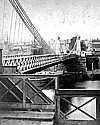
In 1842, the first U.S. wire suspension vehicle bridge was opened to traffic at Fairmount, Pennsylvania, for Calloway Sreet to cross the Schuylkill river. It was designed and built by the engineer Charles Ellet to replace the 1816 wooden “Colossus” bridge that burned in 1838. Ellet’s bridge spanned 342 feet, and had a clear width of 25 feet. It was replaced in 1875 by a truss bridge. From 1809 to 1816 there had been prior short-lived bridges at the site, each of which collapsed under excessive loads. One used suspension cables of long iron links (1809-1811), replaced by another suspension (fell 17 Jan 1816) and a third (opened Jun 1816, fell Winter 1816) was only 18 inches wide, but was the first to use cables, made with six 3/8" wires by the nearby wire mill of White and Hazard.«
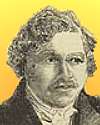
Louis Daguerre
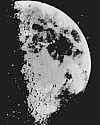
1851
The Daguerreotype: Nineteenth-Century Technology and Modern Science, by Barger and White. - book suggestion.
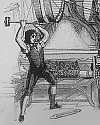
In 1813, a special Commission opened at York, England to put on trial 66 persons for offenses connected with Luddism. Within days, seventeen of them had been executed on the scaffold. Taking their name from (perhaps mythical) Ned Ludd, Luddites vowed to destroy the factory mechanization they blamed for their unemployment. Riots began in 1812, and spread north from Nottingham where half of the population were receiving parish relief. Falling prices for goods, bad harvest increasing prices for food, wages at starvation level, costs of war and lost foreign markets contributed to the economic distress of the working class. One thousand looms were broken up in Nottingham, and a law was passed making destruction of machinery a capital offence.«
more




